

How to Tell If Coffee Is Fresh: A Complete Guide
Table of Contents
- Why Freshness Matters More Than Most People Realize
- Understanding Coffee Roast Date vs Expiration Date
- Visual Inspection: What Fresh Coffee Beans Actually Look Like
- The Coffee Bloom Test: Your Most Reliable Freshness Check
- Sensory Evaluation: Aroma, Taste, and Flavor Profile
- How to Store Coffee Beans for Maximum Freshness
- Recognizing Stale Coffee: Signs of Oxidation and Degradation
- Freshness vs. Peak Flavor: Understanding the Difference
Last Updated: August 27, 2026
Why Freshness Matters More Than Most People Realize
Coffee begins to deteriorate the moment roasting finishes. Within days, the complex aromatics that define specialty coffee start breaking down. Within weeks, oxidation sets in. By the time a bag sits on a grocery shelf for months, the flavor profile has collapsed into something bitter and hollow.
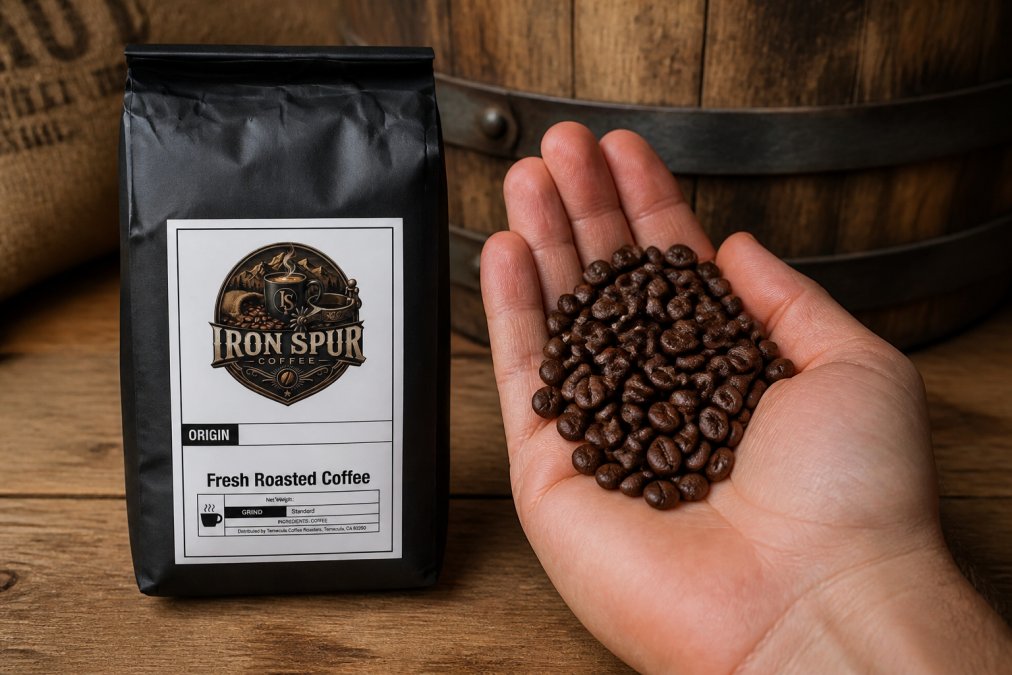
At Iron Spur Coffee, we understand that roasting to order isn't just marketing, it's the only way to guarantee the beans you're brewing actually deliver the promised flavor profile. The difference between coffee roasted three weeks ago and coffee roasted three days ago is dramatic. One tastes alive. The other tastes stale.
Freshness is about understanding the actual window where coffee performs at its peak, then using sensory evaluation and visual inspection to confirm whether a bag still falls within that window.
Understanding Coffee Roast Date vs Expiration Date
The roast date and expiration date are not the same thing. A roast date tells you when the beans were actually roasted. An expiration date is often a legal requirement, a conservative estimate of when the product should no longer be sold, not when it stops being good.
Coffee doesn't "expire" like milk does. It becomes stale. The flavor profile flattens, acidity disappears, and bitterness can emerge. But the coffee won't make you sick.
The roast date is what matters. Look for bags that show the exact date the beans were roasted. If a bag only shows an expiration date with no roast date visible, that's a red flag.
For most brewing methods, coffee tastes best between 5 and 30 days after roasting (peer-reviewed research). Within that window, you're capturing the full complexity of the roast, the acidity, body, and flavor notes that make specialty coffee different from commodity beans. After 30 days, the beans are still drinkable but no longer at their peak. After 60 days, most people notice significant quality decline.
Small-batch roasters like Iron Spur Coffee emphasize roast dates heavily. When beans are roasted to order, the roast date is usually just days before the bag reaches you. You're working with a peak flavor window that's still wide open.
Visual Inspection: What Fresh Coffee Beans Actually Look Like
Before you brew, look. Fresh coffee beans have a distinct visual profile that tells you whether they're still within their prime window.
Surface Sheen and Oiliness
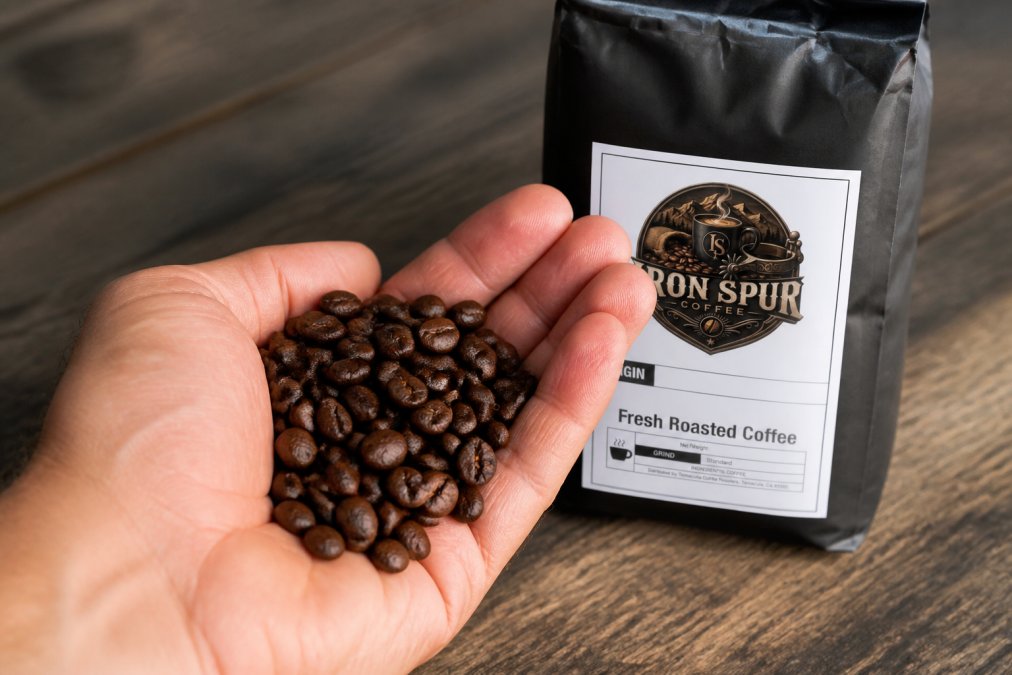
Fresh beans, especially darker roasts, often display a subtle surface sheen. This comes from oils that rise to the surface during roasting. Light roasts typically show less visible oil because the roasting time is shorter, but the oils are still there.
What matters is consistency. If some beans look dull and others look shiny, that's a sign of uneven roasting or age. Beans that have been sitting around for months start to look matte and flat. Fresh beans have a uniform appearance, either consistently oily or consistently matte depending on roast level, but not a chaotic mix of both.
Color Consistency Across the Batch
Pour a handful of fresh beans onto a white surface and look at the color distribution. Fresh beans should have consistent coloring throughout the batch. A light roast should be uniformly light brown. A dark roast should be uniformly dark brown.
If you see many colors, some beans much darker or lighter than others, that suggests uneven roasting or, more commonly, that the batch is old and has oxidized unevenly. Older beans also tend to develop a grayish or dull cast rather than the vibrant, rich color of fresh beans.
The Coffee Bloom Test: Your Most Reliable Freshness Check
The bloom test is the single most reliable way to assess freshness. It's simple, fast, and gives you immediate feedback about how recently the beans were roasted.
How to Perform a Bloom Test
Start with about one tablespoon of freshly ground coffee. Pour hot water (around 200°F) slowly over the grounds without brewing (sca.coffee). Let them sit for 30-45 seconds.
Fresh coffee releases a visible surge of carbon dioxide. You'll see the grounds rise and bubble vigorously. This vigorous reaction signals that carbon dioxide is still trapped in the beans. Fresher beans contain more CO2. As beans age, that gas escapes naturally. After a few weeks, there's less gas left to release. After a couple of months, the bloom becomes minimal or nonexistent.
What a Strong Bloom Tells You
A strong, vigorous bloom signals that you're working with coffee roasted recently, usually within the last two to three weeks. The beans still have enough carbon dioxide trapped inside to create that dramatic visual reaction.
A strong bloom also correlates with better extraction during brewing. The CO2 helps agitate the water and grounds, promoting more even contact and better flavor transfer. If you're buying from a roaster like Iron Spur Coffee that roasts to order, you should expect a vigorous bloom every single time.
Sensory Evaluation: Aroma, Taste, and Flavor Profile
Visual inspection and the bloom test give you objective signals. Sensory evaluation, how the coffee smells and tastes, tells you about quality and freshness in a more nuanced way.
Assessing Aroma and Smell
Fresh coffee has a vibrant, complex aroma. The smell should be inviting and detailed. You might pick up notes of chocolate, caramel, fruit, nuts, or flowers depending on the origin and roast level. The key is complexity. Fresh coffee smells rich and multidimensional.
As coffee ages, the aroma becomes flat and muted. The vibrant top notes fade. You're left with a generic "coffee smell" rather than the specific tasting notes that define the roast. Some stale coffee develops a slightly musty or cardboard-like smell, a sign that oxidation is underway.
Tasting for Acidity, Body, and Bitterness
Brew a small cup and taste it while hot. Fresh coffee should have a clean, crisp taste with noticeable acidity. Acidity in specialty coffee isn't a flaw, it's a feature that gives brightness and complexity. A fresh, well-roasted cup should have balanced body and finish clean without harsh bitterness.
Discover Iron Spur Coffee Today →
Stale coffee loses acidity first. The cup becomes flat and one-dimensional. Bitterness often emerges as roast compounds break down.
How to Store Coffee Beans for Maximum Freshness
Once you have fresh beans, storage determines how long they stay that way. The goal is to slow oxidation and preserve the volatile compounds that define flavor.
The Role of One-Way Valves and Airtight Containers
Quality coffee bags feature a one-way valve that allows carbon dioxide to escape while preventing oxygen from entering. This is critical. Without it, oxygen gets in and accelerates oxidation.
If you're transferring beans to a different container, use an airtight container with a tight seal. Dark, opaque containers are better than clear ones because they protect beans from light. The key principle: minimize air exposure. Every time you open the container, you're introducing fresh oxygen. Buy in quantities you'll use within two to three weeks.
Temperature, Light, and Moisture Control
Store coffee in a cool, dark place. Heat accelerates oxidation. Light, especially direct sunlight, degrades the beans. Moisture promotes mold and can cause beans to swell and crack.
A pantry or cabinet away from direct sunlight is ideal. Avoid storing coffee above the stove or near a window. The ideal storage temperature is between 50-70°F. A consistent, cool environment is better than one that fluctuates.
Recognizing Stale Coffee: Signs of Oxidation and Degradation
Knowing what fresh coffee looks and tastes like makes it easier to spot the opposite. Stale coffee has unmistakable characteristics.
Flat, Dull, and Muted Flavor Notes
The most obvious sign of stale coffee is a flat, one-dimensional flavor profile. The acidity is gone. The brightness is gone. What's left is a heavy, dull cup that lacks any complexity or character.
If you're expecting vibrant, punchy flavor notes and instead get something muted and lifeless, oxidation is the culprit. Fresh coffee from a roaster like Iron Spur Coffee maintains those vibrant flavor notes throughout the peak window. Stale coffee tastes like it's been sitting around, because it has.
Rancid Smells and Off-Taste Indicators
In extreme cases, very old coffee can develop a rancid smell. This is oxidation taken to its endpoint. The oils in the beans have broken down completely. The aroma is unpleasant rather than inviting.
Off-tastes also emerge, musty, cardboard-like, or slightly sour notes indicate oxidation. If a coffee smells rancid or tastes off in a way that's clearly wrong, it's past the point of being worth brewing.
Freshness vs. Peak Flavor: Understanding the Difference
Freshness and peak flavor are related but not identical. Freshness refers to how recently the beans were roasted. Peak flavor is when the roasted beans express their full potential.
For most coffees, peak flavor occurs 5-14 days after roasting. During this window, the beans have completed initial degassing (so the bloom is still strong and extraction is optimal), but the flavor compounds haven't yet begun to break down significantly.
Before day 5, some coffees can taste slightly underdeveloped. After day 14, the decline becomes noticeable for most people. Iron Spur Coffee's approach of roasting to order means you receive beans right at the beginning of that peak window, not weeks after roasting.
| Indicator | Fresh Coffee | Stale Coffee |
|---|---|---|
| Roast Date | Within 2-3 weeks | Beyond 60 days |
| Visual Appearance | Vibrant, uniform color with sheen | Dull, matte, grayish cast |
| Bloom Reaction | Vigorous, visible CO2 bubbles | Weak or minimal reaction |
| Aroma | Complex, inviting, detailed notes | Flat, generic, musty |
| Flavor Profile | Bright acidity, balanced body, clean finish | Flat, one-dimensional, potentially bitter |
| Taste Development | Evolves as coffee cools | Remains flat at all temperatures |
Recognizing fresh coffee comes down to three things: understanding roast dates, performing a simple bloom test, and trusting your senses. These methods take minutes but deliver immediate feedback about whether the beans in your hand are worth brewing.
At Iron Spur Coffee, we've built our entire approach around this principle. Roasting to order ensures that when your bag arrives, you're working with beans at the absolute beginning of their peak flavor window. No warehouse storage. No shelf time. Just fresh, complex coffee ready to deliver the vibrant, punchy flavor that makes specialty coffee different from commodity blends. The Specialty Coffee Association has published detailed standards for evaluating coffee freshness through sensory analysis to help consumers understand what they're tasting.
Discover Iron Spur Coffee Today and experience the difference that true freshness makes in every cup.
Frequently Asked Questions
How long does coffee stay fresh after the roast date?
Whole bean coffee reaches peak flavor 5-7 days after roasting, once the degassing process completes. It remains fresh for 2-4 weeks in an airtight container. Ground coffee stales much faster, use it within 15 minutes of grinding for best results. After 30 days, even whole beans stored properly show noticeable flavor loss. Roast-to-order specialty coffee like Iron Spur Coffee's small-batch beans arrives at peak freshness, ensuring you capture that complex sweetness and vibrant aroma.
What's the difference between a roast date and an expiration date?
A roast date tells you when the beans were roasted; an expiration date is rarely printed on quality coffee. The roast date matters far more because it defines your freshness window. Coffee doesn't expire like food, it degrades. After 4 weeks, oxidation dulls the flavor profile, acidity flattens, and bitterness can emerge. Look for bags that display the roast date prominently. Avoid bags with vague 'best by' labels that hide how old the beans actually are.
Does the bloom test really prove coffee is fresh?
Yes. When you pour hot water over fresh grounds, carbon dioxide trapped inside escapes rapidly, creating visible bubbles and foam. This bloom indicates the beans still contain volatile compounds, a sign of recent roasting. Stale coffee produces little to no bloom because most gas has already escaped during storage. A vigorous bloom is one of the most reliable freshness checks you can perform at home, far more accurate than smell alone.
Can I drink coffee that's a year old if it's been stored properly?
Technically yes, but the flavor will be flat and dull. Oxidation degrades the aromatic compounds that give specialty coffee its punchy character and complex sweetness. Even in an airtight container away from light and heat, coffee loses its vibrant tasting notes within 3-4 months. After a year, you're drinking stale coffee, safe but stripped of the flavor profile that makes premium beans worth buying. For the best experience, buy smaller quantities more frequently or choose roast-to-order options that guarantee freshness.
This article was written using GrandRanker