

How to Store Coffee Beans: A 2026 Guide
Table of Contents
- Why Proper Storage Matters for Coffee Freshness
- Best Coffee Storage Containers for Maximum Freshness
- The Complete Storage Process: Step-by-Step
- Can You Freeze Coffee Beans? What You Need to Know
- How to Tell If Coffee Beans Are Stale
- Understanding Coffee Bean Shelf Life
- Common Storage Mistakes to Avoid
- Conclusion
Last Updated: August 22, 2026
Why Proper Storage Matters for Coffee Freshness
The moment coffee beans are roasted, they begin a slow decline in flavor and aroma. Oxygen exposure, temperature fluctuations, and light all accelerate this deterioration. How you store your coffee beans determines whether you're drinking a vibrant cup with complex sweetness or a flat, stale brew that tastes like cardboard.
At Iron Spur Coffee, specialty-grade beans roasted with precision thermal mapping can lose their character within days if stored incorrectly. The difference between a resilient, flawless morning and a disappointing cup often comes down to one thing: where those beans spend their time between roasting and brewing.
Coffee freshness isn't just about taste. It's about getting the full value of what you paid for. Premium beans deserve premium storage. When you invest in high-elevation, specialty-grade coffee roasted to order, protecting that investment through proper storage makes the difference between a cup that delivers maximum flavor and one that falls flat.
The science is straightforward: coffee beans contain oils and aromatic compounds that oxidize when exposed to air, light, and heat. Moisture creates the conditions for mold and degradation. Humidity causes the beans to absorb water, which interferes with the roasting profile's intended flavor notes. Temperature swings cause the beans to expand and contract, damaging their cellular structure. Each of these factors compounds the others, accelerating staling.
Understanding how to store coffee beans isn't complicated, but it does require intention. The good news is that with the right approach, you can maintain freshness for weeks, long enough to enjoy your beans at their peak.
Best Coffee Storage Containers for Maximum Freshness
The container you choose is your first line of defense against oxidation and moisture. Not all containers are created equal, and the difference between a mediocre option and the right one is measurable in cup quality.
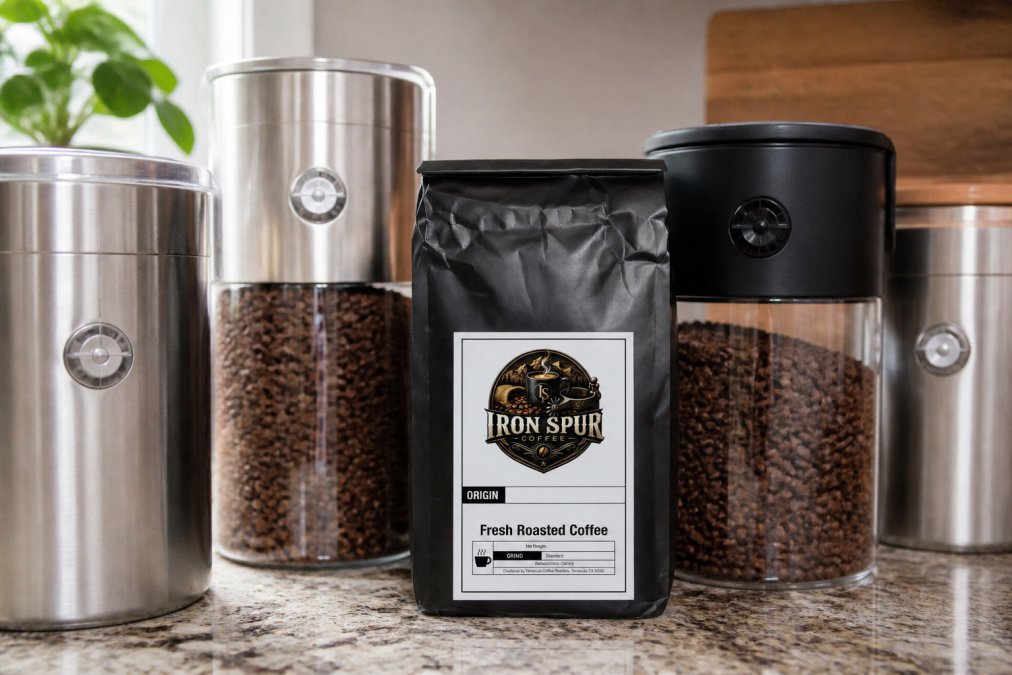
Airtight Containers with One-Way Valves
One-way valve technology is a game-changer for storing whole beans. These valves allow carbon dioxide (CO2) to escape from freshly roasted beans without letting oxygen back in. This is critical because newly roasted coffee undergoes degassing, a natural process where CO2 trapped inside the beans is released over the first 5-14 days after roasting (peer-reviewed research).
A quality airtight container with a one-way valve maintains the optimal environment for this degassing to occur while protecting the beans from oxygen. The valve does the work for you, so you don't have to burp the container daily or worry about pressure buildup.
Look for containers that are:
- Opaque or dark-tinted (blocks light from degrading the beans)
- Made from food-grade plastic or stainless steel (doesn't absorb odors)
- Fitted with a reliable one-way valve (allows degassing without letting air in)
- Designed with an airtight seal around the lid
Many coffee enthusiasts prefer containers specifically designed for coffee storage because they account for degassing in their engineering. Generic airtight containers often lack the valve, forcing you to choose between letting CO2 build pressure or opening the lid and exposing beans to oxygen.
Vacuum-Sealed and Glass Options
Vacuum-sealed containers remove most air before sealing, creating an oxygen-free environment. This approach works exceptionally well for long-term storage of beans you won't use immediately. However, vacuum sealing is less practical for daily use since you'd need to re-seal the container after each opening.
Glass containers offer aesthetic appeal and allow you to see your beans without opening the lid. The problem is that glass is transparent, light reaches the beans directly. If you choose glass, store it in a dark cupboard or use an opaque sleeve to block light exposure. Glass also doesn't account for CO2 degassing the way valve-equipped containers do.
For most people, an opaque airtight container with a one-way valve strikes the best balance between functionality, durability, and maintaining freshness. It's the container design that aligns with how coffee actually behaves after roasting.
The Complete Storage Process: Step-by-Step
Proper storage isn't a single action, it's a system. Following these steps ensures your beans stay fresh from the moment they arrive until the last cup.
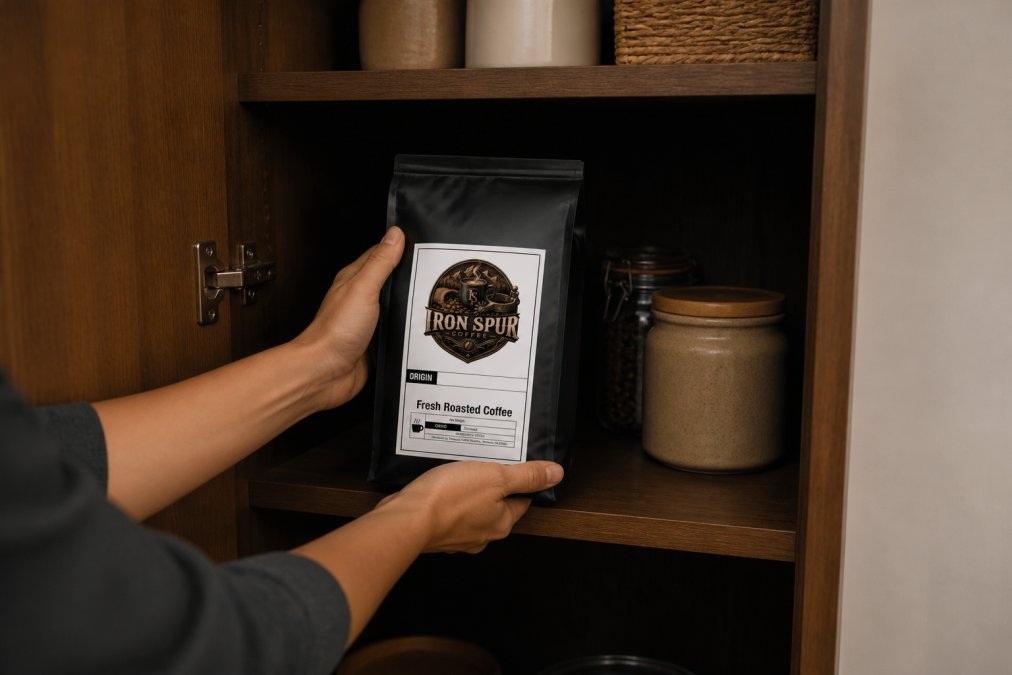
Step 1: Choose Your Storage Location
Your storage location sets the foundation for everything else. The ideal spot is cool, dark, and stable, away from direct sunlight, heat sources, and humidity.
A pantry or cupboard away from the kitchen's heat is ideal. Avoid storing coffee:
- Above or near the stove (heat accelerates oxidation and oil migration)
- On windowsills or anywhere exposed to direct sunlight (light degrades flavor compounds)
- In the refrigerator (temperature fluctuations and moisture damage the beans)
- Above the microwave or oven (heat penetrates through cabinets)
- In a humid bathroom or near a sink (moisture causes mold and flavor loss)
Room temperature is your target, ideally between 60-70°F (ncausa.org). Consistency matters more than the exact number. A cool pantry that stays stable is better than a cold location with temperature swings.
Step 2: Manage Temperature and Humidity
Temperature fluctuations are one of the most underestimated threats to coffee freshness. When beans expand and contract with temperature changes, the bean integrity breaks down. This allows oxygen to penetrate deeper into the bean structure, accelerating oxidation.
Humidity is equally critical. Coffee beans are hygroscopic, they absorb moisture from the air. High humidity (above 60%) causes beans to absorb water, which interferes with the roasting profile and creates conditions for mold (peer-reviewed research). Low humidity is actually preferable for storage, though it's less common in most homes.
If you live in a humid climate, consider storing your beans in a cool, dry location with lower moisture. Some people use small silica gel packets inside their storage containers to manage excess humidity, though this is only necessary if your environment is particularly damp.
Step 3: Protect from Light and Oxygen
Light triggers photodegradation, a chemical breakdown of the aromatic compounds that make coffee taste good. Even ambient indoor light can degrade beans over time if they're stored in a transparent container.
An opaque container is non-negotiable. The container's job is to block light completely while maintaining an airtight seal. When you open the container to scoop beans, oxygen enters briefly, but the one-way valve prevents a continuous flow of fresh air back in.
Minimize how often you open the container. Scoop what you need and seal it immediately. Some people transfer beans to a smaller container for daily use, keeping the main supply sealed and undisturbed. This reduces oxygen exposure for the bulk of your supply.
Can You Freeze Coffee Beans? What You Need to Know
Freezing is controversial in the coffee world, and for good reason. The science is clear: freezing damages bean integrity and introduces moisture problems that outweigh any potential freshness benefits.
When you freeze coffee beans, you're subjecting them to extreme temperature shock. The moisture inside and around the beans freezes, expanding and creating micro-fractures in the bean structure. When the beans thaw, condensation forms on the surface, introducing unwanted moisture that accelerates staling and can promote mold growth.
The real issue is that freezing doesn't preserve freshness, it damages the beans in ways that become apparent when you brew them. The cup quality suffers noticeably, with a flat, muted flavor profile compared to beans stored at room temperature.
There's a narrow exception: if you have a large quantity of beans you won't use for several months, freezing in a vacuum-sealed, airtight container can slow oxidation. But this requires:
- Vacuum sealing to remove oxygen completely
- Thawing the entire container before opening (to avoid condensation)
- Using the beans immediately after thawing
For most home coffee drinkers, room-temperature storage in an airtight container is superior. You'll get better flavor and avoid the hassle of managing frozen beans.
Discover Iron Spur Coffee Today →
How to Tell If Coffee Beans Are Stale
Stale beans display clear signs. Learning to recognize them helps you know when it's time to use what you have or switch to fresher supply.
Appearance is the first indicator. Fresh beans have a vibrant color and visible surface oils (especially on darker roasts). Stale beans look dull and dry, with a faded appearance. The color becomes washed out and lifeless.
Aroma is the most reliable test. Fresh beans have a strong, pleasant coffee smell, complex and inviting. Stale beans smell flat, muted, or even cardboard-like. If you open a container and the aroma is weak, the beans have lost their volatile aromatic compounds to oxidation.
When you grind stale beans, they produce less aroma than fresh beans. The difference is dramatic if you're comparing fresh-roasted beans to beans that have been stored for months.
In the cup, stale beans produce a thin, flat-tasting brew. The sweetness and complexity that define quality coffee disappear. You're left with a one-dimensional cup that tastes like generic coffee rather than a specialty product.
The roast date matters. Beans roasted more than 4 weeks ago are typically past their peak, especially if stored improperly. This is why Iron Spur Coffee's commitment to roasting to order is significant, you receive beans within days of roasting, ensuring maximum freshness when they arrive at your door.
Understanding Coffee Bean Shelf Life
Shelf life depends on storage conditions. Under ideal conditions, whole beans stay fresh for 3-4 weeks. Ground coffee, with its increased surface area, deteriorates much faster, typically within 1-2 weeks.
The roast date is your reference point. Coffee reaches peak flavor 5-7 days after roasting, once degassing has progressed sufficiently. From that point, the clock starts. In an airtight container in a cool, dark location, you have a window of about 3-4 weeks where the beans maintain good flavor.
After 4 weeks, oxidation and oil migration become noticeable. The beans don't become unsafe to drink, but the cup quality declines measurably. After 8 weeks, the flavor degradation is significant enough that most coffee enthusiasts would notice a clear difference.
Proper storage extends this window. A vacuum-sealed container in a cool environment can preserve beans for 6-8 weeks. Freezing theoretically extends shelf life, but as discussed, the damage to bean structure usually negates any benefit.
The practical takeaway: buy beans in quantities you'll use within 3-4 weeks. Buying smaller amounts more frequently ensures you're always drinking fresh coffee. This is why many specialty roasters, including Iron Spur Coffee, recommend ordering smaller bags more often rather than stockpiling large quantities.
Common Storage Mistakes to Avoid
Understanding what not to do is as important as knowing the right approach. These mistakes are common and easily corrected.
Storing beans in clear containers. Transparency looks nice on the shelf, but light exposure degrades flavor compounds daily. Switch to opaque containers immediately if you're doing this.
Keeping coffee above the stove or oven. Heat accelerates oxidation and oil migration. The beans deteriorate faster in warm locations, even if the container is sealed.
Using the refrigerator for storage. The temperature fluctuations and moisture in refrigerators create condensation when containers are opened. This introduces water that damages the beans and promotes mold.
Buying in bulk and storing for months. Large quantities mean beans sit longer before use. By the time you reach the bottom of a large bag, the beans are well past peak freshness.
Transferring beans between containers repeatedly. Each time you open a container, oxygen enters. Minimize transfers. Use one primary storage container and scoop what you need.
Storing near strong odors. Coffee beans absorb odors from their environment. Keep them away from spices, cleaning products, and other aromatic items.
Ignoring the roast date. The roast date tells you when peak freshness begins. Beans without a visible roast date are a red flag, you have no way to know how old they are.
Leaving the bag it came in as your storage method. Original coffee bags often have one-way valves, but once opened, they don't seal reliably. Transfer beans to a proper airtight container.
Conclusion
How you store coffee beans directly determines the quality of every cup you brew. The investment in proper storage, an opaque airtight container with a one-way valve, a cool dark location, and mindful handling, pays dividends every morning.
Iron Spur Coffee's roasting-to-order model ensures your beans arrive at peak freshness. From there, the responsibility is yours. Store them correctly, and you'll experience the full complexity and sweetness that precision small-batch roasting delivers. The resilient foundation for your day starts with beans that stay fresh.
Discover Iron Spur Coffee Today and experience specialty-grade beans roasted with thermal mapping precision. Our Instant Coffee offers the same disciplined quality in a convenient format, maximum flavor and freshness in every serving, designed for those who demand a flawless morning fuel.

Frequently Asked Questions
Q: Does freezing coffee beans actually keep them fresh?
A: Freezing can extend shelf life if done correctly, but it introduces freezer burn risk and condensation when beans thaw. The ideal approach: freeze only if you won't open the container for months, use airtight freezer bags, and thaw completely before opening. For most people, storing beans in a cool, dark pantry in an airtight container with a one-way valve preserves flavor better than freezing. Small-batch roasted beans like Iron Spur Coffee are roasted to order for peak freshness, so proper room-temperature storage is typically sufficient.
Q: What is the best container for storing coffee beans?
A: Airtight containers with one-way valves are best because they allow CO2 degassing while blocking oxygen and moisture. Look for opaque, dark-colored canisters that block light entirely. Vacuum-sealed bags are excellent for long-term storage but less convenient for daily use. Avoid clear containers, paper bags, and the original bag without a seal, as these expose beans to light, oxygen, and humidity, accelerating rancidity and flavor loss.
Q: How long do coffee beans stay fresh after opening?
A: Coffee bean shelf life depends on storage conditions. In an airtight container at room temperature, whole beans stay fresh for 2-4 weeks after opening. Without proper sealing, freshness drops to 3-5 days. Roast date matters significantly, beans roasted within the past 1-2 weeks deliver optimal flavor. Iron Spur Coffee's roast-to-order model ensures you receive beans at peak freshness, allowing you to maximize that 2-4 week window when stored correctly in a cool, dark place.
Q: How does light and heat affect coffee bean quality?
A: Direct sunlight and heat accelerate oxidation and oil migration in coffee beans, causing rancidity and bitter flavors within days. Heat speeds up CO2 degassing, while light breaks down aromatic compounds that create cup quality. Beans stored near appliances, in direct sunlight, or in warm kitchens lose complexity and sweetness rapidly. Store in a cool dark place, a pantry or cupboard away from windows, stoves, and heat sources, to preserve the flavor profile and structural elegance that specialty roasting delivers.
This article was written using GrandRanker