

Why Specialty Coffee Tastes Different: A Complete Guide
Table of Contents
- Why Specialty Coffee Tastes Different: The Foundation
- Specialty Coffee vs Commercial Coffee: What Sets Them Apart
- Terroir and Origin: How Location Shapes Flavor
- What Makes Coffee Taste Bitter and How Roasting Changes That
- The Role of Freshness and Degassing in Flavor
- Brewing Variables: Grind, Water Chemistry, and Extraction
- How to Identify Specialty Coffee Flavor Notes
- Sensory Training for Beginners: Developing Your Palate
Last Updated: August 20, 2026
Why Specialty Coffee Tastes Different: The Foundation
Specialty coffee tastes different because it's built on precision at every stage. From the altitude where beans grow to the exact temperature during roasting, every variable compounds into flavor that mass-market coffee cannot replicate.
When you taste specialty coffee, you're experiencing intentional choices: beans sourced from specific microclimates, processing methods that preserve complexity, and roasting profiles designed to highlight rather than mask. At Iron Spur Coffee, we've made this precision our foundation. Our specialty-grade beans sourced from high-elevation estate environments and small-batch roasting with thermal mapping eliminate the bitter notes that dominate commercial blends.
Mass-market coffee prioritizes consistency and shelf stability. Specialty coffee prioritizes flavor. That shift in priority changes everything about how the coffee tastes, how it brews, and how long it stays fresh.
Specialty Coffee vs Commercial Coffee: What Sets Them Apart
The core difference between specialty coffee and commercial coffee comes down to intentionality and traceability. Commercial coffee is a commodity: beans from multiple origins, harvest years, and processing methods blended together to hit a price point. Specialty coffee is single-origin, often single-lot, and roasted to emphasize what makes that specific bean unique.
Commercial coffee relies on volume and consistency. Beans are often older, stored for months before roasting. The roast is designed to be forgiving, to taste acceptable regardless of brewing variables. Bitterness is the default because darker roasts mask defects.
Specialty coffee works backward. Specialty roasters source from growers they know, often visiting farms themselves. They understand the altitude, soil, and rainfall. They roast smaller batches to order, meaning beans reach your cup weeks fresher than commercial alternatives.
The flavor difference is measurable. Commercial coffee has a narrow flavor band. Specialty coffee has complexity: multiple flavor notes that shift as the coffee cools, acidity that brightens rather than sharpens, and a clean finish instead of lingering harshness.
Iron Spur Coffee represents this approach. Our roasting process uses thermal mapping to eliminate bitter notes. We roast to order, meaning your beans are roasted days before they ship, not months before reaching a shelf. That freshness translates directly to flavor clarity.
Terroir and Origin: How Location Shapes Flavor
Terroir, the complete environment where coffee grows, is the foundation of flavor in specialty coffee. Altitude determines oxygen levels and growing season length. Soil composition affects mineral uptake. Rainfall patterns, cloud cover, and proximity to the equator all influence how the bean develops.
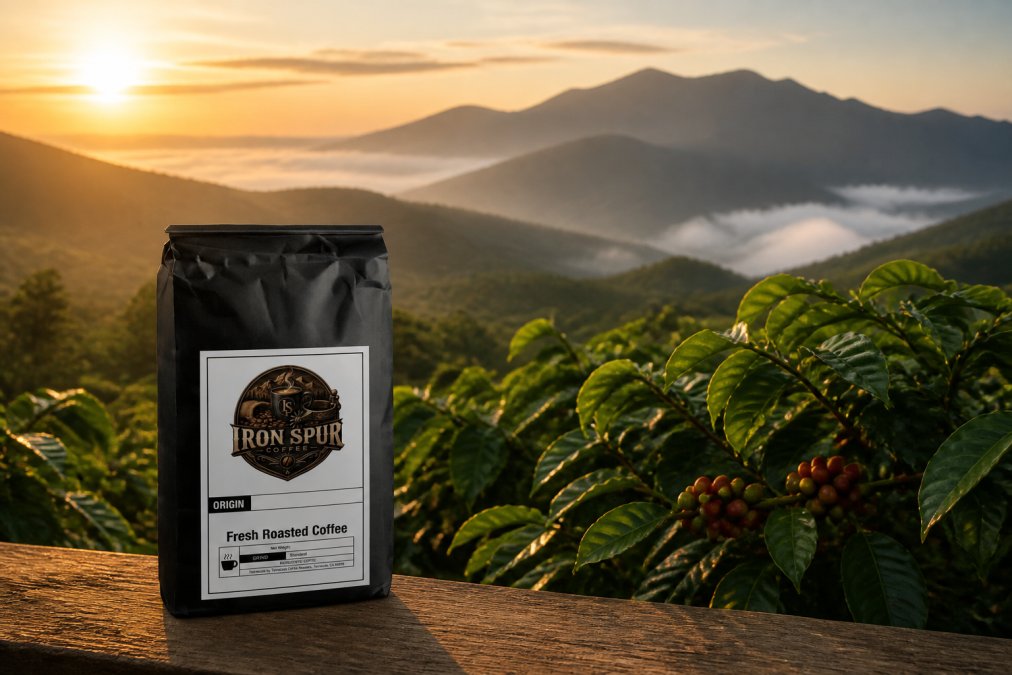
Two coffee plants of the same species grown at different altitudes taste completely different. Higher altitude means slower maturation, which means the bean develops more complexity. Beans grown at 2,000 meters have more time to develop sugars and acids than beans grown at 500 meters. That extra development time becomes flavor.
Origin-specific coffees showcase this principle. Ethiopian natural-process beans taste fruity and floral because of altitude, soil, and processing. Kenyan washed beans taste bright and citrus-forward because of volcanic soil and washing. Sumatran beans taste earthy and full-bodied because of wet climate and semi-washed processing.

Altitude and Climate Impact
Altitude is the single strongest predictor of coffee flavor complexity. Beans grown above 1,800 meters develop more slowly, forcing the plant to invest more in flavor compounds. Climate patterns matter equally. A region with distinct wet and dry seasons produces different beans than one with consistent rainfall.
Processing Methods and Bean Development
How the bean is processed after harvest determines which flavor compounds remain in the final cup. Washed process removes the fruit immediately, leaving the bean clean and allowing terroir to shine through clearly. Natural process leaves the fruit on the bean to dry, allowing it to absorb sugars from the fruit, producing fruitier, more complex beans. Honey process splits the difference: the fruit is partially removed, and the bean dries with some sticky fruit attached.
Iron Spur Coffee's Ethiopia Natural exemplifies this principle. The natural process allows the fruity, floral character of Ethiopian beans to develop fully, resulting in tasting notes of milk chocolate, fruity sweetness, and caramel.
What Makes Coffee Taste Bitter and How Roasting Changes That
Bitterness in coffee comes from over-extraction during brewing and over-roasting during roasting. Commercial coffee leans into bitterness because it masks defects. A dark roast hides stale, poorly stored, or low-quality beans under char and bitterness.
Specialty coffee approaches bitterness differently. The roast highlights sweetness and complexity, not problems. This requires better beans and precise roasting.
The roast profile determines which flavor compounds develop. Light roasts preserve origin character and acidity. Medium roasts balance origin character with roast flavor. Dark roasts emphasize roast flavors but risk pushing into bitterness if taken too far.
Thermal mapping, the roasting technique Iron Spur Coffee uses, prevents bitterness from uneven heat. Precision roasters monitor bean temperature directly, adjusting heat input moment by moment. This ensures every bean reaches the same development level, eliminating burnt, harsh notes.
A precisely roasted medium-dark bean tastes like dark chocolate and molasses. An imprecisely roasted bean tastes like ash and char. The same roast level, different execution, completely different cup.
The Role of Freshness and Degassing in Flavor
Freshness is where specialty coffee's advantage becomes undeniable. Coffee is most flavorful in the first two to four weeks after roasting, when beans actively degas, releasing carbon dioxide created during the roast.
Most commercial coffee is weeks or months old by the time it reaches your cup. The degassing is complete. Volatile flavor compounds have oxidized. What remains is flat, one-dimensional taste.
Specialty roasters roast to order. Iron Spur Coffee roasts your beans days before they ship, not months before reaching a store shelf. Your beans arrive in the optimal freshness window, with degassing still happening and flavor still developing.
Discover Iron Spur Coffee Today →
Freshness matters for brewing too. Fresher beans release more CO2 during brewing, affecting extraction and flavor clarity. Stale beans don't release enough gas, changing how water flows through grounds and how flavors dissolve into the cup.
Brewing Variables: Grind, Water Chemistry, and Extraction
Specialty coffee's complexity only emerges if you brew it correctly. Three variables control extraction: grind size, water temperature, and brew time.
Grind consistency is critical. Uneven grinds mean uneven extraction: fine particles over-extract and taste bitter, while larger particles under-extract and taste sour. A burr grinder produces uniform particles. Consistency costs more upfront but transforms the cup.
Water temperature affects extraction speed. The optimal range is 195-205°F. Too hot and you over-extract, pulling bitter compounds. Too cool and you under-extract, leaving behind sweetness and complexity.
Water chemistry is the variable most coffee drinkers ignore. Water that's too soft doesn't dissolve coffee's soluble compounds efficiently. Water that's too hard masks flavor. Specialty coffee professionals measure water hardness and adjust accordingly.
Brew ratio, the proportion of coffee to water, determines strength and flavor balance. A standard ratio is 1:16 (one part coffee to sixteen parts water). Adjusting the ratio lets you control strength without changing extraction.
How to Identify Specialty Coffee Flavor Notes
Tasting specialty coffee is a learned skill. Specialty coffee's flavor profile is more complex than commercial coffee because specialty roasting preserves the origin's character. A Kenya coffee has bright acidity and citrus notes. A Sumatra coffee has earthy, full-bodied character. A natural-processed Ethiopian has fruity, floral complexity.
Learning to identify these notes requires deliberate tasting. Hold the coffee in your mouth for a moment. Notice the mouthfeel: is it light and tea-like, or heavy and syrupy? Notice the aftertaste: does it linger cleanly, or fade abruptly? Notice the flavor progression: do new notes emerge as the coffee cools?
The acidity in specialty coffee tastes bright or crisp, not sour or sharp. Sweetness comes from the coffee itself, not added sugar. Body, the weight and texture, varies by origin and processing. Washed coffees tend toward lighter body. Natural and honey-processed coffees tend toward heavier body.
| Flavor Component | What It Means | How to Notice It |
|---|---|---|
| Acidity | Bright, crisp sensation; not sourness | Hold in mouth; notice the clean sensation |
| Body | Weight and texture of the coffee | Compare to tea (light) or syrup (heavy) |
| Aftertaste | Flavor that lingers after swallowing | Wait 10 seconds; notice what remains |
| Sweetness | Natural sugar from roasting | Taste without adding sugar |
| Clarity | How distinct the flavor notes are | Notice if flavors are sharp or blended |
Sensory Training for Beginners: Developing Your Palate
Developing your palate is straightforward: taste deliberately, take notes, and repeat.
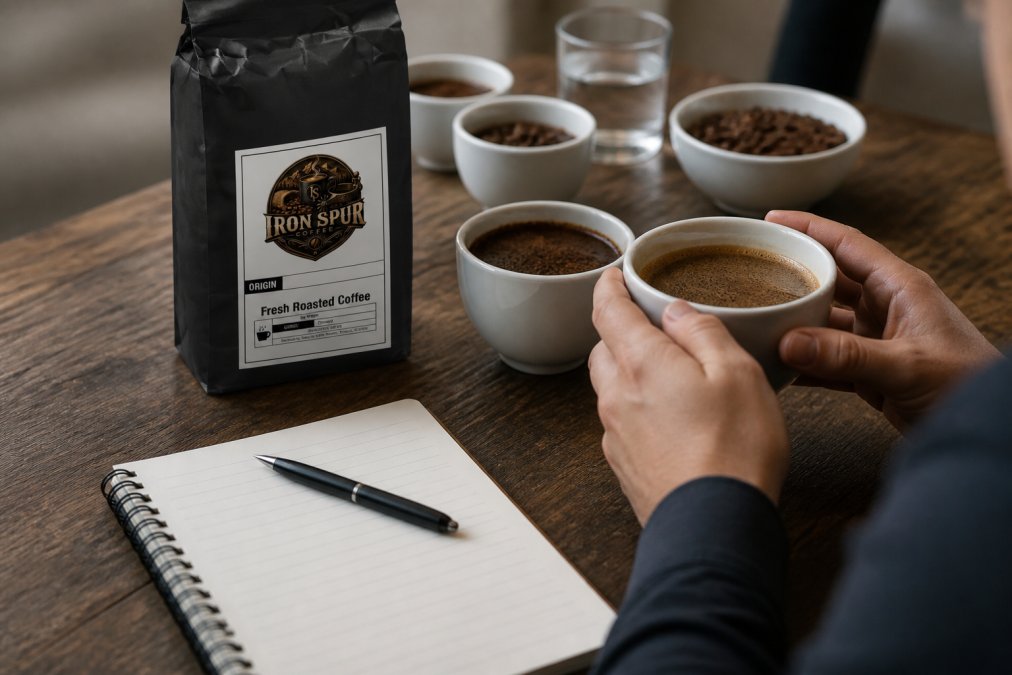
Start by tasting two different coffees side by side, brewed the same way. The differences will be obvious. One might taste brighter, one heavier. One fruity, one chocolatey. Write down what you notice.
Next, taste the same coffee over time. Brew a cup, taste it hot. Wait for it to cool to room temperature, then taste it again. Specialty coffees reveal different notes at different temperatures. Commercial coffee tastes the same throughout, a sign of its flatness.
Taste with intention. Instead of asking "Do I like this?" ask "What do I taste?" Notice the progression from first sip to aftertaste. Notice how flavor changes as the coffee cools. Your nose contributes significantly to flavor perception; volatile compounds you smell also appear in the taste.
As you taste more specialty coffee, your taste buds become more sensitive to subtle variations. Iron Spur Coffee's single-origin offerings are ideal for palate training because each has distinct character. The Kenya tastes bright and citrus-forward. The Tanzania tastes floral with stone fruit notes. The Sumatra tastes earthy and full. Tasting them in sequence trains your palate to recognize these distinct profiles.
Specialty coffee tastes different because every decision in its journey, from altitude to processing to roasting to freshness, compounds into flavor. Commercial coffee prioritizes consistency and cost. Specialty coffee prioritizes complexity and clarity. If you've never experienced the difference, a single bag of freshly roasted, single-origin specialty coffee will make it obvious. The Specialty Coffee Association's cupping standards define quality metrics that separate specialty from commodity. Iron Spur Coffee applies these standards to every batch, using thermal mapping to eliminate bitterness and roasting to order to preserve freshness. Your coffee foundation determines everything that follows. Get started with Iron Spur Coffee and experience why specialty coffee tastes different.
Frequently Asked Questions
What is the difference between specialty coffee and commercial grade coffee?
Specialty coffee comes from single-origin farms with cupping scores above 80 points, emphasizing distinct flavor profiles and terroir. Commercial coffee blends lower-quality beans from multiple origins, prioritizing consistency and cost over flavor complexity. Specialty beans are roasted to highlight their unique characteristics, acidity, sweetness, mouthfeel, while commercial roasting often masks poor bean quality with dark roasts that produce bitter, ashy notes. The difference becomes clear when you compare a specialty Ethiopian Natural with its fruity, caramel notes to a generic grocery-store blend.
Why does specialty coffee often have fruity or floral notes?
Fruity and floral notes come from the bean's origin, altitude, and processing method. High-elevation farms in regions like Ethiopia and Kenya produce beans with higher acidity and more complex sugars. The natural or honey processing methods, where fruit stays on the bean longer, increase fruit-forward flavor compounds. Light to medium roasts preserve these delicate notes, while dark roasting destroys them. When you taste a Kenya single-origin with bright acidity and citrus notes, you're experiencing the terroir and processing method working together to create those flavors.
How does the roasting process change the flavor profile of specialty beans?
Roasting develops flavor through heat, transforming green beans' chemical compounds into the tastes you experience. Light roasts preserve origin flavors and acidity, revealing fruity or floral notes. Medium roasts balance origin character with roasted sweetness, showing chocolate and caramel notes. Dark roasts emphasize body and bitterness, often masking origin flavors. Precision thermal mapping, used in specialty roasting, ensures even heat distribution, preventing scorching and bitter compounds. This is why specialty roasters roast to order: freshly roasted beans deliver maximum sweetness and complexity before degassing reduces those volatile flavor compounds over time.
Does freshness really affect how specialty coffee tastes?
Yes, freshness directly impacts flavor clarity and aroma. Specialty beans reach peak flavor 5-14 days after roasting, once degassing stabilizes. Before that window, CO2 release can make brewing unpredictable. After 3-4 weeks, oxidation flattens flavor notes and reduces brightness. Stale coffee, whether specialty or commercial, tastes flat, bitter, or cardboard-like because volatile aromatic compounds have dissipated. Roasting to order ensures your beans arrive in their optimal flavor window, which is why specialty roasters prioritize speed and freshness over long shelf stability.
How can I tell if a coffee is truly specialty grade?
Look for three markers: a cupping score (80+ points indicates specialty grade), single-origin designation with specific farm or region details, and roast date on the bag. Specialty roasters publish tasting notes based on sensory analysis and often list altitude and processing method. Avoid bags labeled only 'medium roast' or 'dark roast' with no origin information, those are commodity blends. Ask the roaster about their sourcing, roasting method, and flavor profile. Iron Spur Coffee's single-origin offerings, like Tanzania with its pear and floral notes, show the transparency and specificity that define specialty coffee.
What brewing mistakes destroy the flavor of specialty coffee?
Common mistakes include using water that's too hot (above 205°F), which extracts bitter compounds; grinding too fine, which over-extracts and creates astringency; and using water with poor mineral content, which reduces extraction yield. Specialty coffee requires precision: water temperature between 195-205°F, grind consistency matched to your brewing method, and a brew ratio of 1:16 (one part coffee to 16 parts water) as a starting point. Even the best beans, like Ethiopia Natural with its milk chocolate and fruity notes, will taste harsh or thin if brewing variables aren't controlled. Water chemistry matters too: distilled water under-extracts, while hard water can over-extract.
Why does my specialty coffee taste different each time I brew it?
Variables like water temperature fluctuation, inconsistent grind size, and brewing time all shift the extraction yield, the amount of soluble compounds pulled from the beans. Even small changes affect flavor balance. If your water temperature drops mid-brew, you'll under-extract and taste sour acidity. If your grind is too coarse one day and fine the next, one cup will taste thin and the other bitter. Degassing also plays a role: beans taste different day-to-day as CO2 release stabilizes. To achieve consistency, use a gooseneck kettle for temperature control, a burr grinder for uniform grind, and measure your coffee and water by weight. Specialty coffee rewards precision.
This article was written using GrandRanker