

Small Batch Roasted Coffee: 7 Key Benefits
Table of Contents
- What Small Batch Roasted Coffee Actually Is
- Flavor Clarity and Origin Character Come Through
- Precision Temperature Control Eliminates Bitterness
- The Coffee Roast Date Importance for Maximum Freshness
- Small Batch vs Commercial Coffee Roasting: What Changes
- How to Store Small Batch Coffee Beans for Peak Performance
- Sustainability and Waste Reduction at Scale
- Conclusion
Last Updated: August 15, 2026
What Small Batch Roasted Coffee Actually Is
Small batch roasted coffee refers to coffee beans roasted in limited quantities, typically 5-50 pounds per batch, using precision temperature control and careful monitoring throughout the roasting process. Unlike industrial roasting operations that process hundreds of pounds simultaneously, small batch roasting allows roastmasters to adjust heat, airflow, and timing in real-time based on how the beans respond.
At Iron Spur Coffee, small batch roasting serves as the foundation for delivering maximum flavor and freshness. By roasting to order in controlled batches, the team ensures that each bag reaches you with the complex sweetness and deep flavor notes that get lost in mass-produced alternatives sitting on shelves for weeks.
The specialty-grade, high-elevation beans used in small batch roasting start with inherent advantage. High-altitude growing conditions create denser beans with more developed sugars and acids. When roasted in small batches with precision thermal mapping, these beans express their origin character fully, something that gets flattened out in high-volume roasting where speed takes priority over nuance.
Flavor Clarity and Origin Character Come Through
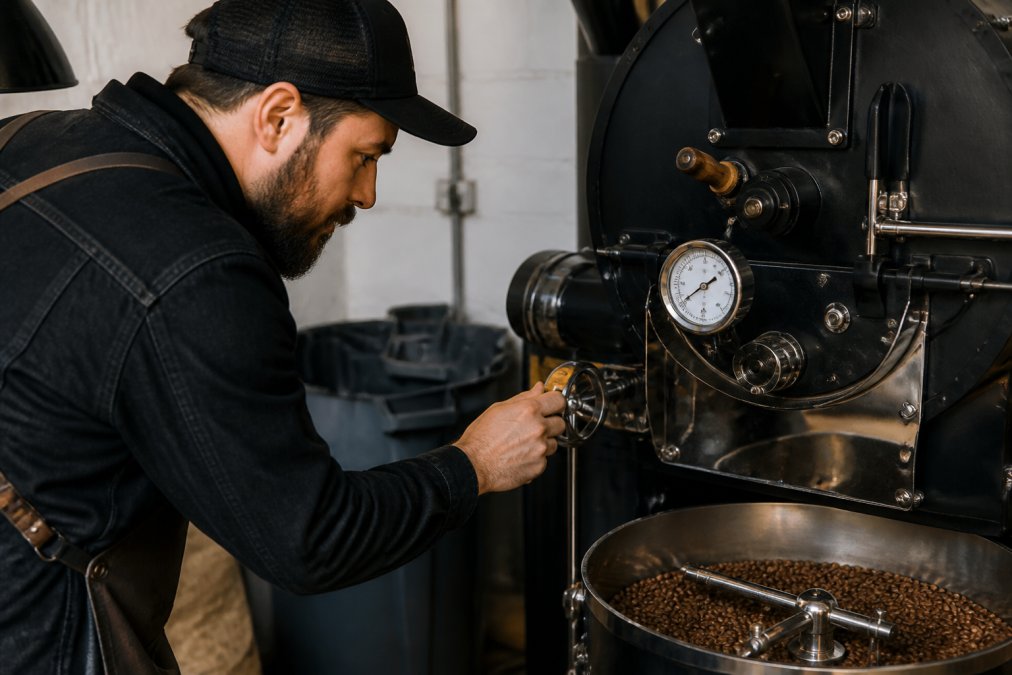
The most immediate benefit of small batch roasted coffee is flavor clarity, the ability to taste exactly what the coffee is supposed to taste like without harsh, bitter notes that mask origin character. When beans are roasted in smaller quantities, the roastmaster can track the roast curve with precision, catching the exact moment when the Maillard reaction reaches its peak before bitterness develops.
Origin character refers to the natural flavor notes from where the coffee was grown: soil composition, altitude, rainfall patterns, and processing method all contribute to the bean's inherent profile. A Colombian coffee from Medellin might express notes of dried orange and berry, while a Balinese coffee from Kintamani carries dark chocolate and molasses characteristics. These distinct profiles only emerge when the roasting process respects the bean's structure rather than pushing it into uniformity.
In commercial roasting, beans from different origins often get roasted to the same profile because adjusting for individual characteristics slows production. The result is a flattened, one-note cup. Small batch roasting eliminates this by treating each origin with the attention it deserves, dialing in the exact roast profile that best expresses each coffee's potential.
Precision Temperature Control Eliminates Bitterness
Bitterness in coffee comes from over-roasting, uneven heat distribution, or roasting too fast. Precision temperature control, the ability to manage exactly how hot the beans get and for how long, is what separates a clean, sweet cup from a bitter one.
Small batch roasting equipment allows for thermal mapping, where roastmasters monitor bean temperature throughout the roast and adjust heat input continuously. This prevents hot spots where some beans roast faster than others, ensuring even development across the entire batch. The roastmaster reads the beans in real-time, listening to audible cues, watching color development, and adjusting airflow and heat to keep the roast on the intended curve. This hands-on approach works only in small batches where one person can actually monitor and respond.
Commercial roasting removes the roastmaster from this equation. Machines run pre-programmed profiles with minimal intervention. The profile might be well-designed, but it can't adapt to variations in bean density, moisture content, or ambient conditions. Iron Spur Coffee's commitment to precision small batch roasting directly addresses this problem, using thermal mapping and continuous monitoring to eliminate the bitterness that makes coffee undrinkable without cream or sugar.
The Coffee Roast Date Importance for Maximum Freshness
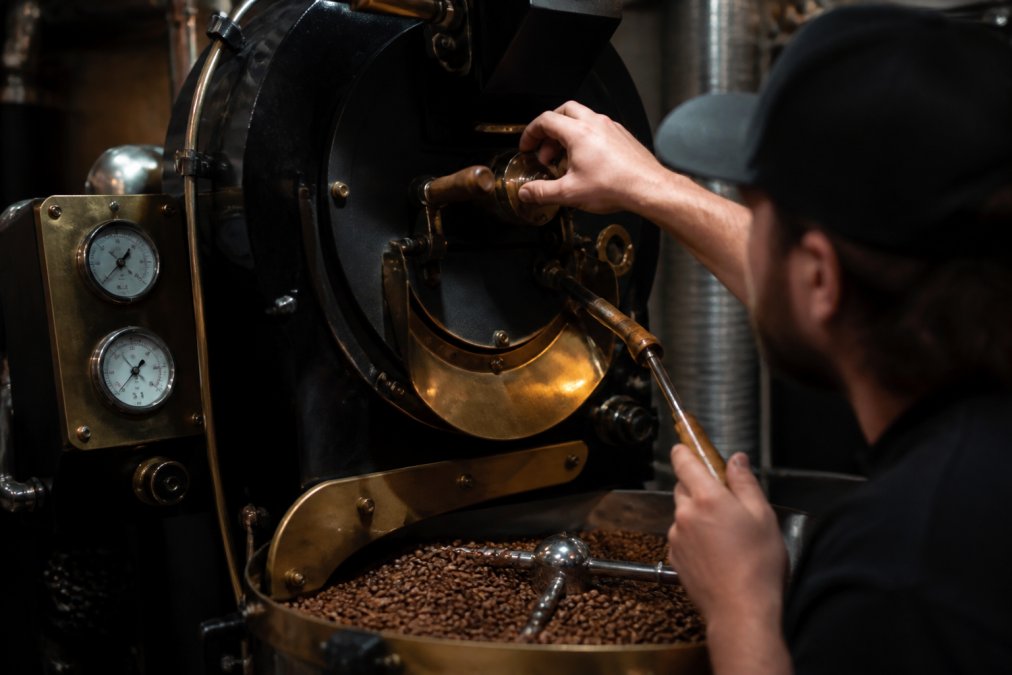
The roast date is the single most important indicator of coffee freshness, yet it's almost never printed on bags from commercial producers. This absence isn't accidental, commercial coffee sits in warehouses and on store shelves for weeks or months before reaching you.
Coffee begins to degrade immediately after roasting. Within the first 24-48 hours, the beans release carbon dioxide, and volatile aromatic compounds that create flavor start to oxidize. After about two weeks, most aromatic complexity has faded. After a month, the coffee tastes flat and stale, no matter how well it was roasted.
Small batch roasted coffee addresses this by eliminating the lag time between roasting and consumption. When you order from a roaster that practices roasting to order, your coffee is roasted after you place your order. This means it arrives at your door at peak freshness, typically within 3-7 days of roasting, the optimal window for flavor and aroma.
Looking for the roast date on a bag tells you how seriously a roaster takes freshness. If the date isn't printed, the roaster is hiding something. If the date is more than three weeks old, the coffee has already lost significant flavor.
Small Batch vs Commercial Coffee Roasting: What Changes
Small batch roasting typically processes 5-50 pounds per roast cycle, allowing one roastmaster to monitor the entire process and respond to how the specific beans are developing. The roast takes 12-18 minutes, with the roastmaster actively engaged throughout. After roasting, beans cool and rest for 24-48 hours, then ship fresh to customers.
Commercial roasting processes hundreds or thousands of pounds per cycle using large drum roasters. The roast is automated, following a pre-programmed curve with minimal human intervention. Speed is the priority. After roasting, beans are cooled rapidly and often packaged immediately, then stored in warehouses. By the time they reach store shelves, they've already lost significant freshness.
| Aspect | Small Batch | Commercial |
|---|---|---|
| Batch Size | 5-50 lbs | 500+ lbs |
| Monitoring | Real-time, hands-on | Automated, minimal adjustment |
| Roast Time | 12-18 minutes | 8-12 minutes |
| Heat Control | Precision thermal mapping | Standard curve application |
| Post-Roast Rest | 24-48 hours before shipping | Immediate packaging |
| Freshness at Purchase | 3-7 days old | 4-12 weeks old |
| Origin Expression | Tailored to bean characteristics | Standardized approach |
| Consistency | High quality, batch variation acceptable | Standardized, flavor flattened |
| Cost | Higher | Lower |
The key difference comes down to thermal mass and heat transfer. Small batch roasters respond quickly to adjustments. Commercial roasters have high thermal mass, so adjustments are blunt and slow, which is why they rely on pre-programmed profiles. For flavor development, this matters enormously. The roastmaster can slow down or speed up the roast to keep beans in the Maillard reaction window for exactly the right amount of time, while commercial roasting moves beans through at a fixed pace.
Quality control is another major difference. Small batch roasters cup (taste-test) every batch and can adjust future roasts based on results. Commercial roasters might cup-test occasionally, but they can't adjust individual batches, so some taste great while others taste mediocre, yet all ship because stopping production isn't economically viable.
Discover Iron Spur Coffee Today →
How to Store Small Batch Coffee Beans for Peak Performance
Once you have fresh, expertly roasted small batch coffee, storage becomes critical to maintaining that quality. The enemy of coffee freshness is exposure to oxygen, light, heat, and moisture. Oxygen causes oxidation, which degrades aromatic compounds. Light accelerates this process. Heat speeds up chemical degradation. Moisture can cause mold and off-flavors.
The best container is an airtight, opaque container kept in a cool, dark place. Glass jars with airtight seals work well, as do specialized coffee storage containers with one-way valves. Avoid clear containers that expose beans to light and paper bags that don't seal completely.
Room temperature (around 65-70°F) is ideal. Don't refrigerate or freeze coffee beans, temperature fluctuations cause condensation, which introduces moisture and damages the beans. A cool pantry or cabinet away from the stove is perfect.
Buy only what you'll use within 2-3 weeks. Coffee peaks in flavor 5-10 days after roasting and begins to noticeably decline after about three weeks. Grind your beans immediately before brewing, once ground, coffee loses freshness rapidly as ground coffee exposed to air begins staling within minutes. Whole beans protect the interior from oxidation, preserving flavor much longer.
For the best results with small batch coffee, use it within two weeks of the roast date. After that, it's still drinkable but noticeably less vibrant.
Sustainability and Waste Reduction at Scale
Small batch roasting inherently produces less waste and environmental impact than commercial roasting. Commercial roasting generates significant chaff waste, the papery skin that comes off beans during roasting. A large roaster processing 1,000 pounds daily produces 150-200 pounds of chaff. Small batch roasters produce proportionally less chaff waste because they roast smaller volumes.
Energy consumption differs substantially. Commercial roasters run continuously throughout the day, keeping equipment at operating temperature between batches. A small batch roaster heats up for each roast and cools down after, using energy only when actively roasting. Over a year, this difference compounds significantly.
Water usage in cooling is another factor. Commercial roasters often use water-cooled systems that consume gallons per roast cycle. Small batch roasters typically use air cooling, which requires no water.
Small batch roasting also reduces waste in the supply chain. Roasting to order, as Iron Spur Coffee practices, means every bean roasted gets used at peak freshness, with minimal waste. A customer who receives stale commercial coffee and throws it away has generated more waste than a customer who receives fresh small batch coffee and uses it all.
Sourcing from specialty-grade, high-elevation beans also supports sustainability. These beans typically come from smaller farms and cooperatives that practice more careful land stewardship. Small batch roasters tend to build direct relationships with these growers, creating incentives for sustainable farming practices.
Small batch roasted coffee delivers what mass-produced alternatives cannot: flavor clarity that reflects the bean's origin, freshness that makes a measurable difference in your cup, and the precision roasting that eliminates bitterness. If you've settled for flat, stale, bitter coffee from commercial roasters, the difference a properly roasted, fresh small batch will make is dramatic.

Iron Spur Coffee's precision small batch roasting with thermal mapping ensures that every batch achieves complex sweetness and deep flavor notes without harsh bitterness. Roasted to order using specialty-grade, high-elevation beans, each bag arrives at peak freshness with the structural elegance and flavor clarity that only small batch roasting can deliver. Discover Iron Spur Coffee Today and experience what coffee tastes like when roasted with discipline and precision.
Frequently Asked Questions
What does small batch roasted coffee mean?
Small batch roasted coffee is roasted in smaller quantities, typically under 10-15 pounds per roast, allowing precise control over heat transfer and roast curve. This contrasts with commercial roasting, which processes hundreds of pounds at once. The smaller thermal mass means the roastmaster can adjust temperature modulation in real time, developing complex sweetness and eliminating the flat, bitter notes common in industrial roasting. Roasting to order ensures the beans reach you at peak freshness.
How important is the coffee roast date when buying small batch beans?
The roast date is critical. Small batch coffee begins degassing immediately after roasting and reaches optimal flavor 3-7 days post-roast, then gradually loses aroma and clarity over weeks. Commercial coffee often sits in warehouses for months, losing origin character. When you buy small batch roasted coffee with a visible roast date, you're guaranteed freshness. Check the label for the roast date, avoid any bag without one, as it signals the roaster doesn't prioritize freshness or quality control.
Is small batch coffee actually better than mass-produced coffee?
Yes, measurably. Small batch roasting allows precision control over the Maillard reaction and bean density variables that commercial roasters cannot manage with large thermal loads. This results in flavor clarity where origin character shines through, you taste the terroir, not roast bitterness. Quality control is tighter because every batch is monitored individually. Commercial roasting prioritizes speed and volume, not taste development. The difference becomes obvious within the first two weeks of opening a bag.
How should I store small batch coffee beans to keep them fresh longer?
Store beans in an airtight container away from heat, light, and moisture. Keep them at room temperature, never in the freezer, which damages cell structure. Whole beans stay fresh 2-3 weeks post-roast when stored correctly; ground coffee degrades in 1-2 days. Buy only what you'll use in that window. Iron Spur Coffee's roast-to-order model ensures your beans arrive fresh and peak during your consumption window. Check the roast date on arrival and grind just before brewing for maximum aroma profile and complexity.
This article was written using GrandRanker