

Why Specialty Coffee Tastes Better: A Complete Guide
Table of Contents
- What Makes Specialty Coffee Taste Better
- Specialty Coffee vs Commercial Coffee: The Core Differences
- How Origin, Altitude, and Terroir Shape Flavor
- Precision Roasting and the Elimination of Bitterness
- Freshness and Roast Dates: Why Timing Matters
- How to Brew Specialty Coffee at Home for Maximum Flavor
- Understanding Coffee Flavor Notes Explained
- The Home-to-Cafe Equipment Gap
- Frequently Asked Questions
Last Updated: September 1, 2026
What Makes Specialty Coffee Taste Better
Specialty coffee tastes better because it's sourced, roasted, and brewed with precision that commercial-grade coffee never receives. Specialty-grade beans are evaluated on a 100-point cupping scale and must score 80 or higher, while commercial coffee has no such standard (sca.coffee). Specialty coffee comes from high-elevation estate environments where altitude, soil composition, and processing methods directly influence flavor complexity.
The real difference comes down to intentionality. Specialty coffee roasters use precision thermal mapping to control roast profiles at the bean level, eliminating the bitterness and numbing effect that characterize poorly roasted commercial coffee. Iron Spur Coffee, for example, roasts to order using this approach, ensuring maximum flavor and freshness arrive at your door rather than sitting in a warehouse for months.

Specialty Coffee vs Commercial Coffee: The Core Differences
Specialty coffee and commercial coffee operate under entirely different frameworks.
Sourcing and grading: Specialty coffee begins with beans that score 80 points or higher on the specialty grade cupping scale, with growers often known by name. Commercial coffee is purchased by weight from bulk suppliers with no individual evaluation.
Processing methods: Specialty coffee employs three primary processing approaches, washed process, natural process, and honey process, each selected to highlight specific flavor characteristics. Commercial coffee uses whatever processing is cheapest and fastest.
Roast profile: Specialty roasters develop roast profiles specific to each origin using thermal mapping to monitor bean temperature and development. Commercial roasters use time-temperature curves optimized for volume, not flavor.
Freshness standards: Specialty coffee is roasted in small batches and shipped quickly. Iron Spur Coffee roasts to order, meaning your beans are roasted days before arrival. Commercial coffee is roasted weeks or months before purchase.
The practical outcome: specialty coffee delivers distinct flavor notes tied to origin. Commercial coffee tastes like very little at all.
How Origin, Altitude, and Terroir Shape Flavor
Origin matters more than most coffee drinkers realize. The same coffee plant grown at different elevations, in different soil types, and under different climate conditions produces dramatically different flavor profiles. This is terroir, the environmental factors that shape what ends up in your cup.
Altitude is the primary driver. High-elevation beans grow slower, develop denser cellular structure, and accumulate more sugars and acids. A coffee grown at 1,200 meters tastes fundamentally different from one grown at 1,900 meters, even if they're the same variety from the same region.
Iron Spur Coffee's Bali Blue from Kintamani grows at 1,200-1,600 meters in volcanic loam soil, producing dark chocolate, molasses, and brown sugar notes. The Ethiopia Natural from Sidama grows at 1,700-1,900 meters, delivering milk chocolate, fruity aromatics, and caramel. Same plant family, different elevations, completely different sensory experience.

Processing method amplifies these terroir differences. A natural process coffee emphasizes fruity, sweet aromatics. A washed process highlights acidity and origin clarity. A honey process creates balance between sweetness and acidity.
Precision Roasting and the Elimination of Bitterness
Most coffee tastes bitter because it's been roasted too dark, too fast, or without temperature control. Precision roasting eliminates this problem by managing the roast profile with thermal mapping, monitoring bean temperature in real time and adjusting heat and airflow to hit specific development targets.
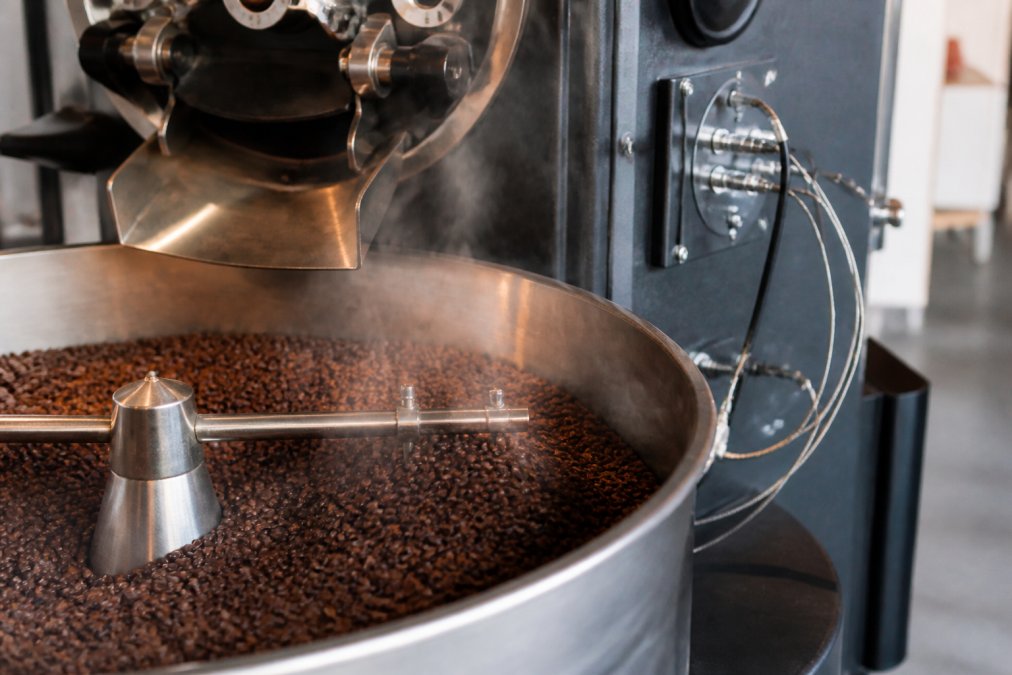
Commercial roasters use time-temperature curves optimized for consistency. Specialty roasters track the roast in real time, monitoring the first crack, development time, and the specific color and behavior that indicates completion. Different origins require different roast profiles.
Thermal mapping takes this further. By monitoring bean temperature rather than air temperature, roasters can account for variables like humidity, ambient temperature, and bean moisture content. This precision eliminates the numbing effect and develops the full range of flavor compounds.
Iron Spur Coffee uses precision thermal mapping in its small-batch roasting process. Each roast is monitored to ensure optimal development without crossing into bitterness.
Freshness and Roast Dates: Why Timing Matters
Freshness is where specialty coffee reveals its real advantage over commercial alternatives. A freshly roasted specialty coffee bean is a living system of volatile compounds, aromatics, acids, sugars, and oils that create flavor and aroma. These compounds are unstable and begin to degrade the moment the roast cools.
The roast date is your freshness baseline. A coffee roasted yesterday is at peak flavor. A coffee roasted three weeks ago has lost significant aromatics and complexity. A coffee roasted three months ago tastes flat and hollow. Commercial coffee is often roasted 6-12 months before purchase.
In the first 3-5 days after roasting, the coffee is still degassing. By day 7-10, the aromatics have fully developed and the coffee reaches its flavor peak. From day 10 to day 21, the coffee remains excellent. After day 21, the decline accelerates. By day 30, you're losing noticeable complexity.
Roasting to order is a competitive advantage. When Iron Spur Coffee roasts your order, the beans are roasted days before arrival. You're drinking coffee at peak flavor. Store opened bags in an airtight container away from heat and light for about two weeks.
How to Brew Specialty Coffee at Home for Maximum Flavor
Brewing specialty coffee at home is straightforward if you understand the variables. The goal is extraction, dissolving the soluble compounds from the coffee grounds into water. Too little extraction and the coffee tastes sour and thin. Too much extraction and it tastes bitter and harsh.
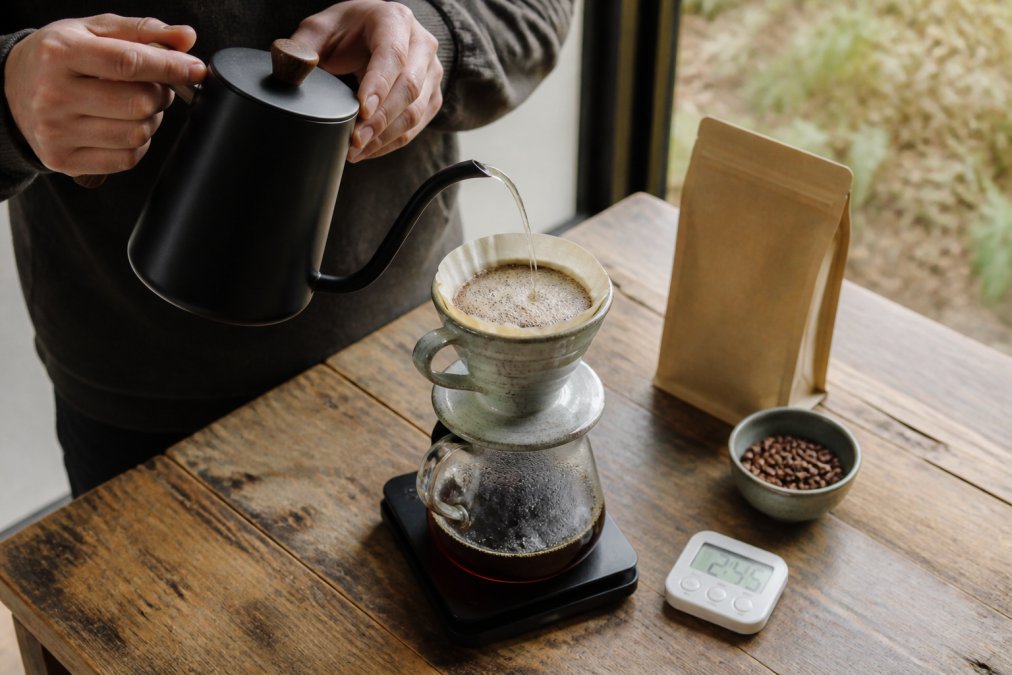
Start with the right equipment. A burr grinder (not a blade grinder) is essential, it produces uniform grind size, which is critical for even extraction. A digital scale ensures you're using the right coffee-to-water ratio. A gooseneck kettle helps with pour control. A timer is essential, as brewing time is a precision variable.
The basic ratio is 1:16 coffee to water by weight. If you use 30 grams of coffee, use 480 grams of water. Adjust from there: if the coffee tastes sour, increase the ratio to 1:17. If it tastes bitter, decrease the ratio to 1:15.
Discover Iron Spur Coffee Today →
Grind size depends on your brewing method. A French press requires a coarse grind. A pour-over requires a medium grind. An espresso machine requires a fine grind. Grind consistency matters more than grind size, all particles should be roughly the same size so they extract evenly.
Water quality is non-negotiable. Mineral content affects extraction. Filtered water with moderate mineral content produces the best results. Water temperature should be 195-205°F (sca.coffee). Boil water, let it cool for 30 seconds, then brew.
Water Chemistry and Its Impact on Extraction
Water chemistry directly determines how efficiently extraction happens. Specialty coffee extraction targets a total dissolved solids (TDS) of 1.25-1.45 percent in the final cup. This range produces balanced flavor, with sweetness, acidity, body, and complexity all present and in proportion.
Water with too few dissolved minerals extracts too fast, resulting in a sour, thin cup. Water with too many dissolved minerals can easily over-extract, resulting in a bitter cup. The sweet spot is water with moderate hardness, around 50-100 parts per million (ppm) of dissolved minerals. Most filtered water falls in this range.
This detail separates a good cup of specialty coffee from an excellent one. Two people brewing the same beans with the same equipment but different water will get noticeably different results.
Grind Consistency and Brewing Variables
Grind consistency is the single most important variable you control at home. If your grinder produces particles of wildly different sizes, some will extract in 2 minutes while others need 4 minutes. A burr grinder produces uniform particles; a blade grinder does not.
Once you have a burr grinder, dial in your grind size for your brewing method:
- French press: coarse grind, 4-minute brew time, full immersion
- Pour-over: medium grind, 2.5-3 minute brew time, controlled pouring
- AeroPress: medium-fine grind, 1-2 minute brew time, immersion then pressure
- Espresso: fine grind, 25-30 second brew time, high pressure
Brewing time is the variable you adjust to hit your target extraction. If your coffee tastes sour, increase brew time by 15-30 seconds. If it tastes bitter, decrease brew time by 15-30 seconds.
Understanding Coffee Flavor Notes Explained
Specialty coffee tasting notes describe the aromatics and flavor compounds you actually taste. When a bag says "dark chocolate, molasses, brown sugar," these aren't marketing language, they're the specific sensory attributes present in that coffee.
Flavor notes come from the origin, processing method, and roast profile. A washed-process Ethiopian coffee tastes fruity and floral because the washed process highlights acidity and the high altitude produces complex sugars. A natural-process coffee from the same region tastes sweeter and more fruit-forward because the natural process emphasizes sweetness and body.
Learning to taste these notes requires practice. When you brew a cup, smell the grounds before brewing. Smell the brewed coffee. Take a small sip, hold it in your mouth for a second, then swallow. Notice the initial flavor, the development, the body, and the aftertaste.
Acidity in specialty coffee is not sourness, it's brightness and complexity. A coffee with bright acidity tastes clean and crisp. Sweetness comes from sugars naturally caramelized during roasting. Body is the weight and texture of the coffee in your mouth. A French press produces a heavier body because the metal filter allows oils to pass through. A pour-over produces a lighter body because the paper filter removes oils.
The Home-to-Cafe Equipment Gap
The equipment gap between home and cafe is real and explains why your coffee at home sometimes tastes different from the same coffee at a specialty cafe. Cafes have advantages in consistency, precision, and scale that home brewing can't fully replicate.
Espresso machines are the most obvious gap. A quality espresso machine costs $300-2,000 and requires training to use properly. Home espresso machines are cheaper but less consistent. Grinders are the second gap. Specialty cafes use commercial grinders ($500-2,000) that produce perfectly uniform particles. Home grinders ($30-300) are good but not perfect. Water systems are the third gap. Cafes use filtered water systems that maintain consistent mineral content.
A home setup with a burr grinder, a scale, a gooseneck kettle, and a pour-over dripper produces excellent specialty coffee for $100-150 total investment. You'll get 80-90 percent of cafe-level consistency. Iron Spur Coffee is designed for home brewing. The beans are roasted to order for maximum freshness, the flavor profiles are distinct enough to taste the difference between origins, and the roast profiles are optimized for standard home brewing methods.
The difference between specialty coffee and what most people drink comes down to intention. Commercial coffee prioritizes shelf stability and cost. Specialty coffee prioritizes flavor. When you brew Iron Spur Coffee, roasted to order with precision thermal mapping to eliminate bitterness, you're tasting the result of that different priority. The complex sweetness, the deep flavor notes, the absence of that harsh numbing effect, these aren't accidents. They're the direct result of sourcing high-elevation specialty-grade beans, processing them with care, roasting them with precision, and getting them to you fresh. Discover Iron Spur Coffee Today and taste the difference that disciplined roasting and maximum freshness deliver to your morning routine.
Frequently Asked Questions
How is specialty coffee different from commercial grade coffee?
Specialty coffee is graded on a 100-point cupping scale and scores 80 points or higher, while commercial coffee often scores below 70. Specialty-grade beans come from single origins at high elevations, use selective harvesting, and undergo precise processing. Commercial coffee blends lower-grade beans and prioritizes volume over flavor complexity. The difference shows in tasting profiles: specialty coffee delivers distinct flavor notes like chocolate, citrus, or floral aromatics, while commercial coffee tends toward generic, bitter profiles.
Why does specialty coffee have more complex flavor profiles?
Complex flavors develop through altitude, terroir, processing methods, and roast precision. High-elevation beans (1,200-1,900 meters) grow slower, developing denser sugars and more nuanced aromatics. Processing methods like washed, natural, or honey process create different sensory attributes. Precision roasting with thermal mapping controls the Maillard reaction, preserving sweetness and acidity instead of creating burnt, numbing flavors. Commercial roasting uses high-speed methods that destroy delicate flavor compounds, leaving only bitterness.
What is the 15-15-15 rule for specialty coffee?
The 15-15-15 rule refers to optimal brewing: 15 grams of coffee, 15 seconds bloom time, and 15:1 water-to-coffee ratio. The bloom phase allows CO2 to escape and water to penetrate the grounds evenly, improving extraction yield. This controlled approach ensures balanced total dissolved solids (TDS) and prevents under- or over-extraction. Specialty coffee's complex flavor notes only emerge when brewing variables are precise; rushing or ignoring the bloom phase results in flat, bitter coffee regardless of bean quality.
How does high-elevation growing impact coffee taste?
High-altitude coffee farms (above 1,200 meters) produce beans with higher acidity, brighter flavor notes, and greater complexity. Cooler temperatures slow the ripening process, allowing sugars and acids to develop more fully within the coffee cherry. This creates the crisp, fruity, or floral characteristics prized in specialty coffee. Low-altitude commercial coffee grows faster and produces flatter, less interesting flavor profiles. Iron Spur's sourced beans, from Ethiopia's Sidama zone at 1,700-1,900 meters and Tanzania's Mbeya region at 1,200-1,900 meters, benefit directly from this elevation advantage.
Why does restaurant coffee taste so much better than mine at home?
Cafes achieve consistency through better water chemistry, precision equipment, and freshly roasted beans. They control water temperature, mineral content (total dissolved solids), and grind size precisely. Professional espresso machines extract under pressure, while home brewers often use inconsistent methods. Cafes also rotate inventory quickly, ensuring beans are within 2-4 weeks of roast. Roasted-to-order specialty coffee like Iron Spur bridges this gap by delivering freshly roasted beans directly to your door, eliminating the stale inventory problem that weakens most retail coffee.
Does precision roasting with thermal mapping actually eliminate bitterness?
Yes. Thermal mapping monitors bean temperature throughout roasting to prevent scorching and charring. Overheated beans develop numbing, bitter flavors from burnt compounds. Precision roasting controls the roast profile to reach desired color (measured on the Agtron scale) without overshooting. This preserves the sweetness and complex aromatics that distinguish specialty coffee. Commercial roasters prioritize speed over precision, resulting in uneven roasts that taste bitter. Iron Spur's small-batch approach with thermal mapping ensures each roast captures the bean's natural flavor potential.
Is specialty coffee healthier than standard commercial coffee?
Specialty coffee isn't inherently healthier, but it contains fewer potentially harmful compounds. Precision roasting avoids the charring that creates acrolein and other burn byproducts present in commercial coffee. Specialty-grade beans from reputable growers often follow sustainable, ethical sourcing practices with fewer pesticide residues. The higher antioxidant content in freshly roasted specialty coffee (before oxidation sets in) may offer marginal benefits. The real advantage is flavor and quality, not health claims. Choose specialty coffee for taste and craftsmanship, not as a health supplement.
This article was written using GrandRanker