

Why Does My Coffee Taste Bitter? Causes and Fixes
Table of Contents
- What Causes Bitter Coffee? The Core Problem Explained
- Over-Extracted Coffee vs Under-Extracted Coffee: Know the Difference
- Grind Size and Its Direct Effect on Bitter Coffee
- Ideal Water Temperature for Coffee Brewing
- Brew Time, Coffee-to-Water Ratio, and Roast Profile
- How to Clean Your Coffee Maker to Eliminate Bitter Taste
- Troubleshooting Bitter Coffee by Brew Method
- Conclusion
Last Updated: August 6, 2026
What Causes Bitter Coffee? The Core Problem Explained
Coffee bitterness comes from over-extraction: water pulls too many compounds from the grounds, capturing harsh flavors alongside the good ones. Sugars and fruit acids dissolve first, followed by bitter compounds. The goal is stopping extraction at the sweet spot before pulling astringent flavors that ruin the cup.
Over-extraction happens when your grind is too fine, water is too hot, brew time runs too long, or your coffee-to-water ratio is off. These variables interact, so a single mistake cascades into an unpleasant cup. The bitterness isn't a flaw in the bean, it's a flaw in the process.
Over-Extraction: The Main Culprit
Tannins are polyphenolic compounds that create a dry, astringent sensation. Chlorogenic acid breaks down during roasting into quinic acid and caffeic acid, both contributing sharp, bitter notes. At low concentrations, these compounds add complexity. Over-extracted, they dominate everything else.
According to the Specialty Coffee Association's brewing resources, extraction yield, the percentage of the coffee's total soluble mass dissolved into your cup, should fall within a specific window to taste balanced rather than bitter.
Over-Extracted Coffee vs Under-Extracted Coffee: Know the Difference
Over-extracted coffee tastes bitter, dry, and hollow with a harsh, lingering finish and very dark color.
Under-extracted coffee tastes sour, weak, and thin with sharp acidity and a finish that disappears too quickly.
Here's a quick diagnostic:
| Flavor Profile | Likely Cause | Primary Fix |
|---|---|---|
| Bitter, dry, harsh finish | Over-extraction | Coarser grind, lower temp, shorter brew time |
| Sour, thin, sharp acidity | Under-extraction | Finer grind, higher temp, longer brew time |
| Flat, papery, no complexity | Stale beans or dirty equipment | Fresh beans, clean machine |
| Bitter AND sour together | Uneven extraction / channeling | Consistent grind, better distribution |
Sourness sits at the front and sides of the tongue; bitterness registers at the back. If your coffee is sour, don't brew it longer, you'll trade one problem for another.
Grind Size and Its Direct Effect on Bitter Coffee
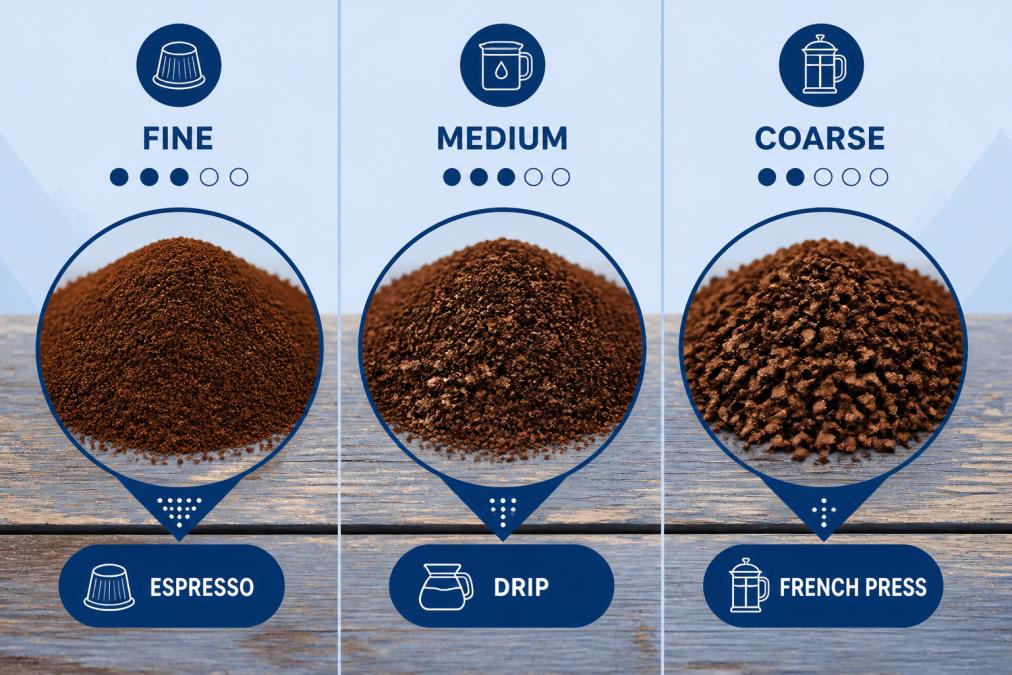
Grind size is the fastest variable to change when coffee tastes bitter. A grind that's too fine increases surface area exposed to water, accelerating extraction and pulling bitter compounds before you can stop them. Going coarser by one or two steps on a burr grinder often transforms a bitter cup into a balanced one.
Burr Grinder vs Blade Grinder: Why Consistency Matters
A burr grinder crushes beans between two abrasive surfaces, producing consistent-sized grounds. A blade grinder chops beans with a spinning blade, producing a chaotic mix of fine powder and large chunks. That inconsistency causes fine particles to over-extract and turn bitter while coarse chunks under-extract and turn sour, creating both problems in one cup.
Quick Grind Size Guide by Brew Method
| Brew Method | Grind Size | Visual Reference |
|---|---|---|
| Espresso | Extra fine | Fine salt |
| Moka pot | Fine | Table salt |
| Drip machine | Medium | Sand |
| Pour-over | Medium to medium-fine | Coarse sand |
| French press | Coarse | Breadcrumbs |
| Cold brew | Extra coarse | Raw sugar crystals |
Match the grind to the method, then adjust from there.
Ideal Water Temperature for Coffee Brewing
The ideal water temperature for coffee brewing is between 195°F and 205°F (90°C to 96°C), according to the National Coffee Association's brewing standards. Boiling water at 212°F is too hot for most brewing methods and a common cause of bitter coffee.
Superheated water extracts bitter compounds rapidly. Many home drip machines run too hot. If using boiling water in a French press or pour-over, let it sit off the heat for 30 to 45 seconds before pouring to drop the temperature into the ideal range.
Water that's too cool causes under-extraction, leaving you with a sour, thin cup. Temperature control matters in both directions.
Brew Time, Coffee-to-Water Ratio, and Roast Profile
Brew time and ratio work together to determine extraction yield. Getting one wrong while the other is correct still produces a bad cup.
Contact time, how long water stays in contact with grounds, determines extraction. Longer contact combined with a fine grind causes over-extraction and bitter aftertaste. A general starting ratio is 1:15 to 1:17 (coffee to water by weight). Going stronger than 1:12 without adjusting grind or time can push extraction into bitter territory.
Total dissolved solids (TDS) measures the concentration of dissolved coffee compounds in your cup. A well-extracted cup typically falls between 1.15% and 1.35% TDS. Inexpensive TDS meters provide objective data when troubleshooting bitter brews.
Dark Roast vs Light Roast: Which Brews More Bitter?
Dark roasts brew more bitter under identical conditions. Extended roasting breaks down more chlorogenic acid, creating higher concentrations of quinic acid and other bitter compounds. Dark roast beans also have less structural integrity and extract faster.
Light roasts are denser and require more heat and contact time to extract fully. Brew them like a dark roast and you'll get under-extraction. Brew a dark roast like a light roast and you'll get bitterness. If you switch roast levels, adjust your grind and temperature accordingly.
Discover Iron Spur Coffee Today →
How to Clean Your Coffee Maker to Eliminate Bitter Taste
Scale buildup, coffee oil residue, and old grounds cause persistent bitterness. Coffee oils oxidize quickly, and old residue corrupts the flavor profile before extraction begins.
Here's a practical cleaning protocol:
- Daily: Rinse the carafe, filter basket, and removable parts with hot water immediately after use.
- Weekly: Wash all removable components with dish soap and warm water.
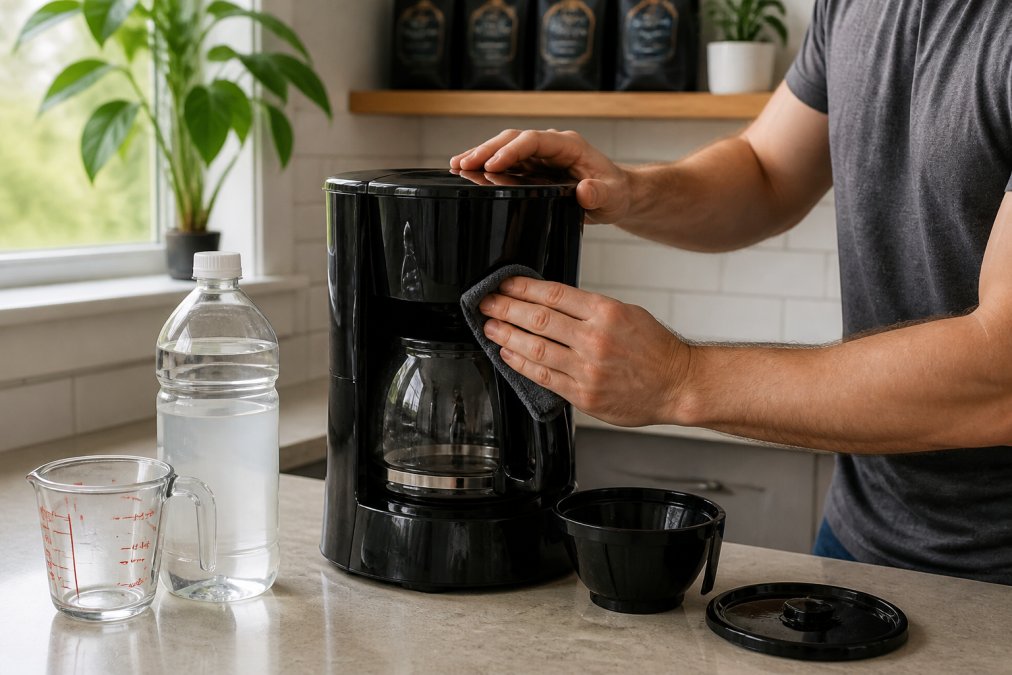
- Monthly: Run a descaling cycle. For drip machines, fill the reservoir with equal parts white vinegar and water, run a half-cycle, pause for 30 minutes, then complete the cycle. Follow with two full cycles of plain water.
- Quarterly: Inspect and clean the burr grinder. Fine coffee dust builds up and turns rancid over time.
Pre-rinsing paper filters with hot water before brewing removes papery compounds that add off-flavors and can amplify bitterness.
Troubleshooting Bitter Coffee by Brew Method
The cause of bitterness in a French press differs from espresso. Here's how to diagnose and fix the problem by method.
Drip Machine
The most common cause is a machine that runs too hot combined with a medium-fine grind. Most budget drip machines overheat the water.
Fix: Use a coarser grind, check your machine's brew temperature, and run a descaling cycle.
French Press
French press bitterness almost always comes from over-steeping. The standard four-minute steep works for a coarse grind. Finer grinds will over-extract significantly.
Fix: Coarsen your grind to breadcrumb consistency. Steep for exactly four minutes, then plunge and pour immediately.
Pour-Over
Pour-over bitterness typically comes from pouring too fast, skipping the bloom, or using water that's too hot. The bloom, a 30-45 second pre-infusion, releases CO2 from fresh beans and allows even saturation.
Fix: Always bloom first. Pour slowly in controlled spirals. Use water at 200°F for medium roasts. If still bitter, coarsen the grind by one step.
According to the Specialty Coffee Association's water quality guide, water mineral content affects extraction. Filtered water with moderate mineral content, around 150 ppm total dissolved solids, produces the most consistent results.
Espresso
Espresso bitterness is usually a grind or temperature problem. A grind that's too fine creates resistance that extends contact time and causes over-extraction. A well-pulled espresso shot should run 25-30 seconds for a 1:2 ratio. If it runs faster, the grind is too coarse. If it runs slower and tastes bitter, it's too fine.
Fix: Coarsen the grind in small increments. Ensure even distribution before tamping to avoid channeling.
Persistent bitterness often traces back to bean quality. Commodity-grade beans roasted at high temperatures to mask defects will taste bitter no matter how precisely you brew them. Specialty-grade beans from high-elevation estates, roasted with precision, give you a flavor profile that's inherently more forgiving.

Bitter coffee is a solvable problem. Start with grind size, check your water temperature, match your brew time to your method, and keep your equipment clean. Those four variables cover the vast majority of cases. When the fundamentals are dialed in and the coffee still tastes harsh, the issue is usually the bean itself. That's where sourcing and roasting quality make the difference that no amount of technique can compensate for.
Frequently Asked Questions
Does grind size affect coffee bitterness?
Yes, grind size is one of the biggest drivers of bitter coffee. A grind that is too fine increases contact time between water and coffee grounds, pulling out bitter compounds like chlorogenic acid and tannins before the sweeter notes have a chance to develop. Coarsening your grind by one or two steps is often the fastest fix for a bitter cup. For drip machines, a medium grind is standard. For French press, go coarser. For espresso, grind fine but dial in your shot time carefully.
Can water temperature cause bitter coffee?
Absolutely. Water that is too hot accelerates over-extraction, pulling bitter compounds out of the coffee grounds faster than desirable flavors dissolve. The ideal water temperature for coffee brewing is between 195°F and 205°F. Boiling water at 212°F will scorch the grounds and produce a harsh, bitter aftertaste. If your machine does not let you set temperature, let boiling water rest for 30 to 45 seconds before pouring to bring it into the right range.
Why does coffee taste bitter all of a sudden?
A sudden shift to bitter flavor usually points to one of three things: scale buildup inside your brewing equipment, stale or over-roasted coffee beans, or a change in your water source. Mineral deposits from hard water coat heating elements and alter brew temperature. Old beans lose volatile aromatics, leaving bitter compounds more prominent. If nothing changed in your routine, run a cleaning cycle on your coffee maker and check whether your current bag of beans is past its peak freshness window.
What is the difference between sour and bitter coffee?
Sour coffee signals under-extraction, meaning water moved through the grounds too quickly and did not dissolve enough of the desirable flavor compounds. The result is a sharp, acidic taste. Bitter coffee is the opposite problem: over-extraction, where water stayed in contact with the grounds too long and stripped out harsh compounds. If your coffee tastes sour, grind finer or extend brew time. If it tastes bitter, grind coarser, lower your water temperature, or shorten contact time.
This article was written using GrandRanker