

High Altitude Coffee Beans: Benefits Explained
Table of Contents
- Why High Altitude Coffee Beans Deliver Superior Flavor
- How Altitude Affects Coffee Acidity and Brightness
- Coffee Bean Density and Flavor: The Elevation Connection
- Slower Growth, Complex Development: The Science Behind Mountain-Grown Coffee
- Impact of Thermal Mapping on Coffee Roasting Excellence
- Brewing High Altitude Beans for Maximum Extraction
- Sustainability and High Altitude Coffee Farming
- Conclusion
Last Updated: August 29, 2026
Why High Altitude Coffee Beans Deliver Superior Flavor
High altitude coffee beans are fundamentally different from lowland counterparts. Elevation directly shapes plant development, maturation speed, and ultimately what ends up in your cup. At Iron Spur Coffee, we source from mountain-grown regions because altitude creates complexity, brightness, and depth that flat-land coffee cannot match.
When coffee plants grow at higher elevations, they experience cooler temperatures, lower oxygen levels, and longer maturation cycles. These environmental stressors trigger metabolic changes within the bean. The plant develops more defense mechanisms, translating into higher concentrations of flavor precursors and aromatic compounds. A coffee cherry ripening at 5,000 feet over six months develops fundamentally different chemical structures than one ripening at 2,000 feet in three months (peer-reviewed research).
High altitude beans typically exhibit brighter acidity, more complex aromatics, and cleaner flavor profiles, more pronounced notes of citrus, florals, and fruit rather than flat, one-dimensional commodity coffee. This results directly from slower growth cycles allowing more time for flavor development. Bean density increases as well, meaning each bean contains more compounds that create taste and aroma when extracted properly.
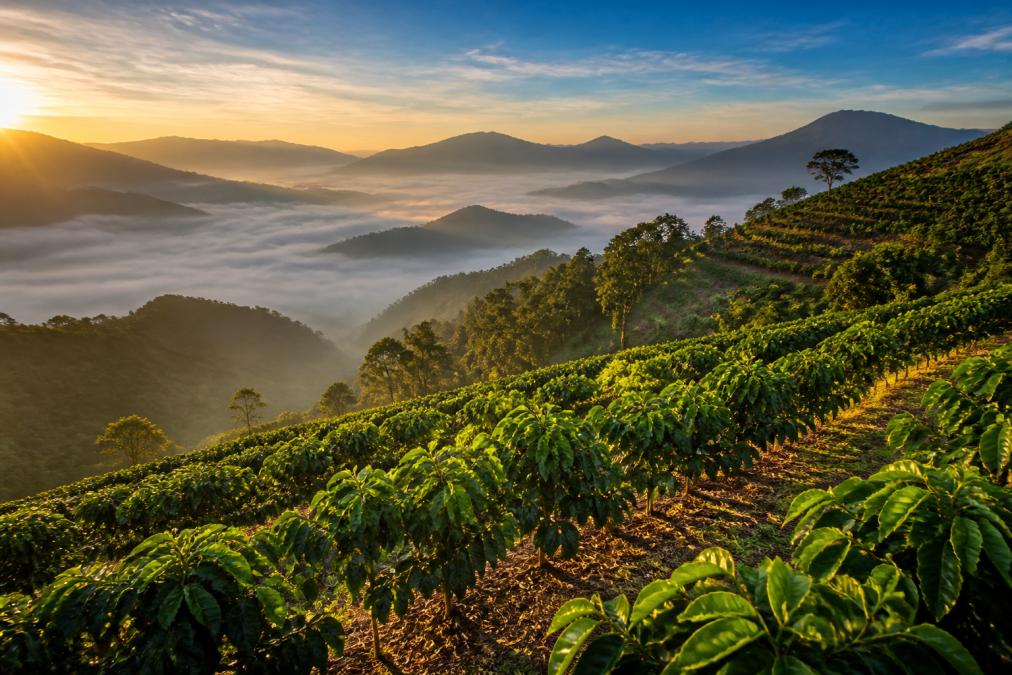
Mountain-grown coffee benefits from unique terroir, soil composition, microclimate, and environmental factors specific to each region. Volcanic loam soils common in high-altitude regions provide mineral profiles that influence plant development. Cooler nights slow respiration, allowing plants to conserve energy and direct resources toward bean development. Our High Plains Colombia, sourced from 1,300-1,500 meters in Medellin, delivers distinctive dried orange and berry notes because altitude and volcanic soil create conditions where those compounds develop fully.

How Altitude Affects Coffee Acidity and Brightness
Acidity in specialty coffee is a desirable characteristic that creates complexity and vibrancy. High altitude coffee beans naturally develop higher acidity levels because plants respond to cooler temperatures and lower oxygen availability at elevation. This acidity, combined with extended maturation, creates the bright, clean flavor profile distinguishing premium coffee from ordinary blends.
At higher altitudes, plants experience stress that triggers increased production of chlorogenic acid and other polyphenols, flavor precursors that, when properly roasted and extracted, become bright, crisp notes (peer-reviewed research). Sea-level coffee simply doesn't develop these compounds to the same degree because the plant doesn't experience the same environmental pressure.
Brightness, that clean, vibrant quality in the cup, emerges from elevated acidity and complex aromatics. Our Kenya offering, grown at 1,700-1,890 meters in Othaya, exemplifies this. The elevation allows SL28 and SL34 varieties to develop the effervescent, lemon-forward character Kenya is known for. Lower-altitude Kenya coffee lacks that distinctive brightness.

Cooler nights mean slower metabolic processes, allowing more time for aromatic compound development. Warmer days still provide growth energy, but daily temperature swings create stress that pushes plants to develop protective compounds, the same compounds creating complexity and depth in the final cup.
Coffee Bean Density and Flavor: The Elevation Connection
Bean density is one of the most direct physical indicators of coffee quality, and altitude is the primary driver of density differences. High altitude coffee beans are noticeably denser than lowland beans, heavier, harder, and more compact. This density directly correlates with flavor intensity and extraction characteristics.
When coffee plants grow slowly at high elevation, beans develop slowly as well. Instead of rapid expansion in warm, sea-level conditions, beans accumulate more cell wall material and develop more compact internal structure. This creates denser beans containing more soluble solids, the compounds that dissolve into water during brewing and create flavor.
Denser beans extract differently than less-dense beans, requiring different brewing temperatures, contact times, and often finer grinds to achieve proper extraction. Brewing high altitude beans with standard methods often results in under-extraction, leaving flavor compounds in the grounds instead of in your cup.
High altitude beans also maintain flavor longer after roasting. The compact structure preserves aromatic compounds better than the porous structure of low-altitude beans. This is why Iron Spur Coffee commits to roasting to order, the structural integrity of high-altitude beans guarantees maximum flavor and freshness when coffee reaches you.
Density shows up as body and mouthfeel. High altitude beans typically produce fuller-bodied coffee with more weight and texture on the palate. This results from more dissolved solids in the cup, a direct consequence of bean density. Our Asian Plateau Blend delivers heavy body and strong aroma specifically because altitude created the density needed for those characteristics.

Slower Growth, Complex Development: The Science Behind Mountain-Grown Coffee
The growth cycle of high altitude coffee plants is fundamentally different from lowland coffee. At elevation, maturation extends dramatically. A coffee cherry at 5,000 feet might take eight to ten months to ripen, while the same variety at 2,000 feet completes ripening in four to six months. This extended timeline is where complexity emerges.
During longer maturation, coffee plants continuously build flavor compounds. Beans accumulate sugars, develop aromatic precursors, and create the chemical foundation for complex taste. Each month of additional growth adds layers of potential flavor. Slower growth literally means more time for flavor development.
Cooler temperatures at altitude slow metabolic processes throughout the plant. Respiration rates decrease, meaning plants burn fewer carbohydrates maintaining themselves. More energy directs toward bean development. Greater temperature swings between day and night create stress triggering production of protective compounds, polyphenols, chlorogenic acids, and other antioxidants that create taste complexity when roasted and brewed.
Oxygen levels also decrease with altitude, creating a different growing environment. Plants adjust physiology, developing different root structures and leaf compositions. These adaptations influence nutrient processing and bean development. A coffee plant at 6,000 feet operates under different physiological constraints than the same variety at 2,000 feet, producing different chemical outcomes.
The harvest window also differs significantly. High altitude coffee, ripening more slowly and uniformly, allows selective harvesting of only the most developed cherries. Lowland coffee, ripening quickly and unevenly, often requires bulk harvesting including under-ripe and over-ripe fruit. This selective harvesting contributes directly to cup quality.
Impact of Thermal Mapping on Coffee Roasting Excellence
Thermal mapping represents a precision approach to roasting essential when working with high altitude coffee beans. Because these beans have higher density and more complex flavor compounds, traditional roasting methods often result in either under-extraction or over-extraction. Thermal mapping uses temperature monitoring and precise heat control to navigate this narrow window.
Standard roasting profiles are designed around commodity coffee, less dense beans with simpler flavor profiles. Applying those profiles to high altitude beans results in bitterness. The denser bean structure means heat penetrates more slowly, requiring different timing and temperature curves. Higher concentration of flavor compounds means over-roasting happens faster than with standard coffee.
Thermal mapping monitors internal bean temperature throughout the roast, not just ambient air temperature. This allows roasters to track exactly when beans reach critical development points and adjust heat input accordingly. The goal is developing full flavor potential while stopping before bitter compounds emerge.
The practical result is clean, complex, sweet coffee rather than harsh, one-dimensional coffee. When thermal mapping is done correctly, high altitude beans reveal their full range of flavor notes, bright acidity, complex aromatics, and body without burnt or bitter undertones. This is the Iron Spur Coffee commitment: precision roasting honoring what altitude and slow growth have built into the bean.
Different high altitude origins require slightly different thermal mapping approaches. Thermal mapping accounts for these differences, ensuring each origin reaches optimal flavor expression. This is why roasting to order matters, we apply precision thermal mapping specific to each bean's characteristics.
Discover Iron Spur Coffee Today →
Brewing High Altitude Beans for Maximum Extraction
Brewing high altitude coffee beans requires understanding how their density and chemical composition differ from standard coffee. The extraction process must be adjusted to account for the bean's physical and chemical properties. Get this right, and you unlock the full complexity that altitude created.
Denser beans require slightly hotter water, slightly finer grinds, or slightly longer contact times than less-dense beans. Start with water temperature: high altitude beans benefit from water at 200-205°F, slightly hotter than the standard 195-200°F range. The extra heat helps penetrate denser bean structure and pull more soluble solids into water.
Grind size matters more for high altitude beans than commodity coffee. A slightly finer grind increases surface area, allowing more contact between water and grounds. If you normally use a medium grind, try a medium-fine grind with high altitude beans and observe the difference.

Contact time is the third variable. For pour-over brewing, aim for 3-4 minutes rather than standard 2.5-3 minutes. For French press, 4-5 minutes works well with high altitude beans. Extended contact time allows water to fully extract flavor compounds that altitude and slow growth created.
Use a scale for coffee-to-water ratio (roughly 1:16, one part coffee to sixteen parts water by weight). Precise ratios ensure repeatable results and help identify which brewing variables affect cup quality.
Different brewing methods work well with high altitude beans with slight adjustments. Pour-over methods like Chemex or V60 allow precise control over water temperature and contact time. French press works well but requires slightly coarser grind to avoid over-extraction. Espresso requires careful grind and pressure adjustment but produces exceptional shots because high pressure forces extraction from denser bean structure.
These adjustments produce balanced, complex, clean coffee. You'll notice bright acidity, full body, and nuanced flavor notes that altitude created. Without adjustments, the same beans would taste flat, under-developed, or muddy.
Sustainability and High Altitude Coffee Farming
High altitude coffee farming exists in ecologically sensitive environments. Mountain regions where premium coffee grows are often biodiverse ecosystems with unique species. Sustainable farming practices matter for environmental reasons and long-term production viability.
Many high altitude coffee farms operate as smaller holdings on steep mountain terrain where mechanization is impossible. These operations often use shade-grown methods, where coffee plants grow under native forest canopy rather than in full sun. Shade-grown coffee supports biodiversity, prevents soil erosion on steep slopes, and creates stable microclimates for coffee plants.
Volcanic soil in high altitude regions is rich in minerals but vulnerable to erosion on steep terrain. Sustainable practices like maintaining ground cover, using terracing, and avoiding chemical runoff protect these soils. Protecting volcanic soil protects the distinctive terroir of high altitude coffee.
Climate change represents an increasing challenge for high altitude coffee farming. As global temperatures rise, the optimal altitude range shifts upward, pushing production to even higher elevations with limits. Some traditional coffee regions face becoming unsuitable for coffee production within this century. Supporting high altitude coffee farming through purchasing choices sustains agricultural communities and ecosystems.
Water management in high altitude regions is critical. Mountain regions receive significant rainfall, but climate patterns are becoming less predictable. Farms implementing water conservation, maintaining forest cover to protect watersheds, and avoiding contamination protect their own productivity while supporting broader environmental health.
Choosing high altitude coffee from sources prioritizing sustainability supports farming practices that matter. Our High Plains Colombia comes from smallholder farmers using fully washed processing and solar drying methods. Our Kenya is sourced from cooperatives using raised-bed drying and shade-grown methods. These practices cost more than industrial commodity production but create coffee worth the investment.
High altitude coffee beans represent a genuinely different product category, where growing conditions directly create flavor complexity that cannot be replicated at lower elevations. Understanding why high altitude coffee tastes better transforms how you approach brewing and what you're willing to invest in your morning coffee.
Iron Spur Coffee specializes in high altitude, specialty-grade beans roasted with precision thermal mapping to unlock the complexity that altitude creates. Our commitment to roasting to order means your coffee arrives with maximum flavor and freshness. Start with our High Plains Colombia or Kenya, both sourced from optimal elevations and roasted with the precision that high altitude beans deserve. Discover Iron Spur Coffee today and experience what disciplined sourcing and roasting deliver.
Frequently Asked Questions
What is the minimum elevation required for high altitude coffee beans?
True high altitude coffee is typically grown at 1,200 meters (3,900 feet) or higher. Most specialty-grade high altitude beans come from 1,500 to 2,200 meters. At these elevations, cooler temperatures slow bean maturation, allowing more complex sugars and flavor compounds to develop. Iron Spur's High Plains Colombia grows at 1,300-1,500 meters and Kenya at 1,700-1,890 meters, both premium elevations that produce the acidity and sweetness specialty roasters seek.
Does altitude affect the caffeine content in high altitude coffee beans?
Altitude influences caffeine levels. The cooler mountain climate triggers a plant defense mechanism that increases caffeine production. This means high altitude coffee not only tastes more complex, it delivers genuine energy performance. For field professionals and outdoor enthusiasts needing reliable fuel, this elevation advantage matters.
Why do specialty roasters prefer high altitude coffee beans over lowland varieties?
Specialty roasters prioritize high altitude beans because of bean density and flavor complexity. Slower growth at elevation creates denser beans with more developed flavor precursors and polyphenols, compounds that become rich, sweet notes during roasting. High altitude beans also show superior acidity and aromatic clarity. When roasted with precision thermal mapping, these beans reveal layered tasting profiles: dried fruit, chocolate, floral notes. Lowland beans mature faster and lack this structural elegance.
How does slower maturation at high elevations impact coffee quality?
Slower maturation is the key to quality. At high altitude, cooler temperatures extend the coffee cherry's development cycle, allowing chlorogenic acid to break down gradually into sweeter compounds and antioxidants to concentrate. This extended growth builds complexity in the bean's structure. Fast-grown lowland beans skip this transformation, resulting in flat, one-dimensional flavor. The slower the maturation, the more time the plant invests in flavor development, which is why mountain-grown coffee commands premium prices and delivers superior sensory characteristics.
Are high altitude coffee beans considered healthier than regular coffee?
High altitude beans contain higher concentrations of polyphenols and antioxidants due to their defensive response to cooler, harsher mountain conditions. These compounds support overall wellness when consumed regularly. However, health benefits depend on roasting method and brewing technique. Precision roasting, like Iron Spur's thermal mapping process, preserves these beneficial compounds by avoiding over-roasting that destroys antioxidants.
What makes high altitude coffee beans superior in flavor compared to lowland coffee?
High altitude beans develop superior flavor through three mechanisms: density, time, and chemistry. Dense beans roast more evenly, revealing complex sweetness and acidity. Extended maturation builds flavor precursors that transform into caramel, chocolate, and fruit notes. Mountain microclimates create unique terroir, volcanic soil, morning mists, temperature swings, that concentrate flavor compounds. When roasted to order with thermal mapping, these beans unlock their full potential: bright acidity, deep body, and clean finish without bitterness.
How does bean density from high altitude affect the roasting process?
Denser beans from high altitude roast differently than lowland beans. They require precise heat management to develop evenly throughout. Thermal mapping technology monitors internal bean temperature in real time, ensuring the roast reaches optimal flavor development without creating bitter compounds. Dense beans can handle higher temperatures without burning their exteriors, allowing roasters to develop deeper, sweeter notes. This is why small-batch roasting with thermal precision, like Iron Spur's process, transforms high altitude beans into smooth, complex coffee rather than harsh or one-dimensional brews.
This article was written using GrandRanker