

Water Temperature and Coffee Extraction: How to Dial It In
Quick Summary
Water temperature sets how fast flavor compounds leave the coffee grounds. Hotter water extracts faster and can push a brew toward bitterness, while cooler water extracts slowly and often tastes sour or thin. Most brew methods start between about 195°F and 205°F, adjusted by roast level.
- Hotter water pulls flavor compounds from grounds faster, shortening brew time.
- Cooler water extracts more slowly and often leaves a sour, thin cup.
- Pour-over starts with a kettle temperature of 199-205°F.
- Light roasts need more heat; dark roasts can turn harsh at lighter-roast temperatures.
- Change temperature in 2-3°F steps and keep other variables constant when testing.
Table of Contents
- How Water Temperature Drives Coffee Extraction
- Ideal Water Temperature for Coffee by Brew Method
- Water Temperature for Espresso: Ranges and Adjustments
- Water Temperature for French Press and Immersion Brewing
- Brewing Coffee with Water That Is Too Cool
- How to Test and Adjust Temperature for Your Own Brew
- Setting Up Your Next Brew at the Right Temperature
- Frequently Asked Questions
How Water Temperature Drives Coffee Extraction
Last Updated: November 12, 2026
Water temperature is one of the biggest levers you have over how your coffee tastes. The impact of water temperature on coffee extraction is direct: hotter water pulls flavor compounds from the grounds faster, while cooler water pulls them more slowly. Temperature is a useful first variable to dial in, because it sets the pace for everything else in the cup.
Extraction is the process of dissolving flavor compounds from roasted coffee into water. Those compounds include acids, sugars, oils and aromatic compounds. Each one dissolves at a different rate, and temperature changes that rate. Think of it as a race: the hotter the water, the faster the compounds leave the grounds.
Temperature and extraction speed
Heat gives water more kinetic energy, so it moves through the coffee bed faster and dissolves solids more quickly. That is why a brew at the high end of the usual range often finishes sooner than one brewed cool.
Speed matters because the compounds do not all dissolve at once. Acids come out first, sugars next, and bitter compounds usually last. Water that is too cool may stop before it pulls out enough sweetness. Water that is too hot may keep pulling bitter compounds after the good ones are gone.
- Hotter water: faster extraction, shorter brew time
- Cooler water: slower extraction, longer contact needed
- Keep contact time and grind size in mind, since they change the pace too
Temperature and flavor balance
Temperature shapes the balance between sour, sweet and bitter. Cooler water tends to leave a brew sour or thin. Hotter water tends to push it toward bitter or harsh. The sweet spot sits in between, and where it lands depends on the roast.
A light roast is denser and needs more heat to extract well. A dark roast extracts easily, so it can turn harsh at temperatures that suit lighter beans. Plan on adjusting, not guessing.
Watch out: Do not chase bitterness with a lower grind or a longer brew before you check temperature. Heat is often the real cause.
Ideal Water Temperature for Coffee by Brew Method
The right temperature depends on how the coffee is brewed, but the number on your kettle is not the number in the brew bed. Contact time, agitation, the thermal mass of your brewer, and the roast level all shift the target. Use the ranges below as starting points, then adjust to your beans and equipment.
| Brew method | Starting temperature (kettle) | Expected drop in the brew bed | Why it works |
|---|---|---|---|
| Pour-over | 199-205°F | 3-8°F | Short contact time needs enough heat to reach sweetness before the drawdown ends |
| Drip | 195-205°F | 2-5°F | Most machines cycle the heater; the slurry temperature is what matters |
| French press | 200-205°F | 5-10°F over a 4-minute steep | Long steep needs firm heat at the start, but the bed cools steadily |
| Espresso | 195-200°F | 1-3°F at the group | Fast extraction under pressure amplifies small temperature changes |
Starting temperature (kettle)
Most brewers fall within these numbers, but the range is not universal. A light roast is denser and needs more heat to extract well; a dark roast extracts easily and can turn harsh at temperatures that suit lighter beans. As a rule of thumb, move toward the high end of the range for light roasts and the low end for dark roasts, then fine-tune by taste.
Heat loss is the variable most brewers ignore. A cold ceramic dripper, a room-temperature French press, or a mug straight from the cabinet will pull heat out of the slurry before the coffee ever finishes extracting. Preheat your brewer and cup with hot water, and keep the kettle lid on between pours. If you brew in a cool kitchen, expect to start 3-5°F higher than the table suggests.
Watch out: Do not treat the kettle display as the brew temperature. A gooseneck kettle loses heat between the spout and the bed, and a thick ceramic brewer absorbs more heat than a thin plastic one. Measure the slurry, not the kettle, when you are dialing in.
For espresso specifically, start near 195-200°F and change it in increments of about 2°F. Small moves make a visible difference because the shot extracts so fast. If a shot tastes sour and runs fast, the water is often too cool, or the grind is too coarse. If it tastes harsh and bitter, the water may be too hot. Change one thing at a time so you can tell which adjustment worked. Our guide on Signs of an Over-Extracted Espresso Shot to Watch For helps you spot that harshness early.
For immersion brewing, the long contact time means a slightly cooler temperature still extracts well. Many brewers use 200-205°F and keep the steep steady. Too much heat in a long steep can make a cup taste heavy and bitter. If your French press tastes flat, check the grind first, then the temperature. A coarse grind with proper heat usually gives a clean, full cup.
Water Temperature for Espresso: Ranges and Adjustments
Espresso extracts fast, so temperature has an outsized effect on the shot. Start near 195-200°F and change it in increments of about 2°F. Small moves make a visible difference.
If a shot tastes sour and runs fast, the water is often too cool, or the grind is too coarse. If it tastes harsh and bitter, the water may be too hot. Change one thing at a time so you can tell which adjustment worked. Our guide on Signs of an Over-Extracted Espresso Shot to Watch For helps you spot that harshness early.
Water Temperature for French Press and Immersion Brewing
Immersion brewing soaks grounds in water for several minutes. Because the contact time is long, a slightly cooler temperature still extracts well. Many brewers use 200-205°F and keep the steep steady.
Too much heat in a long steep can make a cup taste heavy and bitter. If your French press tastes flat, check the grind first, then the temperature. A coarse grind with proper heat usually gives a clean, full cup.
Brewing Coffee with Water That Is Too Cool
Cool water is the most common reason a brew tastes thin and watery. Water well below the target range does not extract enough sweetness and body, so the cup ends up sour and hollow. If your pour-over tastes this way, read Why Your Pour Over Coffee Tastes Thin and Watery for the full diagnosis.
To fix it, raise the temperature in small steps, around 2-3°F at a time. Then taste again. You can also How to Brew Smooth Coffee Without Bitterness at Home, which covers how to find the point where sweetness comes through without harshness.
- Check the temperature with a thermometer, not by feel
- Let your kettle reach a full boil before you pour
- Preheat your brewer and cup so heat does not escape
How to Test and Adjust Temperature for Your Own Brew
Testing is the only reliable way to find your best temperature, but most brewers accidentally test two variables at once. The goal is to change temperature while holding grind size, dose, water ratio, agitation, and brew time constant, so the taste difference you notice is actually caused by heat.
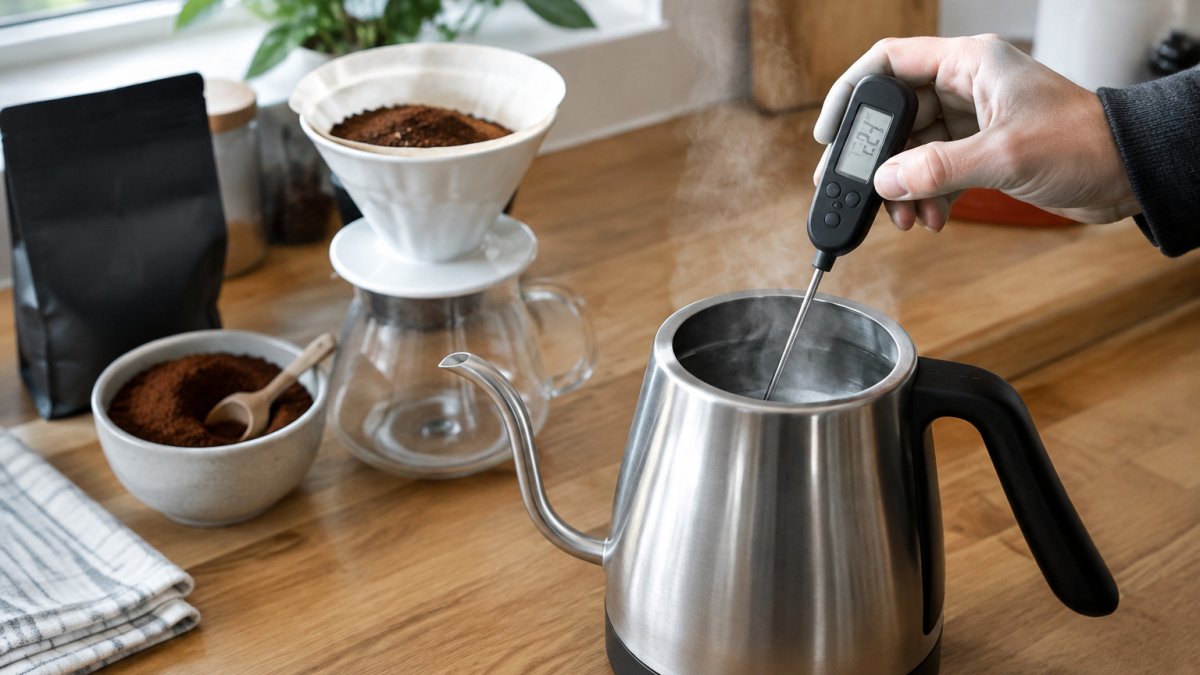
Start with a controlled tasting protocol:
- Weigh your coffee and water so each test uses the same ratio (for example, 1:16).
- Fix your grind size and do not touch it during the test.
- Brew at a middle temperature for your method.
- Brew again 5°F higher, then 5°F lower, keeping every other step identical.
- Taste all three side by side and note sour, sweet, and bitter.
- Narrow the range in 2°F steps around the best cup.
A digital coffee scale makes weighing dose and water consistent, and a guide to choosing grind size helps you adjust the grind once the temperature is set. If you change grind and temperature in the same brew, you will not know which one fixed the cup.
Use a symptom-to-adjustment guide to decide whether temperature is actually the cause:
- Sour, thin, and hollow, with a fast finish: likely under-extracted. Raise temperature 2-3°F before you change the grind.
- Bitter, harsh, and drying, with a slow finish: likely over-extracted. Lower temperature 2-3°F before you coarsen the grind.
- Sweet but weak: strength problem, not temperature. Adjust ratio or dose first.
- Sweet but muddy: agitation or grind problem. Stir less or coarsen slightly before touching temperature.
Watch out: Do not chase bitterness with a lower grind or a longer brew before you check temperature. Heat is often the real cause, and grinding finer to fix a hot brew usually makes the harshness worse.
Measure temperature where it matters. A probe in the kettle tells you what you poured, not what the coffee saw. For pour-over, check the slurry mid-brew; for immersion, check after you add the grounds; for espresso, rely on the machine's group temperature if it reports one, and otherwise treat the boiler setting as a relative dial rather than an absolute number. Preheat your brewer and cup so heat does not escape, and let your kettle reach a full boil before you pour if you are targeting the high end of the range.
Keep notes for each test: temperature, grind setting, dose, ratio, brew time, and a short taste note. After three or four controlled brews you will have a temperature range that fits your beans and equipment, and you can stop guessing.
Setting Up Your Next Brew at the Right Temperature
Start with the range for your method, adjust in small steps, and taste every change. Temperature works together with grind, dose and time, so treat it as one part of the recipe.
Iron Spur Coffee offers specialty small-batch coffees that you can try at home. Try our Ethiopia Natural for a medium-light roast with milk chocolate, fruity and caramel notes, or our Brazil Santos for a medium roast with an elegant, smooth cup and cocoa notes. Our Gourmet Donut Shop blend offers cocoa, caramel and toffee notes for a balanced morning brew.
Frequently Asked Questions
What is the ideal water temperature for coffee extraction?
Most brewers start between 195°F and 205°F (90°C to 96°C) for coffee extraction. Within that range, lighter roasts usually benefit from the upper end because they are denser and need more heat to extract fully, while darker roasts often taste better slightly cooler to avoid harshness. Start near 200°F, brew a cup, and adjust by a few degrees at a time. Changing one variable per test makes the effect of temperature clear.
What water temperature should you use for espresso?
Espresso is usually pulled with water around 195°F to 203°F (90°C to 94°C) at the group head. Because pressure and short contact time shape extraction, small temperature changes can shift sourness and bitterness noticeably. Start mid-range, pull a shot, and taste whether it tastes sour and thin (raise the temperature slightly) or bitter and harsh (lower it). Keep grind size and dose steady while you test.
Does hotter water make coffee more bitter?
Hotter water generally extracts compounds faster, which can pull out bitter flavors along with sweetness and acidity if the brew runs too long or the water is too hot for the roast. Very hot water is not automatically bitter, though. Coffee that tastes bitter often reflects over-extraction from a fine grind, long contact time, or excessive heat together. Lowering temperature a few degrees is a useful test, but check grind size and brew time too.
What happens when you brew coffee with water that is too cool?
Water below roughly 195°F (90°C) extracts more slowly and less completely, which usually produces under-extracted coffee that tastes sour, thin, or weak. Cooler water can also leave the cup flat and underdeveloped, especially with light roasts. If your coffee tastes sour, first check that your water is at the target temperature, then try a finer grind or a slightly longer brew. Raising the temperature a few degrees is the next adjustment to test.
