

How to Choose the Right Coffee Grind Size
Last Updated: October 22, 2026
Quick Summary
Coffee grind size controls how fast water flows through your grounds and determines extraction, which is how much flavor makes it into your cup. Match your grind to your brewing method: espresso needs extra-fine grounds, pour-over needs medium-fine to medium, and French press needs coarse grounds. Adjust one notch at a time until your coffee tastes balanced and clean.
- Sour coffee means under-extraction, so make your grind finer to slow water flow
- Bitter coffee means over-extraction, so make your grind coarser to speed water flow
- French press requires a coarse grind size and four-minute brew time
- Burr grinders produce consistent particle sizes while blade grinders chop randomly
- Espresso requires an extra-fine to fine grind and pulls in 25-30 seconds
Table of Contents
- Why Coffee Grind Size Matters
- Understanding Grind Size Categories and Particle Distribution
- Coffee Grind Size Chart by Brewing Method
- How to Adjust Coffee Grind Size for Optimal Extraction
- Grind Consistency, Burr Type, and Freshness
- How Dose, Water Temperature, and Brew Ratio Work Together
- Common Mistakes to Avoid When Adjusting Grind Size
- Frequently Asked Questions
Why Coffee Grind Size Matters
The right coffee grind size makes the difference between a delicious cup and one that tastes flat or bitter. Grind size controls how fast water flows through your grounds. Finer particles slow the flow. Coarser particles speed it up.
Most home brewers ignore grind size entirely. They buy good beans, use the right water temperature, but still end up disappointed because their grinder is set wrong.
The particle size you choose depends on your brewing method. Espresso needs ultra-fine grounds. French press needs coarse ones. Pour-over sits somewhere in the middle. Get this wrong and you'll taste the mistake immediately.
Understanding Grind Size Categories and Particle Distribution
Coffee grind sizes fall into distinct categories. Each one produces a different particle distribution, which affects how water moves through the grounds and how much flavor you extract.
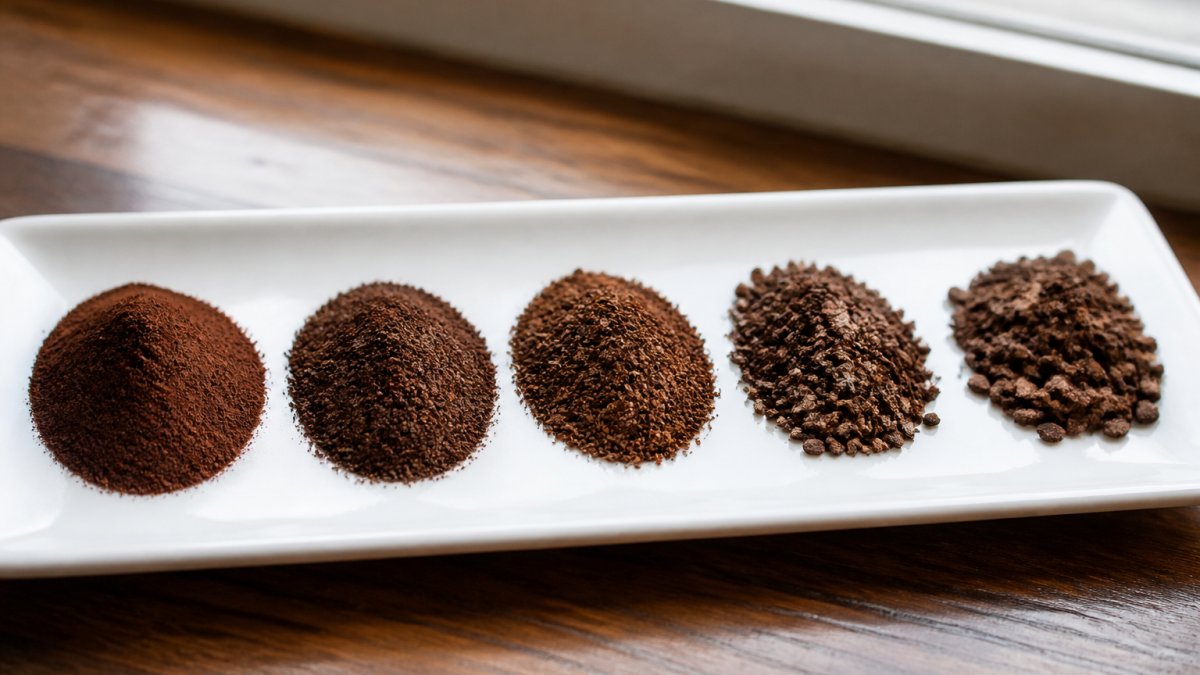
Extra-Fine to Fine Grind
Extra-fine grind looks like powdered sugar. It's used almost exclusively for espresso machines. The particles are so small that water takes longer to push through, which is exactly what espresso needs. A fine grind is slightly coarser than extra-fine. It works well for Turkish coffee and some espresso blends that need a bit more flow.
These grinds extract quickly because of their large surface area. Water touches more of each particle in less time. This is why fine grinds are risky for immersion brewing methods like French press. You'll over-extract and get bitter, harsh flavors. Use fine grinds only when your brewing method demands them.
Medium-Fine to Medium Grind
Medium-fine grind looks like sand from a playground. It's the sweet spot for many pour-over methods and drip coffee makers. Water flows through at a moderate pace. Extraction happens smoothly without rushing or stalling.
A medium grind is slightly coarser. Think of beach sand or granulated sugar. This works well for AeroPress and some filter coffee setups. The medium range gives you the most room for error. Small adjustments in grind size won't ruin your brew. This is where most specialty coffee drinkers start when dialing in a new bean or grinder.
Medium-Coarse to Coarse Grind
Medium-coarse grind looks like breadcrumbs. It's designed for brewing methods that use longer contact times. The particles are large enough that water flows through quickly. You need more time to extract enough flavor.
Coarse grind is the largest you'll typically use. It resembles sea salt or peppercorns. French press and cold brew need this size. Water moves through so fast that you need hours of steeping to pull out the good stuff. Cold brew sits overnight. French press steeps for four minutes. Both need coarse grounds to avoid over-extraction.
Coffee Grind Size Chart by Brewing Method
Different brewing methods demand different grind sizes. Match your grinder setting to your method, and you're already halfway to a better cup.
Espresso Grind Size
Espresso requires an extra-fine to fine espresso grind size. The machine forces hot water through the grounds under pressure. You need particles small enough to create resistance. This slows the water down so it can extract flavor in the 25-30 seconds the shot pulls.
If your espresso tastes sour, your grind is too coarse. Water rushed through without extracting enough. If it tastes bitter, your grind is too fine. Water moved too slowly and over-extracted. Espresso is the most sensitive brewing method to grind size. Small changes matter a lot.
Pour-Over and Drip Coffee Grind Size
Pour-over and automatic drip makers need a medium-fine to medium grind size. Water drips through the grounds by gravity alone. You want a grind that lets water flow steadily without rushing.
Most drip coffee makers work best with a medium grind. Pour-over brewers like Chemex and Hario V60 often prefer medium-fine because the brewing vessel and filter design slow the water flow naturally. Test both and see which tastes better with your beans and water.
Best Coffee Grind Size for French Press
French press requires a coarse grind size. The metal mesh filter is much larger than paper filters. Fine particles slip through and end up in your cup as sludge. Coarse grounds stay in the pot while letting water flow freely.
Brew time for French press is four minutes. The long contact time with coarse grounds extracts plenty of flavor without bitterness. If your French press tastes muddy or gritty, your grind is too fine. If it tastes weak, your grind is too coarse.
Cold Brew Grind Size
Cold brew uses a coarse grind size, just like French press. The difference is time. Cold brew steeps for 12-24 hours. The long extraction time pulls flavor from large particles without over-extraction because the water is cold. Cold water extracts more slowly than hot water.
Use the same coarse grind you'd use for French press. The extended contact time does the heavy lifting.
How to Adjust Coffee Grind Size for Optimal Extraction
Adjusting your grinder is where theory becomes practice. You're aiming for balanced extraction. This means the water pulls enough flavor without pulling too much.
Under-extraction happens when water moves through too fast. Your coffee tastes sour, weak, or thin. The fix is simple: make your grind finer. Finer particles slow the water down.
Over-extraction happens when water moves through too slowly. Your coffee tastes bitter, harsh, or burnt. The fix is to make your grind coarser. Coarser particles speed the water up.
Dialing In Your Grinder: A Step-by-Step Method
Step 1: Start with your brewing method's recommended grind size.
Find the baseline for your method. Espresso starts extra-fine. French press starts coarse. Pour-over starts medium-fine. You're not guessing.
Step 2: Brew one cup and taste it.
Pay attention to the flavor. Is it sour or weak? Is it bitter or harsh? Or does it taste balanced and clean?
Step 3: Make one small adjustment.
Change your grinder setting by one notch. Don't change two or three. One adjustment at a time.
Step 4: Brew and taste again.
Use the same amount of coffee, the same water temperature, and the same brewing time. Only the grind size changes.
Discover Iron Spur Coffee Today →
Step 5: Repeat until balanced.
Keep adjusting one notch at a time until your coffee tastes clean and flavorful. No sourness. No bitterness. This is dialed in.
The whole process takes three to five brews. You're learning how your specific grinder, beans, and method work together. This knowledge transfers to new beans. You'll dial in faster next time.
Troubleshooting Bitter and Sour Coffee
Sour coffee means under-extraction. Water moved through too fast. The fix is a finer grind. Go one notch finer on your grinder. Brew again.
If you're still sour after going finer, check your brewing time. Are you giving the water enough time to contact the grounds?
Bitter coffee means over-extraction. Water moved through too slowly. The fix is a coarser grind. Go one notch coarser on your grinder. Brew again.
If you're still bitter, check that you're not brewing too long. Espresso should pull in 25-30 seconds. French press should steep exactly four minutes. Longer times extract more bitter compounds even with the right grind.
Grind Consistency, Burr Type, and Freshness
Not all grinds are equal. A burr grinder produces consistent particle sizes. A blade grinder chops randomly. Consistency matters because uniform particles extract evenly. Uneven particles extract unevenly.
Fresh beans grind more uniformly because the cellular structure is still intact. Stale beans shatter and produce fines, which are tiny particles that slip through filters and create bitterness.
Burr type affects particle distribution. Flat burrs produce slightly more fines. Conical burrs produce a wider range of particle sizes. Neither is objectively better. Both work.
Store your beans in an airtight container away from light and heat. Whole beans stay fresh for two weeks. Ground coffee loses freshness within hours.
How Dose, Water Temperature, and Brew Ratio Work Together
Grind size doesn't work alone. It's one variable in a system. Dose, water temperature, and brew ratio all affect extraction.
Dose is how much coffee you use. More coffee means more surface area for water to contact. You might need a slightly coarser grind to compensate.
Water temperature changes extraction speed. Hotter water extracts faster. You might need a coarser grind with very hot water or a finer grind with cooler water.
Brew ratio is the coffee-to-water ratio. A stronger ratio (more coffee) might need a coarser grind to avoid over-extraction.
These variables interact. Changing one often means adjusting the others. Start by dialing in grind size while keeping everything else constant.
Common Mistakes to Avoid When Adjusting Grind Size
Mistake 1: Changing too much at once.
You adjust your grinder by five notches instead of one. Now you can't tell which adjustment actually fixed the problem. Go slow. One notch per brew. You'll dial in faster because you understand what each change does.
Mistake 2: Not waiting for the grinder to stabilize.
Burr grinders hold some grounds inside. When you change the setting, the old grounds fall out before the new setting takes effect.
Mistake 3: Blaming the beans instead of the grind.
Your coffee tastes bad. You assume the beans are bad. You buy different beans. But your grinder was set wrong the whole time.
Mistake 4: Using the wrong grinder type.
Blade grinders produce inconsistent particles. They work for cold brew because time compensates for inconsistency. They don't work for espresso or pour-over.
Mistake 5: Ignoring freshness.
You dial in your grind perfectly with fresh beans. Two weeks later, the same beans taste different. They're stale. Stale beans grind differently.
Getting your grind size right transforms your morning routine. It's the easiest variable to control and the one that makes the biggest difference.
Iron Spur Coffee is roasted to order specifically to maintain the freshness and flavor complexity that proper grind size brings out. When you start with high-quality, freshly roasted specialty beans and pair them with the right grind size for your method, you get the clean, bold flavor that makes coffee worth drinking.
Frequently Asked Questions
How do I know if my coffee grind is too fine or too coarse?
If your coffee tastes bitter and over-extracted, your grind is too fine. Water is spending too much time in contact with the grounds, pulling out harsh compounds. If it tastes sour and under-extracted, your grind is too coarse. Water flows through too quickly without extracting enough flavor. Start by adjusting one grind setting at a time and brewing the same way until you find balance.
What grind size should I use for espresso?
Espresso requires an extra-fine, almost powder-like grind, typically around 200-400 microns. The fine particle size slows water flow through the puck, creating the pressure and contact time needed for proper extraction in 25-30 seconds. If your espresso shots pull too fast and taste sour, go finer. If they pull too slowly and taste bitter, go coarser.
Does grind size affect coffee taste?
Yes, grind size directly controls extraction rate and flavor. Finer grinds increase surface area, speeding extraction and producing bolder, more intense flavors. Coarser grinds slow extraction, resulting in lighter, brighter profiles. The same beans ground differently will taste completely different. Matching your grind size to your brewing method and dialing in for your taste preference is essential to unlocking the flavor your coffee deserves.
What grind size is best for pour-over coffee?
Pour-over coffee works best with a medium-fine grind, around 600-800 microns. This size allows water to flow through at a controlled rate while extracting balanced flavor in 2-4 minutes. If your pour-over tastes weak or sour, try a slightly finer grind. If it's bitter, go coarser. The exact setting depends on your specific dripper design and brewing technique.