

How to Brew Smooth Coffee Without Bitterness at Home
Table of Contents
- Why Your Home Brew Tastes Bitter (And How to Diagnose It)
- How to Make Coffee Less Bitter: The One-Variable Method
- Best Coffee Beans for Smooth Coffee: Roast, Variety, and Freshness
- Coffee Grind Size for Drip Coffee (and Every Other Method)
- Best Water Temperature for Coffee: Why 195-205°F Matters
- Repeatable Brew Recipes for Drip, French Press, and AeroPress
- Water Quality, Grinder Maintenance, and Bean Storage
- Common Mistakes That Make Coffee Bitter
- Frequently Asked Questions
Last Updated: October 14, 2026
Why Your Home Brew Tastes Bitter (And How to Diagnose It)
To brew smooth coffee without bitterness at home, remember one principle: bitterness is a symptom, not a sentence.
At Iron Spur Coffee, we roast in small batches and map the temperature curve of every roast to keep bitter compounds from developing.
You don't need new equipment, you need the one-variable approach: change one thing, taste, note the result. Most people change three things at once, then can't tell what worked.
Bitterness vs. Sourness: Two Opposite Problems
Bitterness and sourness sit at opposite ends of the same scale: bitterness means you extracted too much, sourness too little.
Over-extraction pulls out harsh, dry, ashy compounds; under-extraction leaves sharp, acidic, thin flavors. Your tongue knows the difference even if you can't name it yet.
- Bitter, dry, chalky finish → over-extracted, back off
- Sour, sharp, salty taste → under-extracted, push further
- Both at once → uneven grind, with fine and coarse particles together
Adding sugar or milk masks the symptom and locks in the bad habit. Fix the brew instead.
How to Make Coffee Less Bitter: The One-Variable Method
Learning how to make coffee less bitter starts with one rule: change one variable, taste, then decide. Follow these steps:
- Start with a baseline. Use a 1:16 ratio by weight, one part coffee to sixteen parts water.
- Taste it plain. No milk, no sugar. You need the raw flavor.
- Identify the flaw. Bitter, sour, weak, or strong?
- Change one thing. Coarser grind, cooler water, or shorter brew time.
- Taste again. Compare against your baseline.
- Keep what works. Write it down so you can repeat it.
Most bitter cups improve with a coarser grind or cooler water.
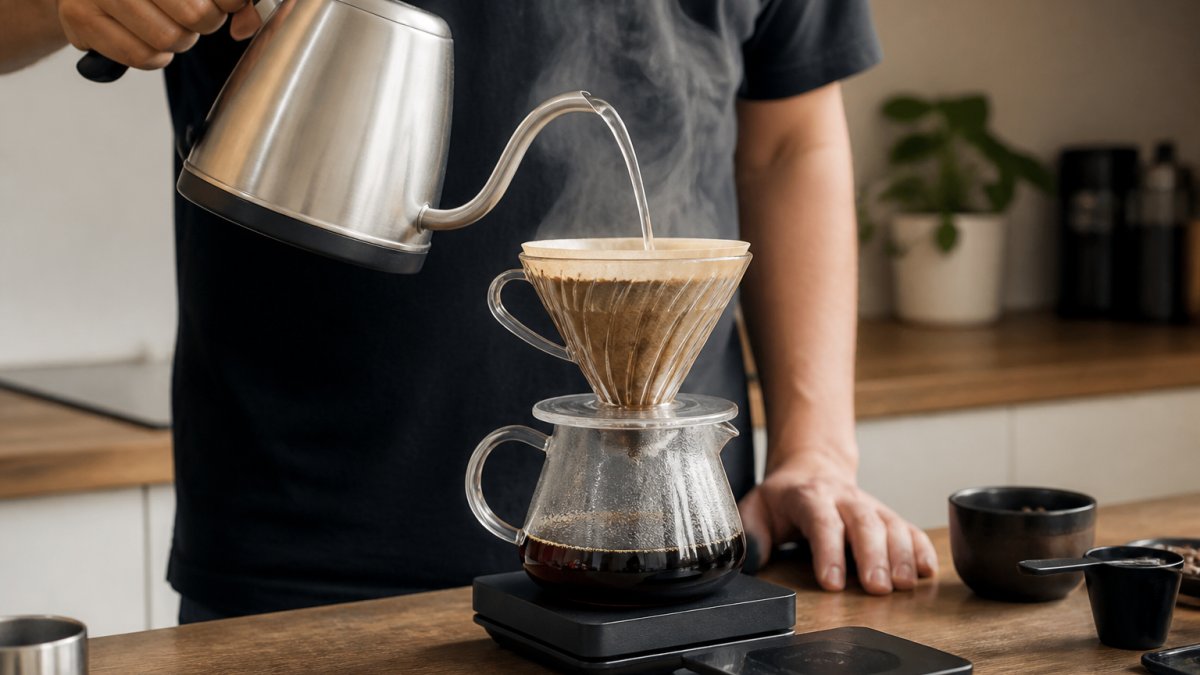
The Diagnosis Flowchart: Taste to Fix
Use this table to match what you taste with the fix that solves it.
| What You Taste | Likely Cause | The Fix |
|---|---|---|
| Bitter, dry, ashy | Over-extracted | Grind coarser, brew shorter |
| Sour, sharp, thin | Under-extracted | Grind finer, brew longer |
| Weak and watery | Too little coffee | Add more grounds |
| Harsh and hot | Water too hot | Drop to 195-205°F |
| Inconsistent cup to cup | Uneven grind | Clean or upgrade grinder |
Start with the top row if you're unsure. Bitterness is the most common complaint we hear.
Best Coffee Beans for Smooth Coffee: Roast, Variety, and Freshness
The best coffee beans for smooth coffee are medium roasts from high-elevation regions, roasted recently. Roast level, variety, and freshness all shape bitterness. Dark roasts carry more bitterness by nature, longer roasting caramelizes sugars and develops bitter notes.
Bean variety matters too. Catuai and Mundo Novo are known for a clean, elegant cup; our Brazil Santos uses both, grown at 750-1050 meters on volcanic loam soil, for a smooth cup with cocoa notes and no harsh edge.

Coffee Grind Size for Drip Coffee (and Every Other Method)
Coffee grind size for drip coffee should look like table salt. Too fine gives bitterness; too coarse gives a weak, sour cup.
Grind is the single biggest lever you control. Here's the rough range by method:
- Drip: medium, like table salt
- Pour-over: medium-fine, like fine sand
- French press: coarse, like breadcrumbs
Blade grinders leave powder and boulders that brew unevenly, so you taste bitter and sour in one sip. A burr grinder gives consistent particle size, the real fix. Switching from pre-ground to fresh-ground beans alone brings a noticeable jump in smoothness.
Best Water Temperature for Coffee: Why 195-205°F Matters
The best water temperature for coffee is 195°F to 205°F. Above that range, water scalds the grounds and pulls out harsh, bitter compounds. It's the number most home brewers ignore, and one of the fastest fixes.
Why Temperature Changes Flavor
Coffee grounds contain hundreds of soluble compounds that dissolve at different rates. The pleasant ones, fruit acids, sugars, aromatic oils, extract readily at 195-205°F. The harsh ones, tannins, chlorogenic acid lactones, dry ashy phenols, need more heat and time. At 212°F, bitter compounds come out before the sweet ones finish dissolving, leaving a cup hollow at the front and harsh at the back.
Tuning Temperature to Your Roast
Roast level changes the ideal temperature inside that 195-205°F window:
- Light roasts: 200-205°F. Denser beans resist extraction, so they need the higher end.
- Medium roasts: 197-202°F. The sweet spot for most beans, including our Brazil Santos.
- Dark roasts: 195-200°F. Already porous and soluble, so cooler water keeps the bitter edge in check.
If unsure, 200°F is a safe middle for any medium roast.
How to Hit the Target Without a Fancy Kettle
You don't need a variable-temperature kettle. Two reliable methods:
- Boil, then rest. Bring water to a full boil (212°F at sea level), then wait. In a standard kettle, water drops roughly 5-10°F per minute at room temperature. A 60-second rest lands you near 200°F; 90 seconds lands near 195°F.
- The two-cup pour. Boil water, pour half into a room-temperature mug, then pour it back. The transfer drops the temperature 10-15°F instantly.
An instant-read digital probe is the cheapest way to verify. Stick it in the kettle before you pour, not after, water cools as it hits the grounds and dripper.
A Quick Test
If you suspect temperature, brew two cups back to back, one at 200°F, one at 190°F, keeping dose, grind, and time identical. Taste side by side. If the cooler cup is smoother, your kettle ran hot; if it's sour and weak, you went too cool. This test tells you more than any guideline.
Repeatable Brew Recipes for Drip, French Press, and AeroPress
A repeatable recipe beats guesswork. Weigh your coffee and water, follow the timing, and you'll get the same smooth cup every time. Three methods to start with:
Drip
- 1:16 ratio, 22g coffee to 350g water
- Medium grind
- Water at 200°F
French Press
- 1:15 ratio, 30g coffee to 450g water
- Coarse grind
- Water at 200°F
AeroPress
- 1:14 ratio, 17g coffee to 240g water
- Medium-fine grind
- Water at 195-200°F
Weigh everything, a scoop varies by bean and grind, so grams are the only reliable measure.
Water Quality, Grinder Maintenance, and Bean Storage
Most guides say use filtered water and clean your gear. Correct but incomplete. Water chemistry, grinder condition, and bean storage are where smooth coffee is won or lost, and the variables home brewers most often overlook.
Water Chemistry: The Variable Nobody Talks About
Coffee is 98% water, so the minerals in your water shape what ends up in your cup. Two numbers matter most:
- Hardness (calcium and magnesium): These minerals bind to coffee compounds and help extract flavor. Too little and your coffee tastes flat and hollow; too much and you get chalky, dull, over-extracted bitterness.
- Alkalinity (bicarbonate): This buffer neutralizes coffee's natural acids. High alkalinity flattens brightness and mutes sweetness; low alkalinity lets acidity run sharp and sour.
Most specialty roasters aim for roughly 50-100 ppm total hardness and 40-70 ppm alkalinity. You can't taste these numbers, but you can taste their effects.
What to do without a lab kit:
- If your tap water tastes good plain, it will likely brew decent coffee. Start there.
- If it tastes metallic, chlorinated, or flat, a basic carbon filter (pitcher or faucet-mounted) removes chlorine and most off-flavors.
- If your coffee consistently tastes dull no matter what you change, your water may be too soft or too alkaline. Try bottled spring water as a test, if the cup improves dramatically, your tap water is the problem.
Grinder Maintenance: The Hidden Bitterness Source
A burr grinder is only as good as its burrs. Over time, coffee oils coat the cutting surfaces and stale grounds pack into the chute, producing inconsistent particle size, fines and boulders, which brews bitter and sour at once.
A simple maintenance schedule:
- After every use: Tap the grinder to clear loose grounds from the chute.
- Weekly: Brush the burrs with a stiff grinder brush. Never use water.
- Monthly: Run a small batch of grinder cleaning tablets (or raw white rice, if your manufacturer allows it) through the burrs to strip built-up oils.
If your coffee suddenly tastes harsh and you haven't changed anything else, clean your grinder before you change your recipe.
Bean Storage: Freshness Without the Fridge
Coffee starts losing flavor the moment it's roasted. The enemies: oxygen, light, heat, and moisture, in that order.
- Store in an opaque, airtight container. A one-way valve bag works if you squeeze out excess air. A mason jar with a tight lid works too.
- Keep it in a cool, dark cabinet. Not above the stove, not on a sunny windowsill.
- Skip the fridge. The temperature swings every time you open the door, and coffee absorbs odors from everything around it.
Buy in quantities you'll finish in two to three weeks. A pound of coffee is roughly 30-45 cups, depending on your dose. If you brew one cup a day, buy a half-pound at a time.
Common Mistakes That Make Coffee Bitter
The most common brewing mistakes all push extraction too far. Avoid these and your coffee gets smoother almost overnight.
- Water too hot. Boiling water scalds the grounds. Let it cool first.
- Grind too fine. Powdery grounds over-extract in seconds.
- Brewing too long. Extra time pulls out bitter compounds.
Pick one mistake from that list and fix it this week. Then move to the next.
We built Iron Spur Coffee around this exact problem. Our beans are specialty-grade, grown at high elevation, and roasted in small batches with precision thermal mapping to cut bitter noise before it reaches your kitchen.
Frequently Asked Questions
Why does my home-brewed coffee taste bitter?
Bitterness usually comes from over-extraction, which happens when water stays in contact with coffee grounds too long, the grind is too fine, or the water is too hot. Dark roasts and stale beans also contribute. Check your grind size first, then your water temperature (aim for 195-205°F), then your brew time. Changing one variable at a time lets you pinpoint the cause instead of guessing.
Does a finer grind make coffee more bitter?
Yes. A finer grind increases surface area, so water extracts compounds faster. If you grind too fine for your brewing method, you pull out harsh, bitter flavors before the brew finishes. For drip coffee, a medium grind works best. For French press, go coarse. Adjust one notch coarser if your cup tastes bitter, and taste again before changing anything else.
What water temperature helps prevent bitter coffee?
The sweet spot is 195-205°F. Water above 205°F scorches coffee grounds and pulls out bitter compounds fast. Water below 195°F under-extracts and leaves the cup sour and weak. If you do not have a variable-temperature kettle, boil water and let it sit for 30-45 seconds before pouring. That brings it into range for most home brewing methods.
Can I fix bitter coffee without adding sugar or milk?
Yes. Start with fresh, medium-roast beans like Brazil Santos or Black Creek, which have smooth cocoa and nutty notes instead of charred flavors. Use filtered water, keep your water temperature between 195-205°F, and coarsen your grind slightly. A pinch of salt can neutralize bitterness in a pinch, but fixing the brew variables gives you a genuinely smooth cup without masking anything.
Bitterness is a solvable problem, not a permanent feature of home brewing. Fix your water temperature, dial in your grind, and use fresh beans, and you'll taste the difference in your next cup. Iron Spur Coffee roasts to order with thermal mapping to keep bitterness out of the bag, and we ship fast so your beans arrive ready to brew. Discover Iron Spur Coffee today and start your morning with a cup that's smooth from the first sip.