

Is Specialty Coffee Worth the Price? A Real Cost Analysis
Table of Contents
- What Is Specialty Grade Coffee
- The SCA Grading System and Why It Matters
- Why Specialty Coffee Costs More Than Commodity Coffee
- Benefits of Small-Batch Roasting for Flavor and Freshness
- How to Store Specialty Coffee Beans for Maximum Shelf Life
- The Diminishing Returns Curve: When Premium Pricing Stops Making Sense
- Is Specialty Coffee Worth It? The Real Value Proposition
- Frequently Asked Questions
Last Updated: September 2, 2026
What Is Specialty Grade Coffee
Specialty grade coffee scores 80 points or higher on the Specialty Coffee Association (SCA) 100-point grading scale, representing the top tier of coffee quality distinguished by exceptional flavor complexity, careful cultivation, and meticulous processing (sca.coffee).
Specialty beans are typically grown at higher elevations, usually between 1,200 and 2,000 meters, where cooler temperatures slow ripening and allow beans to develop complex sugars and acids that create richer flavor profiles (peer-reviewed research). Specialty coffee farmers hand-pick ripe cherries, sort by hand, and employ specific processing methods (washed, natural, or honey process) that directly influence final cup character.
At Iron Spur Coffee, we source specialty-grade beans from high-elevation estate environments in regions like Bali, Ethiopia, and Kenya, each offering distinct flavor signatures shaped by altitude, soil composition, and processing tradition. Specialty coffee is measurable, traceable, and intentional, you're paying for documented quality standards and a transparent supply chain where you can often identify the specific farm or cooperative that grew your beans.
The SCA Grading System and Why It Matters
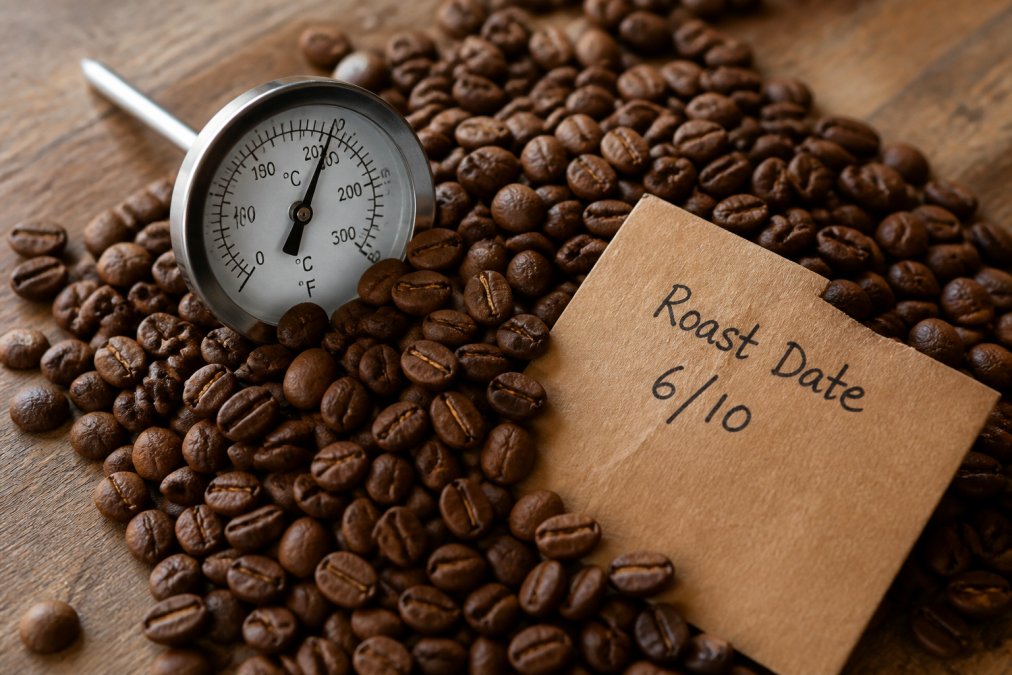
The Specialty Coffee Association grading system provides an objective framework for evaluating coffee quality. Certified cuppers evaluate beans across multiple dimensions: aroma, flavor, aftertaste, acidity, body, balance, consistency, and overall impression. Scores combine to produce a final rating out of 100, with 90-100 being outstanding, 85-89 excellent, 80-84 very good, and below 80 falling into commodity grades.
The SCA score is verifiable and transparent. When a roaster tells you a coffee scored 85, that score came from trained professionals using calibrated protocols, not from the roaster's opinion. This accountability is rare in food and explains why specialty coffee has built transparency into its foundation.
The grading system also explains why specialty coffee costs more. A coffee scoring 82 required selective harvesting, specific fermentation or drying methods, careful storage, and precise roasting to bring out its character. Commodity coffee, scoring 70 or below, is often a blend of beans from multiple origins, sometimes including defective beans, processed quickly to maximize volume. The cost difference reflects fundamentally different production philosophies.
Why Specialty Coffee Costs More Than Commodity Coffee
The price premium for specialty coffee reflects real differences in production at every stage.
Sourcing and farming practices form the foundation. Specialty coffee farmers invest in soil management, shade-grown cultivation, and selective harvesting. Picking only ripe cherries produces less volume than stripping entire branches, but the quality difference is dramatic. This labor-intensive approach costs more upfront and gets passed along the supply chain.
Direct trade relationships increase transparency and cost. When roasters source directly from farmers rather than through commodity brokers, they often pay above commodity rates in exchange for consistent quality. This direct connection also means smaller batch sizes, which reduces economies of scale.
Processing and handling diverge significantly. Specialty coffee undergoes hand-sorting after harvest, precise fermentation timing, and careful drying on raised beds. Commodity coffee is processed for speed: mechanical sorting, rapid drying, and bulk storage.
Roasting to order preserves freshness but requires more frequent roasting runs and higher labor costs. Iron Spur Coffee roasts smaller quantities shortly before shipment rather than processing large batches weeks in advance.

Quality control and traceability add cost. Specialty roasters maintain detailed records of origin, harvest date, processing method, and roasting profile for each lot, enabling the transparency that justifies the premium price.
The cumulative effect: specialty coffee typically costs $20-30 per pound, while commodity coffee costs $5-8. This is a fundamentally different product created through different methods at every stage.
Benefits of Small-Batch Roasting for Flavor and Freshness
Small-batch roasting, processing beans in quantities of 5 to 25 pounds rather than 100-pound drums, preserves flavor complexity that larger-scale roasting cannot match. The roaster can monitor bean temperature continuously and adjust heat input in real time. The Maillard reaction and caramelization happen within narrow temperature windows. Small batches allow the roaster to hit that target window consistently.
Iron Spur Coffee uses precision thermal mapping during roasting to eliminate bitter compounds while preserving the bean's inherent sweetness and complexity. This technique requires continuous monitoring, something practical at small scale but difficult when roasting 100 pounds at once.
Freshness is the second major benefit. Coffee begins losing aromatic compounds immediately after roasting. After about two weeks, it has lost most aromatic complexity (peer-reviewed research). After four weeks, it tastes noticeably flat and stale.
Roasting to order means your coffee is roasted days before shipment, not weeks or months. A coffee roasted two weeks ago still has its full aromatic profile. The same coffee roasted eight weeks ago tastes noticeably muted. Stored correctly in an airtight container, small-batch roasted coffee maintains its flavor profile for weeks.
How to Store Specialty Coffee Beans for Maximum Shelf Life
Storage is where most coffee drinkers lose the value they paid for. Specialty coffee's complexity fades quickly under wrong conditions.
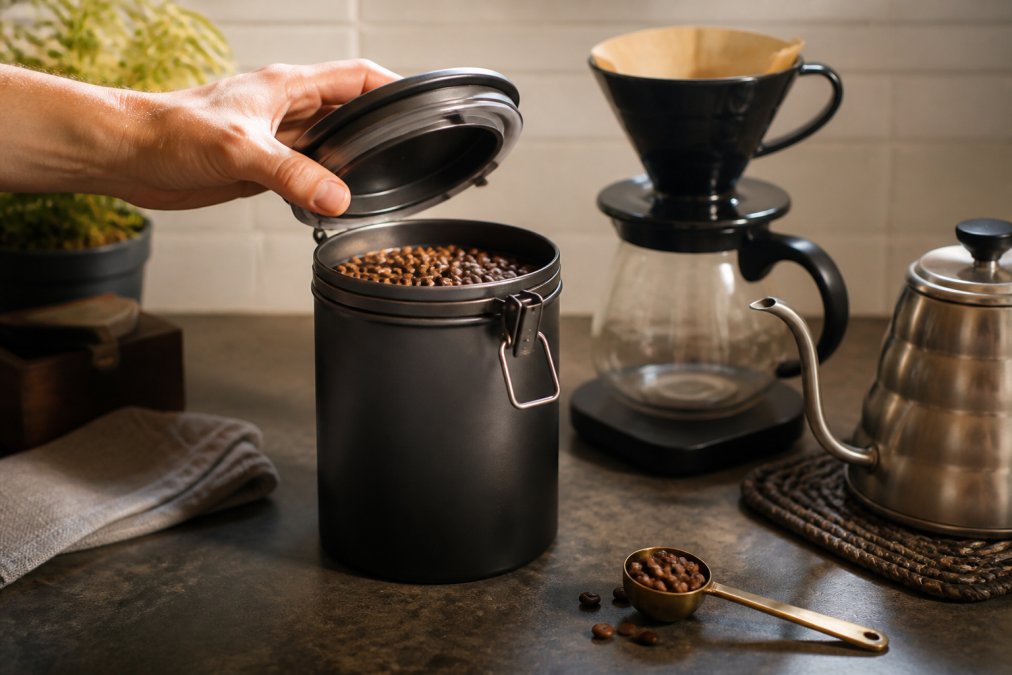
Airtight containers are essential. Oxygen degrades flavor compounds. Use containers with one-way valves or simple airtight containers. Transfer whole beans into a sealed container within a few days of opening the bag.
Discover Iron Spur Coffee Today →
Temperature stability matters. Heat accelerates oxidation and degassing. Store coffee in a cool location, ideally between 50 and 70 degrees Fahrenheit. Avoid areas above the stove, near direct sunlight, or in warm cabinets. A cool pantry is ideal.
Humidity is the third factor. Moisture causes beans to swell and can introduce mold. A dry environment is essential. In humid climates, consider storing beans in a sealed container with a small desiccant packet, replaced every few weeks.
Whole beans stay fresh longer than ground coffee. Grinding increases surface area and speeds oxidation. Grind beans immediately before brewing. Whole beans roasted to order and stored correctly maintain their flavor profile for 4 to 6 weeks.
The Diminishing Returns Curve: When Premium Pricing Stops Making Sense
The relationship between coffee price and flavor quality follows a curve with diminishing returns. Moving from a $5 commodity coffee to a $15 specialty coffee is a massive leap in flavor. The commodity coffee tastes flat and one-dimensional. The specialty coffee has distinct flavor notes, complexity, and balance.
As you move further up the curve, improvements become subtler. The difference between a $20 coffee and a $25 coffee is real but smaller. Both are specialty-grade and taste excellent. The $25 coffee might have more distinctive origin character, but you're paying 25% more for maybe a 10% improvement.
At the very top, coffees scoring 92-100 and priced at $35 or more per pound, you're often paying for rarity or micro-lot status. These are exceptional coffees, but whether they're worth the price depends entirely on your palate and priorities.
The practical takeaway: specialty coffee in the $20-25 range offers the best value proposition. You get genuine quality improvements over commodity coffee, roasted with care, without extreme rarity premiums. Iron Spur Coffee's single-origin offerings at $23.99 sit right in this sweet spot.
Is Specialty Coffee Worth It? The Real Value Proposition
Whether specialty coffee is worth the price depends on how much you care about flavor, how often you drink coffee, and your budget.
For daily drinkers who prioritize taste: specialty coffee is almost certainly worth it. A $20 bag yielding 20 cups costs $1 per cup versus 25 cents for commodity coffee. The annual difference, assuming 300 coffee days per year, is roughly $225. For most people with a disciplined morning routine, that's a reasonable investment in something you use daily and genuinely enjoy more.
For occasional drinkers or those on tight budgets: specialty coffee might not be worth it. If you drink coffee three times a week, the annual difference shrinks to $45. If you don't have a refined palate, you might not perceive enough difference to justify the cost.
For professionals and outdoor enthusiasts: specialty coffee delivers specific value. A field worker or someone heading out for a full day benefits from consistent quality and full flavor profile. Iron Spur Coffee's focus on delivering complex sweetness without the bitterness from rushed commodity roasting makes a tangible difference during a 12-hour workday.
For those who value supply chain transparency: specialty coffee's traceability is worth something in itself. You know where your beans came from, the farmer was paid fairly in direct trade models, and quality was verified by independent standards.
Specialty coffee is worth the price if you drink it regularly and care about flavor quality. The cost-per-cup premium is modest for daily drinkers. Iron Spur Coffee's approach, roasting to order with precision thermal mapping to eliminate bitterness, addresses the specific concern most people have about premium coffee: whether the higher price actually delivers better flavor.
For those ready to move beyond commodity coffee, start with a single-origin specialty coffee at the $20-25 price point. The Ethiopia Natural or Kenya from Iron Spur Coffee are solid entry points. You'll immediately notice the difference in flavor complexity compared to commodity coffee. Whether that difference justifies the price becomes obvious after the first cup.

Specialty coffee's premium price reflects genuine quality differences: higher-elevation cultivation, careful hand-harvesting, intentional processing, and roasting that preserves the bean's character. Whether it's worth the price depends on how much you value flavor and how often you drink coffee. For daily drinkers, the cost-per-cup premium is modest and the flavor improvement is substantial. Iron Spur Coffee delivers specialty-grade beans roasted to order with precision thermal mapping, ensuring maximum freshness and complex flavor without the bitterness that compromises commodity coffee. Start with a bag of our Ethiopia Natural or Kenya single-origin coffee and experience the difference that small-batch roasting and high-elevation sourcing deliver to your cup.
Frequently Asked Questions
Q: What is the difference between regular coffee and specialty coffee?
A: Regular commodity coffee is graded below 80 on the SCA scale and often blends beans from multiple origins with inconsistent quality. Specialty coffee scores 80+ and comes from single-origin estates with traceable sourcing, distinct flavor profiles, and controlled processing. Specialty beans are hand-picked at peak ripeness, processed with precision, and roasted to highlight their unique characteristics rather than mask defects. The difference shows up immediately in taste, complexity, clarity, and absence of bitterness.
Q: Why does specialty coffee cost more than mass-produced coffee?
A: Specialty coffee carries higher costs at every stage: selective hand-harvesting, quality-controlled processing, small-batch roasting, and supply chain transparency. Single-origin beans from high-elevation estates require more labor and yield smaller volumes than commodity crops. Small-batch roasting with thermal mapping adds precision, but eliminates the bitter, burnt flavors of mass-production roasting. Direct trade relationships ensure fair prices to growers, increasing transparency. When you pay more, you're funding traceability, freshness (roasted to order), and flavor complexity that commodity coffee cannot deliver.
Q: How can you tell if a coffee is truly specialty grade?
A: Look for an SCA score of 80 or higher on the packaging or website, this is the official grading standard. Check for single-origin sourcing (specific region, altitude, and grower information), a recent roast date (within 2 weeks), and a detailed tasting profile (acidity, body, specific flavor notes like 'bright citrus' or 'dark chocolate'). Reputable specialty roasters list their processing method (washed, natural, honey process) and often include cupping notes. Avoid vague claims like 'premium' without scores or specifics. Iron Spur Coffee, for example, lists altitude, soil type, and flavor notes for each single-origin offering.
Q: Is specialty coffee worth buying for home brewing?
A: Yes, if you care about flavor and freshness. Home brewers benefit most from specialty coffee because small-batch roasting and roast-to-order freshness make a measurable difference in extraction and taste. You'll notice the complexity and reduced bitterness immediately. The cost-per-cup is higher upfront, but specialty coffee retains flavor for 3-4 weeks if stored properly, and you're not wasting money on stale, bitter coffee that tastes the same whether you paid $8 or $15 per pound. For field professionals and outdoor enthusiasts needing reliable energy and bold flavor, specialty coffee delivers measurable performance.
This article was written using GrandRanker