

Does Freezing Coffee Beans Ruin Flavor? A Guide
Table of Contents
- Does Freezing Coffee Beans Ruin Flavor?
- How the Science of Coffee Staling Affects Frozen Beans
- How to Store Coffee Beans for Maximum Freshness
- Freezing Coffee Beans Vacuum Seal: The Best Method
- How Long Do Coffee Beans Last in the Freezer
- Thawing and Defrosting: Critical Steps for Flavor Preservation
- Impact on Different Roast Levels and Flavor Profiles
- The Refreeze Myth: What Actually Matters
- Frequently Asked Questions
Last Updated: September 3, 2026
Does Freezing Coffee Beans Ruin Flavor?
Freezing coffee beans does not ruin flavor when done correctly. However, improper freezing can degrade the complex sweetness and aromatic oils that define specialty coffee. At Iron Spur Coffee, we've analyzed how storage methods impact the beans we roast to order, and the science reveals that freezing is one of the most effective ways to preserve freshness if you follow specific protocols.
Freezing slows oxidation and staling, the natural processes that cause coffee to lose vibrant flavor notes over time. But freezing introduces risks: condensation, freezer burn, and thermal shock can damage cell structure if you're not careful. The difference between preserving peak flavor and compromising it comes down to airtight storage, single-dose preparation, and proper thawing technique.
How the Science of Coffee Staling Affects Frozen Beans
Coffee staling begins the moment beans are roasted. Heat creates aromatic oils and complex flavor compounds within the bean's porous cell structure. Once roasted, these oils oxidize when exposed to air, moisture, and heat, transforming bright, nuanced flavors into flat, bitter, or cardboard-like notes.
Freezing interrupts oxidation by dramatically slowing the chemical reactions that cause staling. At freezer temperatures, molecular activity that degrades flavor essentially pauses. This is why frozen beans maintain their flavor profile far longer than room-temperature beans. However, freezing only slows oxidation, the moment beans thaw, oxidation resumes at normal speed.
The porous structure of roasted coffee is both an asset and vulnerability. That porosity allows water and air to penetrate the bean, making proper airtight sealing non-negotiable. Additionally, the oils that give specialty coffee its body and complexity are sensitive to temperature fluctuations. Repeated thawing and refreezing breaks down these oils, which is why single-dose freezing strategies work better than bulk storage.
How to Store Coffee Beans for Maximum Freshness
Airtight containers and moisture control
Moisture is the enemy of frozen coffee storage. When frozen beans are exposed to air, they absorb moisture as they warm, and condensation can penetrate the porous cell structure, diluting flavor compounds and promoting mold growth.
The best containers for freezing are vacuum-sealed bags or airtight glass jars with tight-sealing lids. Vacuum sealing removes nearly all air, minimizing oxidation during storage. Glass containers with rubber gaskets provide an excellent reusable alternative. Avoid standard ziplock bags, they don't create a truly airtight seal and allow slow air exchange over time.
Before freezing, ensure beans are completely dry. If stored at room temperature, let them acclimate to room temperature before sealing for the freezer to prevent condensation inside the container as beans cool.
Store beans in a cool, dry place until ready to freeze. Once sealed, keep containers in the coldest part of your freezer, away from the door where temperature fluctuates with each opening.
Room temperature vs. freezer storage
Room temperature storage is acceptable only for beans you plan to use within 2-3 weeks of roasting. Specialty coffee reaches peak flavor 5-10 days after roasting, and this window closes quickly as oxidation accelerates.
Freezer storage extends this window dramatically. Frozen beans maintain their flavor profile for 3-4 months when properly sealed. This is particularly valuable for specialty roasts you want to preserve at peak complexity and sweetness.
The trade-off is convenience. Room temperature storage allows immediate access; freezer storage requires thawing time and careful handling. For those who value maximum flavor and freshness, freezer storage is worth the extra steps.
Temperature consistency matters more than absolute temperature. Fluctuating freezer temperatures cause beans to expand and contract, cracking cell structure and releasing aromatic oils prematurely. Keep your freezer at a steady 0°F or below.
Freezing Coffee Beans Vacuum Seal: The Best Method
Vacuum sealing is the gold standard for freezing coffee beans because it removes oxygen, preventing oxidation during long-term storage. A vacuum sealer pulls air from the bag before sealing, creating an environment where oxidation essentially stops.
The process is straightforward: portion beans into vacuum-seal bags, place the open end in the sealer, and activate. The machine removes air and heat-seals the bag in seconds, creating a hermetically sealed package that protects beans from both air and moisture.
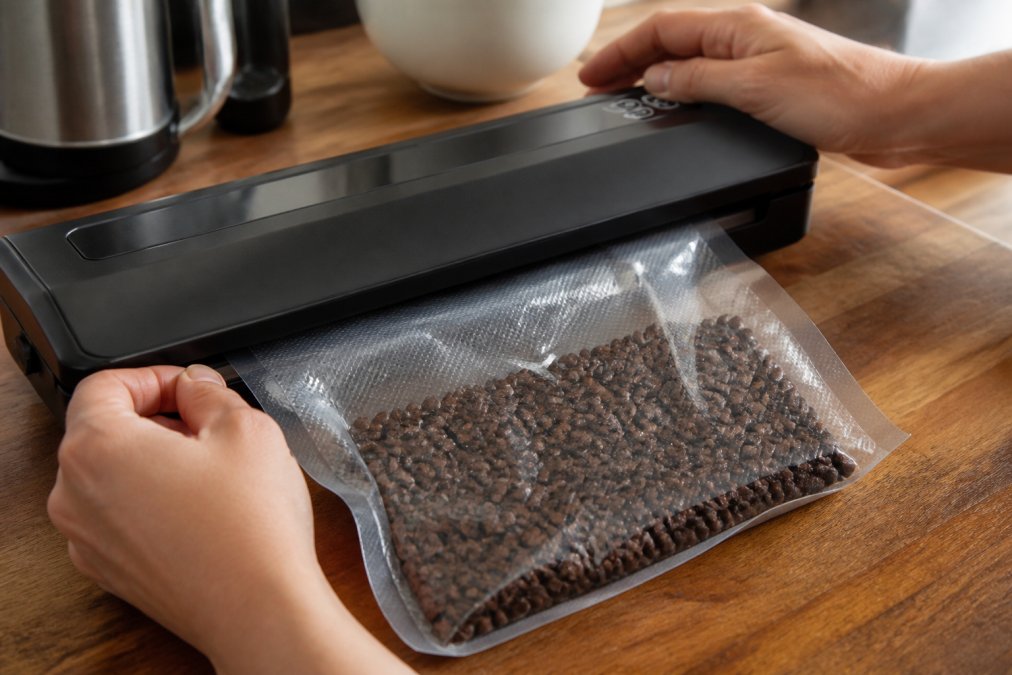
Quality matters when choosing a vacuum sealer. Budget models sometimes fail to create a complete seal. Mid-range sealers ($30-60) are reliable for home use. If you freeze coffee regularly, invest in a model with consistent sealing pressure.
One critical detail: don't seal completely on the first attempt if using a wet-seal method. Leave a small opening, insert a straw, and manually remove air before completing the seal to prevent moisture from being sucked into the bag.
Single-dose vs. bulk freezing strategies
Single-dose freezing divides beans into small portions (enough for one brewing session) before sealing. This eliminates the need to open a large bag repeatedly, preventing condensation exposure and oxidation.
For daily brewers, single-dose freezing means preparing 30 small bags at once. Each time you brew, you thaw only what you need, keeping remaining beans sealed and protected.
Bulk freezing stores larger quantities in one or two bags. This approach is faster to prepare but requires careful thawing. If you thaw a large bag and don't use all beans immediately, you've exposed remaining beans to air and moisture. Bulk freezing works best for households that consume coffee quickly.
The ideal strategy depends on brewing frequency. Daily brewers benefit from single-dose preparation. Occasional brewers can use bulk bags and thaw only what they'll use within a few days.
Avoiding freezer burn and condensation
Freezer burn occurs when ice crystals form on the bean surface, damaging cell structure and creating off-flavors. It's caused by dehydration, moisture in beans evaporates in the dry freezer environment and refreezes on the surface.
Vacuum sealing prevents freezer burn by eliminating air circulation around beans. If using airtight containers instead, wrap them in an additional layer of freezer paper to reduce air exposure.
Condensation is the more common problem. When frozen beans warm, moisture in the air condenses on the cold surface. The solution is to thaw beans completely before opening the bag. Leave sealed bags at room temperature for 30-60 minutes until they reach room temperature, then open. This eliminates the temperature differential that causes condensation.
Never thaw beans in the refrigerator. Room temperature thawing is faster and safer.
How Long Do Coffee Beans Last in the Freezer
Properly frozen coffee beans maintain their flavor profile for 3-4 months, assuming vacuum sealing or equivalent airtight storage and consistent freezer temperature.
Beans don't suddenly lose flavor at the 4-month mark. Instead, oxidation gradually resumes even in the freezer. By month 2, flavor becomes slightly softer. By month 4, complexity and aromatic notes flatten noticeably.
For specialty coffee roasted to order like Iron Spur Coffee's small-batch roasts, the first 2-3 months of freezer storage preserve the roaster's intended flavor profile most faithfully. Beans frozen within a week of roasting taste closest to fresh throughout storage.
Room temperature storage gives you 2-3 weeks before noticeable flavor degradation. This is why freezing is essential for anyone who can't consume specialty coffee quickly.
Discover Iron Spur Coffee Today →
Darker roasts hold their flavor slightly longer than light roasts because they have less volatile aromatic oils. Medium roasts like Iron Spur Coffee's Brazil Santos maintain peak flavor for the full 3-4 month window.

Thawing and Defrosting: Critical Steps for Flavor Preservation
Improper thawing can erase the benefits of perfect freezing. The goal is to bring beans to room temperature without exposing them to moisture or air.
The correct method: Remove sealed bags from the freezer and leave them at room temperature for 30-60 minutes without opening. The sealed environment protects beans as they warm. Once the bag reaches room temperature, open it and use the beans immediately.
This waiting period is non-negotiable. The temperature differential between frozen beans and room temperature air creates condensation. Opening the bag while beans are still cold allows moisture to condense on the surface and penetrate the porous structure immediately.
Never use a microwave, oven, or heat source to thaw beans faster. Heat accelerates oxidation and damages aromatic oils. Never thaw in the refrigerator.
For those who need coffee ready quickly, prepare thawed beans the night before. Store them in an airtight container at room temperature overnight, then use them the next morning.
Once thawed, use beans within 24-48 hours. Oxidation resumes at normal speed. Any unused beans should be stored in an airtight container at room temperature, where they'll remain usable for another 1-2 weeks.
Impact on Different Roast Levels and Flavor Profiles
Light roasts contain the most volatile aromatic compounds and least developed oils. These bright, acidic flavors are sensitive to oxidation. Freezing is particularly valuable for light roasts because it preserves delicate flavor notes. Light roasts reach room temperature in 30-45 minutes.
Medium roasts like Iron Spur Coffee's single-origin selections offer balanced acidity, body, and aromatic complexity. These roasts freeze well and maintain their intended flavor profile throughout the 3-4 month storage window. Thawing takes 45-60 minutes.
Dark roasts have developed oils and lower acidity. The bold flavor compounds are less volatile than light roasts, so freezing provides less dramatic flavor preservation benefit. However, dark roasts still degrade over time at room temperature. Dark roasts thaw slightly slower, sometimes requiring 60+ minutes.
For specialty coffee connoisseurs, roast level determines how aggressively you should freeze. Light roasts justify single-dose freezing and careful thawing because flavor complexity is worth protecting. Dark roasts are more forgiving and tolerate bulk freezing with less risk.
Iron Spur Coffee's precision thermal mapping during roasting creates complex sweetness across all roast levels, meaning even darker roasts benefit from freezer storage to preserve the roaster's intended balance.
The Refreeze Myth: What Actually Matters
Refreezing itself doesn't damage beans, but the thawing and refreezing cycle exposes them to condensation and air, which does.
When you thaw frozen beans, moisture condenses on the surface. If you refreeze without removing this moisture, ice crystals form, damaging cell structure. The damage comes from the condensation and freezing cycle, not from refreezing itself.
However, refreezing is practical only once. Thaw beans once, use what you need, and store the remainder at room temperature. Don't refreeze. The condensation exposure during the first thaw makes refreezing counterproductive.
Single-dose freezing eliminates the refreezing question entirely by portioning beans before the initial freeze.
The real issue people encounter is opening a frozen bag repeatedly without letting it fully acclimate first. Each opening introduces condensation and air exposure, degrading flavor far more than a single, careful thaw-and-use cycle.
Freeze once, thaw once, use the beans. If you must store thawed beans, keep them in an airtight container at room temperature, where they'll remain fresh for 1-2 weeks. Don't refreeze.
Freezing coffee beans preserves flavor when done correctly, but the method matters more than the decision itself. Vacuum sealing, single-dose portioning, and careful thawing are the non-negotiable steps. For specialty coffee drinkers who invest in quality roasts, freezer storage is the difference between enjoying peak flavor for weeks and watching it fade within days.
Iron Spur Coffee's small-batch roasting and roast-to-order approach means your beans arrive at their flavor peak. Freezing extends that peak window dramatically. Start with our Best Sellers Sample Pack to experience how proper freezing preserves the complex sweetness and deep flavor notes our precision thermal mapping creates. Discover Iron Spur Coffee today and taste the difference that disciplined roasting and proper storage make.

| Storage Method | Duration | Best For | Condensation Risk |
|---|---|---|---|
| Room temperature | 2-3 weeks | Quick consumption | None |
| Freezer (bulk bag) | 3-4 months | Occasional users | Moderate |
| Freezer (single-dose) | 3-4 months | Daily brewers | Low |
| Vacuum-sealed freezer | 3-4 months | Maximum freshness | Very low |
EXTERNAL SOURCES:
The science of coffee staling and oxidation is well-documented in food science research. According to research on food preservation and oxidation, freezing slows chemical degradation by reducing molecular activity at cold temperatures. This principle applies directly to coffee bean storage.
Studies on coffee quality and storage methods show that airtight sealing is critical for preservation. The International Coffee Organization's guidance on bean storage emphasizes that moisture and air exposure are the primary drivers of flavor degradation in roasted coffee.
For technical details on freezer burn and cell structure damage, USDA guidelines on freezing food safely provides comprehensive information on how temperature fluctuations and moisture affect frozen products, principles that apply equally to coffee beans.
Frequently Asked Questions
Does freezing coffee beans change the taste?
Freezing coffee beans does not inherently ruin flavor when done properly. The main risk comes from moisture exposure and thermal shock. If beans are vacuum-sealed in airtight packaging and stored at a consistent freezer temperature, they preserve aromatic oils and complex sweetness. However, repeated thawing and refreezing, or exposure to condensation, will degrade flavor notes and increase bitterness. Single-dose freezing, portioning beans into small vacuum-sealed bags, eliminates the refreeze problem entirely.
What's the best way to freeze coffee beans with vacuum sealing?
Portion your beans into single-dose vacuum-sealed bags before freezing. This prevents repeated air exposure and thermal shock. Use a vacuum sealer to remove as much oxygen as possible, then place sealed bags in an airtight freezer container for extra protection. Vacuum sealing removes moisture and oxygen that accelerate oxidation and staling. Keep beans at 0°F or below. Single-dose bags mean you thaw only what you need, eliminating the refreeze myth entirely and preserving flavor profile and acidity across your entire supply.
How long do coffee beans last in the freezer?
Properly vacuum-sealed and frozen coffee beans maintain quality for 3 to 4 months. Beyond that, aromatic oils degrade and flavor notes flatten, even in the freezer. Whole beans last longer than ground coffee because they have less surface area exposed to oxidation. Room temperature storage limits beans to 2 to 3 weeks before staling accelerates noticeably. Freezing extends shelf life significantly, but only if beans are protected from moisture and condensation. Check for freezer burn or discoloration as signs that quality has declined.
Should you thaw coffee beans before grinding?
Yes, always thaw frozen beans to room temperature before grinding. Remove beans from the freezer and let them sit in their sealed bag for 30 to 45 minutes. This prevents thermal shock and condensation from forming on cold beans. When cold beans warm suddenly, moisture condenses on the surface, affecting extraction and introducing bitterness. Grinding cold beans also creates uneven particle size. Thawing ensures even moisture distribution and allows the cell structure to stabilize, protecting the complex sweetness and body you've preserved through freezing.
This article was written using GrandRanker