

Does Thermal Mapping Improve Coffee Flavor?
Table of Contents
- How Thermal Mapping Shapes Coffee Flavor
- The Science Behind Temperature and Taste Perception
- Coffee Extraction Temperature and Flavor Development
- Thermal Stability in Espresso Machines and Consistency
- Impact of Water Temperature on Coffee Acidity
- Thermal Mapping as a Roasting Control Tool
- Real-World Impact: Thermal Mapping vs. Traditional Roasting
- Conclusion
Last Updated: August 11, 2026
How Thermal Mapping Shapes Coffee Flavor
Thermal mapping is the practice of monitoring precise temperature zones during roasting to ensure consistent heat distribution across coffee beans. At Iron Spur Coffee, we use thermal mapping to eliminate the bitter, uneven flavors that result from hot spots and temperature swings in the roasting drum. The real benefit isn't that thermal mapping magically creates flavor where none exists, it prevents the flavor you've already developed from being destroyed by poor roasting technique.
A bag of specialty beans roasted with precision tastes clean and complex. The same beans roasted without temperature control taste harsh and one-dimensional. Thermal mapping bridges that gap by giving roasters real-time visibility into what's happening inside the drum. Uneven roasting creates bitter compounds that numb your palate and mask the acidity and sweetness that make specialty coffee worth drinking.
The Science Behind Temperature and Taste Perception
Temperature fundamentally alters how your taste buds perceive flavor. Your mouth contains sensory receptors that respond to heat, and high temperatures actually suppress your ability to taste sweetness and acidity. When coffee is scalding hot, these receptors are overwhelmed, and your palate goes numb. As the coffee cools, your taste buds gradually recover, and the flavor profile becomes clearer and more nuanced.
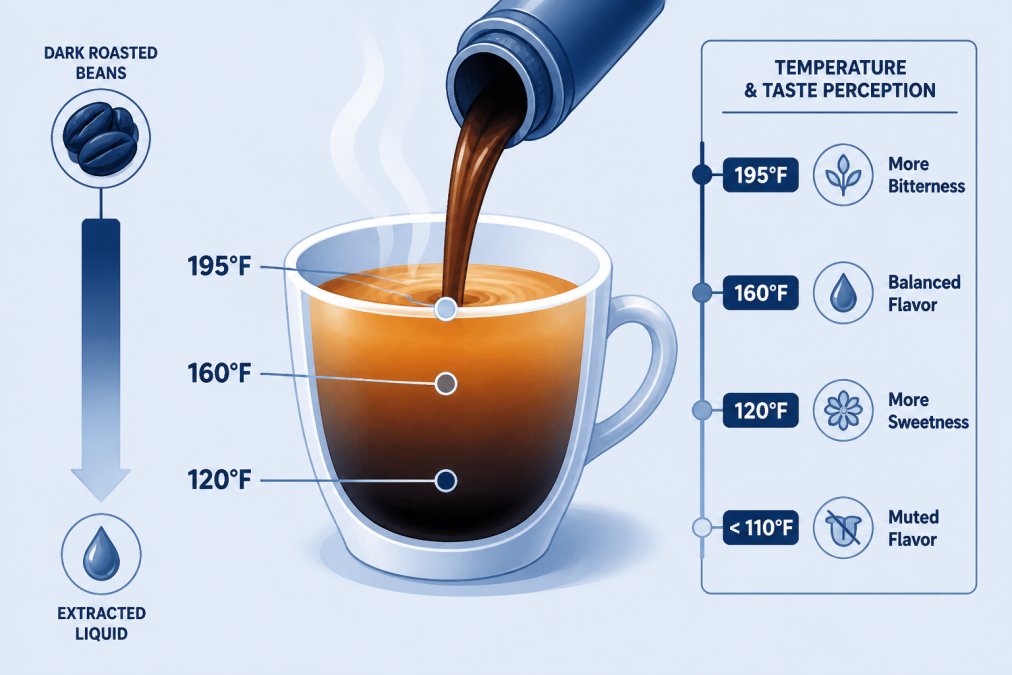
This is why the same cup tastes dramatically different at 180 degrees versus 140 degrees. It's not that the flavor compounds have changed, your sensory perception has. Specialty coffee roasters design their roasts with this reality in mind, creating coffee that tastes good when it's cool enough to actually taste.
Why Heat Numbs Your Palate
The numbing effect of high heat is a protective mechanism. When exposed to extreme heat, your pain receptors activate and shut down your taste perception. This is why drinking coffee straight from a 200-degree brew tastes flat and bitter, your palate isn't experiencing the actual flavor, it's experiencing thermal shock.
Many roasters taste their samples immediately after cooling them to room temperature, which gives them an accurate picture of what the customer will experience. This simple practice reveals flavor defects that hot tasting would mask.
How Flavor Evolves as Coffee Cools
As coffee cools, volatile compounds that create aromatic notes become more apparent. The acidity sharpens. The sweetness emerges. Roasters who understand this cooling curve can design roasts that hit specific flavor targets at the temperature customers will actually drink at. Thermal mapping reveals whether your roast is following the intended cooling curve. A thermally mapped roast cools uniformly, and the flavor evolution follows a clean trajectory.
Coffee Extraction Temperature and Flavor Development
The water temperature used for brewing works in tandem with thermal mapping. Coffee extraction, the process of dissolving flavor compounds from ground beans into water, is temperature-dependent. The ideal extraction window is narrow: typically 195 to 205 degrees Fahrenheit.
A roast that's been thermally mapped to eliminate bitter defects will extract cleanly at these temperatures. If your roast has uneven heat distribution, different bean particles will extract at different rates, creating an extraction profile that's impossible to dial in. A thermally mapped roast extracts uniformly and predictably, making your brewing variables simpler to control.
Thermal Stability in Espresso Machines and Consistency
Espresso machines are sensitive to temperature fluctuations. Even a 2-degree variance can shift the extraction and change the shot's balance. If your beans have uneven roasting, the espresso machine can't compensate, and your shots will vary from one pull to the next. Thermal mapping during roasting eliminates this variable. When beans are roasted uniformly, they extract uniformly in the espresso machine, and your shots become repeatable.
Impact of Water Temperature on Coffee Acidity
Water temperature during brewing directly controls how much acidity extracts and how your palate perceives it.
The Temperature-Acidity Extraction Window
Below 195°F, extraction is slow and incomplete, leaving the brewed coffee sour and thin. Between 195-205°F, extraction is balanced, creating the complexity specialty roasters design for. Above 205°F, extraction accelerates and acidity over-extracts, creating a sharp bite that masks other flavors.
A thermally mapped roast is designed with this extraction window in mind. The roaster has controlled the roasting temperature profile to ensure that acidity compounds develop appropriately and are present in the right concentration to shine at 200°F.
Standardized Flavor Profile by Temperature
Here's a practical reference for how the same cup of coffee tastes at different temperatures, assuming a well-roasted, thermally consistent specialty coffee:
At 180°F (82°C):
- Acidity: Barely perceptible; masked by heat
- Sweetness: Muted; heat suppresses sweet receptors
- Body: Feels full but tastes flat
- Overall: Harsh, one-dimensional, bitter compounds prominent
At 160°F (71°C):
- Acidity: Beginning to emerge; bright but not sharp
- Sweetness: Becoming apparent; caramel and fruit notes visible
- Body: Medium; balanced with acidity
- Overall: More complex than hot; closer to intended flavor
At 140°F (60°C):
- Acidity: Clear and pronounced; citrus or floral notes distinct
- Sweetness: Fully present; chocolate, nut, or fruit sweetness obvious
- Body: Lighter; acidity and sweetness dominate
- Overall: Closest to the roaster's intended flavor profile
At 120°F (49°C):
- Acidity: Sharp and sometimes aggressive; can taste sour if over-extracted
- Sweetness: Still present but acidity dominates perception
- Body: Light; feels thin compared to hotter temperatures
- Overall: Reveals extraction flaws; over-extraction becomes obvious
At 100°F (38°C) and below:
- Acidity: Can taste vinegary if the coffee was over-extracted
- Sweetness: Subtle; acidity overwhelms
- Body: Minimal
- Overall: Primarily diagnostic; not a pleasant drinking temperature
Why Perception Changes with Temperature
Your taste buds contain temperature-sensitive receptors that activate in response to heat. When these receptors are activated by high temperature, they suppress your ability to taste sweetness and acidity. At 180°F, these receptors are firing constantly, drowning out taste signals. As the coffee cools to 140°F, the thermal stimulus decreases, and your taste receptors function normally.
Discover Iron Spur Coffee Today →
If you're evaluating a roast while it's still too hot, you're making decisions based on incomplete information. Waiting for the coffee to cool reveals flavor defects that hot tasting would mask.
Acidity Extraction and Brew Variables
Water temperature works in tandem with brew time and grind size to control extraction. A finer grind increases surface area, speeding extraction. A longer brew time also increases extraction. If you brew fine grounds for a long time with hot water (205°F+), you'll over-extract and pull out excessive acidity and bitter compounds.
A thermally mapped roast simplifies this equation because the beans are uniform. Different particles extract at similar rates, so your brewing variables become easier to dial in.
Practical Tasting Protocol
To evaluate a coffee's acidity profile accurately:
- Brew normally at 200°F for your preferred method.
- Wait 3-5 minutes for the coffee to cool to approximately 160°F.
- Taste a small sip and note acidity character: bright, sharp, citrus, floral, or sour?
- Wait another 5 minutes for the coffee to cool to 140°F.
- Taste again and compare. At 140°F, you should perceive more sweetness and a clearer acidity profile.
- If the coffee tastes harsh or sour at 140°F, the problem is likely over-extraction or uneven roasting.
- If the coffee tastes thin or sour at 160°F but improves at 140°F, the roast is likely sound, and you're experiencing the temperature-perception effect.
This protocol takes 10 minutes and gives you diagnostic information that hot tasting cannot provide.
Thermal Mapping as a Roasting Control Tool
Thermal mapping transforms roasting from an intuitive craft into a measurable, repeatable process. Instead of relying on sound, smell, and experience to judge when to adjust heat, roasters see real-time data about temperature distribution inside the drum. This visibility allows them to make precise adjustments that prevent the hot spots and cold zones that create bitter, uneven flavors.
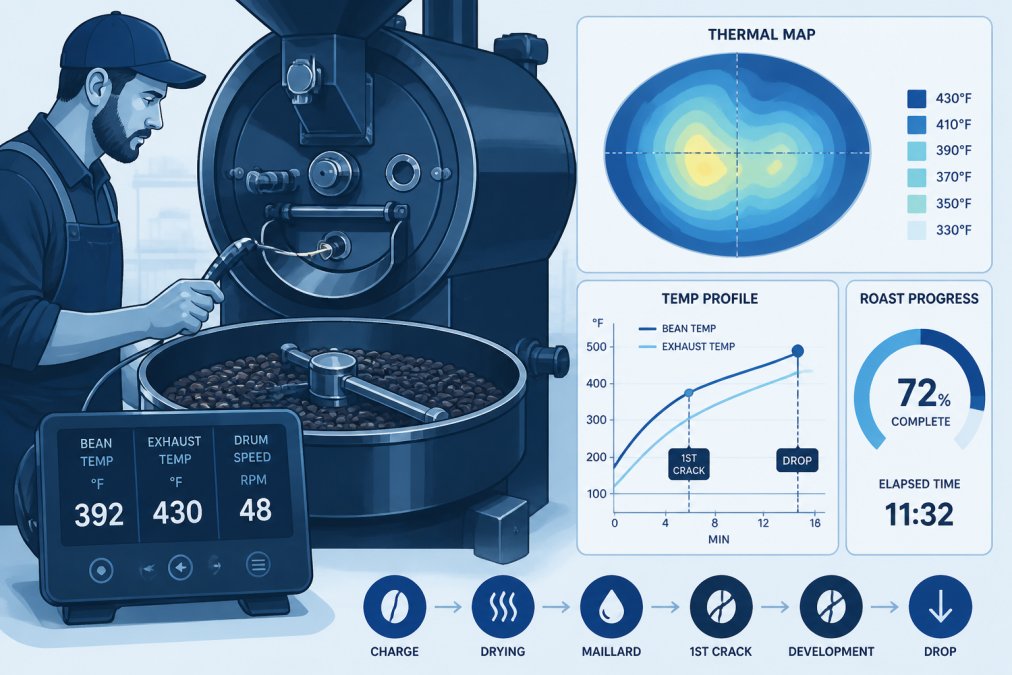
A roaster sets a target temperature profile, the path the coffee should follow from start to finish. Thermal sensors inside the drum report actual temperatures. When the actual profile diverges from the target, the roaster adjusts heat or airflow. This feedback loop ensures that every batch follows the same thermal curve, which means every batch develops flavor consistently.
Identifying Uneven Extraction and Bitter Defects
Uneven roasting creates bitter compounds that are nearly impossible to remove once they're in the bean. These compounds come from over-roasted particles in hot zones of the drum. The only way to prevent them is to prevent the hot zones in the first place. Thermal mapping does exactly that.
When you examine a thermally mapped roast under magnification, the beans are uniformly colored. When you examine a roast without thermal mapping, you'll see some beans darker than others, evidence of uneven heat exposure. Those darker beans have bitter compounds that will be present in every cup brewed from that batch.
DIY Thermal Mapping for Home Roasters
Home roasters can implement basic thermal mapping without expensive equipment. A simple infrared thermometer pointed at beans as they roast provides useful data. More serious home roasters use thermocouples, small temperature probes placed inside the roasting chamber, to track the actual thermal profile.
The key insight is consistency. If you roast the same beans to the same color every time using the same heat profile, your results will be repeatable. Thermal mapping gives you the data to know whether you're actually doing that.
Real-World Impact: Thermal Mapping vs. Traditional Roasting
The difference between thermally mapped roasting and traditional roasting becomes obvious in the cup. A coffee roasted with thermal mapping tastes clean, balanced, and complex. The same beans roasted without thermal mapping taste harsh and one-dimensional.
Consider a light roast specialty coffee. Roasted with thermal mapping, it tastes bright and floral, with clear acidity and sweetness. Roasted without thermal mapping, it tastes sour and thin, or harsh and bitter. The beans are identical. The roasting process is the difference.
Iron Spur Coffee uses thermal mapping specifically to eliminate bitterness and deliver the complex sweetness and clarity that distinguish specialty coffee. Every batch is roasted to a precise thermal profile, which means every batch tastes consistent and clean.
Thermal mapping is a tool that solves a specific problem: preventing the bitter defects that result from uneven roasting. It doesn't create flavor from nothing, and it doesn't make mediocre beans taste great. What it does is ensure that the flavor potential in your beans actually makes it into your cup. For anyone serious about specialty coffee, that's the foundation everything else is built on. Iron Spur Coffee's commitment to precision thermal mapping during small-batch roasting ensures you get the complex sweetness, deep flavor notes, and clean finish that define exceptional specialty coffee. Discover Iron Spur Coffee Today and experience the difference that disciplined roasting precision delivers.
Frequently Asked Questions
How does water temperature affect coffee extraction and flavor?
Water temperature directly controls extraction speed and compound solubility. Between 195-205°F, optimal extraction occurs, pulling sweetness and acidity while minimizing bitterness. Below 195°F, extraction stalls and coffee tastes sour. Above 205°F, over-extraction releases harsh, burnt compounds. Thermal mapping ensures roasters calibrate beans to perform best within this window, delivering consistent, balanced flavor regardless of brewing method.
Why does coffee flavor change as it cools?
Heat suppresses taste perception by numbing palate sensitivity. As coffee cools, your taste buds recover, revealing acidity, sweetness, and subtle aromatic notes hidden by high temperature. This is why specialty coffee tastes dramatically different at 160°F versus 140°F. Thermal mapping during roasting preserves volatile compounds and flavor clarity so these nuances emerge as the cup cools, rather than masking defects with heat.
Can thermal imaging help identify uneven coffee extraction?
Yes. Thermal imaging reveals hot and cold zones within roasting drums, exposing uneven heat distribution that causes some beans to over-extract while others under-extract. This inconsistency produces harsh, bitter flavors alongside underdeveloped notes. By mapping thermal zones in real time, roasters adjust airflow and drum speed to achieve uniform temperature profiles, eliminating the bitter noise that masks the true flavor profile of specialty beans.
What is thermal stability in coffee brewing, and why does it matter?
Thermal stability means maintaining consistent water temperature throughout brewing. Espresso machines with poor thermal stability experience temperature swings that alter extraction rates mid-shot, creating inconsistent acidity and sweetness. Machines with stable heating systems deliver repeatable flavor shots. Thermal mapping data helps equipment manufacturers design better insulation and heating controls, ensuring home baristas achieve professional-grade consistency without expensive commercial gear.
This article was written using GrandRanker