

Best Airtight Containers for Coffee Beans
Table of Contents
- Why Coffee Beans Need Airtight Storage
- How to Store Coffee Beans for Maximum Freshness
- How Long Do Coffee Beans Last in Storage
- Vacuum-Sealed vs. Valve-Based Systems
- Coffee Canister CO2 Valve Explained
- Choosing the Right Material: Stainless Steel, Glass, and Ceramic
- Capacity, Size, and Practical Considerations
- Conclusion
Last Updated: August 30, 2026
Why Coffee Beans Need Airtight Storage
Coffee degrades the moment roasting stops. Oxygen begins breaking down the compounds that make specialty coffee taste complex and sweet. Within days of opening a bag, oxidation accelerates dramatically, flattening the flavor profile that roasters spend weeks perfecting.
This is where airtight containers matter. The best airtight containers for coffee beans create a barrier against oxygen, light, and moisture, the three enemies of freshness. Without proper storage, even premium beans lose their character quickly.
At Iron Spur Coffee, we roast to order specifically because we understand how fragile freshness is. Our precision thermal mapping eliminates bitterness during roasting, but that quality only survives if the beans stay protected afterward. The right container preserves what we've worked to create.
Oxidation isn't the only threat. Degassing, the natural release of carbon dioxide that happens after roasting, also matters. Fresh beans continue releasing CO2 for days. A sealed container without a valve can build pressure and eventually burst. A container with a one-way valve allows gas to escape while blocking oxygen from entering. This balance is what separates a good storage solution from an average one.
How to Store Coffee Beans for Maximum Freshness
The ideal storage method combines three elements: an airtight seal, protection from light, and a cool environment. Temperature stability matters more than most people realize. Fluctuations between warm and cool cause condensation inside the container, which accelerates staling and can introduce moisture that damages beans.
Store your best airtight containers for coffee beans in a pantry or cabinet, not on a sunny counter. Direct sunlight degrades the oils and aromatics that define specialty coffee. Even indirect light causes measurable degradation over weeks. Opaque containers outperform clear glass for this reason, though borosilicate glass with an opaque exterior offers a middle ground, you can see your supply without sacrificing protection.
Temperature should stay between 50-70°F (the FDA). Room temperature works fine for most households. Avoid the refrigerator or freezer unless you're storing beans long-term in bulk. Condensation becomes a real problem when cold beans meet warm air during opening.
The Role of Oxidation and Degassing
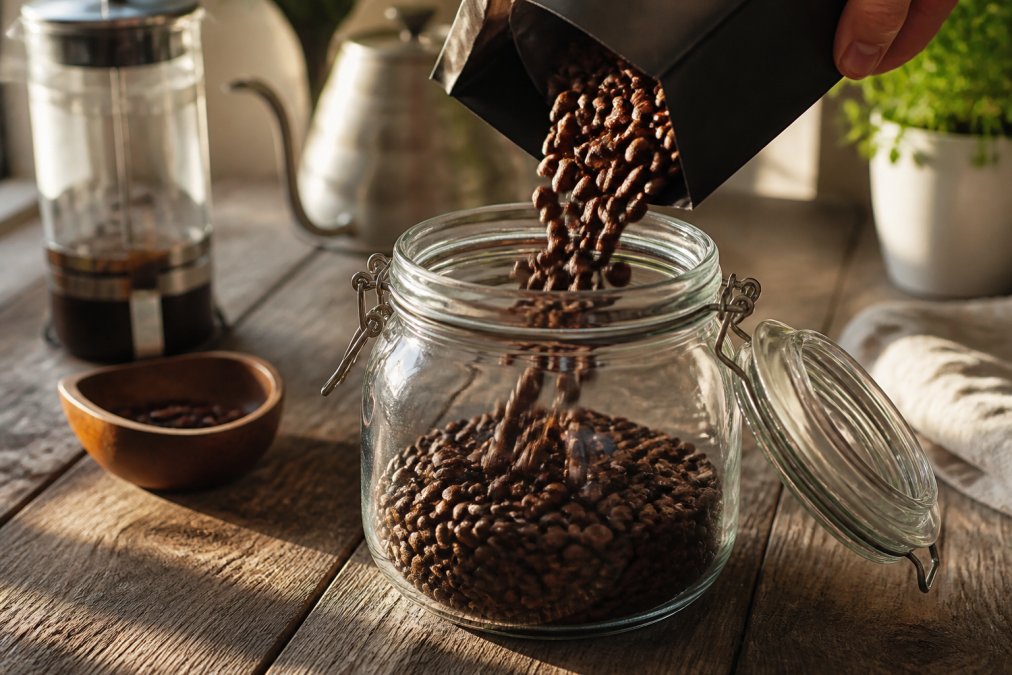
Oxidation is a chemical process where oxygen molecules interact with organic compounds in coffee, breaking down the complex flavor notes into simpler, duller compounds. This happens continuously once beans are roasted. The process accelerates with exposure to heat, light, and humidity.
Degassing is different, it's the release of CO2 that occurs naturally after roasting. Fresh beans release significant gas for 24-48 hours after roasting, then gradually taper off over two weeks (peer-reviewed research). A container without any valve will trap this gas, building pressure inside. A one-way valve solves this by allowing CO2 to escape while preventing oxygen from entering.
The best airtight containers for coffee beans balance these two processes. They seal tightly to minimize oxygen exposure while accommodating the ongoing degassing that happens in the first weeks after roasting. This is why valve-based systems became standard in specialty coffee, they're solving a real engineering problem.
Light, Heat, and Moisture Protection
UV light breaks down chlorogenic acid and other compounds that contribute to coffee's flavor complexity. This happens faster than oxidation alone. A container that blocks light, whether through opacity or dark glass, preserves freshness significantly longer than a clear container.
Heat accelerates every degradation process. Oils oxidize faster at higher temperatures. Moisture absorption increases. Even a 10-degree temperature increase can cut freshness in half over the same time period. This is why a cool, dark cabinet beats a kitchen counter near an oven or window.
Moisture is the silent killer. Humidity above 60% causes beans to absorb water, which promotes mold growth and accelerates staling. A silicone gasket or rubber seal in your airtight container creates a moisture barrier. The seal integrity matters, a loose fit lets humidity creep in over time.
How Long Do Coffee Beans Last in Storage
Properly stored beans maintain peak freshness for 2-4 weeks after roasting. This window is when you'll taste the full complexity that the roaster intended. After four weeks, degradation becomes noticeable to most coffee drinkers, the brightness fades, the sweetness flattens.
Beans remain drinkable for 2-3 months if stored correctly. The coffee won't taste bad, but it won't taste like specialty coffee anymore. The subtle notes disappear. This is why Iron Spur Coffee roasts to order, we want your beans arriving at peak freshness, not weeks into decline.
Storage method changes this timeline dramatically. Beans in a standard plastic bag with a simple fold-over seal degrade 50% faster than beans in a proper airtight container. Beans stored on a sunny shelf lose freshness in half the time compared to a dark cabinet. These aren't small differences, they're the gap between tasting what the roaster created and tasting a shadow of it.
For long-term storage beyond three months, freezing works if done correctly. Use an airtight, opaque container. Let frozen beans come to room temperature in the sealed container before opening to avoid condensation. Frozen beans stay fresh for 6-12 months, though the texture can become slightly brittle.
Vacuum-Sealed vs. Valve-Based Systems
Vacuum-sealed containers remove air entirely, creating the lowest possible oxygen environment. They excel at preservation, beans in vacuum storage maintain freshness longer than any other method. The drawback: vacuum sealing only works if you're willing to open and reseal the container regularly, which defeats the purpose.
Vacuum-sealed systems work best for bulk storage. Buy a larger quantity, divide it into smaller vacuum-sealed portions, and keep most of it sealed. Open one portion at a time. This approach preserves freshness across months of use.
Valve-based systems are more practical for daily use. A one-way valve lets CO2 escape during the critical first two weeks after roasting while blocking oxygen from entering. Once degassing slows, the valve becomes a one-way barrier, CO2 can still escape, but oxygen can't get in. You can open and close the container daily without compromising the seal.
The best choice depends on your usage. If you buy one bag and use it over 3-4 weeks, a valve-based container is ideal. If you buy bulk and want to store most of it sealed, vacuum-seal portions and keep one valve-based container open for daily use.
Coffee Canister CO2 Valve Explained
A CO2 valve is a one-way mechanical gate built into the container lid. It's typically a small rubber or silicone flap that opens when internal pressure rises and closes when pressure equalizes. The valve allows gas to exit but prevents air from entering.
Here's how it works in practice: Fresh beans release CO2 continuously. As pressure builds inside the sealed container, it pushes the valve open slightly, letting gas escape. Once the pressure drops, the valve closes automatically. This cycle repeats as beans degas over days and weeks.
The valve solves a critical problem. Without it, sealed containers would either burst from pressure or require constant opening to release gas, which defeats the purpose of sealing. With a valve, you seal the container once and leave it sealed. The beans degas naturally while oxygen stays out.
Quality matters here. A cheap valve that doesn't seal properly will let oxygen sneak in over time. A well-designed valve creates an airtight seal when closed and opens smoothly when needed. This is why premium canisters cost more, the valve mechanism is engineered to maintain both functions reliably.
Most valve-based systems work identically. The valve sits flush with the lid, barely visible. When you press on the lid, you might hear a slight hiss as trapped gas escapes. This is normal and expected.
Discover Iron Spur Coffee Today →
Choosing the Right Material: Stainless Steel, Glass, and Ceramic
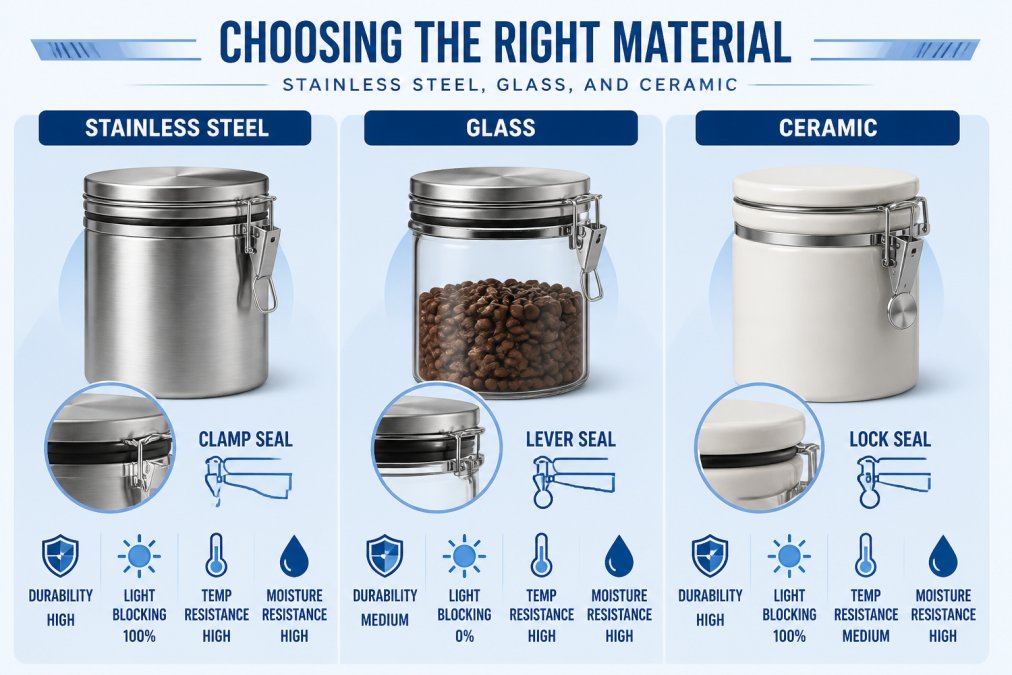
The material determines durability, opacity, and how well the container maintains its seal over time. Each has trade-offs worth understanding before you buy.
Stainless Steel Canisters
Stainless steel offers maximum protection. It's opaque, blocking all light. It doesn't absorb odors or flavors, so you can store different roasts without cross-contamination. It's durable, it won't crack or chip like glass or ceramic.
The drawback is visibility. You can't see how much coffee remains without opening the container. For some people, this is a minor inconvenience. For others, it defeats the purpose of a countertop canister.
Stainless steel also conducts temperature. A container sitting near a heat source will warm up faster than glass or ceramic. This matters less if you're storing in a cool cabinet, but it's worth noting if your kitchen runs warm.
Quality stainless steel canisters use food-grade steel with a proper gasket seal. Cheaper versions use thin steel that dents easily or gaskets that harden over time and lose their seal. A good stainless steel canister lasts years without degradation.
Borosilicate Glass Containers
Glass offers visibility without sacrificing protection if you choose borosilicate glass with an opaque exterior coating or dark tint. Borosilicate is stronger than standard glass, it resists thermal shock and won't shatter as easily if dropped.
Clear glass allows light through, so it's only appropriate if you're using it in a dark cabinet. The advantage is aesthetic, you can see your beans, which appeals to many coffee enthusiasts. The disadvantage is that light exposure will degrade your beans faster than opaque storage.
Glass doesn't absorb odors and doesn't conduct temperature the way metal does. It's easy to clean and won't scratch or wear over time. The gasket seal is usually silicone or rubber, which lasts several years before hardening.
The risk with glass is breakage. Drop it on tile or concrete and it shatters. This makes it less suitable for frequent travel or outdoor use, where durability matters more than aesthetics.
Ceramic Options
Ceramic sits between glass and stainless steel in terms of durability. It's opaque, protecting beans from light. It doesn't conduct temperature. It's heavier than glass, making it feel substantial and premium.
Ceramic is more fragile than stainless steel but less fragile than glass. A chip or crack can develop over time, especially if the container is dropped or bumped regularly. Once the ceramic is damaged, the seal is compromised.
Ceramic canisters often feature decorative designs, appealing to people who want their storage to match their kitchen aesthetic. This comes at a cost, ceramic canisters typically cost more than equivalent stainless steel or glass options.
The seal quality varies significantly with ceramic. Some use proper silicone gaskets; others use cheaper rubber that hardens quickly. Check the gasket material before buying.
Capacity, Size, and Practical Considerations
The right size depends on how much coffee you use weekly and how often you reorder. Most specialty roasters recommend buying enough for 2-4 weeks of use. This keeps beans within their peak freshness window while ensuring you don't run out.
A typical canister holds 1-2 pounds of beans. This is enough for a household that uses a quarter-pound weekly. If you drink more coffee or share with others, consider a larger canister or multiple smaller ones. Multiple containers let you store different roasts separately without flavor blending.
Ease of cleaning matters more than people expect. A wide mouth makes scooping and cleaning straightforward. A narrow mouth is harder to clean and makes scooping tedious. If you're pouring beans into a grinder hopper daily, you'll appreciate a canister with a integrated spout or one that pours easily.
Weight and portability matter if you travel or take coffee outdoors. Stainless steel is heavier but more durable. Glass is lighter but fragile. Ceramic is somewhere in between. For a hiker or field worker, durability and weight are practical considerations, a canister that survives a backpack trip matters more than one that looks good on a shelf.
Seal integrity should be tested before relying on it. Close the lid and try to open it without breaking the seal. It should require firm pressure. A seal that opens too easily won't hold up to daily use. A seal that's too tight becomes frustrating to use daily.
Check the gasket material and replacement availability. Good canisters sell replacement gaskets separately. If the gasket hardens after a year, you should be able to buy a new one for a few dollars rather than replacing the entire container.
Storing specialty coffee properly is about respecting the work that goes into roasting. The best airtight containers for coffee beans protect what makes specialty coffee worth buying, the complexity, sweetness, and depth that disappear quickly without proper care.
Iron Spur Coffee's commitment to roasting to order means your beans arrive at peak freshness. From there, the responsibility shifts to you. A quality airtight container, whether stainless steel, borosilicate glass, or ceramic, preserves that freshness for weeks. The investment in proper storage multiplies the value of premium beans. Discover Iron Spur Coffee Today and experience how fresh beans taste when stored with precision.
Frequently Asked Questions
What type of container is best to store coffee beans in?
Airtight containers made from stainless steel, borosilicate glass, or ceramic work best. Stainless steel provides superior light and oxygen protection, while glass allows you to see bean levels. The key is an airtight seal that prevents oxygen exposure and moisture infiltration. Avoid clear plastic, which allows UV light to degrade your beans.
How long do coffee beans last in an airtight container?
Whole beans in a proper airtight container stay fresh for 2-4 weeks after roasting, with peak flavor during the first two weeks. The roast date matters more than the purchase date. Once ground, coffee degrades within 15 minutes due to rapid oxidation. Store your container in a cool, dark place away from heat sources to extend freshness and preserve the complex flavor profile that specialty roasting delivers.
Do coffee canisters with CO2 valves actually work?
One-way CO2 valves are highly effective for fresh-roasted beans. These valves allow carbon dioxide produced during degassing to escape while preventing oxygen from entering. They're especially valuable for beans roasted to order, which release significant CO2 in the first week. Valve-equipped containers maintain better aroma retention and flavor preservation than simple airtight lids alone, making them ideal for specialty coffee that demands maximum freshness.
Should I store coffee beans in the freezer or an airtight container?
An airtight container at room temperature in a cool, dark place is your best option. Freezing can damage beans through moisture condensation when they thaw, which compromises flavor and aroma. However, an airtight freezer container works for long-term bulk storage beyond 4 weeks. For regular use, keep your airtight container sealed in a pantry or cupboard away from direct sunlight, heat, and humidity to maintain the freshness and bold flavor your specialty coffee deserves.
This article was written using GrandRanker