

How to Tell If Single Origin Coffee Is Worth the Price
Table of Contents
- Single-Origin Coffee vs. Blend: What You're Actually Paying For
- Why Is Single-Origin Coffee More Expensive?
- A Practical Price-to-Value Test for Single Origin Coffee
- Freshness and Roast-Date Checks Before You Buy
- How to Choose Single-Origin Coffee Beans That Match Your Taste
- A Guided Tasting and Brewing Comparison at Home
- Who Should Pay More for Single Origin Coffee, and Who Shouldn't
- Conclusion
- Frequently Asked Questions
Last Updated: October 12, 2026
Single-Origin Coffee vs. Blend: What You're Actually Paying For
Single-origin coffee is coffee sourced from one country, region, or farm rather than a mix of beans from multiple places. That single point of origin gives you a traceable, distinctive cup.
At Iron Spur Coffee, we roast single-origin lots from high-elevation estates, and the difference shows up in the bag.
So what are you really paying for? Two things: traceability and character.
Traceability and Limited Availability
A single-origin label tells you exactly where the beans grew. You can often name the farm, the altitude, and the processing method. That paper trail costs money to maintain.
Blends hide their sources. That's not a knock. It's just cheaper.
Single-origin lots are also small. A single harvest from one farm produces far less coffee than a blend that pulls from many suppliers.
Consistency vs. Distinctive Characteristics
Blends win on consistency. A roaster can swap origins to keep the flavor steady year-round.
Single-origin coffees do the opposite. They taste like a specific place, and that flavor shifts with each harvest. You're trading predictability for personality.
That trade-off is the whole point. If you want the same cup every morning, buy a blend. If you want to taste what a region actually produces, go single-origin.
Why Is Single-Origin Coffee More Expensive?
Single-origin coffee costs more because it takes more work to grow, pick, process, and roast without losing its identity. The price reflects real costs, not just marketing.
Here's where the money goes.
Growing Conditions, Harvest, and Processing Costs
High-elevation farms produce denser beans with more complex flavor. Those farms are harder to work. Steep slopes mean most picking happens by hand.
- Hand harvesting: Workers select only ripe cherries, which takes time and labor.
- Processing: Washed, natural, and honey methods each demand careful handling.
- Small lots: A single farm's harvest is limited, so there's less volume to spread costs across.
Growing conditions matter too. Soil, climate, and elevation all shape the final cup. A farm at 1,700 meters faces different challenges than one at 900 meters.
The Roaster's Role in Price and Quality
Roasting is where a great lot can be ruined or elevated. Small-batch roasting gives the roaster control over every batch.
We use precision thermal mapping to eliminate bitter notes and pull out complex sweetness. That level of attention doesn't scale like mass production.
A Practical Price-to-Value Test for Single Origin Coffee
Most buyers compare sticker prices across different bag sizes and get a misleading answer. A 12-ounce bag at $22 and a 2-pound bag at $30 are not the same purchase. The test below normalizes cost and then weighs it against what the coffee actually delivers.
Step 1: Convert Every Bag to Cost per Ounce
Divide the bag price by the net weight in ounces. That single number makes bags comparable regardless of size.
- A 12-ounce bag at $22 works out to about $1.83 per ounce.
- A 2-pound (32-ounce) bag at $30 works out to about $0.94 per ounce.
- A 10-ounce bag at $28 works out to $2.80 per ounce, the most expensive per ounce of the three, despite the lowest total price.
Run this on any bag before you decide. The larger bag is not automatically the better value if the roast date is older or the origin detail is thin.
Step 2: Estimate Cost per Brewed Cup
A standard drip or pour-over dose is roughly 15 to 18 grams of coffee per 8-ounce cup. There are about 28 grams in an ounce, so a 12-ounce bag holds roughly 336 grams, about 19 to 22 cups at that dose.
- A $22 bag yielding 20 cups costs about $1.10 per cup.
- A $30 two-pound bag yielding about 50 cups costs about $0.60 per cup.
- A $28 ten-ounce bag yielding about 17 cups costs about $1.65 per cup.
Compare that to a typical cafe drip coffee, which often runs $2.50 to $4.00 for a similar volume. Even a premium single-origin bag frequently lands below cafe pricing per cup, which reframes the "is it worth it" question entirely.
Step 3: Score the Bag on What You Can Verify
Price per cup only matters if the coffee is fresh and traceable. Score each bag on these five checks before you commit.
| Check | What to Look For | Why It Matters |
|---|---|---|
| Origin detail | Farm, region, and altitude listed | Shows real traceability, not a marketing label |
| Roast date | Printed date within 2-4 weeks | Freshness drives flavor more than origin alone |
| Process | Washed, natural, or honey named | Explains the flavor profile you should expect |
| Cost per ounce | Compare like-for-like bag sizes | Reveals the true price, not the sticker |
| Tasting notes | Specific, not generic | Signals real quality control at the roaster |
Step 4: Apply the Verdict Rule
A bag earns its premium when it passes at least four of the five checks and its cost per cup is at or below what you'd pay for a comparable cafe drink.
Single Origin Favorites Sample Pack →
The point is not that every single-origin bag must be cheap. It's that the premium should be traceable to something you can verify: a named farm, a recent roast date, a stated process, and a flavor you actually want to drink again.
Freshness and Roast-Date Checks Before You Buy
Freshness decides whether a premium bean tastes premium. Coffee starts losing aroma and flavor within weeks of roasting.
Look for a printed roast date, not a vague expiration window. Roasted-to-order coffee ships close to its roast date, so it arrives near peak flavor.
- Under 2 weeks old: Ideal for peak aroma and sweetness.
- 2 to 6 weeks old: Still good, flavor starts to fade.
- Over 8 weeks old: Flat and stale, no matter the origin.
Whole beans hold freshness longer than pre-ground. Grind right before brewing to keep the oils and aroma intact.
One catch: coffee also needs a few days to rest after roasting.
How to Choose Single-Origin Coffee Beans That Match Your Taste
Match the origin to the flavor you already enjoy. Single-origin coffee isn't one flavor. Each region has its own profile.
Here's a quick guide:
- Bright and fruity: Look for African origins with citrus and floral notes.
- Chocolate and nutty: Central and South American coffees tend to be smoother and sweeter.
- Bold and earthy: Indonesian and darker-roasted lots deliver heavier body.
Our Specialty Coffee Association's coffee standards set the quality benchmarks that separate specialty-grade beans from commodity coffee.
Start with a sample pack if you're unsure. It lets you taste several origins side by side before committing to a full bag.

A Guided Tasting and Brewing Comparison at Home
A side-by-side tasting is the fastest way to know if a single-origin bag earns its price. Brew two coffees the same way and compare them directly.
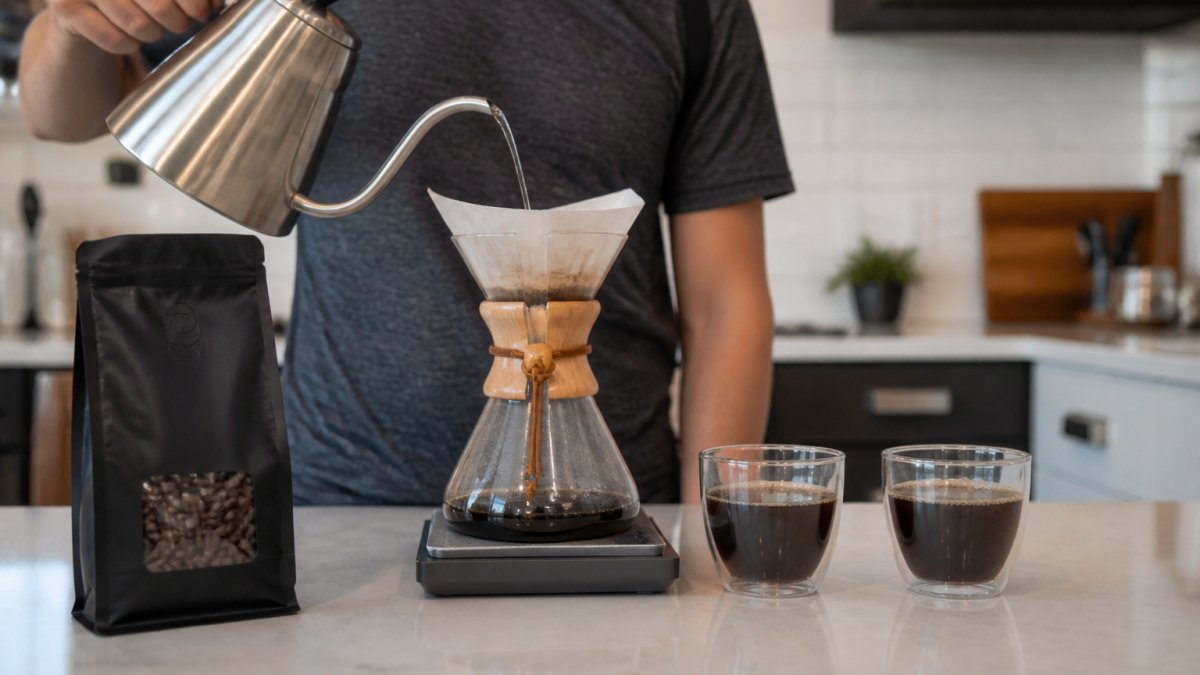
Follow these steps:
- Pick two coffees. Use one single-origin and one blend, or two different origins.
- Grind the same amount. Keep the dose equal for a fair test.
- Use the same method. Brew both as pour-over or both as espresso.
- Slurp and compare. Note aroma, acidity, sweetness, and body.
- Write it down. Track which one you'd buy again.
Tasting both blind removes bias. Have someone else label the cups if you can.
The USDA coffee and specialty crop research tracks how origin and growing conditions shape crop quality, which is why the same bean can taste so different from one farm to the next.
Who Should Pay More for Single Origin Coffee, and Who Shouldn't
The honest answer depends less on the coffee and more on how you drink it. A $28 single-origin Ethiopian natural is a waste if it disappears into a vanilla latte, and a $14 blend is a waste if you're trying to taste what a specific farm produces. Match the bean to the drink.

When the Premium Is Worth It
- You drink it black or with a splash of milk. Delicate origin notes, floral, citrus, stone fruit, survive when nothing else competes with them. This is where single-origin earns its price.
- You brew pour-over, drip, or AeroPress. These methods let you control water temperature and ratio, which is how you actually taste the difference between two origins.
- You're comparing origins to learn what you like. A sample pack or two small bags teaches you more than a year of drinking the same blend.
When the Premium Is Not Worth It
- You drink milk-based espresso drinks. In a 12-ounce latte, the milk and the espresso's concentrated extraction mute most delicate origin characteristics. A well-roasted blend often tastes better here and costs less.
- You want the same cup every morning. Single-origin flavor shifts harvest to harvest. If consistency is the goal, a blend is the correct tool, not a compromise.
- You add sugar, syrups, or flavored creamer. These overwhelm the subtle notes that justify the premium. You're paying for something you can't taste.
The Espresso and Milk-Drink Exception
There's a real exception worth knowing. Some single-origin coffees, particularly certain Brazilian and Central American lots with chocolate and nut notes, hold up beautifully in milk drinks and as espresso. These tend to be medium roasts with lower acidity and heavier body. If your primary drink is a cappuccino or flat white, look for those profiles rather than the bright, fruity African lots that shine in filter.
A Simple Decision Rule
Ask yourself one question: will I taste this coffee on its own, or will something else be the dominant flavor? If the coffee is the star, pay for the single-origin.
There's no wrong answer here. The question is whether the extra money buys something you'll actually notice and enjoy, and that depends on the cup you're building, not the label on the bag.
Conclusion
Deciding whether single-origin coffee is worth the price comes down to what you value: traceable flavor and character, or steady consistency at a lower cost. Iron Spur Coffee roasts single-origin lots to order, using specialty-grade, high-elevation beans and precision thermal mapping to cut bitterness and draw out complex sweetness. Our fast, reliable delivery means your beans arrive fresh, near their roast date.
Frequently Asked Questions
Is single origin coffee more expensive than blends?
Yes, single origin coffee typically costs more because it comes from one specific region, farm, or country rather than a mix of beans. That traceability, limited availability, and the care required during growing, harvesting, and processing all add to the cost. At Iron Spur Coffee, single origin options like Ethiopia Natural and High Plains Colombia are priced at $23.99, while the Single Origin Favorites Sample Pack offers six 2oz packs for $24.99, so you can test several origins before committing to a full bag.
What should you look for on a single-origin coffee label?
Check for the country and region, the farm or grower name, the altitude, the variety, and the processing method. A label that lists all of these gives you confidence the coffee is genuinely traceable. Also look for the roast date, not just a best-by date, because freshness affects flavor more than almost anything else. Iron Spur Coffee labels include region, altitude, variety, and process details so you know exactly what you are buying.
How can you tell if coffee beans are high quality?
Start with the roast date: beans taste best within two to four weeks of roasting. Look for whole beans with a consistent size and color, and check that the bag has a one-way degassing valve. On the label, a specific region, farm name, and processing method signal higher quality than vague descriptions. Finally, brew a small batch and taste for clarity, sweetness, and distinct flavor notes rather than bitterness or a flat, generic taste.
Is single origin coffee better than a blend?
Neither is universally better; they serve different purposes. Single origin coffee highlights the distinctive characteristics of one region, farm, or variety, which is ideal if you want to explore flavor notes like the dried orange and berry in High Plains Colombia or the pear and jasmine in Kenya. Blends are crafted for consistency and balance, which suits espresso and milk coffee. If you value variety and traceability, single origin is the better fit. If you want the same cup every morning, a blend may serve you well.