

How to Tell if Coffee Beans Are Stale: 7 Signs
Table of Contents
- How to Tell if Coffee Beans Are Stale: The 7-Point Check
- Start With the Roast Date, Not the Best-By Date
- Work Through the Signs in Order
- Sign 1: Visual Indicators of Stale Coffee Beans
- Sign 2: Aroma and Scent Changes You Can Smell Immediately
- Sign 3: Taste, Flavor Profile, and Crema Quality
- Coffee Bean Shelf Life: How Long Beans Actually Stay Fresh
- How to Store Coffee Beans for Freshness
- How to Revive Stale Coffee Beans (and When to Let Them Go)
- Conclusion: Trust the Signs, Not the Label
- Frequently Asked Questions
Last Updated: October 3, 2026
How to Tell if Coffee Beans Are Stale: The 7-Point Check
You can learn how to tell if coffee beans are stale by checking seven things in order: the roast date, the look of the beans, the smell, the taste, the crema, the grind, and how they were stored.
Fresh beans smell sweet and complex; stale beans smell flat and papery. Below, we'll walk through each sign in order, from the fastest check to the most reliable one.
Start With the Roast Date, Not the Best-By Date
The roast date tells you how old the coffee really is; a best-by date does not. Many bags print a best-by stamp a year or more out, which says nothing about when the beans were roasted.
- Roasted 0-14 days ago: peak freshness
- Roasted 15-30 days ago: still good, flavor fading
- Roasted 31-60 days ago: noticeably flat
Buy from roasters who print the roast date. It is the single most useful number on any bag.
Work Through the Signs in Order
Start with the roast date, then use your senses: sight, smell, taste. Each sign takes seconds, and you can stop as soon as one fails. Here is the full sequence:
- Check the roast date on the bag
- Look at the bean surface
- Smell the beans
- Brew a small cup and taste it
- Check the crema on espresso
- Feel the grind between your fingers
- Review how you stored them
If two or more signs point to stale, the beans are past their best. Move on to fresh coffee.
Sign 1: Visual Indicators of Stale Coffee Beans
Stale coffee beans usually look dull and dry. Fresh beans have a slight sheen and a deep, even color. Old beans look faded and matte.
Oil Migration: Glossy vs. Matte Beans
Oils move from inside the bean to the surface over time, called oil migration. A dark roast may look glossy within days of roasting, which is normal. A medium roast that turns shiny after weeks on the shelf is a warning sign.
- Glossy right after roasting: normal for dark roasts
- Glossy weeks later: oils have surfaced, flavor is fading
- Matte and dry: likely stale
Sign 2: Aroma and Scent Changes You Can Smell Immediately
Fresh coffee smells sweet, nutty, or fruity; stale coffee smells flat, papery, or like cardboard. This is the fastest test you can run. Open the bag and take a deep breath. If you have to hunt for the scent, the beans have lost most of their volatile compounds.
A few things to sniff for:
- Flat aroma: little to no smell at all
- Cardboard-like: a dry, papery note
- Rancid: a stale oil smell, like old nuts
If the smell disappoints you, the cup will too.
Sign 3: Taste, Flavor Profile, and Crema Quality
Stale coffee tastes flat, bitter, or sour with no sweetness; fresh coffee has clear acidity, body, and a clean finish. Brew a small cup using your normal method and sip it black.
- Fresh: complex sweetness, bright acidity, full body
- Fading: muted flavor, thin mouthfeel
- Stale: bitter, sour, or cardboard-like
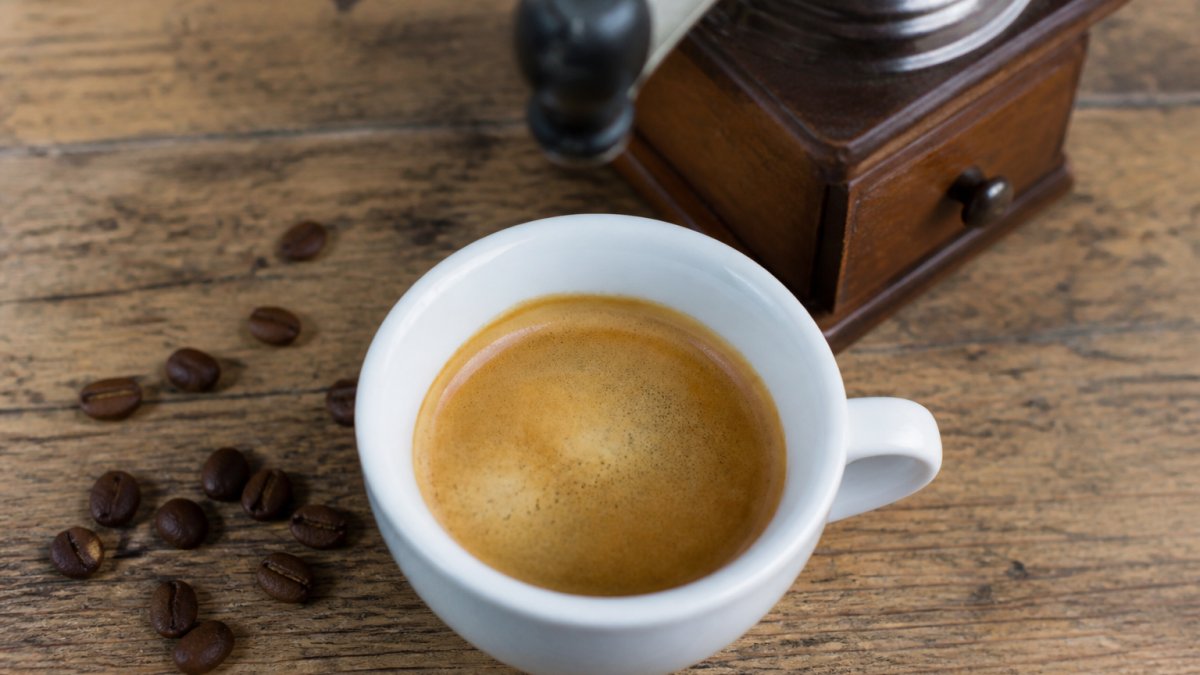
What a Stale Shot of Espresso Looks Like
A stale shot pulls thin and pale; fresh espresso shows a thick, golden-brown crema that holds for a minute or more. Watch the pour: fresh coffee flows slow and syrupy, while stale coffee gushes through fast because the beans have lost CO2 and the puck offers less resistance.
Coffee Bean Shelf Life: How Long Beans Actually Stay Fresh
Most beans stay at their best for two to four weeks after the roast date; after that, flavor drops off. Whole beans hold up longer than pre-ground because less surface is exposed to air.
Degassing, CO2 Release, and the First 14 Days
Roasted beans release carbon dioxide for days after roasting, called degassing (pubmed.ncbi.nlm.nih.gov). During the first 14 days, that CO2 protects the beans and helps espresso pull a rich crema. Once degassing slows, oxygen moves in and oxidation begins, breaking down the oils and aromatic compounds that give coffee its flavor.
Staleness by Roast Level
Dark roasts go stale faster than light roasts. The longer roast drives more oils to the surface, where they meet air. Light roasts keep their density and hold flavor longer.
Best Sellers Sample Pack: 6Bean, Cowboy, Breakfast, Peru, Mexico, Bali →
| Roast Level | Peak Window | Notes |
|---|---|---|
| Light | 4-6 weeks | Dense beans, slower oxidation |
| Medium | 3-4 weeks | Balanced, moderate oil |
| Dark | 2-3 weeks | Oily surface, faster staling |
How to Store Coffee Beans for Freshness
Storing coffee is a fight against oxygen, moisture, and heat. The container you choose decides how much of each your beans meet between brews, and the right one depends on how fast you drink the bag.
The Four Container Types, Ranked by What They Actually Do
Not all "airtight" is equal. Here is how the common options compare on oxygen exclusion and CO2 management.
- One-way valve bag (the bag your coffee came in): The valve lets CO2 escape without letting oxygen in. It is the cheapest effective option and it is already in your hands. Weakness: it does not reseal tightly once opened, and squeezing the air out pushes aroma out with it. Best for beans you will finish in two to three weeks.
- Clip or bag clip: A clip only folds the bag shut. It does not seal. Oxygen enters every time the bag is opened, and the clip does nothing to stop it. This is the weakest option and the one most people use by default.
- Vacuum canister: Pulls air out of the container, removing the oxygen that drives oxidation. Strongest oxygen exclusion of the manual options. Weakness: it also pulls out the CO2 that was protecting the beans, and the vacuum seal degrades as you open and close it. Best for beans you will keep longer than a month.
A Simple Test You Can Run at Home
You do not need lab equipment to check your container. Squeeze it gently after sealing: a valve bag or valve canister should puff back up within a day as the beans release CO2. If it stays collapsed, either the beans have stopped degassing or the valve is not working. A second test: smell the inside a day after sealing.
The Rules That Actually Matter
- Keep beans whole until you brew. Grinding multiplies the surface area exposed to oxygen, and pre-ground coffee stales in days rather than weeks.
- Store in a cool, dark cabinet, not on the counter next to the stove. Heat speeds oxidation.
- Skip the fridge. Every time you open the door, the beans meet warm, humid air and food odors, and the oils absorb both.
Match the Container to Your Drinking Speed
The best container matches how fast you go through a bag. If you drink a bag in two weeks, the valve bag it came in is fine. If a bag lasts two months, a vacuum canister earns its keep. In between, a valve canister is the practical choice.
How to Revive Stale Coffee Beans (and When to Let Them Go)
You cannot fully revive stale beans; oxidation is permanent. What you can do is decide whether a bag is worth drinking, cooking with, or tossing. Here is how to sort a stale bag into one of three buckets.
First, Sort the Bag: Drink, Cook, or Toss
Run the smell test one more time; the result tells you which bucket the beans belong in.
- Flat but not rancid: The beans have lost their bright aromatics but the oils are still sound. These are drinkable with adjustments, and they are excellent for cooking.
- Papery or cardboard-like: Aroma is gone, flavor is muted. Not worth a pour-over, but fine for cold brew, baking, or a milk drink.
- Rancid, like old nuts or cooking oil: The oils have turned. These go in the trash. No brew method fixes rancid oil, and drinking it is unpleasant at best.
If You Are Going to Drink Them Anyway
Stale beans can still make a passable cup if you change how you brew them, hiding the flatness and avoiding amplified bitterness.
- Grind coarser. Stale beans extract faster because they have lost CO2 and the puck offers less resistance. A coarser grind slows extraction and reduces bitterness.
- Brew with a method that masks flatness. A French press or a cold brew concentrate hides muted flavor better than a pour-over, which puts the coffee front and center.
- Add a pinch of salt. Salt suppresses bitterness on the tongue, which is the dominant note in stale coffee. A small pinch in the grounds or the cup is enough.
- Drink it with milk. A latte or a milk-heavy drink softens the edge and covers the missing sweetness.
- Re-seal them in an airtight container for a day. This traps whatever aroma is left and can bring back a faint scent, though it will not restore the cup.
The Upcycling Playbook: What Stale Beans Are Actually Good For
Coffee flavor comes from compounds that survive oxidation better than delicate aromatics do, so old beans still deliver coffee flavor even when they fail as a brew.
- Cold brew: The cold, slow extraction pulls sweetness and body while leaving behind the harsh notes that heat brings out. Stale beans make a surprisingly drinkable cold brew concentrate. Use a coarser grind and a 12- to 16-hour steep.
- Baking: Grind stale beans fine and add them to brownies, chocolate cake, or rubs for meat. The coffee flavor reads as depth rather than brightness, which is exactly what baked goods want.
- Coffee rub: Combine finely ground stale beans with salt, brown sugar, and paprika for a dry rub on steak or pork. The coffee adds a roasted, slightly smoky note.
When to Let Them Go
Toss the bag when the beans smell rancid, when the oils feel sticky and smell like old nuts, or when the cup tastes sour and bitter at once. Rancid coffee is not a flavor problem you can brew around; it is a spoiled-ingredient problem. When in doubt, smell the beans one more time.
Conclusion: Trust the Signs, Not the Label
Labels can mislead you. Your nose, eyes, and tongue cannot.
Freshness is the whole game. At Iron Spur Coffee, we roast to order for maximum flavor and aroma, using specialty-grade, high-elevation beans and precision thermal mapping to eliminate bitterness.
Discover Iron Spur Coffee today and start every morning with coffee that tastes as fresh as the day it was roasted.
Frequently Asked Questions
How long do coffee beans stay fresh after opening?
Most whole bean coffee hits peak flavor within 7 to 14 days of the roast date and starts fading noticeably after about 4 to 6 weeks. Once you open the bag, oxygen speeds up oxidation and aroma loss, so plan to finish a standard 12-ounce bag within a month. Coffee bean shelf life stretches further if you keep beans in an airtight, opaque container with a one-way valve and store it away from heat and light.
What happens if you use stale coffee beans?
Stale coffee beans still make a drinkable cup, but the flavor turns flat, cardboard-like, or rancid. Oils on the bean surface have oxidized, aromatic compounds have faded, and the beans no longer release enough CO2 during brewing, which throws off extraction. You may notice sour or bitter notes, weak body, and thin crema on espresso. It is not a safety issue in most cases, but it is a quality issue you can taste in the first sip.
Can I still use 2-year-old coffee beans?
You can brew them, but expect a dull, papery, or rancid cup. After two years, oxidation has broken down most of the volatile compounds that carry flavor, and the beans have fully degassed. There is no meaningful way to revive stale coffee beans that old. If you want to avoid wasting them, use them for compost or as a fridge deodorizer rather than your morning brew.
How can you tell if coffee beans have gone bad by smell?
Fresh beans hit you with a clear, sweet, roasty scent the moment you open the bag. Stale beans smell flat, dusty, or faintly like cardboard or old cooking oil. Grind a small pinch and smell again: fresh grounds release a sharp burst of aroma, while stale grounds smell muted within seconds. If the bag has no scent at all when you open it, the beans have likely lost most of their volatile compounds.