

Does Roasting to Order Matter? A 2026 Coffee Guide
Table of Contents
- What Roasting to Order Actually Means (and Why It's Not Just Marketing)
- The Coffee Degassing Process: Why Rest Time Changes Everything
- Coffee Roast Date vs Best By Date: What the Labels Don't Tell You
- How to Store Coffee Beans for Maximum Freshness
- The Flavor Timeline: When Roasted-to-Order Coffee Hits Its Peak
- Roast Level, Bean Quality, and the Chemistry Behind the Cup
- Why Roasting to Order Matters for Your Daily Routine
- Frequently Asked Questions
Last Updated: September 11, 2026
What Roasting to Order Actually Means (and Why It's Not Just Marketing)
Roasting to order means roasting beans only after a customer places an order, rather than in bulk for shelves. At Iron Spur Coffee, we roast each batch after your order comes in, so the beans you receive are days old, not months. The distinction matters because coffee begins losing its best qualities the moment it leaves the roaster.
Most grocery store coffee was roasted weeks or months before you bought it, and a "best by" date a year out says nothing about when it peaked. Freshly roasted coffee follows a predictable arc: a short rest, a best window, then a fade. Roasting to order lets you control where on that arc you start drinking.
Below, we'll break down degassing chemistry, how to read roast dates, and how to store beans so the roast-to-order advantage reaches your cup.
Specialty Coffee Association's freshness guidance
The Coffee Degassing Process: Why Rest Time Changes Everything
Coffee degassing is the release of carbon dioxide trapped inside beans during roasting. Freshly roasted beans hold large amounts of CO2 that escape over days. Brew too soon and the gas interferes with water contact, producing uneven extraction and a flat, sometimes sour cup.
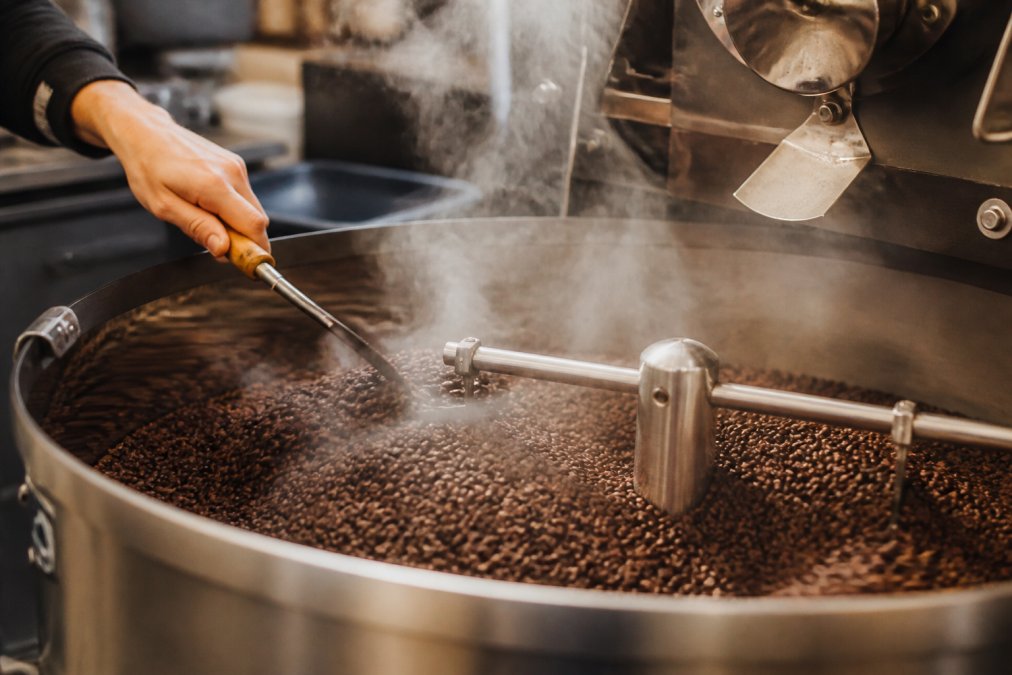
A common mistake is assuming "fresher is always better." Beans straight off the roaster often taste muted because CO2 is still pouring out. Most roasters recommend a rest, typically a few days for filter and longer for espresso, before the coffee shows its full character.
How Carbon Dioxide Release Affects Brewing
During degassing, carbon dioxide pushes water away from the grounds. In a pour-over, the bed bubbles and expands as gas escapes. That bubbling isn't freshness you're tasting; it's freshness getting in the way.
Once most CO2 has left, water extracts sugars, acids, and aromas more evenly. That's why a bag roasted five days ago often outperforms one roasted yesterday. The resting period isn't a flaw in the roast-to-order model; it's part of it.
Coffee Roast Date vs Best By Date: What the Labels Don't Tell You
The roast date tells you when beans were roasted. The best by date tells you when a retailer suggests you stop buying, often a year or more out. Only the roast date helps you judge freshness.
A "best by" date is a shelf-life estimate, not a peak-flavor marker. Coffee can be safe to drink long after it has lost the sweetness and aroma that made it worth buying, and with only a best by date you can't know how long it sat in a warehouse.
Roast-to-order coffee usually ships with the roast date printed on the bag, letting you plan your brewing window instead of guessing.
| Label Type | What It Tells You | What It Hides |
|---|---|---|
| Roast date | Exact day beans were roasted | Nothing about shipping time |
| Best by date | Retailer's shelf-life limit | When the coffee actually peaked |
| No date | Nothing useful | Everything |
How to Store Coffee Beans for Maximum Freshness
Storing coffee well comes down to blocking four enemies: oxygen, light, heat, and moisture. With roast-to-order coffee, there's a fifth variable most guides ignore: the packaging itself, and how it interacts with the active degassing window.
Here's a practical routine:
- Keep beans in an opaque, airtight container, not the flimsy bag with a folded top.
- Store that container in a cool, dark cabinet, away from the stove and any warm appliance.
- Buy in quantities you'll finish within a few weeks rather than stockpiling.
- Grind right before brewing, since ground coffee stales far faster than whole bean.
- Skip the freezer for daily-use beans; repeated thawing introduces moisture.
Why Packaging Matters More With Roast-to-Order Beans
Roast-to-order coffee arrives in one of two packaging formats, and the difference is not cosmetic.
One-way valve bags. A one-way valve is a small membrane that lets carbon dioxide escape while blocking oxygen. During the first week after roasting, beans still release CO2 at a meaningful rate; if that gas can't escape, it builds pressure and can force aroma compounds out when you open the seal. The valve exists precisely because roast-to-order beans ship inside their active degassing window. A bag with no valve, or a taped-over valve, traps that gas against the beans.
Nitrogen-flushed bags. Some roasters purge the headspace with nitrogen before sealing, replacing oxygen with an inert gas. This slows oxidation dramatically and is common for grocery-shelf coffee that needs a long shelf life. For roast-to-order coffee it's less critical, since the beans are already days old, not months, when they reach you. It doesn't hurt, but it isn't why the coffee tastes fresh.
Vacuum-sealed canisters. These remove air entirely, stopping oxidation but also degassing. Vacuum-sealing during the first week traps CO2 inside the bean and the container, causing a slower, more uneven release once opened. Vacuum sealing works best after the heaviest degassing has passed, roughly the second week onward.
Matching Storage to the Roast-to-Order Timeline
The right storage method depends on where your beans sit on the degassing curve:
- Days 1-5 (peak degassing): Leave beans in the original valve bag, sealed, at room temperature. The valve is doing its job. Don't transfer to a vacuum canister yet.
- Days 5-14 (active window): Transfer to an opaque, airtight container if you prefer, but keep it simple. A one-way valve bag still works fine.
- Day 14+ (declining freshness): This is when vacuum sealing or a tighter container helps most, because the beans are no longer off-gassing enough to need an escape route.
What most guides miss is that storage can't rescue stale coffee. It can only slow the decline of fresh coffee. That's the real argument for roasting to order: you start the clock later, so storage has less ground to make up. A valve bag on day three does more for your cup than a vacuum canister on day sixty.
The Flavor Timeline: When Roasted-to-Order Coffee Hits Its Peak
Roasted-to-order coffee typically peaks between a few days and a couple of weeks after the roast date, depending on the brew method. That range is wide, so here's what's actually happening inside the bean and what to expect on specific days.
What CO2 Is Doing Over the First 30 Days
Carbon dioxide release follows a predictable decay curve, not a straight line. The heaviest off-gassing happens in the first 48 to 72 hours, dropping sharply after (peer-reviewed research). By roughly day seven, the release rate has fallen enough that most brew methods extract evenly. By day 14, the bean releases very little CO2, and oxidation becomes the dominant force affecting flavor.
You can observe this without lab equipment. Brew the same coffee as a pour-over on day one, three, seven, and fourteen. Day one: the bed bubbles aggressively and the cup tastes sharp or hollow. Day three: gentler bubbling, sweetness appears. Day seven: the bed barely blooms and the cup shows full structure. Day fourteen: smooth, but the brightest aromatics have faded.
A Day-by-Day Sensory Guide
This is the timeline most roasters work from, and it's the one worth taping inside your cabinet:
- Day 1-2: Peak degassing. Expect muted aromatics, a thin body, and sometimes a sour or metallic edge. This is not the coffee's fault. It's chemistry.
- Day 3-5: The cup starts to open. Sweetness emerges, acidity sharpens into something pleasant rather than harsh, and the finish lengthens. Filter methods often taste good here; espresso usually does not.
- Day 6-10: The sweet spot for most filter coffee. Aromatics are at their most complex, body is full, and extraction is even. If you drink pour-over or drip, this is your window.
- Day 10-14: Espresso hits its stride. The reduced CO2 means pressure-based extraction is no longer fighting the gas, and crema becomes more stable. Filter coffee is still good but starting to round off.
- Day 15-21: Oxidation begins to outpace degassing. The cup is smooth and drinkable but the top-end aromatics have faded. This is fine for milk drinks and cold brew.
- Day 21+: Flavor flattens noticeably. Still safe to drink, but you're drinking the decline, not the peak.
How Roast Level and Method Shift the Timeline
The timeline isn't fixed. It moves with the roast and the brew method.
Darker roasts degas faster than lighter ones because roasting has already driven off more of the bean's internal structure (PubMed). A dark roast might peak two to three days earlier than a light roast from the same origin. Lighter, denser beans hold CO2 longer and often need a longer rest.
Espresso tends to want a longer rest than filter, since CO2 disrupts the pressure-based extraction more aggressively. A common pattern is filter coffee peaking around day five to seven and espresso peaking around day ten to fourteen. If you brew both from the same bag, you'll get two different peak windows from one roast date.
The 'Roast-to-Order' vs. 'Freshly Roasted' Distinction
These terms get used interchangeably, but they describe different things. "Freshly roasted" is a claim about recency. "Roast-to-order" is a claim about logistics: the beans didn't exist as roasted coffee until you ordered them. A grocery bag can be labeled "freshly roasted" and still be six weeks old; a roast-to-order bag has a roast date days old when it ships.
The practical difference is that roast-to-order gives you a known starting point on the timeline above. You can plan your brewing window instead of guessing. That's the part marketing language tends to blur.
If you're coming from grocery store coffee, expect the first few days after delivery to feel like a waiting game. It's worth it. The cup that emerges once the resting period ends is the one the roaster intended.
Roast Level, Bean Quality, and the Chemistry Behind the Cup
Bean quality sets the ceiling; roast level decides how close you get. A high-elevation, dense bean can hold complex sweetness and acidity, but only if the roast develops it properly. A poor green coffee can't be roasted into greatness.
Two reactions drive flavor development. The Maillard reaction builds the browned, toasty notes, while caramelization develops sweetness and body. How far a roaster pushes each one shapes whether the final cup leans bright and fruity or deep and chocolatey.
Roast consistency is where small-batch roasting earns its keep. Large batch roasting can leave beans unevenly developed, some baked and others scorched. Precision thermal mapping, the kind Iron Spur Coffee uses, tracks heat through the roast to keep development even and reduce over-roasting bitterness.
Green coffee quality, moisture content, and bean density all feed into this. A roaster who ignores them is guessing. A roaster who measures them can repeat a great roast instead of stumbling into one.
Why Roasting to Order Matters for Your Daily Routine
Roasting to order puts you in control of freshness instead of leaving it to a warehouse. You get a roast date you can trust, a resting period you can plan around, and a brewing window that lasts longer than the trip home from the store.
For anyone who treats coffee as fuel, whether heading out on a trail or into a long shift, that control means a more reliable cup. You're not gambling on how long a bag sat on a shelf; you're drinking coffee at the point it was meant to be drunk.
The trade-off is timing. Roasting to order means your beans don't exist until you order them, so delivery takes a little longer than grabbing a bag in person. Fast shipping closes most of that gap, and the freshness you gain usually outweighs the wait. If you want to test the difference, start with a small-batch roast like Iron Spur Coffee's Whiskey Barrel Aged, a single-origin Guatemalan bean aged 30 days in a bourbon barrel and roasted to order.

Frequently Asked Questions
What does 'roasted to order' mean for coffee quality?
Roasted to order means your beans are roasted after you place your order, not weeks or months before sitting on a shelf. This matters because coffee starts losing aroma compounds and developing oxidation within days of roasting. When you buy roasted-to-order coffee, you receive beans at their peak flavor potential. Iron Spur Coffee roasts to order using thermal mapping to eliminate bitterness and preserve complex sweetness.
How long does coffee stay fresh after roasting?
Most roasted coffee hits peak flavor between 4 and 14 days after roasting, depending on the bean and roast level. After that window, oxidation gradually degrades aroma compounds and flavor complexity. Whole beans stay fresh longer than ground coffee because less surface area is exposed to oxygen. For maximum freshness, store beans in an airtight container away from light, heat, and moisture, and grind just before brewing.
Is there a peak freshness window for roasted coffee?
Yes. The peak freshness window for most roasted coffee falls between 4 and 14 days post-roast. During the first few days, beans release carbon dioxide through degassing, which can interfere with even extraction. After that resting period, flavors stabilize and the cup reaches its full potential. Coffee remains drinkable for weeks after, but brightness, acidity, and aroma compounds fade steadily once oxidation takes hold.
How does oxidation impact coffee beans over time?
Oxidation occurs when oxygen reacts with oils and aroma compounds in roasted beans, breaking them down and creating stale, flat flavors. The process accelerates with exposure to air, light, heat, and moisture. Whole beans oxidize more slowly than ground coffee because their surface area is smaller. Storing beans in an airtight, opaque container at room temperature slows oxidation and extends the window of peak flavor.
Freshness is the one variable most coffee drinkers never control, and it's the one that changes the cup the most. Iron Spur Coffee roasts to order using specialty-grade, high-elevation beans and precision thermal mapping to keep bitterness out and complex sweetness in, then ships fast so the wait stays short. If you want a bag that starts its clock the day you order it, not months before, discover Iron Spur Coffee today.