

Best Temperature for Storing Coffee Beans
Table of Contents
- Why Temperature Is the Biggest Factor in Coffee Freshness
- The Ideal Temperature Range for Storing Coffee Beans
- Freezing Coffee Beans for Long Term Storage: The Right Way
- Best Coffee Storage Containers for Temperature Control
- Signs of Stale Coffee Beans (and How to Slow Them Down)
- Climate and Roast Level: Adjusting Your Storage Strategy
- Frequently Asked Questions
Last Updated: September 15, 2026
Why Temperature Is the Biggest Factor in Coffee Freshness
The best temperature for storing coffee beans sits between 60°F and 70°F, held steady, away from heat sources and direct sun (Effect of Temperature and Storage on Coffee’s Volatile Compound Profile and Sensory...). That narrow band matters more than almost anything else you do after the roast date. At Iron Spur Coffee, we roast to order specifically because freshness is a clock, and temperature is what sets its speed.
Here's the mechanism. Roasted beans are porous and full of aromatic compounds, and those compounds begin degrading the moment the bean leaves the roaster. Heat accelerates that degradation. Every degree above the ideal range pushes the staling process faster, and every swing in temperature does the same thing from a different direction.
How Heat Speeds Up Staling
Warmth drives two destructive processes at once: oxidation and oil degradation. Oxidation is the reaction between oxygen and the oils and acids inside the bean, and heat gives that reaction more energy to run. Oil degradation follows the same logic, turning the bright, complex sweetness of a fresh roast into flat, papery, rancid notes.
A common mistake is storing beans next to the coffee maker, the oven, or a sunny window. Those spots feel convenient, but they run several degrees warmer than the rest of the kitchen and fluctuate constantly as appliances cycle on and off.
How Cold Slows Oxidation
Cold storage slows molecular activity, which is why freezing coffee beans for long term storage works when it's done correctly. Lower temperatures don't stop oxidation; they put it in low gear. The catch is that cold storage only helps if the beans never see moisture, and we'll get to that.
The Ideal Temperature Range for Storing Coffee Beans
Aim for 60°F to 70°F with minimal fluctuation. This range keeps oxidation slow without introducing the condensation risks that come with refrigeration. Below 60°F is fine for short periods, but sustained cold storage belongs in the freezer, not the fridge.
Three rules decide whether a spot qualifies:
- Distance from heat. Keep beans at least a few feet from the stove, oven, dishwasher, and any appliance that radiates warmth.
- No direct sun. UV exposure degrades aromatic compounds even when the ambient temperature is comfortable. An opaque container in a closed cabinet solves this.
- Stable, not just cool. Temperature fluctuation causes the air inside a container to expand and contract, pulling in fresh oxygen with every cycle.
Most kitchen thermometers cost less than a bag of coffee and will tell you more about your storage spot than any guess. Check the cabinet you're planning to use at the warmest part of the afternoon.
Freezing Coffee Beans for Long Term Storage: The Right Way
Freezing is the single most effective method for long-term storage, provided you seal the beans properly and never thaw and refreeze them. The enemy is moisture, not cold. A freezer-safe, vacuum-sealed or oxygen-barrier bag with a one-way valve keeps condensation away from the bean surface.
Follow this sequence:
- Portion beans into week-sized amounts before freezing so you never open the whole supply at once.
- Use an airtight, vacuum-sealed bag or a vacuum canister rated for freezer use.
- Press out as much air as possible, or use a one-way valve to let carbon dioxide escape while blocking oxygen.
- Label each portion with the roast date.
- Freeze immediately and keep the portions in the coldest, most stable part of the freezer, away from the door.
The mistake that ruins frozen coffee is opening the bag while the beans are still cold. Room-temperature air hits the frozen surface, and condensation forms directly on the beans.
Thawing Protocol: What to Do Before You Grind
The condensation risk is the part most guides skip, and it is the part that decides whether frozen beans taste fresh or flat. Here is the mechanism: cold air holds less moisture than warm air. When you pull a sealed bag from the freezer, the air inside the bag is cold and dry. The moment you open that bag at room temperature, warm humid air rushes in, hits the cold bean surfaces, and condenses into a thin film of water. That water sits on the oils and soluble compounds, and it accelerates oxidation and can carry off aromatics as it evaporates.
Discover Iron Spur Coffee Today →
The fix is to let the sealed bag come fully to room temperature before opening it. That way the condensation forms on the outside of the bag, not on the beans.
A workable protocol:
- Pull one portion from the freezer and leave it sealed on the counter for 30 to 60 minutes. A larger portion needs longer; a single week-sized bag is usually ready in about an hour.
- Do not speed this up with warm water, a microwave, or a hot surface. Rapid warming increases the temperature differential and makes condensation worse.
- Once the bag is at room temperature, open it, grind, and brew. Do not return a thawed portion to the freezer; refreezing exposes the beans to a second condensation cycle and degrades the cell structure.
- If you only need part of a portion, grind what you need and store the rest in an airtight container in a cool cabinet, not back in the freezer.
A common pattern among home roasters and coffee professionals is to freeze in single-dose portions, so the entire bag is used in one brewing session and nothing is left to thaw twice. If you brew a single cup at a time, pre-portioning into 18- to 22-gram doses eliminates the thawing dilemma entirely.
Climate-Specific Adjustments for Freezing
Humidity changes how freezing behaves. In a humid climate, the condensation risk is higher because the room air carries more moisture, so the sealed-bag thaw is non-negotiable and you should minimize the time the bag is open. In a dry climate, the risk is lower, but static cling and chaff can make grinding messier, and the beans may lose moisture to the air faster once opened. In both cases, the freezer itself matters: a frost-free freezer cycles through defrost periods that raise and lower temperature slightly, so keep portions in the coldest, most stable zone, typically the back of the bottom shelf, away from the door and the ice maker.
If your freezer runs a deep freeze cycle or you have a chest freezer, you have an advantage: less temperature fluctuation means less sublimation of ice from the bean surface, which is the slow loss of moisture that makes long-frozen beans taste papery. For storage beyond about three months, a vacuum-sealed bag in a chest freezer is the most reliable setup available to a home user.
Best Coffee Storage Containers for Temperature Control
The best coffee storage containers are opaque, airtight, and sized to hold about a week of beans. Material matters more than most shoppers expect, and the differences come down to three properties: how well the material blocks light, how well it insulates against temperature swings, and how reliably it seals against oxygen and moisture.
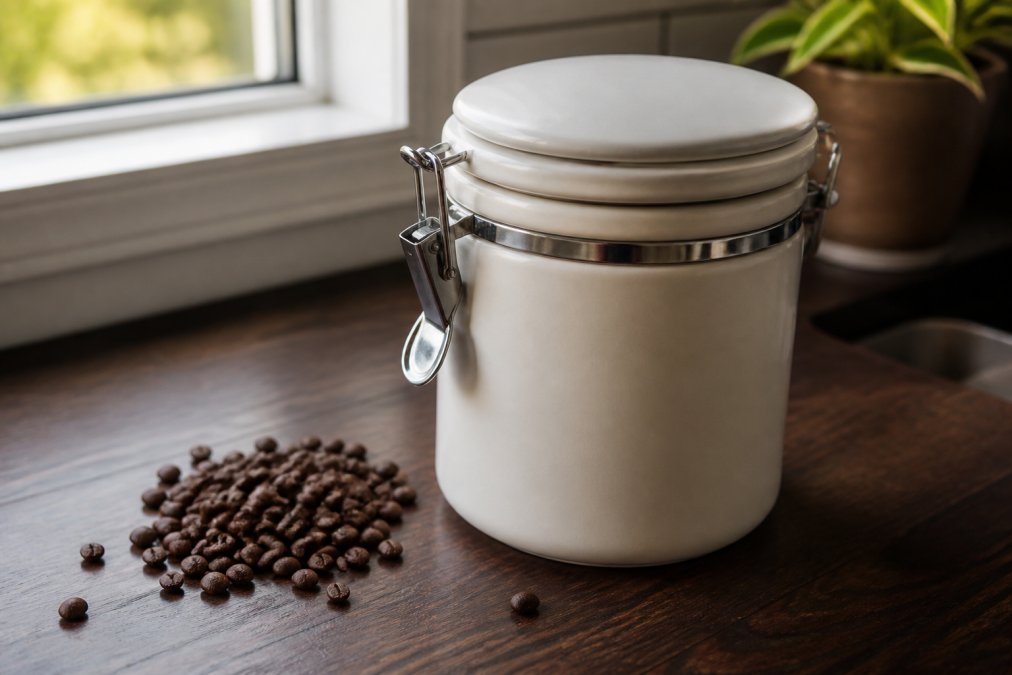
Here is how the common materials actually compare:
- Stainless steel. The strongest performer for temperature stability. Metal has low thermal emissivity and reflects radiant heat, so a stainless canister sitting in a cabinet resists the small ambient swings that push air in and out of a container.
Signs of Stale Coffee Beans (and How to Slow Them Down)
| Sign | What It Means | The Fix |
|---|---|---|
| No aroma when you open the bag | Aromatic compounds have degraded | Use within days; freeze the rest |
| Flat, papery smell | Oxidation is well advanced | Brew stronger or repurpose for cold brew |
| No bloom when brewing | Carbon dioxide has escaped | Check your container seal |
| Oily, dull surface | Oil degradation from heat | Move storage to a cooler spot |
Climate and Roast Level: Adjusting Your Storage Strategy
Frequently Asked Questions
What is the ideal temperature range for storing coffee beans?
The ideal range is 60-70°F (15-21°C) for daily storage. Above 70°F, oxidation and oil degradation speed up noticeably, flattening the flavor profile within days. Below 60°F is fine, but avoid temperature fluctuation, which causes condensation on the beans. For long-term storage, freezing at 0°F (-18°C) or below in a vacuum-sealed, opaque container is the best way to preserve aromatic compounds for months.
Do coffee beans go bad after 2 years?
Yes. Roasted beans lose most of their flavor within 2-4 weeks at room temperature. After two years, even frozen beans will have lost the volatile aromatic compounds that give coffee its character. The oils will have oxidized, producing a flat, papery, or rancid taste. For the best cup, use beans within 4-6 weeks of the roast date, or freeze them properly within the first week for long-term storage.
Should you store coffee beans in the refrigerator or freezer?
The freezer is the better choice for long-term storage. A refrigerator cycles through temperature changes every time the door opens, and the humidity inside promotes condensation on the beans, which accelerates staling. The freezer maintains a steady 0°F (-18°C) or below, slowing oxidation and preserving freshness for months. If you use the freezer, portion beans into single-use vacuum-sealed bags and thaw completely before grinding.
How does light and humidity affect coffee bean temperature?
Light, especially UV exposure, breaks down the aromatic compounds in coffee beans and can raise their surface temperature slightly, speeding up staling. Humidity is worse: moisture causes beans to swell, degas faster, and lose carbon dioxide, which is the barrier that protects flavor. Store beans in an opaque, airtight container in a cool and dark cabinet, away from the stove, dishwasher, or any heat source that causes temperature fluctuation.