

7 Best Brewing Methods for Single Origin Coffee
Quick Summary
The best brewing methods for single origin coffee are pour-over for bright, fruity origins, and French press or AeroPress for fuller body and sweetness. Drip, moka pot and cold brew suit convenience, intensity and low acidity. Match the method to the bean's processing and roast level.
- Pour-over uses a 1:16 ratio, about 20 grams of coffee to 320 grams of water, at near 200°F.
- French press uses 30 grams of coffee to 500 grams of water with a 4:00 steep time.
- AeroPress uses 15 grams of coffee to 225 grams of water at 185-200°F, steeped about 1:30.
- Cold brew steeps coarse grounds 12-18 hours and yields low acidity with heavy body.
- Washed origins suit clarity-focused brewers, while natural-process origins suit brewers that keep oils.
Table of Contents
- Why Brewing Method Matters More for Single Origin Coffee
- Coffee Brewing Methods Chart: Strength, Body and Cleanup Compared
- 1. Pour-Over: Clarity for Bright, Fruity Origins
- 2. French Press and AeroPress: Body and Sweetness
- 3. Drip, Moka Pot and Cold Brew: Convenience and Alternatives
- How to Brew Single-Origin Coffee Step by Step
- How to Make Good Coffee at Home Without a Machine
- Start Your Next Brew with an Iron Spur Single Origin Sample Pack
- Frequently Asked Questions
Why Brewing Method Matters More for Single Origin Coffee
Last Updated: November 11, 2026
Single origin coffee is grown in one place, from one producer or harvest, so its flavor is more distinct than a blend. That clarity is also why the brewing method matters more.
Single origin coffee is a bean grown in a specific region, sometimes a single farm, and roasted without blending in other lots. Its acidity, sweetness and body come from altitude, variety and processing, so extraction choices show up quickly in the cup.
Three variables do most of the work: grind size, water temperature and contact time. A washed Colombia extracts differently than a natural-process Ethiopia, so a method that suits one can make the other taste sour or muddy. Matching the method to the bean's processing and roast level is how you keep the flavor notes on the bag.
Coffee Brewing Methods Chart: Strength, Body and Cleanup Compared
Coffee brewing methods differ mainly in how they extract, how much body reaches your cup, and how much cleanup follows. Use this chart to narrow your choice before reading the method sections below.
| Method | Strength | Body | Cleanup | Best For |
|---|---|---|---|---|
| Pour-over | Clean, moderate | Light to medium | Paper filter, rinse | Bright, fruity origins |
| French press | Strong | Full, heavy | Grounds and rinse | Chocolate and caramel notes |
| AeroPress | Concentrated | Medium | Quick press, rinse | Travel, versatile brewing |
| Drip | Consistent | Medium | Filter disposal | Batch brewing |
| Moka pot | Very strong | Full | Rinse and dry | Espresso-style strength |
| Cold brew | Smooth, low acid | Heavy | Filter disposal | Low acidity, make-ahead |
For a full breakdown of value and bean choice, see How to Tell If Single Origin Coffee Is Worth the Price.
1. Pour-Over: Clarity for Bright, Fruity Origins
Pour-over is the method to choose when you want to taste every layer of a single origin.
Start with a 1:16 coffee-to-water ratio, about 20 grams of coffee to 320 grams of water, with water near 200°F. Grind to a medium-fine size, similar to sea salt.
Pros: Clear flavor, precise control, inexpensive gear. Cons: Requires attention, and a poor pour creates uneven extraction.
For the bean side of this decision, read 7 Best Coffee Beans for Precision Brewing. If you are shopping for equipment, Top 5 Gooseneck Kettles for Pour Over: 2026 Buying Guide covers the pour control you will need.
2. French Press and AeroPress: Body and Sweetness
French press and AeroPress both emphasize body, but they do it through different mechanisms. The French press is a full-immersion brewer: grounds steep in water, and a metal mesh filter lets oils and fine particles into the cup. The AeroPress combines immersion with a short pressure push through a paper or metal filter, so it extracts quickly and leaves most sediment behind.
French press starting recipe
- Dose and ratio: 30 grams of coffee to 500 grams of water (1:16.7). Scale up or down while keeping the ratio.
- Grind: Coarse, similar to raw sugar or sea salt. Too fine and the mesh filter passes grit into the cup.
- Water temperature: 195-205°F. For a light-roasted washed origin, stay near the top of that range; for a darker roast, drop toward 195°F.
- Steep time: 4:00 total. Add grounds, pour all the water, stir once, and place the lid on with the plunger just above the surface.
French press suits chocolatey, caramelly origins such as a Honduras or a Bali Blue, and it flatters natural-process coffees whose fruit notes can turn muddy in a paper filter. The trade-off is sediment and a heavier mouthfeel that can mask delicate floral notes.
Watch out: A coarse grind that is uneven, common with blade grinders, produces both sour and bitter notes in the same cup, because fine particles over-extract while coarse ones under-extract.
AeroPress starting recipe
- Dose and ratio: 15 grams of coffee to 225 grams of water (1:15) for a standard cup; use 1:12 for a concentrated concentrate to dilute.
- Grind: Fine-to-medium, finer than French press and coarser than espresso.
- Water temperature: 185-200°F. Lower temperatures mute bitterness in darker roasts; higher temperatures pull more acidity from light roasts.
- Steep and press: Pour, stir gently, steep 1:30, then press steadily for about 20-30 seconds. Total contact time should land near 2:00.
AeroPress is a forgiving manual brewer for single origin coffee. It is also the easiest way to brew a single cup without a scale-heavy ritual, which makes it a practical starting point for a washed Ethiopia or a honey-process Costa Rica.
Matching the method to processing
A common pattern among roasters is that washed coffees reward clarity-focused brewers, while natural and anaerobic coffees reward brewers that retain oils and body. In practice:
- Washed origins (clean acidity, distinct varietal character) tend to shine in an AeroPress with a paper filter, where the sweetness comes forward without sediment.
- Natural-process origins (berry, tropical fruit, fermented sweetness) often taste fuller in a French press, where oils carry the fruit notes.
- Honey-process coffees sit between the two; try both brewers with the same dose and note whether the sweetness reads as clean or syrupy.
For the bean side of this decision, read 7 Best Coffee Beans for Precision Brewing. If you are shopping for equipment, Top 5 Gooseneck Kettles for Pour Over: 2026 Buying Guide covers pour control, though neither brewer here requires a gooseneck.
3. Drip, Moka Pot and Cold Brew: Convenience and Alternatives
These three methods trade some control for convenience or intensity. Each can brew a good single origin if you match the recipe to the bean and know where each method tends to go wrong.
Drip coffee makers
A drip machine is the easiest way to brew a larger batch, and a good one holds water in the 195-205°F range and saturates the bed evenly. The limitation is control: you set the grind and ratio, and the machine decides the rest.
- Ratio: 1:16 to 1:17, or about 60 grams of coffee per 1 liter (34 ounces) of water.
- Grind: Medium, similar to table salt. Too fine and the basket clogs and over-extracts; too coarse and the cup tastes weak and sour.
- Best for: Everyday drinking and batch brewing. A drip machine flattens the most delicate floral notes, so reserve it for origins with sturdy chocolate, nut, or caramel character rather than a fragile light-roasted Ethiopia.
Watch out: A machine that sprays water unevenly or holds water below 195°F produces a sour, under-extracted cup no grind adjustment can fully fix.
Moka pot
The moka pot pushes hot water through grounds under steam pressure, producing a strong, espresso-style cup with concentrated sweetness and body. It is the closest stovetop approximation of espresso without an espresso machine.
- Dose: Fill the basket level without tamping. Tamping a moka pot basket restricts flow and can cause channeling or a safety-valve release.
- Grind: Fine, but slightly coarser than espresso.
- Water: Fill the base to just below the safety valve, and use hot water to shorten the time on the stove.
- Heat: Medium-low. Remove the pot from the heat as soon as the flow turns pale and sputtering.
Watch out: A moka pot left on high heat will scorch and taste harsh within seconds, and the burnt note cannot be corrected after the fact.
Cold brew
Cold brew steeps coarse grounds in cold water for 12 to 18 hours. The low temperature extracts fewer acids and bitter compounds, so the result is smooth, low in acidity, and heavy in body.
- Ratio: 1:8 for a concentrate to dilute, or 1:15 for ready-to-drink cold brew.
- Grind: Coarse, like French press. Fine grounds make the batch muddy and slow to filter.
- Time: 12-18 hours in the refrigerator. Room-temperature steeping is faster but more prone to fermentation and off-flavors.
- Best for: Origins with heavy chocolate or nut notes, and natural-process coffees whose fruit reads as jammy rather than bright. Delicate floral washed coffees lose their top notes in cold brew.
Choosing among the three
A practical way to decide is to ask what you want from the cup. If you want volume and consistency, use drip. If you want intensity and body, use a moka pot. If you want low acidity and make-ahead convenience, use cold brew.
For a full breakdown of value and bean choice, see How to Tell If Single Origin Coffee Is Worth the Price.
How to Brew Single-Origin Coffee Step by Step
These steps apply to most manual methods and give you a repeatable baseline.
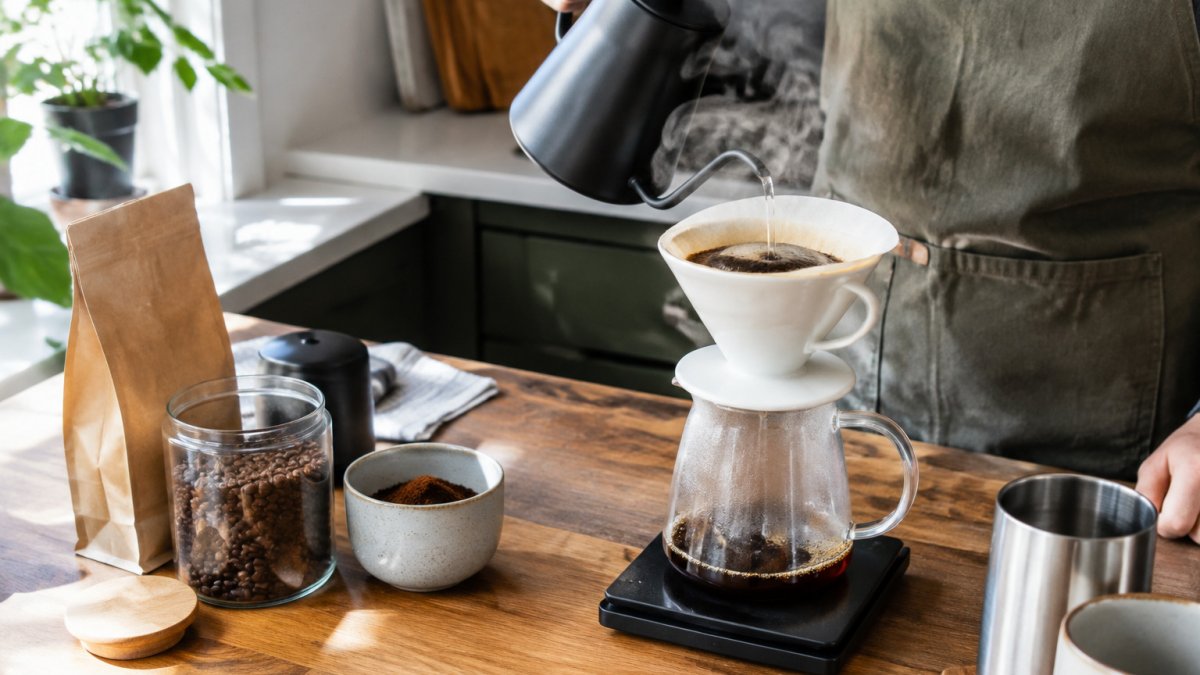
- Weigh your coffee and water. Use a kitchen scale. A 1:16 ratio is a reliable start for pour-over.
- Grind just before brewing. Match the grind to your method, from fine for AeroPress to coarse for French press.
- Heat water to 195-205°F. Let boiled water sit about 30 seconds before pouring.
- Bloom the grounds. Pour about twice the coffee weight in water and wait 30 seconds so trapped gas escapes.
- Pour in steady circles. Finish the full water weight by the 2:30 mark for pour-over.
- Taste and adjust. If the cup tastes sour, grind finer or brew hotter. If it tastes bitter, grind coarser or shorten the brew.
Keep a brew log with grind setting, temperature and time. Repeating a recipe is the fastest way to learn how each origin behaves. Our Single Origin Favorites Sample Pack lets you test several origins across the same method.
How to Make Good Coffee at Home Without a Machine
You do not need a machine to brew good single origin coffee. A French press, a pour-over cone or an AeroPress all work with a kettle, a grinder and a timer.
Water quality matters too. Filtered water with balanced minerals tastes cleaner than tap water with a strong chlorine or mineral flavor.
Start Your Next Brew with an Iron Spur Single Origin Sample Pack
Start Your Next Brew with an Iron Spur Single Origin Sample Pack
Choosing the right method is only half the work. Tasting a range of origins across the same method shows you what each one does best. Our single origin coffees are roasted to order.
Pick a method from this guide, buy a sample pack and brew the same bean two ways to compare the results.
Frequently Asked Questions
What is the best method for brewing single-serving coffee?
For one cup of single origin coffee, pour-over and AeroPress are the most practical choices. A pour-over lets you control water temperature and pour rate, which highlights the clarity of bright origins like Kenya or Ethiopia Natural. An AeroPress brews a full-flavored cup in about two minutes with minimal cleanup. Use a coffee-to-water ratio near 1:16 and a medium-fine grind for either method, then adjust grind size if the cup tastes sour or bitter.
How do you brew single-origin coffee?
Start with freshly ground coffee, ideally within a few weeks of roasting. Use water heated to about 200 degrees Fahrenheit and a ratio of roughly 1:16, so 20 grams of coffee to 320 grams of water. Pour-over brews take about three to four minutes, and French press brews steep for four minutes. Taste each cup and change one variable at a time, such as grind size or brew time, so you can see exactly what affects the flavor.
Is pour-over or French press better for single-origin coffee?
Neither is better in every case. Pour-over uses a paper filter that removes oils and fine particles, producing a clean, bright cup that suits fruity, floral origins such as the Tanzania or Kenya. French press keeps more oil and body, which suits chocolate-forward coffees like Brazil Santos or Bali Blue. If you want clarity, choose pour-over; if you want a heavier, sweeter mouthfeel, choose French press.
What grind size should you use for single-origin coffee?
Match the grind to the brewing method: coarse for French press, medium-fine for pour-over and drip, and fine for Moka pot. Single origin coffees often respond strongly to small grind changes, so adjust in small steps. If the cup tastes sour and thin, grind finer or brew longer. If it tastes bitter and harsh, grind coarser or shorten the brew time.
