

Small Batch vs Mass Produced Coffee: Quality Breakdown
Table of Contents
- Small Batch vs Mass Produced Coffee: The Core Differences
- Roasting Process and Precision Control
- Specialty Coffee vs Grocery Store Coffee: Flavor and Quality
- Benefits of Small Batch Coffee for Freshness and Taste
- How to Identify High Quality Coffee Beans at Home
- Cost Analysis: Price vs Value
- Environmental and Supply Chain Transparency
- Which Should You Choose?
Last Updated: August 10, 2026
Small Batch vs Mass Produced Coffee: The Core Differences
The difference between small batch and mass produced coffee is rooted in fundamentally different approaches to roasting, sourcing, and quality control. Small batch coffee prioritizes precision, freshness, and complexity. Mass produced coffee prioritizes consistency, shelf stability, and cost efficiency.
At Iron Spur Coffee, we've built our entire operation around small-batch roasting because the process allows us to eliminate variables that mass production can't control. When you roast in small batches, every bean gets uniform heat exposure. When you roast thousands of pounds at once, heat distribution becomes a mathematical problem with unavoidable compromises.
The core differences come down to three factors: roast profile control, bean sourcing quality, and freshness window. Small-batch roasters work with specialty-grade green coffee beans sourced from high-elevation estate environments, while mass producers typically source commodity coffee. The roasting process amplifies these differences. A small-batch roaster can adjust temperature, airflow, and timing mid-roast based on how the beans are responding. A mass production facility runs predetermined roast profiles for efficiency, accepting variability as the cost of scale.
Roasting Process and Precision Control
The roasting process is where small batch and mass produced coffee diverge most dramatically. Small-batch roasters use precision thermal mapping to track bean temperature throughout the roast, adjusting heat and airflow in real time. Mass production facilities use automated systems that execute the same roast profile thousands of times, optimizing for throughput rather than individual batch quality.
Batch Size and Heat Transfer
Batch size directly determines how evenly heat transfers to every bean. A small batch, typically 1-5 pounds, sits in the roasting drum with enough space for hot air to circulate around each bean uniformly. Every bean receives similar heat exposure, which means the roast profile develops consistently across the entire batch.
Mass production batches run 50-200+ pounds at a time. At that scale, beans in the center of the drum experience different temperatures than beans at the edges. The roaster compensates by running hotter overall, which accelerates the roast but creates inconsistency. Some beans reach first crack before others, resulting in a range of roast levels within the same batch.
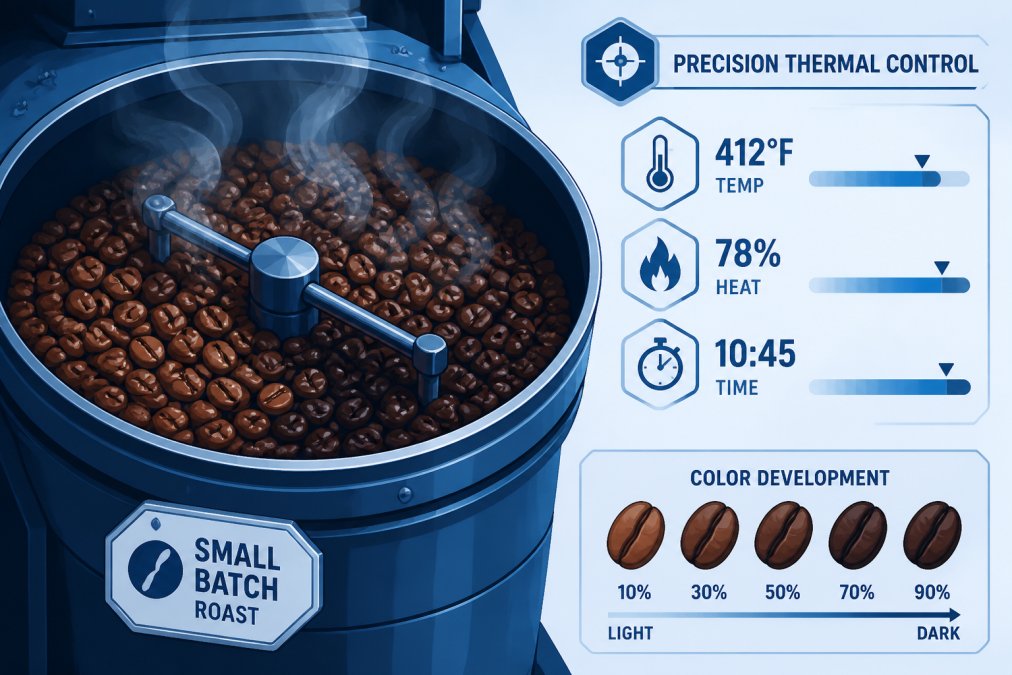
The practical impact: small-batch roasters can target specific roast levels with precision. Iron Spur Coffee uses thermal mapping to eliminate bitterness, a common problem in mass-produced coffee that's roasted too fast or at inconsistent temperatures. When heat distribution is uneven, some beans over-roast and develop harsh, burnt flavors. Small-batch precision prevents that.
Roast Frequency and Consistency
Small-batch roasters typically roast multiple times per week, sometimes daily. This roast frequency allows them to roast to order, which means your coffee is roasted days before it ships to you, not weeks or months before. Roast frequency also enables roasters to adjust profiles based on seasonal variations in green coffee.
Mass production facilities roast on a fixed schedule, often just a few times per week for massive volumes. They can't roast to order because their production model requires inventory. A bag of mass-produced coffee sitting on a grocery store shelf has likely been roasted 4-8 weeks prior, sometimes longer. The roast profile is locked in and doesn't adapt to bean variations.
Specialty Coffee vs Grocery Store Coffee: Flavor and Quality
The term "specialty coffee" refers to beans graded 80+ points on the Specialty Coffee Association scale. Grocery store coffee is typically commodity-grade, scored below 80 points. The difference is dramatic once you taste it.
Bean Selection and Green Coffee Quality
Specialty-grade green coffee beans come from specific microclimates, often high-elevation regions where cooler temperatures slow bean maturation and allow more complex sugars to develop. Roasters like Iron Spur source from smallholder farmers in regions like the Kintamani highlands in Bali or the Medellin region of Colombia, where altitude and soil conditions create beans with inherent complexity.
Commodity coffee comes from large-scale industrial farms optimized for yield, not quality. The beans are processed quickly and blended from multiple origins to meet volume targets. They're functional, but they lack the nuanced flavor notes that specialty beans develop.
Flavor Complexity and Aroma Profile
A specialty coffee has a distinct aroma profile and flavor notes that reflect its origin. Iron Spur's High Plains Colombia, for example, offers dried orange, berry, and chocolate notes because of the bean variety, altitude, and processing method used by the growers. These flavors aren't added, they're inherent to the bean and unlocked by precise roasting.

Mass-produced coffee has a generic aroma profile: roasted, sometimes bitter, occasionally smoky. The roast profile is designed to mask defects in the green coffee, not highlight its strengths.
Benefits of Small Batch Coffee for Freshness and Taste
The freshness advantage of small batch coffee is measurable and immediate. Roasted coffee begins oxidizing the moment it cools. Within the first 5-10 days post-roast, the flavors are at their peak. After 2-3 weeks, oxidation accelerates and flavor begins to fade.
Roasted-to-Order and Shelf Life
Small-batch roasters roast to order, which means your coffee is roasted within days of shipping. When you open the bag, it's typically 3-7 days post-roast, still in the optimal flavor window. The roast date is printed on the bag, so you can verify freshness.
Mass-produced coffee sits in warehouses and on store shelves for weeks or months. By the time you brew it, the oxidation process has already diminished the flavor. Grocery store coffee doesn't print roast dates for this reason.
Oxidation and Peak Flavor Window
Oxidation is the chemical process where oxygen interacts with oils and compounds in the roasted bean. A small amount of oxidation (the first 2-3 weeks post-roast) is beneficial. Beyond that, oxidation becomes degradation. The coffee tastes stale, papery, or muted.
Small-batch roasters work within the peak flavor window. They roast frequently, ship quickly, and encourage customers to brew within 2-4 weeks of the roast date. Mass producers accept that their product will spend 4-8 weeks in transit and storage before reaching a consumer, then another 2-4 weeks on a shelf. By the time it's brewed, it's already 2-3 months past roast.
How to Identify High Quality Coffee Beans at Home
You don't need expensive equipment to assess coffee quality. Visual inspection and basic sensory evaluation give you reliable signals about freshness and roasting precision.
Visual Inspection and Roast Date
High-quality coffee beans have a uniform, deep color with minimal surface defects. The roast should be even, with no pale spots or overly dark patches. If you see beans with visible cracks or uneven coloring, that signals inconsistent roasting or lower-quality green coffee.
Check the roast date on the bag. If it's printed clearly and recent (within 1-3 weeks), that's a strong signal of quality and freshness. If there's no roast date or the date is months old, the coffee has likely oxidized significantly.
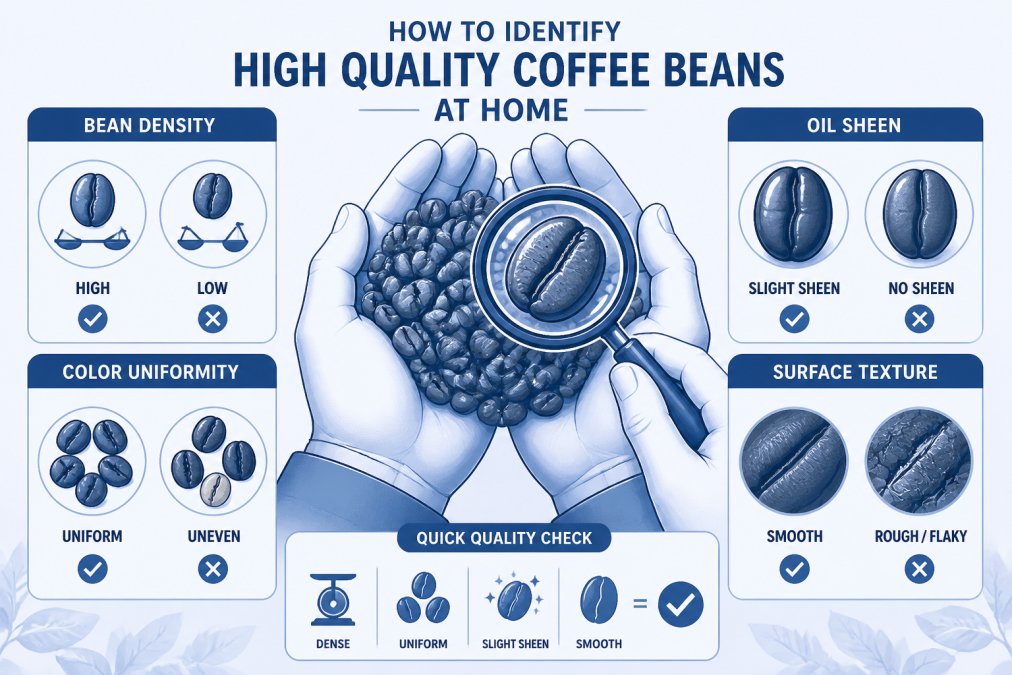
Feel the beans between your fingers. Small-batch roasted specialty coffee often has a slight oil sheen on the surface, a sign of proper roasting that's released the bean's natural oils. Beans that feel dusty or chalky typically indicate stale coffee or under-roasted beans.
Discover Iron Spur Coffee Today →
Cupping and Sensory Evaluation
Cupping is the professional method coffee tasters use to evaluate coffee. You can do a simplified version at home with just hot water and a cup.
Brew a small amount of coffee (1-2 tablespoons of coarsely ground beans in 4 ounces of hot water). Let it steep for 4 minutes, then break the crust on top and smell deeply. A fresh, high-quality coffee will have a complex, inviting aroma with fruity, floral, or chocolatey notes depending on the origin. Stale coffee smells flat or one-dimensional.
Taste it after it cools slightly. High-quality coffee has clarity, you can taste individual flavor notes. Mass-produced coffee tastes muddled, sometimes bitter, without distinct flavor layers.
| Quality Indicator | Small Batch | Mass Produced |
|---|---|---|
| Roast Date | Printed, recent (1-3 weeks) | Often omitted or months old |
| Bean Color | Uniform, deep, even roast | Variable, often darker to mask defects |
| Aroma | Complex, origin-specific notes | Generic, sometimes bitter |
| Flavor Profile | Distinct notes, clarity | Flat, one-dimensional, often bitter |
| Shelf Life Post-Roast | 4-6 weeks optimal | Already oxidized by purchase |
| Price Point | $20-25 per 12oz | $6-12 per 12oz |
Cost Analysis: Price vs Value
Small batch coffee costs 2-3x more than mass-produced grocery store coffee. A 12-ounce bag of specialty small-batch coffee costs around $23.99 and yields roughly 12-15 cups, working out to approximately $1.60-$2.00 per cup. A 12-ounce bag of mass-produced grocery coffee costs $6-10 and yields similar cup count, working out to $0.50-$0.85 per cup.
The price difference is real, but consider what you're paying for: freshness, precision roasting, specialty-grade beans, and supply chain transparency. With Iron Spur Coffee, you're paying for beans roasted to order with thermal mapping precision, sourced from high-elevation estate environments, and shipped quickly to preserve peak flavor.
The value calculation depends on your priorities. If you drink coffee primarily for caffeine and convenience, mass-produced coffee delivers that at lower cost. If you value flavor complexity, freshness, and the ritual of a quality morning cup, small-batch coffee provides measurable benefits that justify the premium.
Environmental and Supply Chain Transparency
Small-batch roasters typically have direct relationships with coffee farmers or cooperative organizations. They can trace beans back to specific regions, sometimes specific farms. This transparency matters for environmental and ethical reasons.
Specialty coffee sourcing often involves direct trade or fair trade relationships, where roasters pay premium prices directly to farmers. This incentivizes sustainable farming practices, shade-grown coffee that preserves forest ecosystems, water conservation, and soil health.
Mass-produced commodity coffee comes from industrial supply chains where beans are aggregated, blended, and processed for efficiency. Individual farmer relationships are lost. Environmental practices are optimized for cost, not sustainability.
When you buy small-batch specialty coffee, you're supporting farmers directly and incentivizing sustainable practices. With mass-produced coffee, the supply chain is opaque and optimized for volume and cost.
Which Should You Choose?
Choose small batch coffee if you drink coffee for the experience, not just the caffeine. You appreciate flavor complexity, freshness, and the ritual of a quality brew. You're willing to pay more for measurable improvements in taste and freshness. You value supply chain transparency and supporting specialty coffee farmers.
Choose mass-produced coffee if you prioritize convenience and cost. You drink coffee as fuel, not as an experience. The caffeine and basic coffee experience are sufficient for your needs.
Most people fall somewhere in between. For this group, small-batch specialty coffee is worth trying. The flavor difference is immediate and obvious. Once you've tasted a fresh, precisely roasted specialty coffee, the flatness of mass-produced grocery coffee becomes apparent.
If you're curious about the difference, start with a single bag of high-quality small-batch coffee and compare it directly to your usual grocery store brand. Brew them the same way and taste them side by side. The difference will be clear.
Iron Spur Coffee offers several entry points into specialty small-batch roasting. The High Plains Colombia features dried orange, berry, and chocolate notes, a bright, approachable single origin that showcases the flavor complexity of specialty beans. The Bali Blue delivers dark chocolate, molasses, and brown sugar notes with a smooth body that appeals to coffee drinkers transitioning from mass-produced brands. Both are roasted to order and ship quickly to preserve peak freshness.
For those seeking something unique, the Whiskey Barrel Aged offers a distinctive experience: single-origin Guatemalan beans aged 30 days in a bourbon barrel, then roasted to order. This combines specialty sourcing, precision roasting, and a memorable flavor profile that mass-produced coffee simply cannot replicate.
The choice between small batch and mass produced coffee ultimately reflects your values around quality, freshness, and experience. Small-batch roasting delivers measurable improvements in flavor complexity, freshness, and supply chain transparency. Mass production delivers consistency, convenience, and lower cost. If you've never experienced fresh, precisely roasted specialty coffee, the difference is worth discovering.
Small-batch specialty coffee delivers flavor complexity and freshness that mass production can't match. If you're ready to experience the difference, specialty coffee sourcing standards provide a framework for understanding quality grades. Iron Spur Coffee combines specialty-grade beans from high-elevation estate environments with precision small-batch roasting and thermal mapping to eliminate bitterness. Discover Iron Spur Coffee Today and experience the difference a disciplined roasting process makes in your daily cup.
Frequently Asked Questions
Is small batch coffee actually better than mass produced coffee?
Small batch coffee typically offers superior flavor complexity and freshness because roasters control heat transfer more precisely, develop more nuanced aroma profiles, and roast in smaller quantities. Mass-produced coffee prioritizes volume and shelf stability over flavor development. However, 'better' depends on your priorities: small batch excels in taste and freshness; mass-produced offers convenience and lower cost. Specialty small-batch roasting with precision thermal mapping eliminates the bitterness common in industrial roasting, delivering the complex sweetness and deep flavor notes that distinguish quality coffee.
What defines small batch coffee in the US roasting industry?
Small batch coffee typically refers to roasts in quantities under 25 pounds per batch, though definitions vary. The key distinction is roaster capacity and control: small-batch roasters can adjust roast profiles for each batch, monitor bean density and heat distribution closely, and roast frequently to maintain freshness. This contrasts with industrial roasting, which processes hundreds of pounds per batch in fixed cycles. Roasted-to-order models, where coffee is roasted after purchase, represent the ultimate small-batch approach, ensuring maximum flavor and aroma retention from roast date forward.
How does freshness affect the taste of small batch vs mass produced coffee?
Freshness is critical: coffee begins oxidizing immediately after roasting, degrading aroma and flavor complexity within 2-4 weeks. Small-batch roasters using roasted-to-order models deliver coffee at peak freshness, typically within days of roasting. Mass-produced coffee sits in warehouses and on store shelves for months, allowing oxidation to flatten flavor and increase staleness. When you brew small-batch coffee fresh, you taste the full acidity, body, and nuanced notes. Mass-produced coffee loses these qualities, often tasting flat or bitter as oils break down. Checking the roast date on your bag is the easiest way to verify freshness.
Can you taste the difference between small batch and grocery store coffee?
Yes, most people notice a clear difference in the first few weeks. Small-batch specialty coffee exhibits distinct flavor notes, fruity, chocolatey, caramel, or floral, depending on origin and roast profile. Grocery store coffee typically tastes generic, flat, or bitter because industrial roasting prioritizes consistency and shelf stability over flavor complexity. The difference is most obvious when comparing high-elevation specialty beans roasted with precision thermal mapping against commodity coffee from mass production. Start with a direct comparison: brew the same amount of each using identical equipment and water temperature. You'll likely notice the small-batch coffee has cleaner acidity, richer body, and identifiable flavor notes absent in mass-produced alternatives.
Why does small batch coffee cost more if it's the same bean?
Small-batch coffee costs more due to several factors: higher-quality green coffee beans (specialty-grade from high-elevation estates versus commodity beans), smaller production runs that increase per-unit roasting costs, precision equipment and thermal mapping technology, roasted-to-order fulfillment requiring faster shipping, and transparent supply chains with direct relationships to growers. Mass-produced coffee uses lower-grade beans, bulk roasting at scale, commodity pricing, and extended shelf life to reduce costs. You're not just paying for beans, you're paying for craftsmanship, freshness, and flavor complexity. At $23.99 per bag for specialty small-batch options, the cost-per-cup typically ranges from $0.80 to $1.20, compared to $0.20 to $0.40 for grocery store coffee, but the flavor difference justifies the premium for coffee connoisseurs and professionals who value quality.
This article was written using GrandRanker