

How to Choose a Coffee Subscription in 2026
Table of Contents
- Start With Your Taste Profile, Not the Brand
- Match Roast Level and Flavor Notes to How You Drink Coffee
- Choose Whole Bean or Pre-Ground Based on Your Brewing Method
- Understand Coffee Subscription Cost: Bag Size, Shipping, and Total Value
- Set Your Coffee Subscription Delivery Frequency Around Your Actual Consumption
- Single-Origin Coffee Subscription vs. Blends: Which Fits Your Routine?
- Read the Coffee Subscription Cancellation Policy Before You Commit
- A Practical Decision Tree for Choosing Your Plan
- Frequently Asked Questions
Last Updated: October 18, 2026
Start With Your Taste Profile, Not the Brand
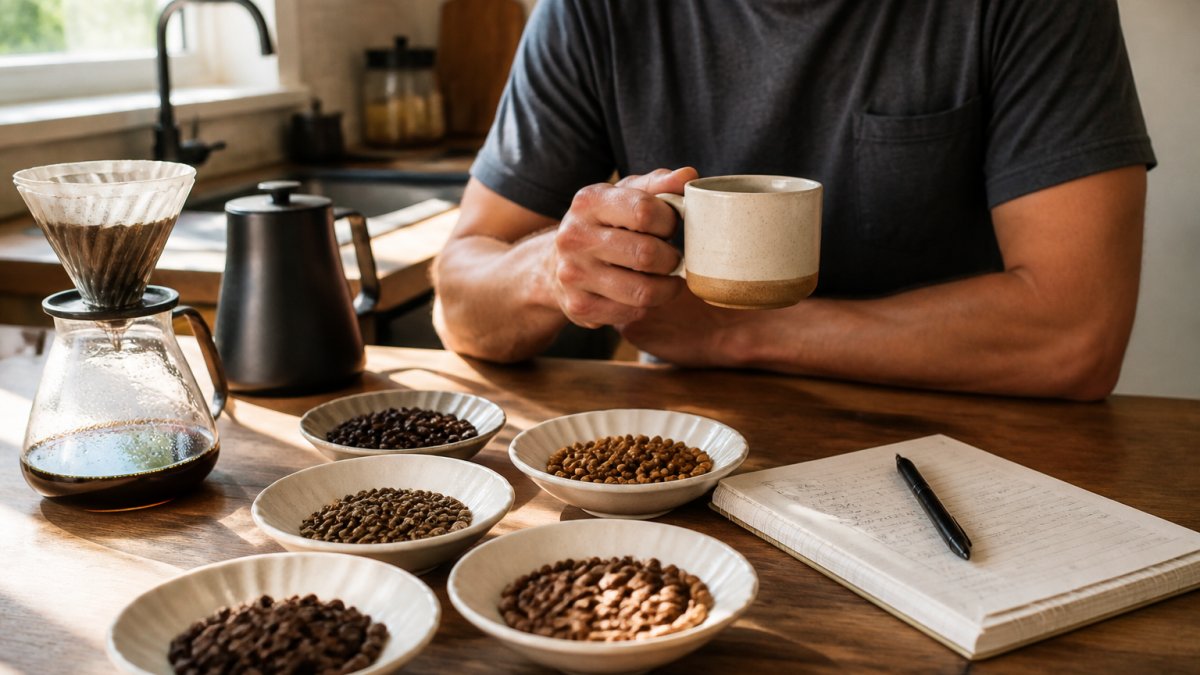
The fastest way to pick a coffee subscription is to start with how you actually drink coffee, not with a brand name.
Ask three questions before you browse:
- Do you drink it black or with milk?
- Do you want bold and heavy, or smooth and sweet?
- Do you brew at home the same way every morning?
Answer those and most of the catalog narrows itself. A common mistake is chasing a trendy brand before knowing your own flavor preference. That is backwards.
Match Roast Level and Flavor Notes to How You Drink Coffee
Roast level is the biggest lever you control. Light roast keeps bright, fruity notes. Medium roast lands in the middle with caramel and cocoa. Dark roast brings smoke and deep sweetness.
Here is how to match it to your cup:
- Milk drinks: medium to dark roast holds up against milk and sugar.
- Black drip: medium roast is the safe default.
- Espresso: dark roast gives a heavier, thicker shot.
If you add milk, a delicate light roast gets buried. If you drink black, a heavy dark roast can taste ashy. Match the roast to the cup, not the shelf.
Choose Whole Bean or Pre-Ground Based on Your Brewing Method
Whole bean coffee stays fresh longer because the oils stay sealed inside the bean. Pre-ground coffee is convenient but starts losing aroma fast once the bag is open.
Grind size has to match your brewing method:
- Espresso: fine grind
- Pour-over: medium-fine grind
- Drip coffee: medium grind
If you own a grinder, buy whole bean. If you do not, order pre-ground to your brew method so the grind size is right out of the bag. Many specialty coffee services let you pick the grind at checkout.
Understand Coffee Subscription Cost: Bag Size, Shipping, and Total Value
Coffee subscription cost is never just the sticker price. The number that matters is cost per ounce of brewed coffee, and that means normalizing bag size, shipping, and consumption rate before you compare plans.
Do the cost-per-ounce math first
A 12 oz bag at $18 and a 2 lb (32 oz) bag at $40 look different on the shelf, but the math flips the value:
- $18 ÷ 12 oz = $1.50 per ounce
- $40 ÷ 32 oz = $1.25 per ounce
The larger bag wins on unit cost, but only if you drink fast enough to finish it before it goes stale. That is the trade-off most subscription pages bury.
Convert to cost per cup
A standard drip dose is about 0.36 oz of ground coffee per 6 oz cup (roughly 10-11 g). At $1.50 per ounce, that is about $0.54 per cup; at $1.25 per ounce, about $0.45 per cup. Run the same math on every plan you are considering and the “cheap” plan often stops looking cheap once shipping is added.
Add shipping and thresholds
Shipping is the hidden line item. A plan with a $6 flat shipping fee on a $15 bag adds 40% to the effective cost. Look for:
- Free-shipping thresholds (many roasters set one around $30-$50 per order)
- Whether shipping is included in the subscription price or billed separately
- Whether skipping a shipment resets a free-shipping minimum
Normalize bag size before you compare
Subscription plans quote prices in different units, 8 oz, 12 oz, 1 lb, 2 lb, or “pods.” Convert everything to cost per ounce, then to cost per cup, before you judge value. A sample pack is the cheapest way to test a roaster before committing: Iron Spur Coffee sells its Best Sellers Sample Pack for $24.99 with six 2 oz packs, about $2.08 per ounce, which is a fair price for tasting six roasts before buying full bags.

| Plan Type | Example Price | Cost per Ounce | Best For | Watch Out For |
|---|---|---|---|---|
| Sample pack | $24.99 for six 2 oz packs | ~$2.08/oz | Testing flavors first | Small volume |
| Single full bag | Varies by size | Varies, do the math | One daily drinker | Shipping adds up |
| Rotating plan | Varies by frequency | Varies, do the math | Variety seekers | Less control |
Factor in consumption rate
Cost per cup only matters against how fast you drink. A 2 lb bag that takes you two months to finish is not a value, it is stale coffee by week six. Match bag size to your actual weekly consumption (see the delivery-frequency section) so the per-ounce savings are real, not theoretical.
Run the math on cost per ounce and cost per cup, not per shipment. A bigger bag at a lower per-ounce price often wins if you drink daily, but only when shipping and freshness are part of the equation.
Set Your Coffee Subscription Delivery Frequency Around Your Actual Consumption
Delivery frequency is where most subscriptions succeed or fail, because it controls both freshness and waste. Match the schedule to how fast you actually drink coffee, then use measurable freshness signals to confirm the plan is working.
Count your actual consumption first
Most households burn through a bag faster than they expect. Count your daily cups, then do the math:
- One cup a day: roughly one 12 oz bag every two to three weeks
- Two cups a day: one 12 oz bag every week to ten days
- Two drinkers: double it
Choose a flexible plan that lets you skip a shipment or pause subscription when you fall behind. A delivery schedule that outruns your drinking habit leaves stale bags on the shelf. When in doubt, start slower and speed up later.
Best Sellers Sample Pack: 6Bean, Cowboy, Breakfast, Peru, Mexico, Bali →
Measure freshness in roast-to-delivery terms
“Fresh” is not a marketing word, it is a timeline. Coffee is at its best roughly 5-20 days after roast for most brew methods, and it declines noticeably after about 4-6 weeks. Ask three questions before you subscribe:
- Does the roaster print a roast date (not just a “best by” date) on the bag?
- How long between roast and ship? Roasted-to-order roasters typically ship within 1-3 business days of roasting.
- How long is transit? Ground shipping is commonly 2-5 business days, so a realistic roast-to-door window is about 3-8 days.
If a roaster cannot tell you its roast-to-ship window, that is a freshness red flag.
Store it so the schedule actually works
Even a well-timed shipment goes stale if storage is wrong. Keep beans in an airtight container away from light and heat, buy only what you will finish in about 4-6 weeks, and avoid transferring beans to a clear countertop jar. For pre-ground coffee, the clock runs faster, aroma drops within days of opening, so smaller, more frequent bags beat one large bag.
Troubleshoot a poor match
When a shipment disappoints, adjust the plan before you cancel:
- Too bitter or ashy: the roast may be too dark for your brew method, try a medium roast or a coarser grind.
- Too sour or thin: the roast may be too light or the grind too coarse, try a medium roast or a finer grind.
- Tastes stale on arrival: check the roast date; if it is more than about 3 weeks old at delivery, ask the roaster about roast-to-ship timing or switch plans.
Start slower than you think you need, confirm the roast-to-delivery window, and adjust frequency as your habits become clear. A schedule that matches your actual consumption is the difference between a subscription that feels fresh every time and one that fills the cabinet with stale bags.
Single-Origin Coffee Subscription vs. Blends: Which Fits Your Routine?
A single-origin coffee subscription sends beans from one country of origin, so you taste that region's character.
Pick single-origin if you want coffee discovery and rotating selections. Pick a blend if you want the same flavor every morning.
- Single-origin: brighter, more distinct tasting notes, changes with the harvest
- Blend: steady, predictable, forgiving with milk
- Rotating selection: best for curious drinkers who like variety
Neither is better. Iron Spur Coffee's Single Origin Favorites Sample Pack at $24.99 lets you test six origins before you commit to a full plan.

Read the Coffee Subscription Cancellation Policy Before You Commit
The cancellation policy decides how much risk you carry. Read it before you enter a card number.
Check these points:
- Can you skip a shipment without a fee?
- Can you pause subscription for a month?
- Is cancellation instant or does it require notice?
A flexible plan with easy skipping beats a cheaper plan with a lock-in. The FTC's guidance on negative-option subscriptions is worth a read, since auto-renewing plans carry consumer protections. If a roaster hides its cancellation terms, that is your answer.
A Practical Decision Tree for Choosing Your Plan
Use this decision tree to pick a plan in five minutes.
- Drink black? Go medium or light roast. Add milk? Go medium to dark.
- Own a grinder? Buy whole bean. No grinder? Order pre-ground to your brew method.
- Want variety? Choose single-origin or a rotating selection. Want consistency? Choose a blend.
- Drink daily? Pick a faster delivery frequency. Drink occasionally? Pick a slower one and confirm you can skip.
- New to the roaster? Start with a sample pack, then commit.
That order matters. Taste first, format second, plan last. Skipping straight to a big subscription is how people end up with cabinets full of coffee they do not love.
Roasted-to-order coffee is the freshness signal to look for. A roast date on the bag beats a vague "best by" date every time. Iron Spur Coffee roasts to order using precision thermal mapping to eliminate bitterness, then ships fast so the bag arrives fresh. Start with a sample pack, find your flavor, then build the plan around it.
Frequently Asked Questions
Is a coffee subscription worth it?
It depends on how much you value freshness and variety. A subscription delivers coffee roasted to order, so you avoid the stale bags that sit on grocery shelves for months. If you drink coffee daily and want consistent quality without reordering every few weeks, the convenience and freshness usually justify the cost. Start with a small bag or sample pack to test the roaster before committing to a recurring plan.
How often should a coffee subscription deliver coffee?
Match delivery frequency to your actual consumption. A typical 12-ounce bag makes about 16 to 20 cups, so a single daily drinker might need a bag every two to three weeks. Households with two or more coffee drinkers may need weekly or biweekly shipments. Choose a plan that lets you skip or pause a shipment when you fall behind, so you never accumulate stale bags.
Can you pause or cancel a coffee subscription?
Most reputable roasters let you pause, skip, or cancel online without a phone call. Before subscribing, check the cancellation policy for notice periods, fees, or minimum commitments. A flexible plan should let you skip a single shipment when you travel or cancel entirely if the coffee does not match your taste. Read the fine print on the checkout page, not just the marketing copy.
Should I choose single-origin coffee or a blend subscription?
Single-origin coffees highlight the character of one region, which suits drinkers who want to explore tasting notes like citrus, chocolate, or floral. Blends combine beans for a consistent, balanced cup that works well with milk or espresso. If you are new to specialty coffee, start with a sample pack that includes both, then choose the subscription format that matches what you actually finish.
Choosing a coffee subscription comes down to matching roast, format, and delivery to your real habits, not to marketing. Iron Spur Coffee makes that easy with specialty-grade, high-elevation beans, small-batch roasting to order, and thermal mapping that keeps bitterness out of the cup. Browse the sample packs, taste the difference, and build a plan that fits your morning. Discover Iron Spur Coffee today and get a resilient, flavorful foundation for your day.