

Coffee Roasting Types: Light to Dark Roast Guide
Table of Contents
- What Is Coffee Roasting and Why It Matters
- The Coffee Roast Spectrum: Light to Dark
- Coffee Roast Flavor Profile Chart: What to Expect
- Light vs Dark Roast Caffeine Content: The Truth
- Small-Batch Roasting Benefits: Freshness and Consistency
- How to Choose the Right Roast for Your Brewing Method
- Conclusion
- Frequently Asked Questions
Last Updated: September 29, 2026
What Is Coffee Roasting and Why It Matters
Coffee roasting applies controlled heat to green coffee beans, transforming them through chemical reactions that develop flavor, aroma, and color. Raw green coffee tastes grassy, with none of the sweetness or depth you expect.
Specialty Coffee Association's roast classification standards
The Coffee Roast Spectrum: Light to Dark
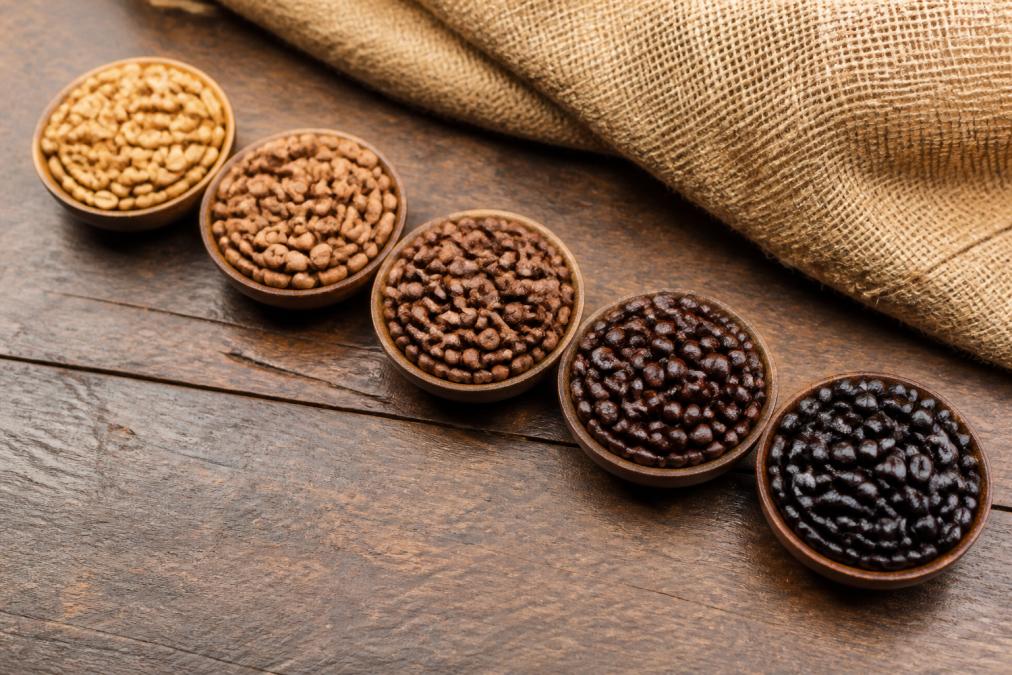
Roast level sits on a spectrum defined by how long beans stay in the roaster and how high the internal temperature climbs. The longer and hotter the roast, the darker the bean and the more origin characteristics give way to roast-driven flavors.
Light Roasts: Bright, Acidic, and Origin-Forward
Light roasts stop shortly after first crack, the audible popping when moisture escapes the bean. They retain the most terroir and acidity, with notes reflecting where the coffee was grown.
Medium Roasts: Balanced Sweetness and Body
Medium roasts land between first and second crack, where caramelization develops sweetness without smokiness. This is the most popular roast degree in the United States because it balances origin characteristics with roasted sugar flavors.
Medium-Dark Roasts: Rich Flavor with Hint of Oil
Medium-dark roasts reach the edge of second crack. Oils migrate to the bean surface, giving a slight sheen, while sweetness drops as caramelized sugars carbonize, replaced by darker cocoa and toasted nut flavors.
Dark Roasts: Bold, Smoky, and Low-Acid
Dark roasts push past second crack into full oil migration. The surface turns glossy and the profile shifts toward smoke, dark chocolate, and sometimes char. Acidity drops significantly, which is why dark roasts appeal to people who find lighter coffees too sharp.
Coffee Roast Flavor Profile Chart: What to Expect
The fastest way to pick a roast is to match your taste preferences to the flavor profile:
| Roast Level | Flavor Notes | Acidity | Body | Best For |
|---|---|---|---|---|
| Light | Citrus, berry, floral | High | Light | Pour-over, cold brew |
| Medium | Chocolate, caramel, nut | Medium | Medium | Drip, AeroPress |
| Medium-Dark | Dark cocoa, toasted nut | Low-Medium | Full | Espresso, French press |
| Dark | Smoke, dark chocolate, char | Low | Heavy | Espresso, moka pot |
Light vs Dark Roast Caffeine Content: The Truth
The idea that dark roasts pack more caffeine is one of the most persistent myths in coffee. By weight, caffeine stays remarkably stable across roast levels. What changes is bean mass, density, and how fast caffeine dissolves.
Caffeine Is Heat-Stable, So Roast Level Barely Moves It
Caffeine is a thermally stable alkaloid that does not burn off at roasting temperatures, which stay well below its decomposition point. A green bean and the same bean roasted dark contain essentially the same caffeine by weight.
Why a Scoop of Dark Roast Can Deliver Less Caffeine
During roasting, beans lose water and expand. A dark roast can shed roughly 15 to 20 percent of its green weight, a light roast closer to 12 to 15 percent, so a dark bean is physically lighter than a light bean of the same size.
Solubility: Why Dark Roasts Extract Faster
Roasting fractures cell walls and makes the bean more porous. A darker roast is more permeable, so hot water reaches caffeine and other solubles faster. Brew the same weight of light and dark for the same time and the dark roast often yields slightly more caffeine because extraction is more complete.
What Actually Moves Caffeine in Your Cup
If caffeine is your priority, roast level is the wrong lever. These variables matter far more:
- Species: Robusta typically contains roughly twice the caffeine of Arabica. A dark-roasted Arabica can still have less caffeine than a light-roasted Robusta blend.
- Dose: Grams of coffee per brew, not scoops or beans.
- Ratio: Coffee-to-water ratio, measured by weight.
- Brew method: Espresso concentrates caffeine per ounce but serves small; drip and cold brew deliver more total caffeine per serving.
- Grind and time: Finer grind and longer contact time extract more caffeine, up to the point of over-extraction.
A Practical Way to Compare
To test this yourself, brew two cups back to back: 15 grams of light roast and 15 grams of dark roast, same grind, water temperature, and brew time.
Small-Batch Roasting Benefits: Freshness and Consistency
Small-batch roasting gives the roaster tighter control over drum speed, airflow, temperature curve, and development time.
How to Choose the Right Roast for Your Brewing Method
Brewing method compatibility is where most roast guides stop short, and it is the biggest factor in whether you enjoy your coffee. The reason is extraction: every brewer applies a different mix of water temperature, contact time, agitation, and filtration, and each roast level responds differently.
The Extraction Principle Behind Every Pairing
Light roasts are dense, less porous, and full of delicate acids and aromatics that need heat and time to dissolve. Dark roasts are porous, oilier, and extract quickly, sometimes too quickly, turning bitter in brewers that run hot and long. Medium roasts sit in the middle and are the most forgiving.
Roast-to-Brewer Pairings, With the Why
- Pour-over and Chemex: Light to medium roasts. These brewers use a paper filter, moderate temperature, and a controlled pour that rewards clarity. Light roasts shine here because the filter traps oils and lets acidity and origin notes come through.
- Drip machine: Medium roasts.
- French press: Medium-dark to dark. The metal mesh filter lets oils and fine particles through, which builds body. Heavier roasts complement that texture instead of fighting it.
- Espresso: Medium-dark to dark. Espresso forces water through a fine grind at high pressure in about 25 to 30 seconds. Lower acidity and higher solubility in darker roasts produce a richer shot with better crema.
- Cold brew: Medium to dark. Long steeping at room temperature or colder extracts slowly and gently. Darker roasts contribute chocolate and caramel depth without the bitterness that heat would pull out.
- Moka pot: Dark roasts. The stovetop moka pot generates high pressure and high heat in a short window, favoring bold, low-acid beans that hold up without turning harsh.
- AeroPress: Medium to medium-dark.
Roast-Specific Storage: The Variable Most Guides Ignore
Storage advice is usually written as if all coffee behaves the same. It does not: roast level changes how fast beans degas and oxidize, which changes how you should store them.
- Dark roasts are the most porous and the oiliest. They degas carbon dioxide quickly and oxidize faster, so they go stale sooner. Buy them in smaller quantities, keep them in an opaque airtight container at room temperature, and plan to finish the bag within about two to three weeks of the roast date.
- Medium and medium-dark roasts are the middle ground. They hold their character for roughly three to four weeks in a proper container and tolerate slightly larger purchases.
- Light roasts are the densest and least porous, so they degas more slowly and hold their aromatics longer. They can stay enjoyable for four to six weeks post-roast, though flavor still fades over time.
A Quick Decision Framework
Start with your brewer, not your taste preference. Pour-over: light to medium. Espresso or moka pot: medium-dark to dark. Drip: medium. Then adjust within that range for more brightness (go lighter) or more body and lower acidity (go darker). The roast is a tool, and the brewer tells you which fits.
Conclusion
Choosing a roast comes down to matching flavor preference with brewing method, not chasing a universal "best" option. Light roasts reward careful brewing with brightness and origin character; dark roasts deliver bold, low-acid cups that stand up to espresso and cold brew. The right roast depends on what you brew and how you like your cup.
Frequently Asked Questions
What are the four main types of coffee roasts?
The four main types are light, medium, medium-dark, and dark roasts. Light roasts have a light brown color and no oil on the surface, medium roasts are medium brown and sweeter, medium-dark roasts are rich dark brown with some oil, and dark roasts are nearly black with an oily sheen. Each level brings out different flavors and aromas.
Does roast level affect the caffeine content of coffee?
Roast level does not significantly change caffeine content. Caffeine is stable during roasting, so a light roast and a dark roast from the same bean have similar caffeine. However, volume matters: dark roasted beans lose more mass, so if you measure by scoop, you might get slightly more caffeine from a dark roast because the beans are lighter and you use more of them.
What is the difference between light and dark roast coffee?
Light roasts are roasted for less time at lower temperatures, preserving origin characteristics like acidity and fruity notes. Dark roasts are roasted longer at higher temperatures, developing bold, smoky, and chocolatey flavors while reducing acidity. Light roasts have a lighter body, while dark roasts are heavier.
How does roasting time affect coffee flavor?
Roasting time drives flavor development. Shorter roasts (light) retain more of the bean's natural sugars and acids, resulting in bright, fruity, and tea-like flavors. Longer roasts (dark) caramelize sugars and break down acids, creating deep, bittersweet, and smoky notes. The Maillard reaction and caramelization during roasting are key to building complexity and sweetness.
What is specialty-grade small-batch roasting?
Specialty-grade small-batch roasting means using high-quality beans (scoring 80+ on a 100-point scale) and roasting them in small quantities to ensure precise control over temperature and time. This method allows roasters to tailor the roast profile to each bean, maximizing flavor and freshness.
What type of coffee roast is best?
The best roast depends on your taste preferences and brewing method. Light roasts suit pour-over and cold brew, highlighting bright, fruity notes. Medium roasts are versatile and work well for drip and espresso. Dark roasts are ideal for espresso, French press, and those who prefer bold, low-acid flavors. Experiment to find what you enjoy most.