

High Altitude vs Low Altitude Coffee Flavor Profile
Last Updated: November 18, 2026
Quick Summary
High altitude coffee ripens more slowly in cool mountain air, building denser beans with brighter acidity, layered sweetness and clearer flavor. Low altitude coffee ripens fast in heat, giving a rounder, flatter cup with softer acidity and simpler sweetness. Elevation is one variable among several, not a guarantee of quality.
- Below 900 MASL, coffee ripens fast and cups soft, mild and low in acidity.
- Above 1,900 MASL, ripening is very slow and lots show intense acidity and delicate florals.
- Arabica above roughly 1,200 meters develops sugars, acids and aromatic precursors for flavor.
- Dense high-grown beans tolerate more energy early in the roast without scorching.
- Compare altitudes with the same roast level, dose, water, grind and brew method.
Table of Contents
- High Altitude vs Low Altitude Coffee: The Flavor Divide
- The Coffee Altitude Chart: Elevation Ranges and What They Mean
- Arabica Coffee Growing Altitude and Why It Sets the Ceiling
- How Altitude Affects Coffee Bean Density and Roast Behavior
- High Altitude Coffee Flavor Notes: Acidity, Sweetness, and Clarity
- Side-by-Side Tasting: A Practical Protocol for Comparing Altitudes
- Choose Your Next Bag: High-Elevation Beans at Iron Spur Coffee
- Frequently Asked Questions
High Altitude vs Low Altitude Coffee: The Flavor Divide
High altitude vs low altitude coffee flavor profile differences come down to one thing: how slowly the cherry ripens. High-elevation coffee tends to ripen more slowly, which can build denser beans, brighter acidity, and more layered sweetness. Cool mountain air slows maturation, giving sugars and acids time to develop before harvest.
The contrast is real. Low-grown beans ripen fast in heat, producing a rounder, flatter cup with less snap and less complexity.
Below, we break down what elevation actually does to flavor, how to read an altitude chart, and how to taste the difference yourself. Most guides treat altitude as a magic number. It is not. It is one variable among several, and understanding the others is what separates a good buying decision from a guess.
The Coffee Altitude Chart: Elevation Ranges and What They Mean
The coffee altitude chart is a practical reference, but it is not a universal law. It maps growing elevation to the cup qualities you can generally expect, while the exact cutoffs shift by origin, climate, and variety. Higher meters above sea level usually mean slower maturation, denser beans, and brighter, more complex flavor. Lower elevations deliver rounder, softer cups. The numbers below are a useful starting frame for Arabica, not a fixed standard that applies identically in every producing region.
| Elevation Range | Ripening Speed | Typical Cup Profile | Common Use |
|---|---|---|---|
| Below 900 MASL | Fast | Soft, mild, low acidity | Blends, commodity |
| 900-1,200 MASL | Moderate | Balanced, gentle sweetness | Everyday blends |
| 1,200-1,500 MASL | Slower | Chocolate, mild fruit, medium body | Specialty single origins |
| 1,500-1,900 MASL | Slow | Bright acidity, fruit, floral, clarity | Premium specialty |
| Above 1,900 MASL | Very slow | Intense acidity, delicate florals | Micro-lots, competition |
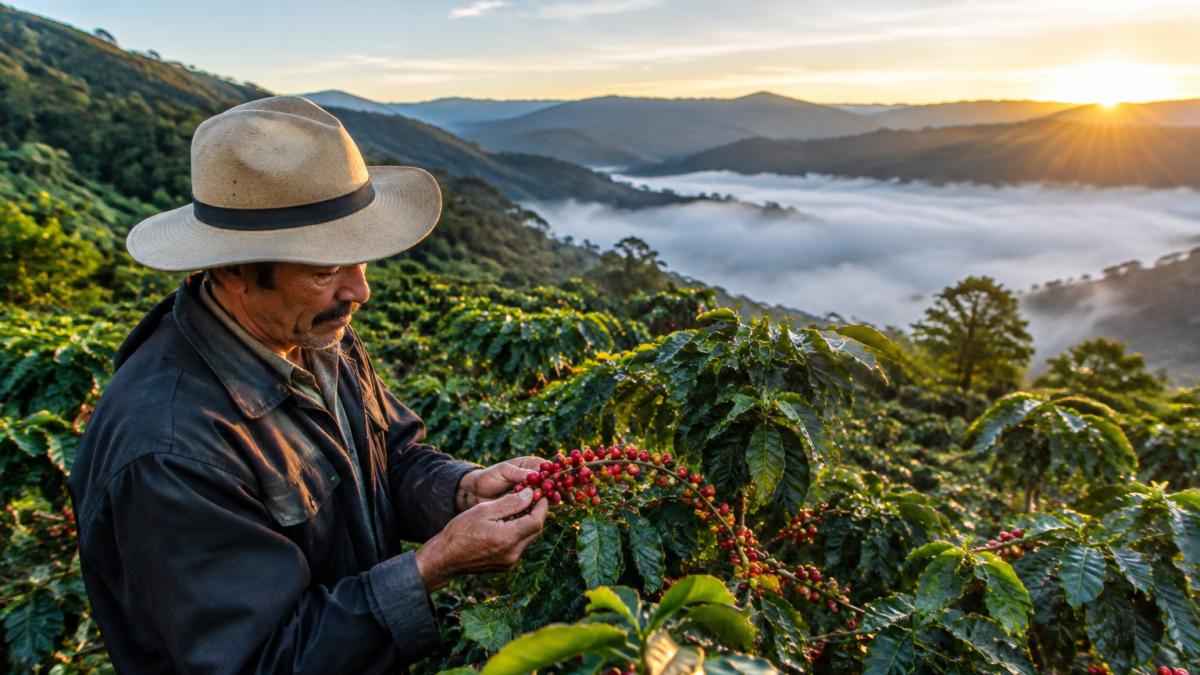
Robusta tells a different story. It thrives at lower elevations and carries more caffeine and a harsher, more bitter profile. That is why the altitude conversation is mostly an Arabica conversation.
Why the bands are not universal. A farm at 1,400 meters near the equator may see cooler average temperatures than a farm at 1,600 meters in a hotter, lower-latitude region with different cloud cover and rainfall. Latitude, seasonal temperature swings, shade management, and soil all shift the effective growing conditions at a given elevation.
Regional context matters. In East Africa, many prized lots come from roughly 1,500 to 2,000 meters, where cool nights and slow cherry development support bright acidity and floral notes. In parts of Central America, specialty coffees often sit in the 1,200 to 1,700 meter range, with chocolate and fruit tones. In Brazil, large volumes of coffee are grown at lower elevations, often below 1,200 meters, and still earn specialty recognition when farming and processing are strong.
How to use the chart when buying. Treat the elevation band as one clue among several. Check the origin, variety, processing method, harvest date, and tasting notes alongside the MASL figure. If a bag lists a high elevation but a dark roast and vague flavor notes, the elevation advantage may be buried. If a bag lists a moderate elevation but a specific variety, a clean process, and a light roast, it may deliver more clarity than the number suggests.
Arabica Coffee Growing Altitude and Why It Sets the Ceiling
Arabica coffee growing altitude sets the quality ceiling because the plant is sensitive to heat. Above roughly 1,200 meters, cooler nights and slower cherry development produce the chemical building blocks of flavor: sugars, acids, and aromatic precursors. Push Arabica too low and it ripens too fast, flattening those compounds before they mature.
The Specialty Coffee Association's green coffee guidance treats elevation as one marker of expected cup quality, not a guarantee. That distinction matters. A well-farmed low-elevation lot can beat a poorly handled high-elevation one.
What most guides miss is that altitude is a proxy. It stands in for temperature, diurnal swing, and ripening speed. When those conditions are right, the cup shows it. When they are not, the number on the bag means little.
How Altitude Affects Coffee Bean Density and Roast Behavior
Altitude affects coffee bean density because slower ripening packs more structural material into the seed. Dense beans conduct heat differently and reward a careful roast curve. They tolerate more energy early in the roast without scorching, which lets a roaster develop sweetness instead of stalling it.
Dense high-grown beans generally need a roast profile that drives through the drying phase and builds sweetness without tipping into bitterness. A softer, low-density bean behaves differently: it browns faster and can turn ashy if pushed.
If you want to go deeper on how density shapes the roast, our step by step guide to coffee roast profiles walks through the curve adjustments that matter.
High Altitude Coffee Flavor Notes: Acidity, Sweetness, and Clarity
High altitude coffee flavor notes tend to run bright and layered. The cooler growing conditions preserve more of the acids that read as fruit and citrus, and they build the sugars that come across as caramel and stone fruit. The result is a cup with clarity: each note stands apart instead of blurring together.
Take our Kenya. Grown between 1,700 and 1,890 meters, it carries bright acidity, orange, lemon, and a floral, effervescent lift. That is high-elevation character in the cup.
Low-altitude coffee leans the other way. Faster ripening produces a rounder, heavier body with muted acidity and simpler sweetness. It can be pleasant and comforting, but it rarely surprises you.
For a closer look at why these flavor notes hit so clearly, our high altitude coffee beans benefits article digs into the chemistry and the cup. And if you want beans built for a clean, bright brew, our picks for the best high elevation coffee beans for pour over point you to the right bags.
Watch out: don't assume a high MASL number guarantees a great cup. Processing and roast level can bury elevation's advantages. A natural process and a light roast protect delicate high-grown flavors; a dark roast can scorch them into generic bitterness.
Side-by-Side Tasting: A Practical Protocol for Comparing Altitudes
The fastest way to understand the divide is to taste it, but a fair comparison requires controlling the variables that can mask elevation's effect. Use this protocol to compare a high-grown and a low-grown coffee with the same roast level, dose, water, grind, and brew method, and score the cups on a simple sensory sheet.
What you'll need: two single-origin bags of similar roast level and process, a burr grinder, a scale, two identical cups, filtered water, a timer, and a printed scorecard.
- Match the variables. Choose coffees with the same roast level (for example, both light or both medium) and, if possible, the same processing method. Different roast levels or processes can confound the result, making it impossible to attribute differences to elevation. [Time: 2 minutes]
- Weigh and grind equally. Use the same dose (for example, 15 grams per cup) and the same grind size for both coffees. [Time: 2 minutes]
- Brew identically. Use the same water temperature, the same method, and the same timing for both. A simple pour-over or cupping setup works well because it keeps extraction consistent. [Time: 8 minutes]
- Slurp and compare. Taste both while hot, noting acidity, sweetness, body, and finish. Use the scorecard below to record impressions. [Time: 5 minutes]
- Let them cool. Flavors shift as the cup cools; high-grown coffees often reveal more layers, while low-grown coffees may stay rounder and flatter. Taste again at warm and room temperature. [Time: 10 minutes]
- Score blind if you can. Have someone else label the cups so you do not know which is which. Blind scoring reduces expectation bias. [Time: 2 minutes]
Simple sensory scorecard. Rate each coffee from 1 to 5 on the following attributes, then compare the totals:
| Attribute | What to look for | High-grown expectation | Low-grown expectation |
|---|---|---|---|
| Acidity | Brightness and liveliness | Higher, more defined | Lower, softer |
| Sweetness | Perceived sugar and fruit | Layered, distinct | Simpler, rounder |
| Body | Weight and texture | Medium to full, sometimes silky | Heavier, sometimes flat |
| Clarity | Separation of flavors | Clear, each note stands apart | Blurred, less distinct |
| Finish | Length and cleanliness | Longer, cleaner | Shorter, sometimes drying |
Expected result: the high-elevation cup often shows sharper acidity, more distinct fruit, and a cleaner finish. The low-elevation cup reads rounder and flatter. But the result is not guaranteed. A well-farmed low-elevation lot can beat a poorly handled high-elevation one, which is why the scorecard matters: it forces you to judge the cup rather than the number on the bag.
Watch out: comparing coffees of different roast levels or processes can confound the result. Keep every variable steady except elevation, and the difference becomes more obvious. If you cannot match roast level or process, note that in your scorecard and treat the comparison as informal rather than controlled.
What this protocol can and cannot tell you. A single side-by-side tasting is a useful learning exercise, not a laboratory study. It can help you notice tendencies and build sensory vocabulary, but it cannot isolate elevation from every other factor. Use it as one input alongside origin, variety, processing, and roast information when you evaluate coffees.
Choose Your Next Bag: High-Elevation Beans at Iron Spur Coffee
Every bag we roast is grown high and roasted to order, so the elevation advantage reaches your cup intact. Our High Plains Colombia comes from 1,300 to 1,500 meters and pours dried orange, berry, and chocolate into a medium roast. Our Ethiopia Natural, grown at 1,700 to 1,900 meters, brings milk chocolate, fruit, and caramel from a hand-sorted natural process.
Both sell for $23.99. Both are single origin.
If you are ready to taste what elevation does, start with a bag that shows it clearly.
Altitude is a growing condition that shapes density, acidity, and sweetness before the bean ever reaches a roaster. Iron Spur Coffee focuses on high-elevation, specialty-grade beans and a disciplined small-batch roast with precision thermal mapping to eliminate bitter noise. Our roasted-to-order approach is designed to preserve the complex sweetness and deep flavor notes that slow ripening creates. Get started with Iron Spur Coffee and taste the difference elevation makes in every cup.
Frequently Asked Questions
Does coffee taste better at higher altitude?
Higher altitude tends to produce denser beans with brighter acidity, more sweetness, and clearer flavor separation. That said, altitude is one variable among many. Processing method, cultivar, roast level, and brew technique all shape the final cup. A washed high-elevation bean roasted light will taste very different from a natural low-elevation bean roasted dark. Use altitude as a starting signal, then taste the coffee to confirm.
What is the 15-15-15 coffee rule?
The 15-15-15 rule is a brewing guideline: 15 grams of coffee per 15 ounces of water, brewed for 15 minutes in a cold brew setup. It is not about growing altitude. For hot brewing, a common starting ratio is 1:15 to 1:17 coffee to water by weight. Adjust grind size and ratio to match the bean's density and roast level.
Which altitude coffee is best?
There is no single best altitude. High-elevation beans (1,500 meters and above) often deliver bright acidity and complex fruit notes, while lower-elevation beans (under 1,200 meters) tend to be rounder and more chocolate-forward. The right choice depends on your brew method and taste preference. If you want clarity and fruit, start high. If you want body and comfort, start lower.
How can you tell whether coffee was grown at high or low altitude?
Check the bag for a stated altitude range in meters above sea level. High-elevation beans often feel denser and harder when you handle them, and they tend to produce brighter, more aromatic cups. Low-elevation beans are usually softer and rounder. Roast level also matters: a light roast preserves altitude-driven acidity, while a dark roast mutes it. Always taste before judging.
