

Best Cowboy Coffee Alternatives for Connoisseurs
Table of Contents
- What Defines Premium Cowboy Coffee Alternatives
- Best Coffee for Outdoor Camping Trips
- How to Avoid Bitter Coffee While Camping
- Cowboy Coffee Brewing Methods Compared
- Specialty-Grade Beans and Flavor Profiles
- Equipment and Vessel Selection for Outdoor Brewing
- Why Small-Batch Roasting Delivers Superior Results
- Conclusion
Last Updated: August 17, 2026
What Defines Premium Cowboy Coffee Alternatives
Premium cowboy coffee alternatives depend on extraction science, water temperature control, and bean quality. The divide between commodity and specialty-grade coffee lies in sourcing, roasting precision, and preparation method. High-elevation estate beans develop more nuanced flavor compounds, while small-batch roasting using thermal mapping ensures consistent extraction without over-roasted bitterness.
Iron Spur Coffee sources specialty-grade beans from high-elevation environments and roasts to order using precision thermal mapping. This approach eliminates the harsh notes that plague mass-produced coffee, delivering complex sweetness, lingering aromatics, and full-bodied mouthfeel instead of bitter bite.
Best Coffee for Outdoor Camping Trips
Outdoor brewing demands beans that hold up to immersion brewing without over-extracting into bitterness, maintain body when cooled, and preserve aromatic compounds through the brewing process.
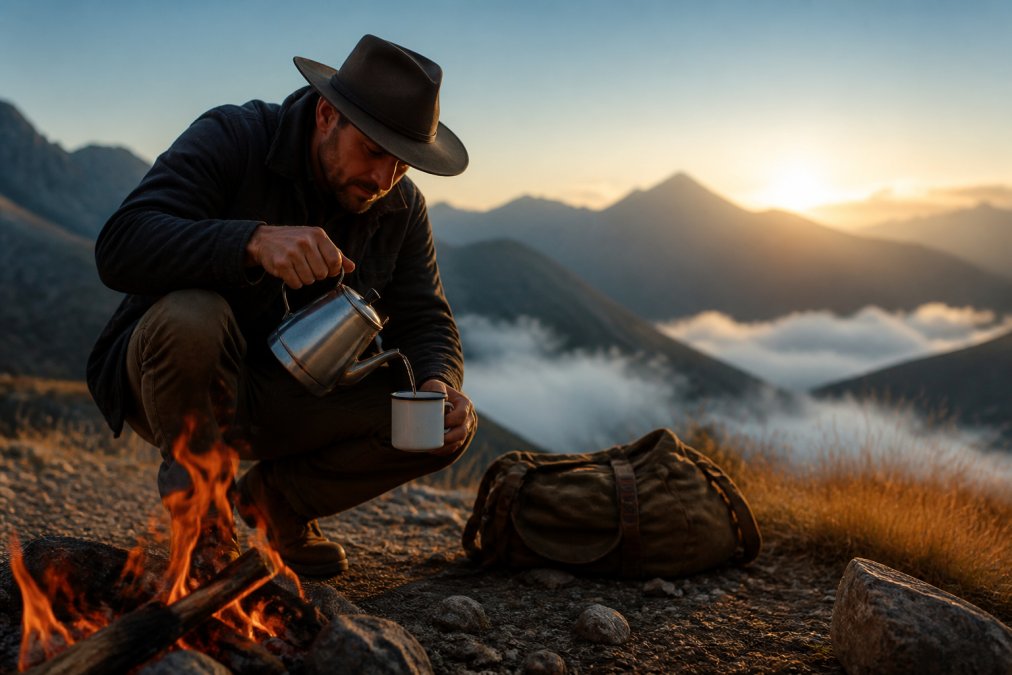
Iron Spur Cowboy Blend: Dark and Medium Roast Balance
The Cowboy Blend ($23.99) balances dark and medium roasted beans for real-world outdoor conditions where precision equipment isn't available. Dark-roasted beans provide structural support and prevent under-extraction, while medium-roasted beans add complexity and prevent flatness. This combination prevents both over-extraction (burnt, astringent taste) and under-extraction (thin, sour taste).

Brew with a 1:16 ratio (one part coffee to sixteen parts water) and steep 4-5 minutes using coarse grind. Most field professionals report consistent results whether brewing with cold mountain water or water from a plastic jug.
Iron Spur Deadwood Dark: Full-Bodied House Blend
The Deadwood Dark ($23.99) delivers maximum boldness for those who don't mind sacrificing complexity. Dark roasts develop deeper caramelization during roasting, creating full-bodied profiles that stand up to long steeping times and temperature fluctuations. The roasting process has already extracted and concentrated compounds that create body and mouthfeel, so your immersion brewing doesn't have to work as hard.
Steep for 5-7 minutes. The full-bodied character won't taste thin even if you extend steeping slightly past your target time, providing valuable margin for error when breaking camp.
Iron Spur Whiskey Barrel Aged: Single-Origin Complexity
The Whiskey Barrel Aged ($23.99) is a single-origin Guatemalan bean aged 30 days in bourbon barrel before roasting to order. High-elevation Guatemalan estates naturally produce nuanced flavor profiles, and barrel aging adds subtle notes of vanilla, oak, and caramel.
Single-origin beans are more sensitive to water temperature and steeping time than blends. Use a 1:16 ratio with 4-5 minutes of steeping. For those with the discipline to dial in brewing parameters, this complexity rewards precision.
How to Avoid Bitter Coffee While Camping
Bitterness traces to three causes: over-extraction from too-long steeping, water that's too hot, or grind sizes that are too fine.
Thermal Mapping and Precision Roasting
Precision thermal mapping during roasting ensures each bean reaches the same degree of caramelization. Uneven roasting creates some particles that are over-roasted (burnt, acrid) and others that are under-roasted (sour, grassy). When you brew a blend of unevenly roasted beans, conflicting flavor notes read as bitterness.
Iron Spur's thermal mapping means each particle extracts uniformly, producing a clean, balanced cup. The roasting level itself influences bitterness risk: light roasts develop fewer bitter compounds but are prone to under-extraction; dark roasts develop more bitter compounds but forgive extended steeping. The Cowboy Blend's combination of dark and medium roasts provides safety margin if you steep longer than intended while keeping the overall profile from tasting harsh.
Water Temperature and Brewing Ratio Control
Optimal extraction happens between 195-205°F. Below 195°F, extraction is too slow and you get sour coffee. Above 205°F, you risk pulling bitter compounds.
In outdoor settings, use slightly coarser grounds than you would at home. Coarser particles have less surface area, slowing extraction even if water is slightly hotter than ideal. A 1:16 brewing ratio combined with coarse grounds gives you a buffer zone where small temperature variations don't dramatically change the final cup.
Grind Size and Immersion Brewing Technique
Coarse grounds (similar to sea salt) have less total surface area than fine grounds, so they extract more slowly. This slower extraction window is essential when brewing without precise temperature control.
For immersion brewing, coarse grind is non-negotiable. Fine grind means over-extraction is almost inevitable. When you pour hot water over grounds, the initial contact creates a "bloom" where CO2 escapes and grounds absorb water, this takes about 30 seconds. After blooming, actual extraction happens over the next 4-5 minutes. Skip stirring during this time; let gravity do the work.
Cowboy Coffee Brewing Methods Compared
Two primary methods dominate outdoor coffee brewing: filterless immersion and decanting.
Filterless Immersion vs. Decanting Technique
Filterless immersion requires no equipment beyond a vessel and heat source. You pour hot water directly onto grounds, let them steep 4-5 minutes, and drink. The trade-off is sediment: fine particles remain suspended, creating grittiness toward the end.
Decanting produces a cleaner cup. After steeping, pour the liquid slowly into a second vessel, leaving settled grounds behind. This requires two vessels and more attention but delivers a smooth cup. You lose some liquid (the last inch remains with the sludge), but what you drink is clean.
For field professionals, the choice depends on priorities. Immersion is faster and requires less equipment. Decanting takes 2-3 extra minutes but delivers noticeably cleaner drinking experience. Coarser grind sizes reduce sediment volume significantly even in filterless immersion.
Discover Iron Spur Coffee Today →
Extraction Science and Sediment Management
Extraction dissolves soluble compounds from grounds into water. Acids and sugars extract quickly (first 2-3 minutes), while bitter compounds extract slowly (after 4+ minutes). This is why steeping time is critical: too short produces sour coffee, too long produces bitter coffee.
Sediment is composed of insoluble particles that don't dissolve. Finer grind creates more sediment particles; coarser grind creates fewer. This is why outdoor brewing guides recommend coarse grind.
Advanced sediment management uses "cold water settling." After steeping, add a small splash of cold water to your brewing vessel. This causes fine particles to settle more completely. Wait 30 seconds, then decant. This technique produces a noticeably cleaner cup than standard decanting.
Specialty-Grade Beans and Flavor Profiles
High-elevation estates produce beans with more complex flavor development because altitude stress concentrates sugars and acids. When roasters work with these complex raw materials, they develop more nuanced tasting profiles.
Single-Origin vs. Blended Roasts
Single-origin beans come from a specific estate, region, or country and showcase terroir, environmental characteristics that influence flavor. Blended roasts combine beans from multiple origins to create more balanced profiles.
For outdoor brewing, blends have a practical advantage: they're more forgiving. If water temperature drifts or steeping time is off by 30 seconds, a well-designed blend is more likely to still taste good. Single-origin beans are more sensitive to brewing parameters.
Tasting Notes and Aromatic Compounds
Tasting notes describe specific flavor characteristics you perceive when drinking coffee. Aromatic compounds are volatile molecules released when hot water contacts grounds, creating smell and much of the taste experience. Lighter roasts preserve more delicate aromatic compounds; dark roasts develop deeper, heavier ones.
In outdoor settings, aromatic compounds matter significantly. The smell of coffee brewing over a campfire triggers mental associations and influences how your brain interprets taste. Iron Spur's commitment to roasting to order preserves aromatic compounds better than pre-roasted coffee sitting on shelves. Aromatic compounds degrade as soon as roasting completes, so beans roasted days before shipping are at peak aromatic potential.
Equipment and Vessel Selection for Outdoor Brewing
Your brewing vessel influences both practical outcome and sensory experience.
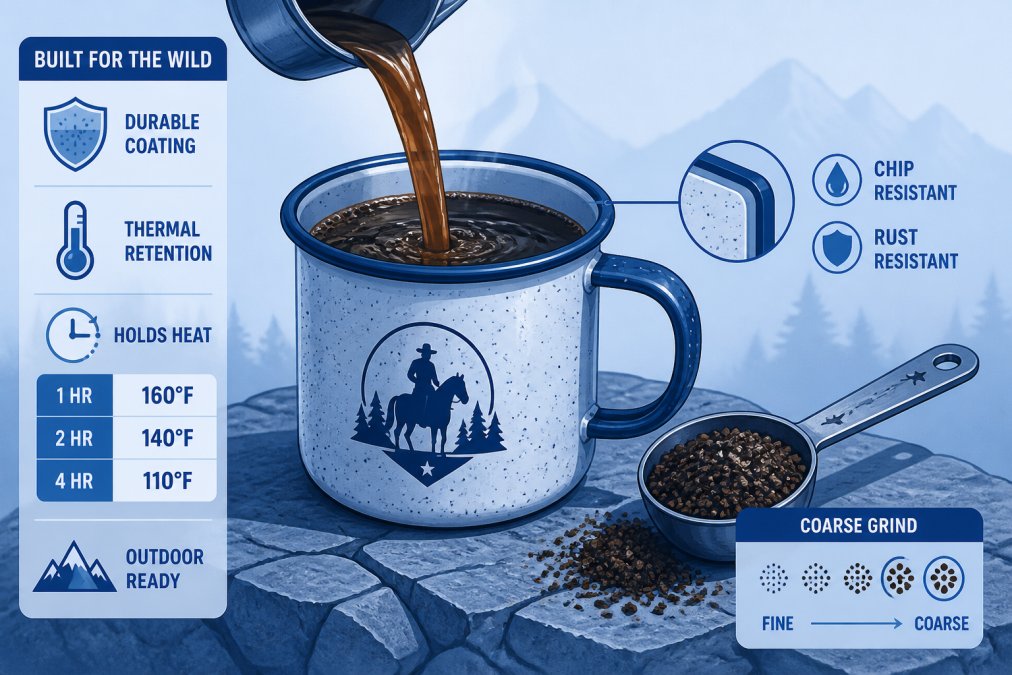
The enamel mug is the classic choice for outdoor coffee brewing. It's lightweight, durable, and provides excellent thermal retention. A 12-ounce enamel mug like Iron Spur's offering ($25.00) is large enough for a substantial cup but small enough to pack easily. Enamel distributes heat evenly and resists warping that thin metal cups experience.

Enamel is susceptible to staining from coffee and tea, a normal characteristic. Stains can be removed by applying lemon juice or soda and gently scrubbing with a hard sponge. Cast iron is another excellent option, retaining heat exceptionally well, though it's heavier than enamel. Stainless steel is lightweight and durable but doesn't retain heat as effectively. Ceramic is fragile in outdoor settings and not recommended.
Why Small-Batch Roasting Delivers Superior Results
Mass production optimizes for consistency and cost. Small-batch roasting optimizes for quality and complexity.
Large commercial roasters process hundreds of pounds in batches using automated controls and conveyor systems. This is efficient but doesn't allow precision adjustment that brings out peak complexity in specialty-grade beans. Small-batch roasters work with 5-20 pound batches, monitoring manually and adjusting heat and airflow based on specific batch characteristics.
Thermal mapping, tracking internal bean temperature during roasting, is a key differentiator. Iron Spur uses precision thermal mapping to ensure every bean reaches the same development degree. This consistency means all particles extract at similar rates, producing a balanced, clean cup. Mass-produced beans roasted without thermal mapping have more variation, translating to inconsistent extraction and muddled flavor.
"Roasted to order" matters as well. Aromatic compounds degrade as soon as roasting completes. Coffee roasted weeks ago has lost volatile compounds present at roasting. Coffee roasted days before shipping is at peak aromatic potential.
The real test of a cowboy coffee alternative is performance when conditions are far from ideal. Iron Spur Coffee's specialty-grade beans and precision small-batch roasting with thermal mapping deliver the complexity and smoothness that serious outdoor enthusiasts demand. Whether brewing over a campfire at dawn or in your truck bed before a long shift, the Cowboy Blend, Deadwood Dark, or Whiskey Barrel Aged provides the disciplined quality that separates a premium experience from ordinary convenience. Discover Iron Spur Coffee Today and experience the difference that small-batch roasting and precision thermal mapping make in your cup.

| Brewing Method | Grind Size | Steeping Time | Sediment Level | Best For |
|---|---|---|---|---|
| Filterless Immersion | Coarse | 4-5 minutes | Moderate | Speed, simplicity |
| Decanting Technique | Coarse | 4-5 minutes | Minimal | Clean cup, connoisseurs |
| Cold Water Settling | Coarse | 4-5 minutes + 30 sec | Very Low | Maximum clarity |
| Fine Grind Immersion | Fine | 2-3 minutes | High | Avoid this method |
Frequently Asked Questions
What makes cowboy coffee alternatives different from regular grocery store coffee?
Specialty-grade cowboy coffee alternatives prioritize coarse grind, high-elevation single-origin or small-batch blended beans, and precision roasting to eliminate bitterness. Unlike mass-produced options, roasted-to-order coffees preserve aromatic compounds and deliver complex sweetness with full-bodied mouthfeel. Iron Spur's thermal mapping process specifically removes bitter notes, giving you clean extraction during immersion brewing without sediment harshness.
How does thermal mapping actually reduce bitterness in coffee?
Thermal mapping monitors bean temperature throughout the roasting process to control caramelization and aromatic compound development. This precision prevents over-roasting, which creates harsh, bitter flavors. By managing the roast level carefully, specialty roasters like Iron Spur ensure that flavor extraction remains balanced during brewing, whether you're using filterless immersion or decanting techniques in the field.
What's the best coffee for outdoor camping trips that won't taste stale after a few weeks?
Choose roasted-to-order specialty coffees in small batches, like Iron Spur's offerings, which arrive fresher than pre-roasted shelf stock. High-elevation beans retain aromatic compounds longer, and single-origin options (such as Iron Spur's Whiskey Barrel Aged) develop stable tasting notes over time. Store in an airtight container away from light, and grind immediately before brewing to maximize flavor retention on your camping trip.
How do I avoid bitter coffee while camping with the right brewing technique?
Use a coarse grind and control water temperature between 195-205°F for immersion brewing. Steep for 4-6 minutes, then decant carefully to minimize sediment in your cup. Iron Spur's specialty roasts are designed to perform well with this method because thermal mapping eliminates over-roasted bitter compounds. The key is managing your brewing ratio (roughly 1:16 coffee to water) and avoiding prolonged contact with fine sediment.
This article was written using GrandRanker