

Why Coffee Bean Origin Affects Flavor So Much
Last Updated: October 27, 2026
Quick Summary
Coffee origin affects flavor because the plant's genetics, soil, altitude, and climate determine the chemistry inside the seed before it is ever picked. A bean grown at 1,800 meters in volcanic soil develops different sugars and acids than one grown at 1,200 meters in heavy clay. Those differences can survive the roast and land in the cup.
- Our High Plains Colombia lot grows in volcanic loam around Medellín, and our Bali Blue comes from the volcanic soils of Kintamani.
- Our Ethiopia Natural grows between 1,700 and 1,900 meters, while our High Plains Colombia grows lower, around 1,300 to 1,500 meters.
- Our Ethiopia Natural is built on indigenous heirloom cultivars from the Sidama zone.
- Our Kenya is fully washed and dried on raised beds, while Bali Blue is hand-picked, wet-hulled, and dried on raised beds.
- Keep water temperature consistent, ideally 195-205°F, when tasting origin differences.
Table of Contents
- Why Coffee Bean Origin Affects Flavor: The Core Reasons
- Coffee Terroir Explained: Soil, Climate, and Growing Conditions
- How Altitude Affects Coffee Flavor and Bean Density
- Coffee Variety and Genetics: The Cultivar Behind the Cup
- Coffee Processing Methods and Flavor: Washed, Natural, and Beyond
- Single-Origin Coffee Flavor Profiles: Country and Regional Differences
- Separating Origin From Roasting and How to Taste the Difference
- Choosing a Single-Origin Bag That Matches Your Taste
- Frequently Asked Questions
Why Coffee Bean Origin Affects Flavor: The Core Reasons
Coffee origin affects flavor because the plant's genetics, soil, altitude, and climate determine the chemistry inside the seed before it is ever picked. A bean grown at 1,800 meters in volcanic soil develops different sugars and acids than one grown at 1,200 meters in heavy clay. Those differences can survive the roast and land in the cup.
Below, we break down each factor and show you how to taste the difference yourself.
Coffee Terroir Explained: Soil, Climate, and Growing Conditions
Coffee terroir explained simply: it is the total growing environment of the plant, including soil minerals, temperature swings, rainfall, shade, and elevation.
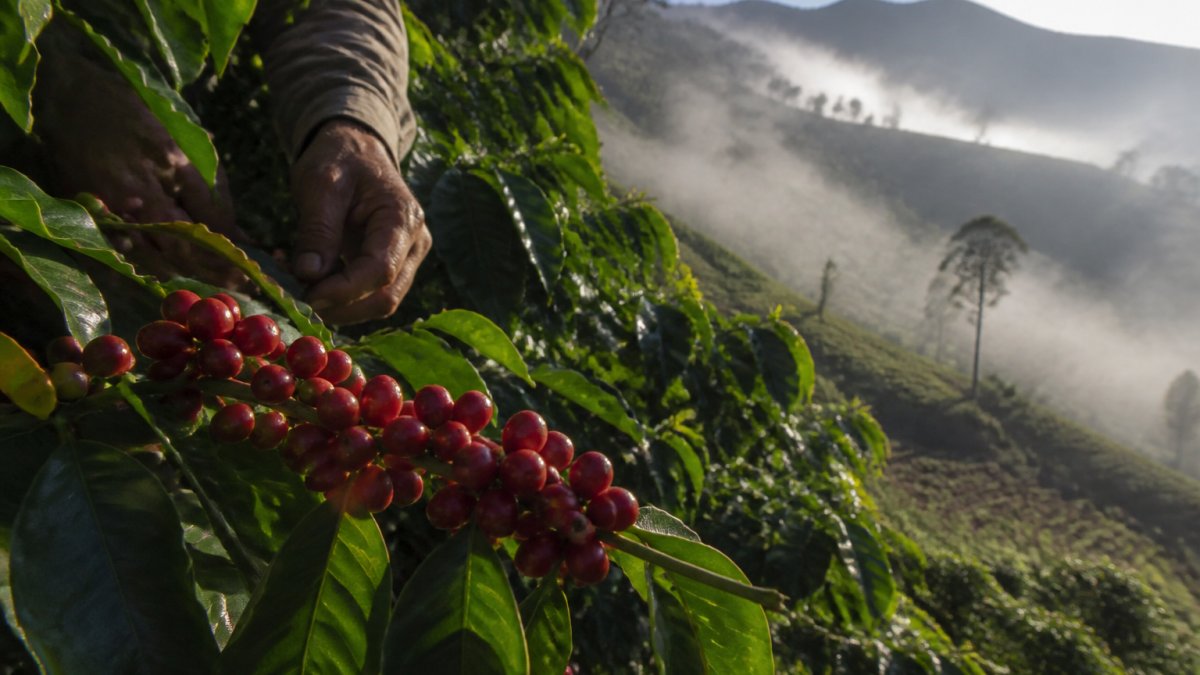
Soil Composition and Nutrients
Our High Plains Colombia lot grows in volcanic loam around Medellín, and our Bali Blue comes from the volcanic soils of Kintamani.
Climate, Temperature, and Rainfall
Consistent rainfall matters too. Too much water near harvest dilutes sugars; too little stresses the plant. The best lots come from regions with distinct wet and dry seasons that let cherries ripen evenly.
How Altitude Affects Coffee Flavor and Bean Density
Our Ethiopia Natural grows between 1,700 and 1,900 meters, and the Kenya lot sits at 1,700 to 1,890 meters. Our High Plains Colombia grows lower, around 1,300 to 1,500 meters.
Coffee Variety and Genetics: The Cultivar Behind the Cup
The cultivar is the plant's genetic identity.
- Heirloom cultivars in Ethiopia. Our Ethiopia Natural is built on indigenous heirloom cultivars from the Sidama zone.
- SL28 and SL34 in Kenya. Our Kenya lot also includes Ruiru 11 and Batian.
- Bourbon and Typica. Bali Blue includes Bourbon, Typica, and Catimor.
- Castillo and Caturra. Our High Plains Colombia uses Castillo, Caturra, Colombia, and Typica.
Coffee Processing Methods and Flavor: Washed, Natural, and Beyond
- Washed: Our Kenya is fully washed and dried on raised beds.
- Natural: Our Ethiopia Natural is full natural, sorted by hand, and dried on raised beds.
- Wet-hulled: Bali Blue is hand-picked, wet-hulled, and dried on raised beds.
For a deeper comparison of how wet and dry methods diverge, see our guide to wet vs dry coffee processing.
Single-Origin Coffee Flavor Profiles: Country and Regional Differences
Single-origin coffee flavor profiles vary by country and region because each growing area stacks a distinct terroir, variety set, and processing tradition. But broad origin claims deserve caveats. A single farm in Nyeri can taste brighter than a different lot from the same county, and a washed Ethiopian coffee can read cleaner than a natural from a neighboring zone. Treat the table below as a starting map, not a guarantee.
Ethiopia, Kenya, Colombia, and Bali Compared
| Origin | Typical Flavor Profile | Processing |
|---|---|---|
| Ethiopia (Sidama) | Milk chocolate, fruit, caramel, floral | Natural, raised beds |
| Kenya (Nyeri) | Bright acidity, orange, lemon, floral | Fully washed |
| Colombia (Antioquia) | Dried orange, berry, chocolate | Fully washed, solar dried |
| Bali (Kintamani) | Dark chocolate, molasses, brown sugar | Wet-hulled |
How to Taste Origin Differences Yourself
Use the same brew method, dose, grind, water temperature, and water source for every coffee. Taste the same roast level across origins, or the same origin across roast levels. See our guide to light vs dark roast differences to understand how roast influences the cup. Cup two coffees side by side rather than from memory, and note acidity, body, sweetness, and aroma separately.
Keep in mind that tasting notes are not guarantees. Individual perception can vary, so let your own palate be the final judge.
Separating Origin From Roasting and How to Taste the Difference
To isolate origin, control the variables:
- Use the same brew method and dose for every coffee
- Keep water temperature consistent, ideally 195-205°F
- Taste the same roast level across origins, or the same origin across roast levels
- Cup two coffees side by side rather than from memory
- Note acidity, body, sweetness, and aroma separately
Roasting to order, as we do.
Choosing a Single-Origin Bag That Matches Your Taste
Our recommendation: start with the origin whose tasting notes match flavors you already enjoy. Read how to tell if single origin coffee is worth the price before you decide. Browse the single-origin collection to find a bag that fits.
Frequently Asked Questions
Why does coffee taste different depending on where it is grown?
Coffee flavor shifts with origin. Processing and roasting also shape flavor.
How do altitude and climate affect coffee flavor?
Iron Spur's Ethiopia Natural is grown at 1,700 to 1,900 meters and has a tasting profile of milk chocolate, fruity, and caramel notes.
Do single-origin coffees taste different from blends?
A single-origin coffee comes from one country, region, or farm, so its flavor profile reflects that specific coffee origin and terroir. Blends combine beans from multiple origins to build a consistent, balanced cup, often with more body and less pronounced acidity. Single-origin lots let you taste the distinct fruit, floral, or chocolate notes tied to a place. Neither is better; they serve different goals. Single-origin rewards curiosity, while blends deliver reliability.
How does coffee processing change the taste?
The catalog lists the processing method for each product. For example, Ethiopia Natural is full natural and hand-sorted, while Kenya is fully washed.
The challenge with origin is that most bags on a shelf tell you nothing about elevation, variety, or processing, so you cannot predict what you are buying. Iron Spur Coffee roasts to order from specialty-grade, high-elevation estate beans, using precision thermal mapping to eliminate bitter noise so the origin character leads the cup. Every lot lists its region, altitude, variety, and process. Discover Iron Spur Coffee today and taste what a specific origin actually delivers.
