

Wet vs Dry Coffee Processing: What's the Difference?
Table of Contents
- Wet vs Dry Coffee Processing: The Core Difference
- Wet Processed Coffee: How Washed Beans Are Made
- Dry Processed Coffee: The Natural Method Explained
- Washed vs Natural Coffee: Flavor, Body, and Acidity
- Honey Processed Coffee: A Middle Ground
- Side-by-Side Comparison: Wet vs Dry Processing
- Risks, Quality Control, and Environmental Impact
- How to Read a Bag Label and Choose Your Beans
- Frequently Asked Questions
Last Updated: October 17, 2026
Wet vs Dry Coffee Processing: The Core Difference
The difference between wet and dry coffee processing comes down to one decision: how long the fruit stays on the seed. Dry processing leaves the whole coffee cherry intact while it dries. Wet processing strips the skin and pulp off within hours of harvest, then ferments and washes what remains.
At Iron Spur Coffee, we source beans from both camps, and the process label on a bag tells you more about what's in your cup than the roast date does.
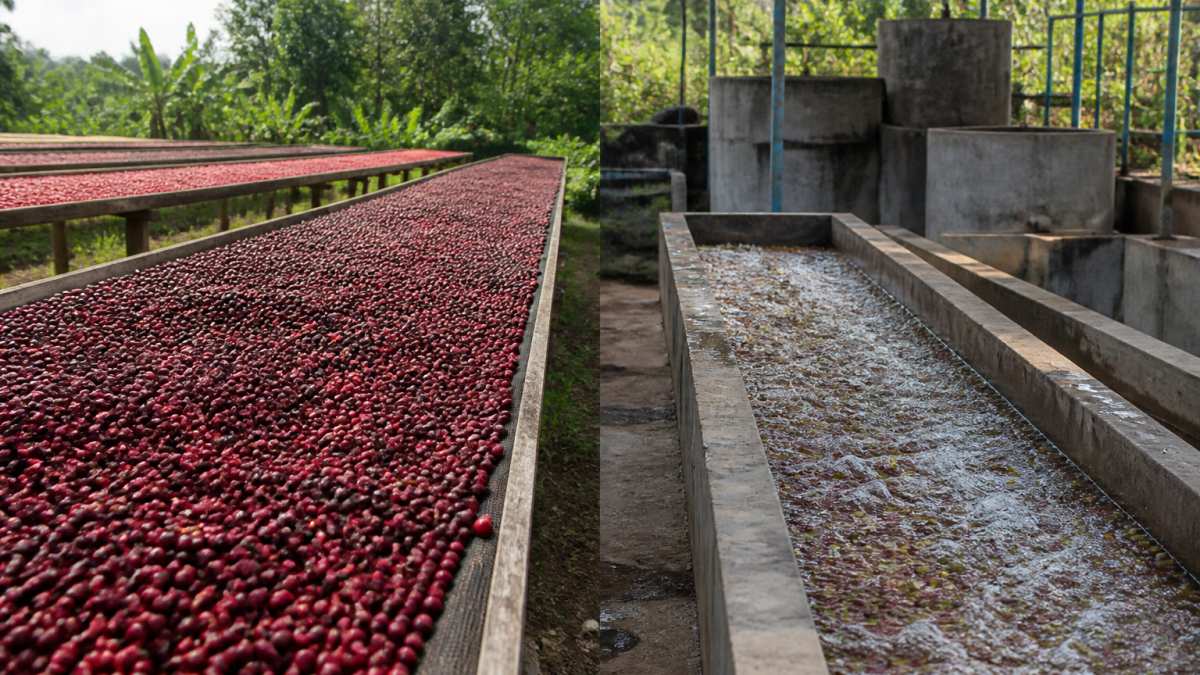
Coffee processing is the series of steps that turns a harvested coffee cherry into a dried, stable green bean ready for hulling, shipping, and roasting. Everything after picking, from depulping to the final moisture check, falls under that term.
Wet Processed Coffee: How Washed Beans Are Made
Wet processed coffee, also called washed coffee, removes the fruit before drying. The goal is a clean, consistent seed with almost nothing left on it to ferment unpredictably. Producers who can afford the water and infrastructure tend to prefer it for exactly that reason.
Depulping, Fermentation, and Washing
A depulper strips the skin and most of the pulp within hours of picking. What remains is the mucilage, a sticky layer that clings to the parchment. Producers move the beans into fermentation tanks for roughly 12 to 36 hours, depending on heat and altitude, letting microbes break the mucilage down. Then comes washing: channels or mechanical scrubbers rinse the loosened mucilage away until the parchment feels slick-free.
A common mistake is rushing fermentation in hot weather. Push it too long and you get vinegar notes; cut it short and the mucilage gums up the drying phase.
Drying Washed Beans on Beds and Patios
Washed beans dry on raised beds, patios, or in mechanical dryers, usually over 8 to 14 days in the sun. The parchment stays on during this stage, protecting the seed. Our High Plains Colombia is fully washed and dried in solar dryers to shield it from rain, which is standard practice in regions where afternoon storms are a daily threat. Target moisture content sits around 10 to 12 percent before the beans go to rest and hulling.

Dry Processed Coffee: The Natural Method Explained
Dry processed coffee, or natural process coffee, dries the whole cherry, fruit and all. Nothing is depulped. The seed absorbs sugars and compounds from the mucilage and pulp for weeks, which is why natural coffees carry heavier fruit character. It's the older method, and in dry climates it's also the cheaper one.
Sun Drying Whole Cherries
Cherries spread across raised beds or patios and get turned by hand every few hours for even airflow. Full drying takes roughly 3 to 6 weeks. The margin for error is thin: pile the cherries too deep and they mold; leave them through a rain shower and they split. Our Ethiopia Natural comes from smallholder farms in the Sidama zone, sorted by hand and dried on raised beds, with a cup that lands on milk chocolate, fruity notes, and caramel.

Washed vs Natural Coffee: Flavor, Body, and Acidity
The flavor split between washed and natural coffee is real, but it is not a simple switch. It comes from how long the seed sits in contact with fruit sugars and how much microbial activity happens before drying. Understanding that mechanism keeps you from over-reading a process label.
Why the Cup Diverges: Mucilage Contact and Fermentation Byproducts
In wet processing, the mucilage is broken down and rinsed away within roughly 12 to 36 hours of fermentation, so the seed dries with very little fruit material left on it. The result is a cup where the acids and aromatics formed during roasting read clearly: citric and malic brightness, floral notes, and a lighter body. Origin character, meaning the soil, altitude, and variety, comes through with less interference.
In dry processing, the seed stays inside the fruit for the full 3 to 6 weeks of drying. Sugars and organic acids from the pulp and mucilage migrate into the seed, and slow microbial activity continues inside the cherry. That produces the heavier body, lower perceived acidity, and fermented-fruit notes natural coffees are known for. The trade-off is that the fruit character can mask origin nuance, which is why two naturals from different regions can taste more alike than two washed coffees from the same region.
What the Label Does Not Tell You
Process is one variable among several. Variety, altitude, roast level, and brew method all move the cup, sometimes more than processing does. A light-roasted washed coffee can taste syrupy and sweet; a dark-roasted natural can taste flat and ashy. Most practitioners find that process sets the direction of the flavor, while roast and brew decide how far it travels.
A practical way to read it: washed coffees reward attention to origin and brewing precision because there is less fruit to hide behind. Naturals are more forgiving of casual brewing but can turn muddy if over-extracted. If you want the grapefruit-and-cocoa clarity of a washed Colombian, go washed. If you want blueberry jam and molasses, go natural. Our Bali Blue takes a different route still, wet-hulled and dried on raised beds, landing on dark chocolate and brown sugar with a syrupy body.

Honey Processed Coffee: A Middle Ground
Honey processed coffee splits the difference: the skin is removed but some or all of the mucilage stays on during drying. The sticky, honey-like coating gives the method its name. Less water than washed, more control than natural.
Producers grade honey lots by how much mucilage remains, from white honey (almost none) to black honey (nearly all). Expect sweetness and body closer to a natural with more clarity than a full natural delivers. It's a useful bridge if washed feels thin and natural feels too wild.
Side-by-Side Comparison: Wet vs Dry Processing
Here's the comparison most guides skip. Use this table to match a method to your palate and to understand what a producer trades off.
| Factor | Wet (Washed) | Dry (Natural) |
|---|---|---|
| Fruit removal | Depulped within hours | Whole cherry stays on |
| Fermentation | Controlled, 12-36 hours | Slow, inside the fruit |
| Drying time | 8-14 days | 3-6 weeks |
| Water use | High | Minimal |
| Flavor profile | Clean, bright, acidic | Fruity, sweet, heavy |
| Body | Lighter | Fuller |
| Consistency | Easier to control | Harder to control |
| Risk | Fermentation errors | Mold and uneven drying |
Risks, Quality Control, and Environmental Impact
Most guides treat processing risk as a flavor footnote and sustainability as a water-use number. Both are more useful when you look at the mechanisms. The failure modes differ by method, and so do the environmental trade-offs, which is why a single metric like gallons per pound never tells the whole story.
Processing Defects and Consistency
Washed coffee fails mainly through fermentation timing. Under-fermentation leaves mucilage that gums up drying and produces flat, grassy, or peanut-like cups. Over-fermentation pushes vinegar, starchy, or medicinal notes. Heat accelerates both, so a mill that ferments in hot weather without checking temperature and pH is gambling on every lot.
Natural coffee fails through drying management. Cherries piled too deep trap moisture and heat, inviting mold and phenolic, medicinal off-flavors. A single rain shower during the 3 to 6 week dry can split cherries and seed mold. Uneven drying across a bed produces inconsistent lots, which is why turning frequency, bed depth, and shade management matter as much as the drying surface itself.
Neither method is inherently more consistent. Washed is easier to standardize because the fruit is gone early and the variables are fewer. Natural rewards disciplined sorting and turning, and punishes shortcuts. A mill that checks moisture content at the target range and cups every lot catches both kinds of failure before the coffee ships.
Water Use, Wastewater, and Beyond
Washed processing consumes far more water per pound of green coffee than natural processing, and the wastewater carries sugars and organic load that can pollute local streams if untreated. Many mills now recirculate water or use eco-pulp machines that cut consumption sharply. Our Forge Roast - Costa Rica is eco-pulped and sun dried, a good example of the middle path.
But water is only one axis. Natural processing saves water while demanding more land and labor per lot, because cherries take weeks longer to dry and need turning and sorting throughout. Mechanical dryers cut weather risk but add energy use. In humid climates, natural processing may be impractical without covered beds or dryers, which is why producers choose methods based on rainfall, humidity, infrastructure, and local tradition rather than sustainability alone. A fair comparison weighs water, wastewater, energy, land, and climate risk together, not one number in isolation.
How to Read a Bag Label and Choose Your Beans
The process line on a bag is your best guide to flavor. "Fully washed" or "wet processed" means clean and bright. "Natural" or "dry processed" means fruity and heavy. "Honey" or "wet-hulled" sits in between. Altitude and region fill in the rest.
Match the method to your morning. If you want a bright, structured cup to start a hard day, a washed medium roast like our Guatemala, with dark chocolate, bright fruit, and butterscotch, delivers. If you want sweetness and depth for a slow weekend brew, reach for a natural.
Coffee processing isn't a marketing detail. It's the step that decides what your cup tastes like before the roaster ever touches it.
The process label tells you what to expect, but the roast decides whether that potential survives. Iron Spur Coffee sources specialty-grade, high-elevation beans from both washed and natural lots, then roasts in small batches with precision thermal mapping to keep bitterness out of the cup.
Frequently Asked Questions
What is the difference between wet and dry coffee processing?
Wet processing removes the coffee fruit and mucilage before drying, using water, depulping, and fermentation. Dry processing, also called natural processing, dries the whole coffee cherry in the sun with the fruit still attached. The method affects flavor: washed coffees tend to be cleaner and brighter, while natural coffees are fruitier and heavier in body. Both start with hand-sorted coffee cherries and end with dried green coffee ready for hulling and roasting.
Does wet or dry processing make coffee taste better?
Neither method is objectively better; they produce different cup profiles. Wet processed coffee typically offers clarity, bright acidity, and a clean finish, which suits drinkers who want to taste the bean's origin. Dry processed coffee brings sweetness, fruitiness, and a heavier body, which many people prefer for bold morning brews. The best choice depends on your taste. A medium roast washed coffee like High Plains Colombia ($23.99) delivers dried orange and chocolate notes, while a natural like Ethiopia Natural ($23.99) brings milk chocolate and fruity caramel.
Are washed and wet-processed coffee the same thing?
Yes, washed coffee and wet processed coffee refer to the same method. The coffee fruit is removed with a depulping machine, the mucilage is broken down through fermentation, and the beans are washed in water before drying. Some regions use the term fully washed to emphasize that all fruit and mucilage were removed. The result is a clean, consistent cup profile with pronounced acidity and clarity, which is why many specialty roasters use washed beans as a benchmark for origin flavor.
Which coffee processing method is more consistent?
Wet processing generally produces more consistent results because the fruit and mucilage are removed early, reducing the chance of over-fermentation or mold during drying. Dry processing requires more careful turning and monitoring of whole cherries, and it carries a higher risk of defects if humidity or rainfall is high. That said, skilled producers on raised beds can achieve excellent consistency with natural coffees. For buyers, washed coffees offer a reliable baseline, while natural coffees reward careful sourcing and quality control.