

Coffee by the Roast vs Competitors: A 2026 Guide
Table of Contents
- Coffee by the Roast: What Sets Roast Levels Apart
- Fresh Roasted Coffee vs Store Bought: The Freshness Factor
- How to Choose a Coffee Roast: A Practical Framework
- Small-Batch Roasting vs Mass Market Production
- Best Coffee Subscription Services 2025: Comparing Models
- Single Origin vs Blends: Flavor Complexity and Sourcing
- Economic Value Analysis: Price vs Quality
- Conclusion
Last Updated: August 14, 2026
Coffee by the Roast: What Sets Roast Levels Apart
The roast level controls flavor clarity, body, acidity, and how origin characteristics shine through. Light roast preserves the bean's origin characteristics and acidity. Medium roast balances origin flavors with caramelized sweetness. Dark roast makes the roast profile dominant, with bold flavor and low bitterness.
At Iron Spur Coffee, precision roasting eliminates burnt, ashy notes that give dark roasts a bad reputation, replacing them with smooth sweetness and depth.
Light Roast: Acidity and Origin Clarity
Light roasts preserve the coffee farmer's work. The beans spend less time in the roaster, so origin's natural acidity and brightness remain intact. You'll experience specific flavor notes from altitude, soil, and processing method.
This roast level works best if you appreciate tasting the difference between a Kenyan and Colombian coffee. The acidity is the liveliness that makes the cup feel fresh and clean. Light roasts have a thinner body because less caramelization occurs.

Light roasts demand precision brewing. Under-extraction leaves them sour; over-extraction makes them thin. They perform best with pour-over methods or espresso machines where you control variables.
Medium Roast: Balanced Body and Sweetness
Medium roasts hit the middle ground. Sugars caramelize and develop sweetness while origin flavors remain underneath. You get complexity from both the origin and the roast's contribution.
The body feels fuller than light roast. The acidity is still present but softer. Many find medium roasts the most approachable because they balance brightness with smoothness and work across all brewing methods without demanding precision.
Dark Roast: Bold Flavor and Low Bitterness
Dark roasts develop deep caramel and chocolate notes. The roast profile dominates the cup's flavor, and origin characteristics fade into the background.
The misconception is that dark roasts are bitter. That's only true if the roaster loses control of the thermal profile. Iron Spur Coffee's thermal mapping eliminates this problem by monitoring internal bean temperature throughout the roast, ensuring dark roasts develop sweetness instead of bitterness.
Dark roasts have the lowest acidity and heaviest body. They work beautifully in espresso and are forgiving in drip coffee and French press.
Fresh Roasted Coffee vs Store Bought: The Freshness Factor
The moment coffee is roasted, it begins to oxidize. Within two weeks, the coffee loses its peak freshness. Store-bought coffee sitting on a shelf for months tastes flat because it's already lost its volatile flavor compounds.
Fresh roasted coffee tastes noticeably different. The aroma is brighter, sweetness more pronounced, and origin flavors clearer. This is chemistry, freshly roasted beans have more of the compounds that make coffee taste good.
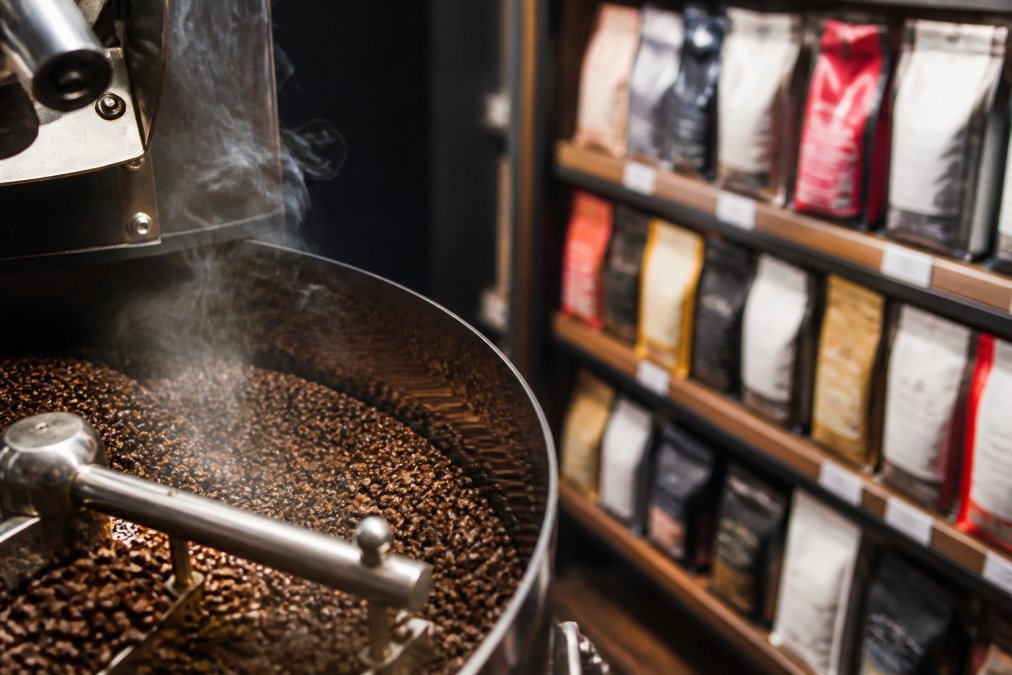
Roasting to order solves the access problem. Iron Spur Coffee roasts your order after you buy it, meaning your beans arrive at peak freshness with days or weeks of optimal flavor ahead.
Degassing and Resting Periods
Freshly roasted coffee releases carbon dioxide for 24-48 hours after roasting. If you brew too soon, the CO2 interferes with water contact, leading to under-extraction and sour flavors.
Most roasters recommend waiting 5-7 days after roasting before brewing. This allows enough degassing while the coffee retains peak flavor compounds. After two weeks, degassing is complete, but the coffee has already begun losing brightness.
Roast-to-order services like Iron Spur Coffee time shipping so your beans arrive with optimal degassing already underway.
Shelf Stability and Oxidation
Coffee's enemy is oxygen. Once roasted beans are exposed to air, oxidation accelerates. Sealed bags with one-way valves slow this process but don't stop it. After three months, even well-packaged coffee has noticeably less flavor clarity.
Storage conditions matter. Heat and light speed oxidation. Fresh roasted coffee maintains its flavor complexity longer because you're starting from a higher baseline.
How to Choose a Coffee Roast: A Practical Framework
Choosing the right roast comes down to two questions: What brewing method will you use, and what flavor profile appeals to you?
Brewing Method Compatibility
Different brewing methods extract coffee differently. Pour-over and drip use gravity and time. Espresso uses pressure. French press uses immersion. Each pulls different compounds from the beans.
Light roasts work best with pour-over and drip coffee where you control water temperature and contact time precisely. Medium roasts are versatile and work across all methods. Dark roasts excel in espresso and French press, where pressure or immersion brings out their sweetness.
Flavor Profile Preferences
If you like bright, complex flavors and appreciate tasting the difference between origins, choose light roast. If you like balanced, approachable coffee that works everywhere, choose medium roast. If you like bold, smooth, sweet coffee without acidity, choose dark roast.
Iron Spur Coffee's lineup covers all three profiles. The Latin American Blend is a medium-dark roast with nutty hints and mild fruity tones. The African Kahawa Blend is a complex medium-dark roast with bright flavor and hints of toffee, caramel, chocolate, and fruit. The Italian Roast is the darkest option for maximum smoothness and minimal acidity.
Small-Batch Roasting vs Mass Market Production
Small-batch roasters can adjust their process for each batch. Mass market roasters optimize for consistency and volume, accepting more variation in the final cup.
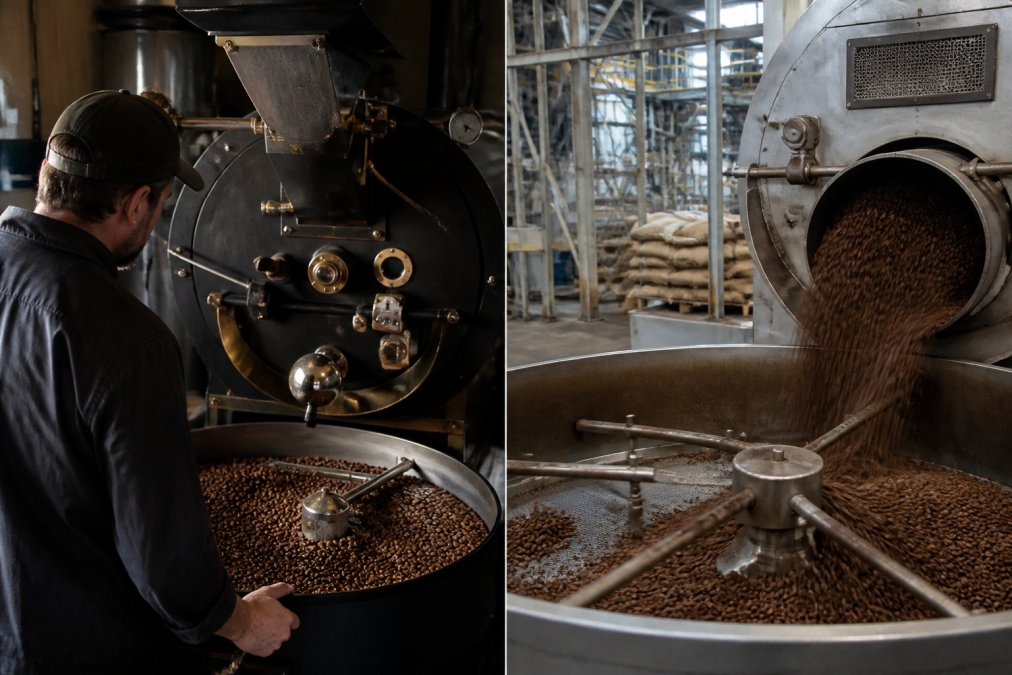
Small-batch roasting allows the roaster to respond to specific characteristics of each batch of green beans. A skilled roaster monitors variables and adjusts the roast profile accordingly.
Discover Iron Spur Coffee Today →
Mass market roasting runs the same profile for thousands of pounds of beans. Some batches roast perfectly; others come out under or over. Individual bags are less consistent.
Batch Consistency and Roast Profiles
Small-batch roasters taste every roast and adjust accordingly. This feedback loop ensures every batch hits the target flavor profile.
Mass market roasters rely on automated profiles. If green beans vary, roast output varies. Quality control catches the worst batches, but the average is lower than small-batch roasting.
Iron Spur Coffee roasts in small batches with precision thermal mapping, monitoring internal bean temperature throughout the roast to ensure every batch develops the intended flavor profile without bitterness or under-roasting.
Thermal Mapping and Quality Control
Thermal mapping measures the temperature inside the beans, not just air temperature. This is crucial because beans roast from the inside out.
Small-batch roasters use thermal mapping to ensure consistent results. They know exactly when the first crack occurs, when the roast reaches its peak, and when to stop. This precision eliminates the guesswork that leads to inconsistent batches.
Best Coffee Subscription Services 2025: Comparing Models
The best coffee subscription services fall into two categories: roast-to-order and pre-roasted. Roast-to-order subscriptions roast your coffee after you order, guaranteeing freshness. Pre-roasted subscriptions ship faster because coffee is already roasted and packaged, but the coffee is older when it arrives.
Roast-to-Order vs Pre-Roasted Subscriptions
Roast-to-order subscriptions deliver fresher coffee at peak freshness when they arrive. The downside is timing, you can't order Monday and have it Wednesday. Pre-roasted subscriptions offer speed but older coffee.
For most people, the freshness advantage of roast-to-order outweighs the timing inconvenience. Coffee tastes noticeably better fresh, and if you're ordering a subscription, you're planning ahead anyway.
Specialty Grade vs Commercial Grade Standards
Specialty-grade coffee meets strict quality standards. Only coffee that scores 80 points or higher qualifies as specialty grade. Commercial-grade coffee has lower standards and is graded on appearance and basic quality control.
Specialty-grade coffee costs more because sourcing, processing, and quality control are more rigorous. The flavor difference is significant.
Iron Spur Coffee uses specialty-grade, high-elevation beans. Combined with roast-to-order and thermal mapping, this ensures you're getting coffee at the highest quality level.
| Subscription Type | Freshness | Shipping Speed | Price Range | Best For |
|---|---|---|---|---|
| Roast-to-Order | Peak freshness | 3-7 days | Higher | Flavor enthusiasts who prioritize taste |
| Pre-Roasted Weekly | Very fresh | 1-3 days | Medium | Those balancing freshness and convenience |
| Pre-Roasted Monthly | Fresh | 1-2 days | Lower | Budget-conscious drinkers |
Single Origin vs Blends: Flavor Complexity and Sourcing
Single-origin coffee comes from one farm or region. All beans share the same altitude, soil, processing method, and harvest time, creating a consistent flavor profile that reflects the origin's unique characteristics.
Blends combine beans from multiple origins. The roaster selects beans that complement each other, creating a flavor profile greater than any single origin alone.
Single origins showcase the coffee farmer's work and are ideal if you want to explore how different regions taste. Blends are designed for balance and consistency and are more forgiving because if one origin varies slightly, the blend still tastes consistent.
Iron Spur Coffee's Cowboy Blend combines dark and medium roasted beans with cocoa, caramel, and vanilla tones. The Deadwood Dark is a house blend optimized for espresso.


Economic Value Analysis: Price vs Quality
Coffee pricing reflects sourcing, roasting, and freshness. Cheaper coffee comes from lower-altitude farms, uses commercial-grade beans, and sits in distribution longer. More expensive coffee uses specialty-grade beans, roasts to order, and ships fresh.
A bag of Iron Spur Coffee at $23.99 tastes noticeably better than grocery store coffee at $8. A 12-ounce bag makes roughly 12-16 cups depending on brewing method. At $23.99, that's $1.50-$2 per cup for specialty roast-to-order coffee versus $0.50-$0.75 per cup for grocery store coffee.
That premium buys fresher beans, better sourcing, more careful roasting, and noticeably better flavor. For daily drinkers, specialty roast-to-order coffee delivers better value because the flavor improvement is substantial and consistent.
Choosing between coffee by the roast and competitors comes down to what you prioritize. If freshness, flavor clarity, and precision roasting matter to you, roast-to-order specialty coffee delivers. If convenience and price matter more, grocery store coffee works. But if you drink coffee every day and want quality that supports your morning routine, Iron Spur Coffee's roast-to-order model with thermal mapping precision ensures you're getting specialty-grade beans roasted fresh with the care that eliminates bitterness. Discover Iron Spur Coffee Today.
Frequently Asked Questions
What's the difference between specialty-grade coffee and commercial-grade coffee?
Specialty-grade coffee scores 80 or higher on a 100-point cupping scale and is sourced from high-elevation estates with strict quality controls. Commercial-grade coffee prioritizes volume and consistency over flavor complexity, often blending lower-quality beans and using mass-market roasting methods. Specialty-grade beans exhibit distinct origin characteristics, cleaner extraction, and complex flavor notes, not the flat, bitter profile typical of store-bought options.
How does roast date affect the flavor profile of coffee?
Roast date directly impacts freshness longevity and flavor clarity. Coffee peaks in flavor 3-7 days after roasting, after degassing completes. Within two weeks, the beans retain full aroma and acidity. After 30 days, oxidation accelerates, dulling brightness and sweetness. Roast-to-order models guarantee peak freshness, while pre-roasted grocery store coffee loses flavor complexity weeks before it reaches your cup.
Which roast level works best for different brewing methods?
Light roasts highlight acidity and origin characteristics, ideal for pour-over and drip methods that allow full extraction. Medium roasts balance sweetness and body, suiting French press and Aeropress. Dark roasts deliver bold, low-bitterness profiles perfect for espresso and cold brew, where extraction intensity matters. Choosing the roast profile that matches your brew method maximizes flavor clarity and prevents under or over-extraction.
Why does small-batch roasting eliminate bitterness better than mass-market roasting?
Small-batch roasting uses thermal mapping to monitor bean temperature precisely throughout the roast, controlling the Maillard reaction that creates flavor notes without charring. Mass-market roasting relies on time-based cycles that often overheat beans, producing bitter, ashy flavors. Precision roast profiles ensure even development, preserving the sweetness and complexity of specialty-grade beans while preventing the scorched taste common in commercial options.
This article was written using GrandRanker