

Does Water Quality Change How Coffee Tastes?
Quick Summary
Yes, water quality changes how coffee tastes because water makes up about 98 percent of a brewed cup. Minerals like calcium and magnesium help extract flavor, so balanced water quality coffee brews clearer and sweeter, while hard or distilled water can make it muddy or flat.
- Water makes up about 98 percent of a brewed cup.
- Calcium and magnesium bind to flavor compounds and help carry them into the cup.
- Distilled and reverse osmosis water can taste flat because they hold almost no minerals.
- Check your local utility's water quality report before deciding if tap water suits brewing.
- Chlorine can add a medicinal or plastic taste, and a simple carbon filter often removes it.
Table of Contents
- How Minerals in Water Affect Coffee Extraction
- Is It Safe to Use Tap Water for Coffee?
- Best Bottled Water for Coffee and Why Distilled Water Falls Short
- Third Wave Water and Mineral Recipes You Can Measure
- Testing Your Water at Home and Separating Water Problems From Brewing Problems
- Choosing Your Water for the Next Brew
- Frequently Asked Questions
Why Water Makes Up Most of Your Cup
Does water quality change how coffee tastes? Yes. Water makes up about 98 percent of a brewed cup, so the water you use shapes flavor as much as the beans do, and good water quality coffee starts with a clean, well-balanced base. The same bag of coffee can taste flat, sharp or muddy depending on the water behind it.
Coffee is mostly water, so water quality matters more than most people expect. Minerals, pH and dissolved solids all change how well the coffee extracts. Those changes show up as sweetness, body and clarity in the cup.
- Water carries flavor compounds out of the grounds
- Mineral content changes how much flavor gets pulled out
- Off tastes from the tap can carry straight into your cup
Watch out: Distilled and reverse osmosis water can taste flat because they hold almost no minerals to pull flavor out of the grounds.
How Minerals in Water Affect Coffee Extraction
Minerals help water extract coffee flavor. Calcium and magnesium bind to flavor compounds and help carry them into the cup, so water with some mineral content usually brews a fuller, more balanced coffee.
Water that has too few minerals often tastes thin. Water with too many can taste chalky or dull the bright notes in a light roast. The goal is a middle range that lets the beans show their sweetness.
Calcium, Magnesium and Bicarbonate
Calcium and magnesium are the two minerals that matter most for extraction. Magnesium tends to pull out more flavor, while calcium adds body and a rounder mouthfeel. Bicarbonate, a form of alkalinity, buffers acidity, so it softens sour notes but can also flatten brightness if it runs too high.
Hard Water Versus Soft Water
Hard water has high calcium and magnesium levels. Soft water has very little of either. Hard water often brews heavier, sometimes muddy coffee, and it can leave scale inside your equipment. Soft water often tastes flat and can make coffee taste sour or thin.
- Hard water: heavier body, risk of scale and dull flavor
- Soft water: lighter body, risk of flat or sour taste
- Balanced water: clearer fruit and sweetness
The article describes how the main minerals in water change the cup, with the effect of each one summarised below.
| Water type | Mineral content | Typical cup |
|---|---|---|
| Hard water | High calcium and magnesium | Heavier body, dull flavor, scale risk |
| Soft water | Very little calcium or magnesium | Lighter body, flat or sour taste |
| Balanced water | Middle range | Clearer fruit and sweetness |
| Distilled or reverse osmosis | Almost no minerals | Thin, lifeless coffee |
Is It Safe to Use Tap Water for Coffee?
Check your local utility's water quality report to judge whether your tap water is suited to brewing coffee. Check that report for hardness, chlorine and any contaminants before you decide.
Chlorine is the most common problem. It can add a medicinal or plastic taste to coffee. A simple carbon filter often removes it.
Our advice: if your tap water tastes good on its own, it will usually brew good coffee. If it tastes of chlorine or metal, filter it first.
Best Bottled Water for Coffee and Why Distilled Water Falls Short
Many people reach for bottled water, but labels vary. Look for a bottled water with a listed TDS (total dissolved solids) in a moderate range rather than one labeled "purified."
Distilled water falls short because it contains almost no minerals. It can brew thin, lifeless coffee and does not help extraction.
Watch out: Some bottled waters are very soft. If your coffee tastes flat after switching, try a water with a little more mineral content.
Third Wave Water and Mineral Recipes You Can Measure
Commercial mineral packets are one way to remove guesswork when preparing water for brewing. That consistency is valuable for repeatability, but the packets are a fixed recipe, and some brewers find they prefer a different balance for light versus dark roasts or for espresso versus pour-over.
Building your own mineral recipe gives you control and is simpler than it sounds. The two ingredients that matter most are magnesium and calcium, usually added as Epsom salt (magnesium sulfate) and baking soda (sodium bicarbonate) for alkalinity, or as calcium chloride for calcium without adding alkalinity. A common starting point for a gallon of distilled or reverse-osmosis water is roughly 0.5-1.0 gram of Epsom salt and 0.1-0.3 gram of baking soda, dissolved fully before brewing. These amounts are starting references, not universal targets; adjust in small increments and record what you taste.
A reproducible workflow looks like this: start with a gallon of distilled or reverse-osmosis water; add the minerals by weight using a small digital scale that reads to 0.1 gram; shake or stir until fully dissolved; measure TDS and, if you have the test, alkalinity; brew a controlled cup and note the flavor; then change one mineral at a time in the next batch. Keep a log with the exact weights, the resulting TDS, and your tasting notes. Over a few batches you will converge on a recipe that suits your beans and brewing method.
Safety notes matter here. Use food-grade Epsom salt and food-grade baking soda, not industrial or technical grades. Do not add minerals to water you have not confirmed is safe to drink; distilled and reverse-osmosis water are suitable bases because they are low in contaminants, but they still need to be handled cleanly. Store mixed water in a clean container and use it within a few days. If you are unsure about your base water's safety, start with bottled distilled water rather than untreated tap water.
Watch out: Adding minerals by volume (teaspoons) instead of weight introduces large batch-to-batch variation because the density of the powders differs, so weigh the minerals if you want repeatable results.
For brewers who want a shortcut, a commercial packet plus a TDS meter gives a reliable baseline. For brewers who want to tune flavor, the weighed recipe above is the more flexible path. Either way, the goal is the same: a known, repeatable water profile so that when you change beans or grind, you know the water is not the variable.
Testing Your Water at Home and Separating Water Problems From Brewing Problems
A TDS meter is the easiest starting point, but total dissolved solids alone cannot tell you whether your water is suitable for coffee. TDS measures everything dissolved in the water, including minerals that help extraction and minerals that flatten it. To get a useful picture, test three things: TDS, hardness, and alkalinity. Inexpensive test strips can read hardness and alkalinity, while a handheld TDS meter gives a quick number in seconds. For more precise readings, a drop-count alkalinity test kit from a homebrew or aquarium supplier is affordable and repeatable.
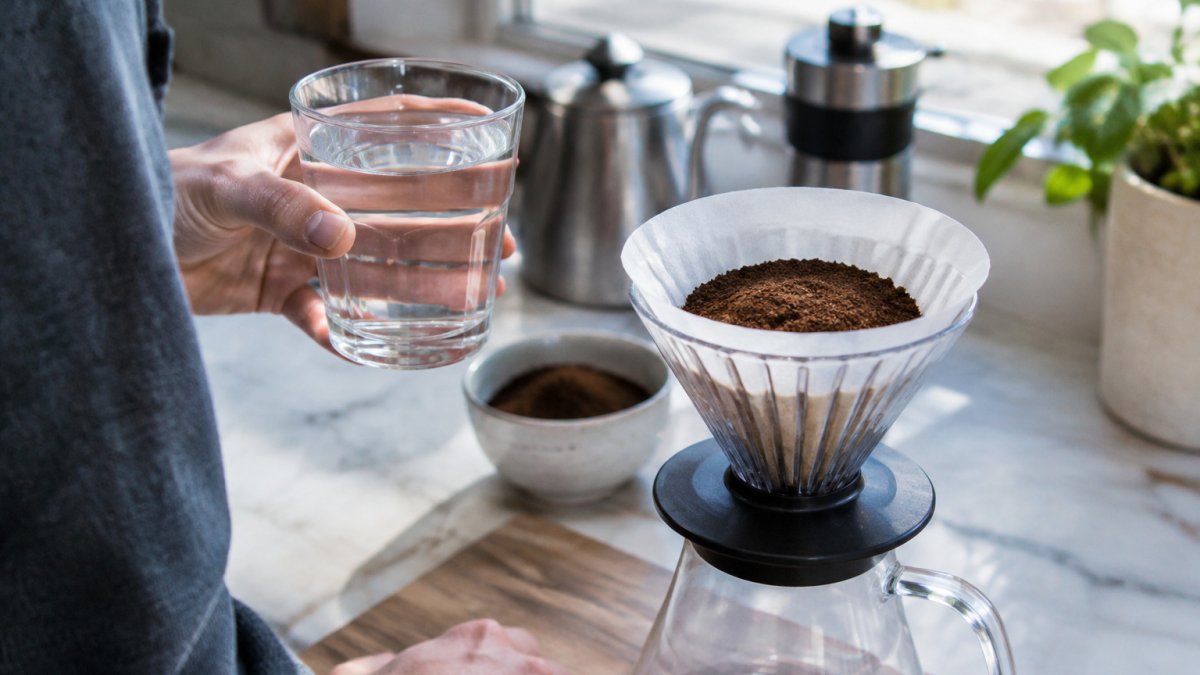
Start by testing your tap water straight from the faucet. Record the TDS, hardness, and alkalinity numbers. Then test the same water after your filter, if you use one. Finally, test the water as it comes out of your kettle or brewer, since some filters and kettles change the profile. Write all three sets of numbers next to your brew notes so you can compare them against what you taste.
Interpreting the numbers is where most home brewers get stuck. A common pattern is that high alkalinity (above roughly 80-100 ppm as calcium carbonate) buffers coffee's natural acidity and produces a flat, chalky, or muddy cup. High hardness (above roughly 150-200 ppm) can increase body but may also mute clarity and contribute to scale. Very low TDS (below roughly 75-100 ppm) often yields a thin, sour, or tea-like cup because there are too few minerals to carry flavor compounds into solution. These are starting reference points, not absolutes, because the bean, roast level, and brewing method all shift the target.
Before you change your water, rule out the other variables. A controlled tasting test helps. Brew the same coffee, with the same dose, grind, water temperature, and brew time, using two different waters side by side. If the cup changes noticeably when only the water changes, water is your variable. If both cups taste similarly thin or bitter, the problem is more likely grind, ratio, or brew time. A pour-over that tastes weak and sour often needs a finer grind, not softer water. A cup that tastes bitter and harsh usually points to over-extraction from grind or contact time, not water chemistry.
Watch out: Changing water and grind at the same time makes it impossible to know which change fixed or hurt the cup, so adjust one variable per brew.
A simple diagnostic order helps: first confirm your grinder is producing an even grind and your brew ratio is consistent; second, check that your brew time and temperature match the method; third, test your water and compare it against the reference ranges above. If the water numbers are extreme in any direction, adjust water next. This order prevents the common mistake of chasing water recipes when the real issue is an inconsistent grind or an off brew ratio.
Choosing Your Water for the Next Brew
Pick one water source, test it once, and brew the same beans three times. If the cup gets clearer and sweeter, keep that water. If it tastes flat or muddy, adjust the minerals in small steps.
Once your water is set, the beans matter most. Try the Ethiopia Natural for milk chocolate, fruity and caramel notes, or the Kenya for bright acidity with orange, lemon and floral notes. Both show how much water can change a coffee's character, so use the water you have tested and taste the difference yourself.
Frequently Asked Questions
Why does distilled water make coffee taste different?
Distilled water has almost no dissolved minerals, so it extracts coffee less efficiently. Without calcium and magnesium to pull flavor compounds from the grounds, brews often taste flat, thin or sour. Many brewing guides recommend adding a small mineral source back to distilled water before brewing, or using a mineral packet designed for coffee, to restore body and sweetness.
Can hard water make coffee taste bitter?
Hard water contains high levels of calcium and magnesium, which can increase extraction and sometimes push a brew toward harshness or bitterness, especially with dark roasts or fine grinds. Very soft water can instead make coffee taste dull. Testing your water's hardness and adjusting grind size or brew time is usually the fastest way to find a balance that suits your roast.
Does filtered water improve the taste of coffee?
Filtered water often improves coffee by removing chlorine, which can add off-flavors, and by reducing sediment and some organic compounds. However, many standard pitcher or faucet filters strip out most minerals, which can leave coffee tasting thin. Filters that retain calcium and magnesium, or a blend of filtered water with a mineral supplement, tend to give more consistent results.
How can I tell if my water is affecting my coffee?
Brew the same coffee, grind and ratio with two water sources, such as your tap water and a bottled or filtered option, then taste them side by side. If one tastes noticeably flatter, sharper or muddier, water is a likely factor. Checking total dissolved solids with an inexpensive TDS meter gives a useful number to compare against recommended targets of roughly 75 to 250 ppm.
