

Instead of Store Bought Coffee, Try This 2026 Guide
Table of Contents
- Why Store Bought Coffee Falls Flat
- Buy Fresh Roasted Coffee Beans Online
- How to Store Coffee Beans for Maximum Freshness
- Benefits of Specialty Grade Coffee Over Grocery Aisles
- Equipment-Specific Cost Analysis for Home Brewing
- Flavor Profile Matching: Find Your Perfect Cup
- Sustainability Impact of Fresh Roasted Coffee
- Conclusion: Upgrade Your Morning Routine
- Frequently Asked Questions
Last Updated: September 18, 2026
Why Store Bought Coffee Falls Flat
If your morning cup tastes flat, thin, or bitter no matter what you buy, the problem is usually the bag, not your brewing. Most store bought coffee sits in a warehouse, then a distribution center, then a shelf, and by the time it reaches your kitchen it can be months past its roast date. Coffee starts losing its best aromatics within days of roasting, so freshness is the single biggest difference you can taste.
This guide from Iron Spur Coffee covers why grocery coffee disappoints, how to buy fresh roasted coffee beans online, and how to store them so every cup holds up. Below, we'll show you exactly how to fix your morning routine without adding much time or money.
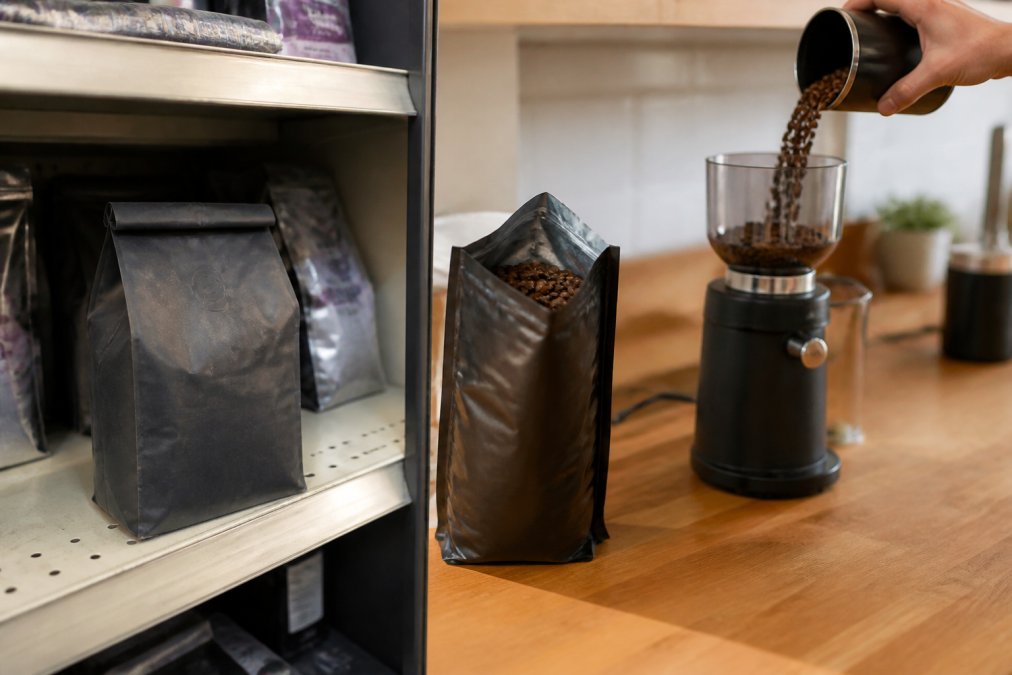
Three things happen to supermarket coffee before you open it:
- Roast dates are often missing or vague. A "best by" date tells you nothing about when the beans were actually roasted.
- Pre-ground coffee goes stale fast. Grinding exposes the oils and aromatics to oxygen, and they fade within days.
- Valve bags sit in transit. Even good packaging can't stop time once the clock starts ticking.
Buy Fresh Roasted Coffee Beans Online
Buying fresh roasted coffee beans online is the fastest way to get coffee at its peak, because roasters ship within days of roasting instead of months. The trade-off is that you can't smell the bag first, so you have to judge a roaster on a few concrete signals.
What to Look for in an Online Roaster
A good online roaster tells you four things clearly:
- Roast-to-order or a printed roast date. If the date isn't on the bag, ask.
- Origin and altitude. High-elevation, specialty-grade beans tend to develop more complex sweetness.
- Process details. Washed, natural, and wet-hulled beans each taste different, and good roasters say which they use.
- Shipping speed. Fast delivery matters more than almost anything else for freshness.
Many online roasters now publish roast dates and ship within a day or two of roasting. Iron Spur Coffee roasts to order, which means your bag is roasted after you buy it, not pulled from a warehouse shelf. If you're not sure where to start, a sample pack lets you taste several origins before committing to a full bag.

How to Store Coffee Beans for Maximum Freshness
Knowing how to store coffee beans for maximum freshness comes down to four enemies: oxygen, light, heat, and moisture. Beat all four and your beans hold their flavor for weeks instead of days. The mechanism is simple: coffee beans are porous and full of volatile aromatic oils. Once those oils meet oxygen, they oxidize and turn rancid, which is why a stale bean tastes like cardboard no matter how you brew it.
Here's the storage routine that works, with the reasoning behind each step:
- Keep beans whole until you're ready to brew, then grind right before use. Grinding multiplies the surface area exposed to oxygen, so ground coffee stales in days while whole beans hold for weeks.
- Use an airtight, opaque container. A one-way valve bag works well if you squeeze out the air. The valve lets carbon dioxide escape after roasting without letting oxygen in.
- Store in a cool, dark cabinet, not above the stove or in the fridge door. Heat accelerates the oxidation reaction, and every open-and-close cycle in a fridge door exposes beans to temperature swings and moisture.
- Skip the freezer for daily use. Freezing is fine for long-term storage in a sealed bag, but repeated thawing pulls condensation onto the beans and adds moisture that dulls flavor.
Batch Prep for Busy Mornings
Batch prep is how you keep fresh coffee fast without falling back on a pod machine. The convenience argument for store-bought coffee is real, so the fix is to build a routine that removes the morning friction. On Sunday, portion a week's worth of beans into single-brew containers so mornings are grab-and-go.
- Pre-measure beans into small airtight jars, one per day. Label them if you're rotating origins.
- Pre-grind only what you'll brew within 48 hours. Anything past that loses its peak aroma.
- For iced coffee, brew a batch ahead and chill it in a sealed pitcher. Cold brew concentrate keeps about a week in the fridge and dilutes 1:1 with water or milk.
- For espresso, pre-dose into single-shot baskets and cover them, so the puck is ready to lock in.
A common pattern among home brewers is to prep five to seven single-serve portions on Sunday, which turns a five-minute morning routine into a ninety-second one.
Benefits of Specialty Grade Coffee Over Grocery Aisles
The benefits of specialty grade coffee start with what "specialty grade" actually means. Specialty grade coffee is coffee that scores 80 points or higher on a standardized 100-point scale, judged for defects, flavor, and overall quality.
The practical upside:
Best Sellers Sample Pack: 6Bean →
- Smoother, sweeter cups with less of the bitterness that sends people reaching for sugar.
- Clearer flavor notes, so a chocolate-forward bean actually tastes like chocolate.
- Better value per cup when you consider how much you stop wasting on coffee you don't enjoy.
Equipment-Specific Cost Analysis for Home Brewing
Most cost comparisons ignore the biggest variable: your gear. The same bag of beans costs wildly different amounts per cup depending on how you brew it. Here's how the math shakes out per 12oz cup, assuming a $23.99 bag of single origin:
| Brewing Method | Beans per Cup | Cups per Bag | Cost per Cup |
|---|---|---|---|
| Drip coffee | ~10g | ~45 | ~$0.53 |
| Pour-over | ~15g | ~30 | ~$0.80 |
| French press | ~18g | ~25 | ~$0.96 |
| Espresso | ~18g | ~25 | ~$0.96 |
Flavor Profile Matching: Find Your Perfect Cup
Flavor profile matching means choosing beans by the tasting notes you actually enjoy, not by roast level alone.
Use this quick guide:
- Chocolate and caramel: Bali Blue, with dark chocolate, molasses, and brown sugar notes.
- Bright and fruity: Ethiopia Natural, with milk chocolate, fruit, and caramel.
- Citrus and berry: High Plains Colombia, with dried orange, berry, and chocolate.
- Flavored without syrups: the Flavored Coffees Sample Pack at $24.99, with French Vanilla, Hazelnut, Cinnabun, Caramel, Mocha, and Cinnamon Hazelnut, flavored with oils rather than sugar syrups.
Sustainability Impact of Fresh Roasted Coffee
The sustainability case for roast-to-order coffee rests on three concrete mechanisms: packaging, waste, and shipping weight.

A few practical habits that help:
- Buy whole beans in sizes you'll finish within a few weeks. A one-pound bag is a good target for a single daily drinker.
- Reuse your storage containers instead of buying new ones each time.
- Compost spent grounds rather than sending them to the trash. Spent grounds are close to neutral in pH and break down readily in a home compost pile.
- Skip the pod machine for daily brewing. If you want convenience, batch-brew and reheat instead.
Conclusion: Upgrade Your Morning Routine
The gap between flat grocery coffee and a genuinely good cup isn't a mystery. It's freshness, quality grade, and storage, three things you control. Buy from a roaster that ships within days of roasting, store your beans properly, and match your beans to the flavors you actually like.
Frequently Asked Questions
Why does store bought coffee taste different than fresh roasted coffee?
Store bought coffee often sits on shelves for months after roasting, losing volatile oils that carry flavor. Fresh roasted coffee, especially when roasted to order, retains complex sweetness and deep notes. Iron Spur Coffee uses precision thermal mapping to eliminate bitterness, so you get a smooth cup instead of stale or harsh flavors. The difference comes down to time and oxygen exposure.
How does thermal mapping improve the flavor of coffee?
Thermal mapping tracks bean temperature throughout the roast to ensure even development. This prevents scorching and underdevelopment, which cause bitterness or sourness. Iron Spur Coffee applies this to small-batch roasting, so each batch hits consistent flavor peaks. The result is a cleaner, sweeter cup without the harsh notes you often find in mass-produced coffee.
What are the benefits of buying coffee beans online?
Buying fresh roasted coffee beans online gives you access to roast-to-order options, detailed origin information, and sample packs to explore flavors. You avoid warehouse storage and get beans shipped directly after roasting. Iron Spur Coffee offers sample packs like the Best Sellers Sample Pack for $24.99, letting you try six blends before committing to a full bag.
How long does coffee stay fresh after roasting?
Coffee peaks in flavor 3 to 14 days after roasting and stays good for about 4 to 6 weeks if stored properly. Keep beans in an airtight container away from light, heat, and moisture. For maximum freshness, buy whole beans and grind right before brewing. Iron Spur Coffee roasts to order, so your beans arrive near peak freshness.
Is it worth switching to a coffee subscription service?
A subscription ensures you never run out of fresh beans and often saves money per bag. If you drink coffee daily, a subscription can replace grocery runs and guarantee roast-to-order delivery. Iron Spur Coffee offers fast, reliable shipping so you get beans shortly after roasting. Start with a sample pack to find your favorite, then subscribe for regular deliveries.