

How to Identify High Quality Coffee: 2026 Guide
Table of Contents
- How to Identify High Quality Coffee: Start With the Roast Date
- Visual Inspection: What High Quality Coffee Beans Look Like
- Why Coffee Roast Date Importance Beats Any Expiration Label
- The Aroma Test: Separating Freshness From Stale Coffee Beans
- Signs of Stale Coffee Beans: What to Throw Out
- Origin and Processing: How Traceability Points to Quality
- What Specialty Coffee Roasters Do Differently
- Brewing Variables That Make or Break Quality Beans
- Frequently Asked Questions
Last Updated: September 8, 2026
High quality coffee is defined by measurable, verifiable characteristics, roast date, bean density, origin transparency, and defect tolerance, rather than marketing language on a bag. This guide from Iron Spur Coffee breaks down the exact sensory and visual checks professionals use to evaluate beans, so you can spot quality before you spend a dollar.
The Specialty Coffee Association defines specialty-grade coffee as green beans scoring 80 or above on a 100-point cupping scale, a threshold that requires zero primary defects and strict moisture content limits Specialty Coffee Association grading standards. That standard filters out the commodity-grade crops that fill most grocery shelves. The five checks below, roast date, visual uniformity, aroma, origin traceability, and brewing variables, give you the same evaluation framework without a formal cupping lab.
How to Identify High Quality Coffee: Start With the Roast Date
The single most reliable indicator of high quality coffee is the roast date printed on the bag, not the expiration date. Coffee is a perishable agricultural product, and its flavor compounds begin degrading the moment roasting ends.
Roasting to order is the only way to guarantee you receive beans at peak condition. When you see a roast date within the last two weeks, you know the roaster prioritizes freshness over inventory convenience. That date is the first filter: if it's missing or vague, put the bag down.
Visual Inspection: What High Quality Coffee Beans Look Like
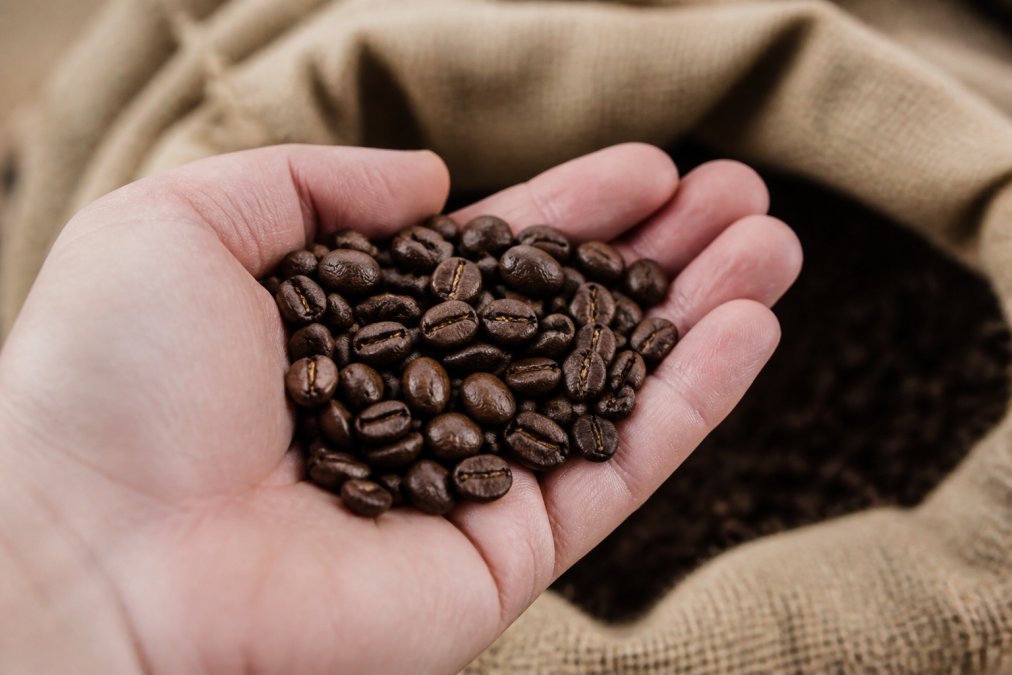
High quality coffee beans share consistent size, color, and surface texture across the entire batch. Spread a handful on a flat surface and look for uniformity. Specialty-grade beans are sorted by screen size, so variation beyond a few millimeters signals careless processing.
Color should be even across every bean, reflecting an even roast. Mottled or patchy coloring indicates uneven heat distribution, which produces bitter and sour notes in the same cup. Beans should look dry and matte, not shiny with oil, oil on the surface is a warning sign of over-roasting, not freshness.
Bean Uniformity and Defect Tolerance
The Specialty Coffee Association allows zero primary defects in specialty-grade coffee, which includes full black beans, full sour beans, and insect-damaged beans Specialty Coffee Association defect classification. Secondary defects like broken beans and shells are permitted only in tiny quantities. When you spot cracked, chipped, or oddly shaped beans in a batch, you're looking at coffee that failed quality grading.
A common mistake is assuming darker roasts hide defects. They don't, they hide the evidence of poor sourcing behind a bitter, smoky flavor. Light and medium roasts expose every flaw in the green bean, which is why roasters using high-quality origin beans favor them.
Why Coffee Roast Date Importance Beats Any Expiration Label
Coffee roast date importance comes down to chemistry: roasted beans release carbon dioxide for days after roasting, a process called degassing, and the aromatic compounds that create flavor notes fade continuously. An expiration date tells you when the coffee becomes unsafe to drink, which for a dry, roasted product is rarely. The roast date tells you when the coffee is at its peak flavor window.
The optimal brewing window for most specialty coffee opens about three to five days after roasting and closes around four weeks post-roast. After that, oxidation takes over and the cup turns flat and papery. This is why coffee roast date importance outweighs any other label claim.
The Aroma Test: Separating Freshness From Stale Coffee Beans
Freshly roasted high quality coffee releases a sweet, complex aroma that fills the room the moment you break the seal. Grind a small amount and inhale immediately. You should detect fruit, chocolate, caramel, or floral notes depending on the origin, not a single burnt, smoky wall of smell.
Stale beans smell flat and dusty, like old cardboard or musty grain. If you cannot identify at least one specific aroma note, the beans have passed their peak. The tasting wheel developed by the Specialty Coffee Association maps these sensory descriptors, and familiarizing yourself with it sharpens your ability to name what you smell Specialty Coffee Association flavor wheel. Trust your nose: it detects volatile compounds long before your palate registers their loss.
The Oil Myth: Why Shiny Beans Are a Red Flag, Not a Sign of Freshness
A persistent consumer myth holds that oily, glossy beans are fresher because they look "moist" or "flavorful." The opposite is true. Surface oil on roasted coffee is not a sign of freshness, it is a sign of structural breakdown. In light and medium roasts, oils stay trapped inside the bean's rigid structure. As roasting progresses past the second crack, typically into dark roast territory, the bean's cellulose structure fractures, allowing oils to migrate to the surface.
This is why you will almost never see a high quality single origin light roast with a shiny surface. When you see glossy beans, you are looking at one of two things: a dark roast that has pushed past the point of origin character, or a bean that has been sitting on a shelf long enough for oils to wick outward. Both scenarios indicate a coffee that will taste bitter, flat, or ashy rather than sweet and complex.
The practical test is simple: rub a bean between your fingers. If it leaves an oily residue, the roast is either too dark for quality evaluation or the coffee is past its peak. A fresh, high quality bean, even a medium-dark roast, should feel dry to the touch. The oil on the surface accelerates oxidation, meaning those beans will go stale faster than their matte counterparts.
Aroma as a Chemical Clock
The aromatic compounds in coffee are volatile organic compounds (VOCs) that evaporate continuously after roasting. The most desirable ones, those responsible for floral, fruity, and caramelized sugar notes, are also the most volatile, meaning they disappear first. The chemical clock starts ticking at the roast date, not the date you open the bag.
A common pattern among specialty roasters is to rest beans for three to seven days after roasting before brewing. This allows carbon dioxide to escape without losing the delicate aromatics. When you buy beans within that window, you are capturing the peak aromatic profile.
Signs of Stale Coffee Beans: What to Throw Out
Signs of stale coffee beans include a flat, papery aroma, a dull appearance, and a brew that tastes bitter and hollow rather than sweet and complex. The most obvious sign is the absence of the fragrant burst when you open the bag. If you have to press your nose into the beans to smell anything at all, they're past their prime.
Another clear indicator is how the beans behave during brewing. Fresh beans bloom vigorously when hot water hits them, puffing up as trapped carbon dioxide escapes. Stale beans barely react, and the resulting cup tastes thin and lifeless.
Origin and Processing: How Traceability Points to Quality
High quality coffee carries a transparent chain of custody: the farm or cooperative, the region, the elevation, the variety, and the processing method are all disclosed. Single origin coffee from a named estate or smallholder group signals that the roaster has direct relationships with producers and paid a premium for quality.
Discover Iron Spur Coffee Today →
Processing method directly shapes flavor. Washed coffees produce clean, bright cups with pronounced acidity. Natural process coffees develop heavy fruit and wine-like sweetness. Wet-hulled Indonesian coffees create earthy, full-bodied profiles. When a roaster specifies the process, the elevation, and the variety, they're telling you they know exactly what they bought and why it tastes the way it does.

What Specialty Coffee Roasters Do Differently
Specialty coffee roasters treat sourcing and roasting as precision work rather than commodity processing. They buy green beans that score above the specialty threshold, roast in small batches to maintain consistency, and calibrate each batch to the bean's specific density and moisture content.
Roasters like Iron Spur Coffee use precision thermal mapping to eliminate bitterness. Roasting to order means every bag ships within days of leaving the roaster, preserving the volatile oils that create complex sweetness.
Brewing Variables That Make or Break Quality Beans
Even the best beans produce a mediocre cup if the brewing variables are wrong. Water temperature, grind size, and water quality each shift the extraction in ways that can flatten or amplify bean quality.
Water Quality: The Most Overlooked Quality Killer
High quality coffee is roughly 98% water. If your water is poor, your beans never have a chance. The Specialty Coffee Association publishes water quality standards that specify a total dissolved solids (TDS) range of 150-250 parts per million (ppm) for optimal extraction Specialty Coffee Association water quality standards. Water below that range, such as distilled or heavily reverse-osmosis filtered water, extracts too little flavor, producing a sour, hollow cup. Water above that range, especially hard water with high calcium or magnesium content, over-extracts and creates bitter, chalky flavors.
Municipal tap water across the United States varies dramatically. Cities with soft water, like Boston, often produce under-extracted coffee. Cities with hard water, like Phoenix or Las Vegas, often produce bitter, over-extracted coffee. Chlorine, added to most municipal supplies, imparts a chemical off-taste that masks the delicate notes in high quality beans.
The practical fix is not expensive. A basic activated carbon filter removes chlorine and improves taste, but it does not adjust mineral content. For the best results, look for water specifically formulated for coffee brewing, such as Third Wave Water packets, which add the precise mineral profile back into distilled water. If you are spending $20 or more per bag on specialty coffee, spending an extra dollar on water chemistry is the highest-leverage upgrade you can make.
Extraction Science: Why Grind Size and Temperature Are Non-Negotiable
Coffee extraction is a race between desirable and undesirable compounds. The sugars and acids that create sweetness and brightness extract first. The bitter compounds extract later. The goal of every brewing method is to stop extraction before the bitter compounds dominate.
Grind size controls the surface area exposed to water. A finer grind accelerates extraction; a coarser grind slows it. If your grind is too fine for your method, you over-extract and get bitterness. If it is too coarse, you under-extract and get sourness. The correct grind size depends on brew time: espresso needs a fine grind (25-30 seconds), French press needs a coarse grind (4 minutes), and pour-over methods sit in between (2-3 minutes, medium grind).
Water temperature operates on the same principle. The Specialty Coffee Association recommends water between 195°F and 205°F for most brewing methods. Below 195°F, extraction slows dramatically, producing a sour, weak cup. Above 205°F, bitter compounds dominate before the sugars fully dissolve. The sweet spot is 200-202°F for most pour-over and drip methods. If you do not have a temperature-controlled kettle, bring water to a boil and wait 30-45 seconds before pouring.
Brewing Method Correlation: Quality Is Not Absolute
A critical insight most guides miss is that bean quality perception shifts depending on brewing method. A coffee that tastes vibrant and complex as a pour-over can taste harsh and overwhelming as espresso, and vice versa. This is not a flaw in the bean, it is a mismatch between the bean's characteristics and the extraction dynamics of the method.
For example, light-roasted, high-acidity coffees from Ethiopia or Kenya often shine as pour-over or drip because those methods highlight brightness and floral notes. The same beans pulled as espresso can taste sharply acidic and thin. Conversely, medium-dark roasts with chocolate and nut notes, like Brazilian or Sumatran beans, perform well as espresso or in milk-based drinks because their heavier body and lower acidity hold up to the concentrated extraction.

The practical takeaway: when evaluating a new bag of high quality coffee, do not judge it solely by your usual brewing method. If a bean tastes flat or bitter as espresso, try it as a pour-over before concluding the coffee is low quality. The bean may be excellent, your brewing variables just do not match its profile.
| Brewing Variable | Optimal Range | Effect of Getting It Wrong |
|---|---|---|
| Water TDS | 150-250 ppm | Below: sour, hollow. Above: bitter, chalky |
| Water Temperature | 195-205°F | Below: sour. Above: bitter |
| Grind Size | Method-specific | Too fine: bitter. Too coarse: sour |
| Coffee-to-Water Ratio | 1:16 to 1:18 | Too strong: overpowering. Too weak: thin |
Frequently Asked Questions
How can you tell if coffee is high quality?
Start with the roast date. High quality coffee is typically consumed within 2 to 4 weeks of that date. Look for uniform bean size and color, a clean aroma without mustiness, and clear origin information. Specialty grade beans score 80 or above on the cupping scale and are free of primary defects. If the bag lacks a roast date or lists only a 'best by' date, the roaster is likely hiding staleness.
Does the roast date matter for coffee quality?
Yes, the roast date is the single most important freshness indicator. Coffee beans begin degassing immediately after roasting and oxidize as they age. Flavors peak between 3 and 14 days post-roast and decline noticeably after 4 weeks. A 'best by' date tells you nothing about freshness. Specialty coffee roasters print the roast date on the bag so you know exactly when the beans were roasted.
What are the visual signs of high-quality coffee beans?
High quality coffee beans are uniform in size and color, which indicates they were sorted carefully after processing. They should be free of cracked, broken, or discolored beans. The surface should look matte for light to medium roasts. A shiny, oily surface on a light roast is a warning sign of over-roasting or age. Specialty grade beans have a moisture content around 9-12 percent and a dense structure from high-elevation growing.
What are the signs of stale coffee beans?
Stale coffee beans lose their aromatic punch. The distinctive floral, fruity, or chocolatey notes fade into a flat, papery, or even musty smell. When brewed, stale coffee tastes hollow and bitter with no sweetness or balanced acidity. The crema on espresso will be thin and dissipate quickly. If your beans were roasted more than 6 weeks ago and show these signs, it's time for a fresh bag.
What is the difference between specialty grade and commodity coffee?
Specialty grade coffee scores 80 or above on the Specialty Coffee Association's 100-point cupping scale. It is grown at high elevations, picked ripe, and processed with care. Commodity coffee is mass-produced, often sun-dried on the ground, and contains defects that create bitter or sour flavors. Specialty coffee roasters source these higher-grade beans and roast them in small batches to preserve their distinct flavor notes.
How does high-elevation affect coffee bean quality?
High-elevation coffee grows slower because of cooler temperatures, which allows the bean to develop more complex sugars and acids. This density translates to brighter acidity and more pronounced flavor notes like citrus, berry, or chocolate. Look for altitude on the bag: 1,200 meters or higher generally signals quality potential. Iron Spur's Bali Blue grows at 1,200-1,600 meters, while our Ethiopia Natural grows at 1,700-1,900 meters.