

Does Ethical Sourcing Change How Coffee Tastes?
Last Updated: November 3, 2026
Quick Summary
Ethical sourcing coffee can influence flavor mainly through farm practices, such as selective harvesting, careful drying, and hand sorting, which fair pay can make possible. Origin, altitude, variety, processing, and roast level also shape the cup, so sourcing is only one factor.
- Ethically sourced coffee generally pays growers a fair price, protects workers, and minimizes harm to the land.
- Harvesting only ripe cherries and drying beans carefully are the clearest ways sourcing affects flavor.
- Certifications describe specific practices and do not guarantee taste.
- Roast level can hide or mute origin character, so compare coffees roasted to the same level.
- Brew two or three origins side by side with the same dose and method to test differences yourself.
Table of Contents
- What Makes Coffee Ethically Sourced
- How Farm Practices and Fair Prices Can Shape Flavor
- Coffee Origin and Flavor: Separating Sourcing From Other Factors
- Coffee Certifications Explained and What They Do Not Guarantee
- How to Identify Ethically Sourced Coffee on the Label
- A Simple Tasting Framework to Judge Sourcing Claims for Yourself
- Trying Iron Spur's Single-Origin Coffees Side by Side
- Frequently Asked Questions
What Makes Coffee Ethically Sourced
Ethically sourced coffee is beans bought under terms that pay growers a fair price, protect workers, and minimize harm to the land they farm, and that is what buyers mean when they search for ethical sourcing coffee. The term covers a range of practices rather than one standard, and there is no single authority that defines it for every buyer.
Most ethical sourcing programs focus on three things: what farmers are paid, how labor is treated, and how the farm affects its surroundings. Some buyers add a fourth, transparency, meaning they can trace a bag back to the cooperative, farm, or lot it came from. At Iron Spur Coffee, we treat traceability as the starting point, because a buyer cannot judge sourcing claims they cannot verify.
Ethical sourcing and flavor are separate questions, so a good ethical sourcing coffee can still disappoint in the cup. A coffee can be sourced carefully and still taste flat if it was picked unripe or dried poorly, and a less carefully traded coffee can taste excellent. Keeping the two questions apart is the first step to evaluating any bag on the shelf.
How Farm Practices and Fair Prices Can Shape Flavor
Sourcing affects flavor mostly through the farm, not through the price tag. Better-paid growers can afford to pick more selectively, dry beans more carefully, and maintain their trees, and those decisions show up in the cup. Fair pricing is therefore a condition that makes quality possible, rather than a flavor guarantee on its own.
Farm conditions set the ceiling. Elevation, variety, and soil all shape the sugars and acids a bean develops as it matures, and these are factors a grower cannot fully control. A farmer working with good genetics at a high altitude has more room to produce a complex cup than one working with a lower-grade variety, regardless of how the coffee was traded.
Altitude, varieties and growing conditions
Higher-elevation coffee grows more slowly, which tends to give beans denser structure and more developed acidity. Heirloom and indigenous varieties vary widely in their flavor potential, and the same variety can taste different across farms. When you see altitude or variety listed on a bag, treat it as a clue about what the cup might offer, not a promise.
Our Ethiopia Natural, grown at 1700-1900 meters in the Sidama Zone, is a useful example of how altitude and variety are listed on a bag. Those are growing-condition details, not sourcing claims.
Selective picking and post-harvest processing
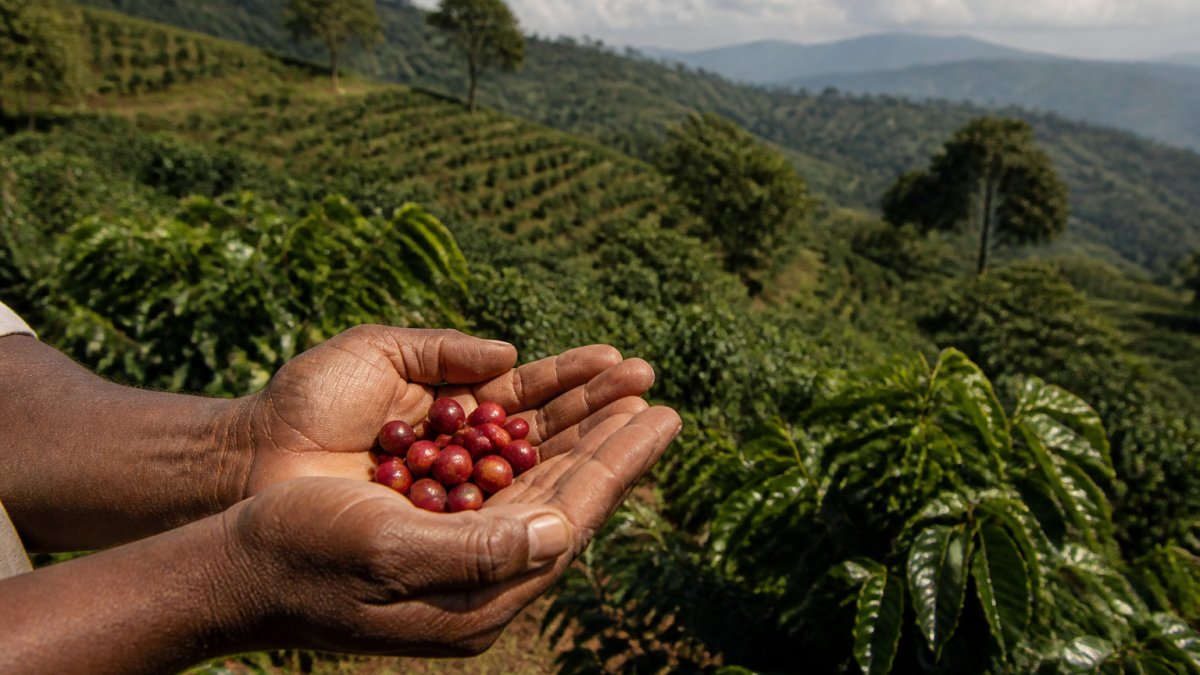
The clearest mechanism linking sourcing to flavor runs through harvest selectivity. Ripe cherries carry more sugar and fewer green, astringent compounds than underripe ones.
Drying is the second mechanism. Coffee that dries too fast cracks and loses clarity; coffee that dries too slowly or unevenly can develop musty, fermented off-notes. Raised beds, careful turning, and controlled airflow cost labor and equipment, which is exactly where a price premium can be spent.
Processing method then shapes which qualities survive. Washed coffees tend to show cleaner acidity and clearer origin character because the fruit is removed before drying.
Our Bali Blue is hand picked, wet-hulled, and dried on raised beds.
The trade-offs nobody puts on the label
Ethical sourcing is not a straight line to a better cup, and the honest version of this story includes the costs. Certification and compliance carry real expenses, and smallholders sometimes cannot absorb them even when their practices already meet the standard. Price premiums do not always reach the picker; a higher farmgate price can be captured by a cooperative, exporter, or middleman depending on how the chain is structured.
A higher price paid at the farm level does not automatically translate into better picking or drying if the premium is not tied to quality outcomes or reinvested in labor and equipment.
The article breaks down how specific farm and processing choices shape what ends up in the cup.
| Factor | How it affects flavor | Example from the article |
|---|---|---|
| Harvest selectivity | Ripe cherries carry more sugar and fewer green notes | Strip-picking mixes ripeness and adds vegetal notes |
| Drying care | Fast drying cracks beans; slow or uneven drying causes off-notes | Raised beds and turning cost labor |
| Hand sorting | Removes defective beans that add bitterness | Done at the mill |
| Washed processing | Cleaner acidity and clearer origin character | Fruit removed before drying |
| Natural processing | Berry and tropical notes, with over-fermentation risk | Fruit dries on the bean |
| Wet-hulled processing | Heavy, earthy, molasses-like character | Common in Indonesia |
| Altitude | Slower growth gives denser structure and acidity | Higher elevations noted in the article |
Coffee Origin and Flavor: Separating Sourcing From Other Factors
Origin matters, but it is tangled up with everything else. A coffee from a famous region can taste ordinary if it was roasted badly, and a modest lot can taste remarkable when handled well.
Roast level is the most common hidden variable. A medium-dark roast will mute the origin character of almost any bean and push the cup toward chocolate and smoke. Roast level is listed alongside origin on our bags: our High Plains Colombia is a medium roast, and the Bali Blue is medium-dark.
Research on how much of the flavor difference traces back to sourcing specifically is limited, and most public studies focus on farm economics rather than controlled taste outcomes. Be cautious about any claim that a particular sourcing scheme produces a particular flavor.
Coffee Certifications Explained and What They Do Not Guarantee
Certifications are one of the most visible tools buyers have. Each one sets its own standard and measures a different thing. Some focus on minimum prices paid to farmers, others on environmental practices, and others on social conditions at the farm. None of them is a guarantee of taste.
A few of the programs you will see most often on bags:
- Fairtrade sets a minimum price for coffee plus a social premium paid to the cooperative, and focuses on labor standards and democratic organization. It says little about cup quality.
- USDA Organic certifies that the coffee was grown without prohibited synthetic inputs and under an approved organic system plan. It is an environmental and input standard, not a flavor or labor standard.
- Rainforest Alliance combines environmental criteria, shade, water, biodiversity, with social and labor requirements, and uses a points-based standard.
- Bird Friendly (Smithsonian) requires shade-grown, organic conditions that preserve habitat, making it one of the stricter environmental standards.
- Direct trade is not a certification at all; it is a set of buyer-created relationships, and what it means depends entirely on the roaster using the term.
Read a certification as a statement about specific practices, not an overall quality ranking. A bag can carry a certification and still be roasted poorly, and an uncertified coffee can come from a farm that matches every standard in practice.
Ask two questions when you see a certification: what exactly does it check, and who verifies it? Those answers tell you more than the logo does. A named certifying body and a standard you can look up are worth more than a badge with no issuer behind it.
How to Identify Ethically Sourced Coffee on the Label
Start with specifics. A label that names the farm, cooperative, or region is more useful than one that says only "ethically sourced." Named origins let you check claims and compare lots over time.
Look for these details on the bag or product page:
- The country, region, and cooperative or farm name
- The altitude and variety of the beans
- The processing method, such as washed, natural, or wet-hulled
- The roast date, not just a best-by date
- Any certification, along with the body that issues it
Be wary of vague phrases with no source behind them, such as "farmer-friendly" or "sustainably grown," unless the seller explains what they mean. A transparent roaster should be able to tell you where a coffee came from and how it was processed without hesitation.
A Simple Tasting Framework to Judge Sourcing Claims for Yourself
You can test a sourcing claim against your own palate with a controlled comparison. The goal is not to prove that ethics taste better, but to learn what you actually notice in the cup.
Use two or three coffees from different origins, roasted to the same level and brewed the same way. A digital scale helps here: weigh the same dose, usually around 15 grams to 250 milliliters of water, and keep water temperature and brew time constant. You can find a digital coffee scale guide that explains which features matter for consistent dosing. Taste each one black, then write down the flavors you detect and how bright or heavy each cup feels.
Repeat the tasting a second day to check that your impressions hold. If the differences only appear when you know which coffee is which, treat that as a reason for caution about your own conclusions. Our Peru, a medium roast with salted caramel and citrus notes, can be compared against the Ethiopia Natural if you want to test origin differences side by side.
Trying Iron Spur's Single-Origin Coffees Side by Side
Our single-origin coffees make a practical comparison because each one has a distinct growing story and roast level. Brewing two or three at once lets you judge differences in altitude, variety, and processing directly, rather than guessing from a bag description.
We suggest starting with the Bali Blue for a darker, molasses-forward cup, then the Ethiopia Natural for a lighter, fruit-driven contrast. The High Plains Colombia sits in between, with a medium roast that keeps its citrus and berry character clear. Finish with the Peru for a silky, salted caramel profile.


Each is priced at $23.99. Brew them with the same method and dose, taste them in the same order, and note what each one tells you about the link between where a coffee comes from and how it tastes.
Frequently Asked Questions
What makes coffee ethically sourced?
Ethically sourced coffee is usually defined by how the farmers who grew it were paid and treated, and by the environmental practices used on the farm. Buyers look for fair prices paid above commodity levels, safe working conditions, fair labor practices, shade-grown or agroforestry systems that protect biodiversity, and transparency about where the beans came from. No single standard covers all of these, so the term is best understood as a set of commitments rather than one guarantee. When a roaster can name the farm, region and price paid, the claim is easier to verify.
Does ethical sourcing affect coffee flavor?
Sourcing can influence flavor indirectly. Farms that invest in selective picking, cherry ripeness checks and careful post-harvest processing often produce cleaner, more consistent beans, and those practices are commonly tied to fair pricing and better farmer income. Growing conditions such as altitude, variety and soil matter more directly to flavor. Ethical sourcing does not guarantee a better cup on its own, so the most reliable way to judge it is to taste coffees side by side and compare them to the sourcing details on the bag.
Does fair trade coffee taste different?
Fair trade certification sets minimum prices and premiums for farmers, but it does not directly control flavor. Some fair trade coffees taste excellent and others taste ordinary, because the taste depends on variety, altitude, processing and roasting. If you are comparing fair trade and non-certified coffees, judge them by tasting, and check whether the roaster also names the farm or cooperative and the processing method.
How can I tell whether coffee is ethically sourced?
Start with specifics on the label: the country, region, farm or cooperative, and the processing method. Look for recognized certifications, and be cautious of vague words like natural or sustainable that have no defined standard. Iron Spur's single-origin coffees, including Bali Blue from Kintamani, Ethiopia Natural from the Sidama Zone, High Plains Colombia from Medellin and Peru from the Norandino cooperative, list their growers, regions, altitudes and processing methods, which lets you check the claims against the details.
