

Coffee Subscription vs Buying in Store: 2026 Comparison
Table of Contents
- Coffee Subscription vs Buying in Store: The Core Trade-Offs
- Coffee Subscription Cost vs Grocery-Store Prices
- Coffee Freshness After Roasting: What the Label Won't Tell You
- How to Choose Coffee Beans: A Practical Decision Framework
- Coffee Subscription Delivery Frequency and Flexibility
- Waste, Freshness, and Household Consumption
- Which Option Fits Your Routine?
- Frequently Asked Questions
Last Updated: October 15, 2026
Coffee Subscription vs Buying in Store: The Core Trade-Offs
The coffee subscription vs buying in store decision comes down to one question: how much do you value freshness against immediate access? Grocery-store coffee is built for shelf life, not peak flavor.
Below, we break down freshness, cost, selection, and convenience so you can pick the right source for your routine.
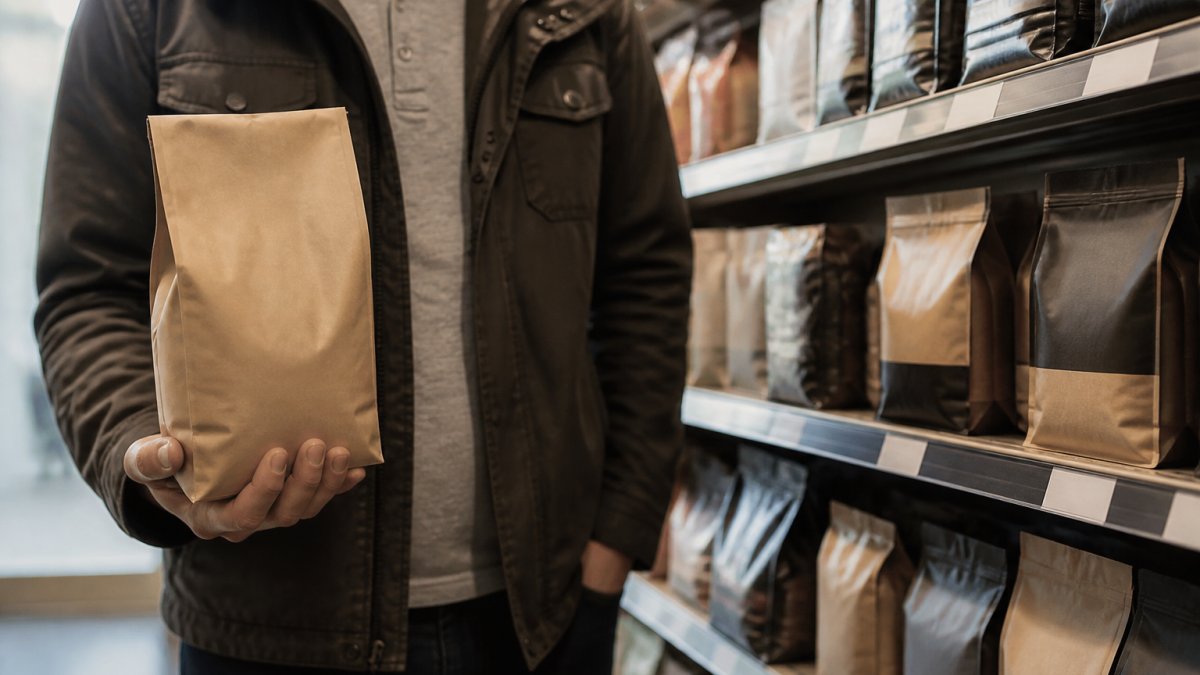
Freshness and Roast-Date Differences
Freshly roasted coffee tastes best within a few weeks of its roast date. Coffee begins losing aroma and flavor shortly after roasting as oxygen exposure drives oxidation. A subscription delivers beans days off the roast; store-bought coffee may sit in a warehouse and on a shelf for weeks or months before you buy it.
Convenience and Immediate Access
Buying in store wins on immediate access. You walk in, grab a bag, and brew the same day. A coffee subscription trades that instant grab for home delivery and delivery frequency you set in advance. The trade-off is planning: you gain freshness but lose the ability to restock on a whim.
Coffee Subscription Cost vs Grocery-Store Prices
Cost depends on what you count. A subscription's sticker price often runs higher per bag, but grocery-store coffee hides costs in staleness and waste. When you compare by cost per cup and by how much coffee you actually drink, the gap narrows, and sometimes flips.
Transparent Cost-Per-Cup Math
Here is how we would run the numbers. Take the bag price, add any shipping, subtract any subscription discount, then divide by the number of cups the bag yields. A 12-ounce bag of whole beans brewed at roughly 15 grams per cup yields about 22 cups.
Run the same math on a grocery bag. A 12-ounce bag priced at $9.99 yields the same ~22 cups, or about $0.45 per cup, if you finish it.
Three variables move the number the most:
- Bag size. A 12-ounce bag and a 2-pound bag do not share a per-cup cost. Divide by cups, not by ounces, or you will compare the wrong things.
- Shipping. Free-shipping thresholds and flat rates can add $0.05-$0.15 per cup on small orders. Factor shipping into the bag price before you divide.
- Discounts and commitments. Prepaid plans and multi-bag discounts lower the per-cup cost, but only if you actually drink the coffee before it stales.
| Factor | Coffee Subscription | Buying in Store |
|---|---|---|
| Freshness | Days off roast | Weeks to months on shelf |
| Cost per cup | Fixed, predictable | Varies by waste |
| Selection | Curated, rotating | Whatever is stocked |
| Convenience | Home delivery | Immediate access |
| Commitment | Flexible, cancel anytime | None |
What Actually Drives the Price Difference
Subscription coffee usually costs more per ounce because it is roasted to order in smaller batches, shipped quickly, and sourced from higher-grade lots. Store coffee costs less per ounce because it is roasted for shelf life, shipped in bulk, and warehoused for weeks. You are not paying more for the same beans, you are paying for a shorter path from roaster to cup.
When Store Buying Wins on Price
Store buying wins on price when you buy small quantities, drink coffee slowly, or catch a deep sale on a brand you already like. It also wins when you can verify a recent roast date on the bag and finish it within a few weeks. If those conditions hold, the per-cup math favors the store.
When a Subscription Wins on Price
A subscription wins on price when you drink daily, want whole bean, and would otherwise waste part of every store bag. It also wins when shipping is free above a threshold you can hit with one order, and when a prepaid or multi-bag plan lowers the per-cup cost below your store baseline. Run your own numbers with your own bag sizes and cadence, the answer depends on your household, not on a slogan.
Coffee Freshness After Roasting: What the Label Won't Tell You
A "best-by" date is not a roast date. Most grocery packaging shows only a best-by or sell-by date, which tells you nothing about when the beans were roasted. Freshness after roasting is the variable that separates a lively cup from a flat one.
Look for a printed roast date, not a best-by date. Whole beans keep longer than ground coffee because grinding exposes more surface area to oxygen. Store beans in an airtight container away from light and heat.
How to Choose Coffee Beans: A Practical Decision Framework
Use three questions to pick your beans: how you brew, how you drink it, and how fast you go through a bag. That framework beats chasing flavor adjectives on a label.
Whole Bean vs Pre-Ground
Whole bean coffee preserves freshness and lets you match the grind to your brewer. Pre-ground coffee is convenient but loses aroma faster. If you own a grinder, buy whole bean every time.
Single-Origin vs Blends
Single-origin coffee highlights one region's character; blends combine origins for balance and consistency. Our Black Creek medium roast blend carries nutty, sweet chocolate, and mild citrus notes. For a lighter start, Long Ride is a smooth South American breakfast blend. Not sure where to begin? The Best Sellers Sample Pack lets you try six coffees in 2-ounce packs before committing to a full bag.


Coffee Subscription Delivery Frequency and Flexibility
Delivery frequency is where subscriptions earn their keep. You set the cadence to match your household consumption, so you never run out of coffee and never stockpile stale bags. A weekly drinker might choose every two weeks; a lighter household might choose monthly.
But frequency is only half the story. The terms behind the cadence decide whether a subscription fits your routine or fights it. Before you commit, check these five things:
- Skip and pause options. Can you skip a single delivery without canceling? Can you pause for a month while you travel? A subscription that only offers "cancel" is not flexible, it is a commitment with an exit.
- Cancellation terms. Look for cancel-anytime language with no fees and no phone call required. If cancellation requires a phone call during business hours, treat that as a friction cost.
- Minimum commitments. Some plans require a set number of deliveries before you can cancel. That is fine if you already know you like the coffee; it is a trap if you are still sampling.
- Changing your coffee selection. Can you swap a roast, change a grind, or substitute a single-origin for a blend on your next delivery? The best subscriptions let you edit the next shipment up until it ships.
- Changing frequency mid-plan. Your consumption changes with the seasons. A plan that locks your cadence for six months will not match a household that drinks more in winter.
How to Match Cadence to Consumption
Start with how fast you finish a bag. A household brewing two cups a day burns through a 12-ounce bag in about two weeks. A solo drinker brewing one cup a day takes roughly a month. Set your first cadence one step slower than you think you need, it is easier to add a delivery than to catch up on stale bags.
If you are unsure, order a sample pack first. It lets you taste several roasts before you commit to a recurring cadence, and it tells you which bags you actually finish.
Delivery Reliability and the Backup Bag
Home delivery is convenient until it is not. Weather delays, carrier mistakes, and missed deliveries happen. Keep one backup bag of store coffee on hand for the gap between "ran out" and "next delivery arrives." That backup bag is not a failure of the subscription, it is the cost of not running to the store every week.
Questions to Ask Before You Sign Up
Ask the roaster directly: What is the roast date on a typical shipment? Can I skip, pause, or cancel without a fee? Can I change my roast or grind on the next order? Is there a minimum number of deliveries? The answers tell you more about the service than any marketing page. A subscription that answers all five clearly is one you can adjust as your habits change, and that flexibility is the difference between a service that fits your routine and one that piles up unopened bags.
Waste, Freshness, and Household Consumption
Waste is the hidden cost of buying in store. A large bag bought on sale goes stale before a single-person household finishes it, and stale coffee gets poured out. A subscription sized to your consumption cuts that waste.
Match your order to how much you actually drink. A household brewing two cups a day burns through a 12-ounce bag in about two weeks. A solo drinker might need a month. Getting the size right protects freshness and your budget at the same time.
Which Option Fits Your Routine?
Pick a coffee subscription if freshness, variety, and predictable delivery matter most to you.
Here is the decision framework we would use:
- You drink daily and care about flavor: subscription, whole bean.
- You want to try before committing: start with a sample pack.
- You need coffee today: buy in store.
- You brew occasionally: buy small bags in store to avoid waste.
- You want bold flavor for long days: choose a dark or medium-dark roast.
For most people who drink coffee every morning, a subscription delivers better coffee for a similar cost per cup once waste is factored in. That is the whole argument in one line.
The real challenge is not choosing a side. Start with the Best Sellers Sample Pack to find your roast, then let a subscription keep your shelf stocked.
Frequently Asked Questions
Is it cheaper to buy coffee beans in store or through a subscription?
It depends on volume and quality tier. Grocery-store coffee often costs less per bag upfront, but the beans may have been roasted weeks or months earlier. A coffee subscription like Iron Spur Coffee's Long Ride at $23.99 per bag delivers roasted-to-order beans, so you're paying for freshness and flavor rather than shelf time. Calculate cost per cup using your actual brew ratio to compare fairly. If you drink two cups daily, a $23.99 bag lasting two weeks works out to roughly $1.71 per day.
Is coffee from a subscription fresher than store-bought coffee?
In most cases, yes. Coffee freshness after roasting peaks within 4 to 14 days, then declines as oxidation sets in. Store-bought coffee may sit in a warehouse or on a shelf for weeks before you buy it. A subscription that roasts to order, like Iron Spur Coffee, ships beans shortly after roasting so they arrive within that ideal window. Check the roast date on the bag, not the best-by date, to judge actual freshness.
Can I choose how often a coffee subscription is delivered?
Most coffee subscription services let you set delivery frequency, typically every 1, 2, or 4 weeks. Coffee subscription delivery frequency should match your household consumption. A single daily drinker might need one 12-ounce bag every two weeks, while a two-person household could need weekly delivery. Iron Spur Coffee offers fast, reliable delivery.
What should I look for when buying coffee beans at the grocery store?
Check the roast date first. If the bag only shows a best-by date, subtract 6 to 12 months to estimate roast time, which usually means the coffee is already past peak. Look for whole beans over pre-ground, since grinding accelerates staleness. Valve-sealed bags help release CO2 without letting oxygen in. If the store has a local roaster section with recent roast dates, that's your best bet for grocery-store coffee.
Are coffee subscriptions worth it for someone who drinks coffee daily?
For daily drinkers, a subscription often makes sense because you get consistent freshness and never run out of coffee. The trade-off is paying slightly more per bag than mass-market grocery brands, but you gain roast-to-order quality, variety, and home delivery convenience. If you value flavor and a reliable morning routine, the cost per cup is usually comparable to a specialty cafe but far less than buying coffee out every day.