

Best Non-Bitter Coffee Beans for Home Brewing
Table of Contents
- Why Some Coffee Beans Taste Bitter (and Others Don't)
- How to Brew Coffee Without Bitterness at Home
- Low Acidity Coffee Beans: What to Look For
-
Best Non-Bitter Coffee Beans for Home Brewing
- 1. Brazil Santos: Smooth Cocoa Without the Bite
- 2. Peru: Salted Caramel and Silky Sweetness
- 3. Forge Roast - Costa Rica: Sweet Apple and Honey
- 4. High Plains Colombia: Dried Orange and Berry
- 5. Guatemala: Dark Chocolate and Butterscotch
- 6. Papua New Guinea: Caramel, Honey, and Fruit
- 7. Black Creek: Consistent, Clean, and Smooth
- 8. Long Ride: A Smooth Morning Blend
- 9. French Vanilla: Creamy Flavor Without Bitterness
- 10. Caramel: Sweet, Buttery, and Smooth
- What Sets Specialty Coffee Roasters Apart
- Frequently Asked Questions
Last Updated: September 17, 2026
Why Some Coffee Beans Taste Bitter (and Others Don't)
The best non-bitter coffee beans for home brewing share one trait: they are brewed and roasted to keep extraction in balance. Bitterness comes from over-extraction, dark roasting, and Robusta's higher caffeine load. This guide breaks down that harsh bite, then names ten beans that avoid it.
Roast Level and Bitterness: What the Data Shows
Dark roast does not create bitterness by itself, but it concentrates it. Longer roasting burns off the sugars that balance the cup, leaving char and smoke.
Arabica vs. Robusta: The Bitterness Gap
Arabica beans carry roughly half the caffeine of Robusta, and caffeine is a primary bitter compound. Robusta also contains more chlorogenic acid, which breaks down into bitter lactones during roasting.
How to Brew Coffee Without Bitterness at Home
Learning how to brew coffee without bitterness comes down to four variables: grind size, water temperature, ratio, and time. Nail those and almost any medium-roast bean tastes clean; miss them and even a $24 bag of specialty Arabica tastes harsh.
Grind Size, Water Temperature, and Coffee-to-Water Ratios
Grind size controls how fast water pulls flavor. A fine grind extracts fast and tips into bitterness within seconds; a coarse grind extracts slowly and forgives mistakes. Starting points: fine for espresso, medium-fine for pour-over, medium for drip, coarse for French press.
Why the Coffee-to-Water Ratio Causes Most Bitterness
The coffee-to-water ratio is the variable most home brewers ignore, and it quietly causes the most bitterness. Use too little coffee and the water keeps pulling, extracting the bitter compounds last. The cup tastes weak and harsh at once, the signature of an under-dosed brew.
Here is how the variables stack up:
| Variable | Bitter If... | Fix |
|---|---|---|
| Grind size | Too fine | Go one step coarser |
| Water temp | Above 205°F | Drop to 195-205°F |
| Ratio | Too little coffee | Use 1:15 to 1:17 |
| Brew time | Too long | Shorten by 30 seconds |
| Water quality | Hard or chlorinated | Filter it |
Troubleshooting: Why Your Coffee Is Still Bitter
If your coffee is still bitter after adjusting grind and temperature, work through this checklist, changing one variable at a time.
- Weigh your coffee instead of scooping it. A scoop of coarse grounds and a scoop of fine grounds weigh differently; a kitchen scale makes the ratio repeatable.
- Check your ratio. If you are below 1:15, add coffee, the most common single fix for bitter, thin coffee.
- Check your water. Hard water and chlorine both read as bitter. If your tap water tastes off on its own, it will taste off in your cup. Filtered water removes the minerals and chlorine that make coffee taste sharp.
- Clean your grinder and brewer. Old oils go rancid and deposit on every brew; a monthly deep clean removes buildup no grind adjustment will fix.
- Confirm your roast date is recent. Beans past their roast date oxidize and lose the sweetness that balances bitterness.
- Try immersion brewing. A French press slows extraction and is more forgiving of grind inconsistency than a pour-over.
- Taste at 3 minutes and again at 5. If the 5-minute cup is harsher, you are over-extracting, shorten the brew or coarsen the grind.
Matching the Brew Method to the Bean
Different brewing methods expose bitterness differently. A French press uses full immersion and a metal filter, so oils and fines stay in the cup, adding body but amplifying bitterness if the grind is too fine. A pour-over's paper filter traps oils and fines for a cleaner cup that hides some bitterness but punishes an inconsistent grind.
Low Acidity Coffee Beans: What to Look For
Before you shop for low-acid beans, separate two sensations that get lumped together constantly: acidity and bitterness. They come from different compounds and have different fixes. Buy a low-acid bean to solve a bitterness problem and you may spend money on the wrong bag.
Markers of a Genuinely Low-Acid, Low-Bitterness Bean
Once you know which sensation you are trying to avoid, these markers point to a smoother cup:
- Bean origin: Brazil, Peru, and Guatemala produce naturally low-acid profiles because their growing conditions and varietals tend toward softer, sweeter cups
- Process: Washed and pulped-natural beans taste cleaner and more predictable than dry-processed (natural) beans, which can carry fermented or boozy notes that some drinkers read as harsh
- Altitude and roast: Medium roasts of shaded, lower-altitude beans carry less bite than light roasts of high-grown beans, which preserve more of the acids that read as bright
- Varietal: Bourbon, Catuai, and Typica tend to produce rounder cups than high-acid varietals like Geisha or SL28
What Low-Acid Beans Will and Won't Fix
A low-acid bean softens the bright, tart edge in your cup. It will not fix bitterness from a dark roast, stale beans, or a brewing mistake, those are process problems no origin or varietal will paper over. Choose the bean for the flavor profile you want, then use brewing variables to control bitterness.

Best Non-Bitter Coffee Beans for Home Brewing
The best non-bitter coffee beans for home brewing are medium-roast Arabica with recent roast dates and clean processing. Every bean below meets that bar and lists its exact tasting profile.
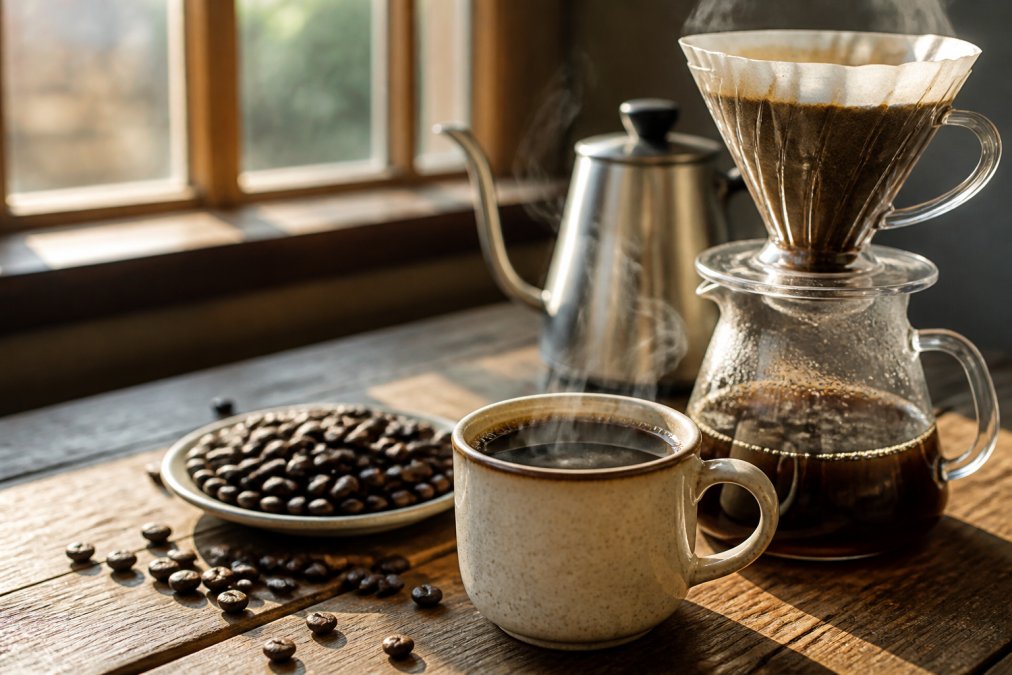
1. Brazil Santos: Smooth Cocoa Without the Bite
Our top pick for a daily non-bitter cup is Brazil Santos at $23.99. This single-origin medium roast from Fazenda Santa Barbara delivers an elegant, smooth cup with cocoa notes and almost no acidic edge.

2. Peru: Salted Caramel and Silky Sweetness
Peru runs $23.99 and brings salted caramel, silky sweetness, and a hint of citrus. The Caturra, Bourbon, Catuai, Pache, and Catimor varieties come from the Norandino cooperative in Piura and Amazonas.
3. Forge Roast - Costa Rica: Sweet Apple and Honey
From micro farms in Alajuela comes Forge Roast - Costa Rica, priced at $23.99. Expect sweet apple, raisin, and honey from Caturra and Catuai beans grown at 1300-1445 meters.

4. High Plains Colombia: Dried Orange and Berry
High Plains Colombia costs $23.99 and layers dried orange, berry, and chocolate. Smallholder farmers around Medellin grow Castillo, Caturra, Colombia, and Typica varieties at 1300-1500 meters.
5. Guatemala: Dark Chocolate and Butterscotch
Guatemala at $23.99 delivers dark chocolate, bright fruit, and butterscotch. Bourbon, Catuai, Caturra, and Typica beans from Antigua grow between 1200 and 1616 meters in volcanic loam.
6. Papua New Guinea: Caramel, Honey, and Fruit
Papua New Guinea is $23.99 and brings caramel, honey, and fruit. Bourbon and Typica varieties come from small agricultural cooperatives in Chimbu Province at 1350 meters.
7. Black Creek: Consistent, Clean, and Smooth
Black Creek at $23.99 is a medium-roast blend of Central and South American coffees built for consistency. Notes of nutty, sweet chocolate, and mild citrus finish clean and bright.
8. Long Ride: A Smooth Morning Blend
Long Ride costs $23.99 and is a smooth South American breakfast blend. It is built for the first cup of the day: easy, balanced, and low on bite.
9. French Vanilla: Creamy Flavor Without Bitterness
French Vanilla runs $23.99 and starts as specialty-grade single-origin coffee roasted to a smooth medium. Natural flavoring oils are added while the beans are still warm, giving a rich, creamy vanilla profile.
10. Caramel: Sweet, Buttery, and Smooth
Caramel at $23.99 finishes the list with an all-natural sweet, buttery caramel flavor on a medium roast. It works alone or as the base for blended drinks.
What Sets Specialty Coffee Roasters Apart
Specialty coffee roasters separate themselves through sourcing, roast control, and freshness, the difference shows up as complex sweetness instead of flat bitterness. At Iron Spur Coffee, we source specialty-grade beans from high-elevation estates and roast in disciplined small batches. Precision thermal mapping eliminates the bitter noise that plagues mass-produced coffee, and roasting to order means your beans ship at peak freshness.
Frequently Asked Questions
Which coffee beans are the least bitter?
Beans grown at high elevation and roasted to a medium level tend to be least bitter. Arabica varieties like Bourbon, Typica, and Catuai produce sweeter, smoother cups than Robusta. Single-origin beans from Brazil, Peru, Colombia, and Guatemala are consistently rated as low-bitterness options. Freshness also matters: beans roasted within the past two weeks have not yet developed the stale, harsh compounds that make older coffee taste bitter.
Does roast level affect coffee bitterness?
Yes, significantly. Dark roasts spend more time in the roaster, which breaks down natural sugars and creates bitter compounds. Medium roasts preserve more of the bean's inherent sweetness while still developing body and depth. For home brewing, a medium roast is the safest choice if you want to avoid bitterness, because it balances acidity, sweetness, and body without the charred notes that come with darker roasting.
How can I brew coffee at home to avoid a bitter taste?
Start with fresh, medium-roast beans and grind them to match your brewing method: coarse for French press, medium for drip, fine for espresso. Keep water temperature between 195°F and 205°F. Use a coffee-to-water ratio of about 1:15 to 1:17 by weight. If your coffee still tastes bitter, coarsen the grind slightly or shorten the brew time. These adjustments reduce over-extraction, the main cause of bitterness.
What is the best coffee without bitterness for a daily routine?
A medium-roast single origin or blend with naturally sweet flavor notes works best. Brazil Santos delivers smooth cocoa notes, while Peru offers salted caramel and citrus. Black Creek, a medium blend, provides nutty chocolate and mild citrus with a clean finish. All are roasted to order and priced at $23.99 per bag. Choosing beans with tasting notes like caramel, honey, or chocolate signals lower bitterness before you even brew.
Are low acidity coffee beans less bitter?
Not necessarily. Acidity and bitterness are separate taste sensations. Low acidity beans are gentler on the stomach, but bitterness comes from over-extraction, dark roasting, and stale beans. You can have a bright, high-acid coffee that is not bitter, or a low-acid coffee that tastes bitter if brewed poorly. Focus on fresh medium roasts and proper brewing technique to control bitterness regardless of acidity level.