

How to Store Coffee Beans for Maximum Freshness
Table of Contents
- Why Proper Storage Matters for Coffee Bean Freshness
- The Best Way to Store Coffee Beans
- Ideal Storage Conditions: Cool, Dark, and Dry
- How Long Do Coffee Beans Stay Fresh After Opening
- Can You Freeze Coffee Beans to Extend Freshness
- Assessing Freshness and Recognizing Stale Beans
- Common Storage Mistakes to Avoid
- Frequently Asked Questions
Last Updated: October 10, 2026
Why Proper Storage Matters for Coffee Bean Freshness
How to store coffee beans for maximum freshness directly determines how long they stay fresh and flavorful. Oxygen, light, heat, and moisture are the enemies of freshness. Without proper storage, specialty beans lose their complexity and vibrant notes within days.
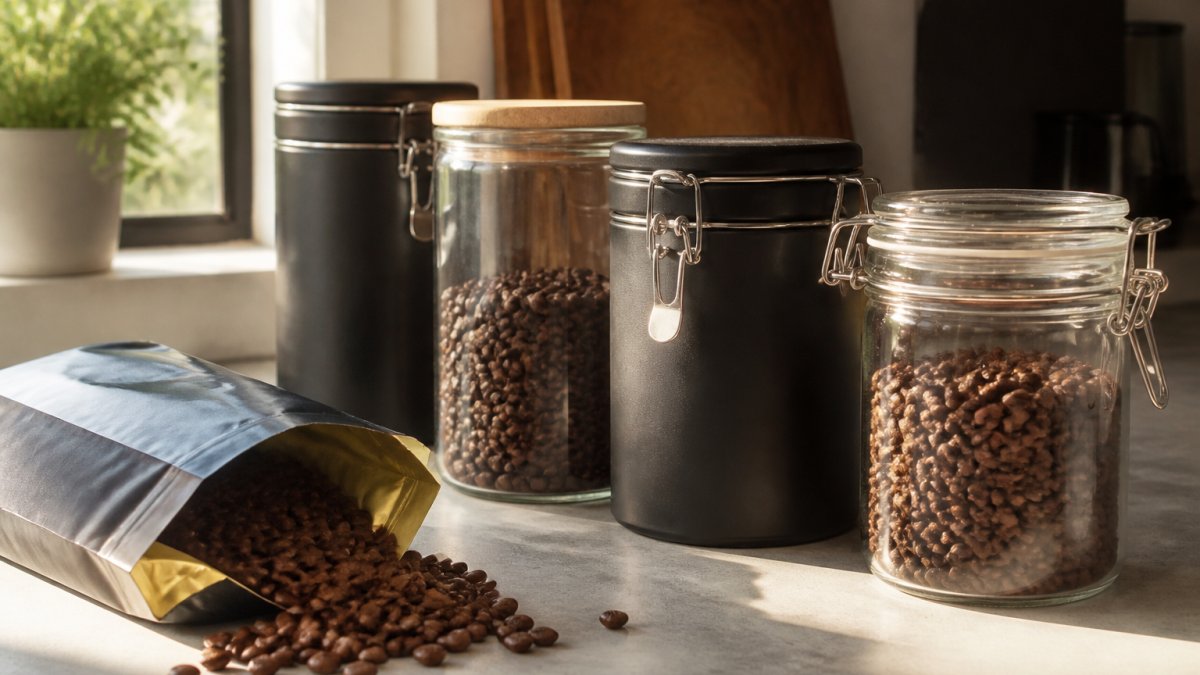
Freshness affects everything about your coffee experience. A bag stored carelessly tastes flat and stale. The same beans stored correctly deliver the rich, nuanced flavors the roaster intended. At Iron Spur Coffee, we roast to order specifically to maximize freshness when your beans arrive. But once they're in your hands, storage becomes your responsibility.
Many people treat coffee like any other pantry item, leaving bags open, storing them on countertops in sunlight, or refrigerating without protection. These mistakes erase the work of careful sourcing and precise roasting.
The Best Way to Store Coffee Beans
The right approach depends on how quickly you drink your coffee. Use this framework to choose your storage strategy.
Storage Decision Guide by Consumption Pattern
Daily drinkers (finish a bag in 2-3 weeks): Keep beans in the original bag with a functioning one-way valve. Fold the top down after each use and store in a cool, dark cabinet. The valve lets CO₂ escape without letting oxygen in.
Regular drinkers (finish a bag in 4-6 weeks): Transfer to an airtight opaque container after the first week. Choose a container that fits your beans snugly, too much empty space means excess oxygen. Vacuum-sealed containers are ideal if you have the equipment.
Occasional drinkers (finish a bag in 2+ months): Freeze half the bag in single-use portions immediately after opening. Keep one week's worth in an airtight opaque container in the pantry. Properly frozen beans maintain reasonable flavor for 3-4 months (Storage and shelf life - NCA).
Bulk buyers (buy multiple bags at once): Freeze all but one open bag. Store the open bag in an airtight opaque container. This approach lets you enjoy fresh beans consistently without buying small quantities frequently.
Using the Original Bag with One-Way Valve
Most quality coffee bags include a one-way valve that lets carbon dioxide escape without allowing oxygen back in. This degassing process is essential after roasting, CO₂ buildup can affect flavor extraction if trapped.
Keep your beans in the original bag if it has an opaque exterior, a present and functional one-way valve, and you'll finish it within 3-4 weeks of opening. Fold the top down tightly after each use and store in a cool, dark place. The valve prevents oxygen from entering while allowing natural gases to exit.
Choosing the Right Coffee Bean Storage Container
An airtight container is your best choice for storage beyond 3-4 weeks. Look for containers that seal completely and block light. The key is eliminating air movement and blocking UV rays.
Container selection criteria:
- Seal quality: The seal must be airtight. Test it by pressing the lid down firmly and listening for a slight pop when you open it. Silicone gaskets or rubber seals work better than simple snap-on lids.
- Opacity: The container must be opaque or dark-tinted. Clear containers allow light to penetrate, degrading beans over time.
- Capacity: Choose a container that fits your beans snugly. Too much empty space means excess oxygen.
- Ease of use: A lid that's easy to remove and replace encourages consistent sealing.
When transferring beans, minimize air exposure. Pour beans directly into the container, seal it immediately, and store it away from heat sources. Label the container with the roast date and opening date. Vacuum-sealed containers are excellent for long-term storage (beyond 4 weeks) because they remove the oxygen that drives staling.
Ideal Storage Conditions: Cool, Dark, and Dry
Keep beans in a cool place, ideally between 50-70°F, away from heat sources and direct sunlight. Darkness is essential, light breaks down the oils and compounds that give coffee its flavor. Dry conditions prevent moisture absorption; keep beans away from the sink, dishwasher, and bathroom. Avoid temperature fluctuations. A pantry or sealed cabinet is ideal.
How Long Do Coffee Beans Stay Fresh After Opening
Freshness is not binary, it's a curve. Understanding where your beans sit on that curve helps you decide whether to brew now or freeze for later.
The Freshness Timeline: What Changes and When
Days 1-7 (peak window): Beans are at their best. Aroma is vibrant and complex. The cup tastes bright with distinct origin notes. Crema is thick, golden, and persistent.
Days 8-14 (excellent range): Flavor complexity remains strong. Aroma is still pronounced. The cup is clean and balanced.
Days 15-21 (good range): Aroma becomes noticeably flatter. When you grind, the sound diminishes, beans grind more quietly and produce finer, dustier particles. The cup loses some brightness; flavors flatten slightly. Crema thins and fades faster. The coffee is still good, but complexity has declined. Origin characteristics are less distinct.
Days 22-35 (acceptable range): Aroma is dull. The cup tastes one-dimensional. Bitterness may emerge. The coffee is drinkable but noticeably stale.
Beyond day 35: Beans taste flat, hollow, or bitter. They're past the point where most people enjoy them, though they won't harm you. Storage conditions dramatically affect this timeline, poor storage (clear containers, warm locations, high humidity) can compress the entire curve into 7-10 days.
Observable Freshness Markers
You don't need a calendar; your senses tell you when beans are declining:
- Aroma test: Open the bag and smell deeply. Fresh beans smell bright and complex. Stale beans smell muted or musty. This is the quickest indicator.
- Visual inspection: Fresh beans have a slight sheen from natural oils. Stale beans look dull and chalky.
- Grinding behavior: Fresh beans crack and pop slightly when ground. Stale beans grind silently and produce fine powder.
- Crema quality (espresso only): Fresh beans produce thick, golden crema that lasts 30+ seconds. Stale beans produce thin, pale crema that dissipates in seconds or doesn't form at all.
- Taste test: The most reliable measure. Fresh coffee tastes clean, balanced, and complex. Stale coffee tastes flat, one-dimensional, or bitter. If you notice a hollow or papery taste, the beans are old.
Roast Date vs. Opening Date
Roast date matters more than you might think. Beans are freshest in the first 1-2 weeks after roasting. For maximum freshness, buy beans roasted within the past 7-10 days. Avoid beans without a roast date.
Storage Conditions Affect the Entire Timeline
Proper storage extends peak freshness to 3-4 weeks. Poor storage compresses it to 7-10 days.
Can You Freeze Coffee Beans to Extend Freshness
Freezing slows staling dramatically, but freeze-thaw cycles damage beans. The risk is moisture: when frozen beans thaw, condensation forms on the surface, accelerating staling. To freeze successfully, minimize thawing cycles.
Freeze beans in their original sealed bag, wrapped in an additional layer of plastic or foil. Place in a freezer set to 0°F or below. Remove only what you need for immediate use and return the rest to the freezer immediately.
Freezing in Single-Use Portions
The best freezing strategy is portioning beans before freezing. Divide your beans into small bags or containers, each holding one week's worth. Seal them individually and freeze them all at once.
When you need coffee, remove one portion and thaw it at room temperature for 1-2 hours before grinding. Never thaw in the refrigerator because the slower thaw increases condensation. Quick room-temperature thawing minimizes moisture exposure.
This method eliminates repeated freeze-thaw cycles. Each portion thaws once, and the rest stay frozen. Your beans stay fresher longer because you're not repeatedly opening and closing the main container.
Label each portion with the roast date and freeze date. This helps you use older beans first and track freshness. Single-use portions also make it easy to grab exactly what you need without excess handling.
Assessing Freshness and Recognizing Stale Beans
Fresh beans have a vibrant aroma. Open a bag of fresh beans and you'll smell bright, complex notes. Stale beans smell flat and dull. If your beans have almost no aroma, they're past peak freshness.
Look at the beans themselves. Fresh beans have a slight sheen from natural oils. Stale beans look dull and dry. This visual cue is quick and reliable.
Taste is the ultimate test. Fresh beans produce a cup with clarity and complexity. You'll notice distinct flavor notes. Stale beans taste flat and one-dimensional. If your coffee tastes bitter or hollow, the beans are likely old.
The crema on espresso is another indicator. Fresh beans produce thick, golden crema that lasts. Stale beans produce thin, pale crema that dissipates quickly.
Grinding behavior also signals freshness. Fresh beans crack and pop slightly when ground. Stale beans grind quietly and produce fine, dusty particles. The sound and feel of grinding change noticeably as beans age.
Common Storage Mistakes to Avoid
Leaving bags open is the most common mistake. An open bag allows constant oxygen exposure and moisture absorption. Seal your bag tightly after every use.
Storing on the counter in sunlight is equally damaging. Light and heat accelerate staling dramatically. Move beans to a dark, cool location.
Refrigerating beans without protection is another frequent error. The refrigerator is cold, which seems helpful. But it's also humid. Beans absorb moisture and develop off-flavors.
Using clear containers defeats the purpose. You can see your beans, but light penetrates constantly. Switch to opaque containers.
Grinding too far in advance wastes freshness. Ground coffee stales much faster than whole beans. Grind immediately before brewing.
Buying too much at once is a subtle mistake. Large quantities sit in storage longer. Buy smaller amounts more frequently. This ensures you're always brewing relatively fresh beans.
Proper storage transforms how your coffee tastes. Our High Plains Colombia, Brazil Santos, Bali Blue, and Ethiopia Natural are roasted to order specifically so they arrive fresh.


Frequently Asked Questions
How long do coffee beans stay fresh after opening the bag?
Whole coffee beans stay fresh for 2 to 4 weeks after opening when stored in an airtight container in a cool, dark place. Freshness peaks within the first 2 weeks. After 4 weeks, the beans begin to lose flavor complexity and aroma. Iron Spur Coffee's roasted-to-order beans arrive at peak freshness, so proper storage from day one preserves that quality window.
Is it okay to store coffee beans in a Ziploc bag?
A Ziploc bag alone is not ideal because it doesn't block light or provide complete air-tight sealing over time. If your coffee came in the original bag with a one-way valve, keep it there. If you must use a Ziploc, press out as much air as possible and store it inside an opaque container away from heat and light to reduce oxygen exposure and protect against flavor degradation.
Can you freeze coffee beans to extend freshness?
Yes, freezing coffee beans works when done correctly. Place beans in an airtight, opaque container or freezer bag and freeze for up to 3 months. The key is to portion beans into small batches so you thaw only what you need, minimizing freeze-thaw cycles that degrade flavor. Avoid opening the container repeatedly, as condensation can introduce moisture. Grind directly from the freezer without thawing for best results.
What's the best way to store coffee beans by roast level?
All roast levels benefit from the same storage rules: airtight, opaque containers in cool, dark, dry conditions. Medium roasts like Brazil Santos and High Plains Colombia maintain complexity for 3 to 4 weeks. Medium-dark roasts like Bali Blue stay fresh slightly longer due to their roasting profile. Light roasts like Ethiopia Natural are more delicate and should be consumed within 2 to 3 weeks for peak flavor. Check the roast date on your Iron Spur bag to track freshness.