

How to Make Coffee Taste Better Without Sugar
Quick Summary
To make coffee taste better without sugar, first fix brewing flaws: if it tastes bitter, use a coarser grind or shorter brew, and if it tastes sour, go finer or brew longer. Then choose freshly roasted beans with naturally sweet tasting notes, and add cinnamon, cardamom, or a drop of vanilla extract for subtle sweetness. This is how to make coffee taste better without sugar.
- Bitter coffee usually means over-extraction, so try a coarser grind or shorter brew.
- Sour or sharp coffee usually means under-extraction, so try a finer grind or longer brew.
- A common starting ratio is 1:15 to 1:17 by weight for most brew methods.
- Most drip and pour-over setups brew between 195°F and 205°F.
- Cinnamon, cardamom, ginger, and vanilla extract add sweetness or balance without sugar.
Table of Contents
- Why Your Coffee Tastes Bitter or Flat Without Sugar
- How to Make Coffee Less Bitter Before You Add Anything
- Choosing Beans That Taste Sweeter Naturally
- Natural Sweeteners for Coffee and How to Use Them
- How to Flavor Coffee Without Syrup
- Benefits of Black Coffee Without Sugar and a Step-by-Step Reduction Plan
- Pick Your Next Bag and Taste the Difference
- Frequently Asked Questions
How to Make Coffee Taste Better Without Sugar
Last Updated: October 30, 2026
Why Your Coffee Tastes Bitter or Flat Without Sugar
Sugar hides a lot of problems in coffee, and that's the honest reason most people reach for it when they wonder how to make coffee taste better without sugar.
The good news is that most bitter or flat coffee has a fixable cause. Once you know what to look for, you can improve the cup before you ever touch the sugar bowl.
Diagnosing Bitter, Sour, and Weak Coffee
Taste is your best diagnostic tool. Each common flaw points to a different cause.
- Bitter: Usually over-extraction. The water pulled too much from the grounds, often because the grind is too fine or the brew ran too long.
- Sour or sharp: Usually under-extraction. The water didn't pull enough sweetness out, often from a grind that's too coarse or a brew that was too short.
- Weak or flat: Usually too little coffee for the water, or stale beans that have lost their aromatics.
A quick test helps. Change one variable at a time and taste after each change.
Watch out: Don't fix bitterness by brewing weaker and weaker.
Most bitter, sour, or weak coffee traces back to a few common causes, and each one points to a different fix.
| Flaw | Usual cause | Fix |
|---|---|---|
| Bitter | Over-extraction | Coarser grind or shorter brew |
| Sour or sharp | Under-extraction | Finer grind or longer brew |
| Weak or flat | Too little coffee or stale beans | Add coffee or use fresher beans |
| Bitter despite thin cup | Extraction is off | Adjust grind, not strength |
How to Make Coffee Less Bitter Before You Add Anything
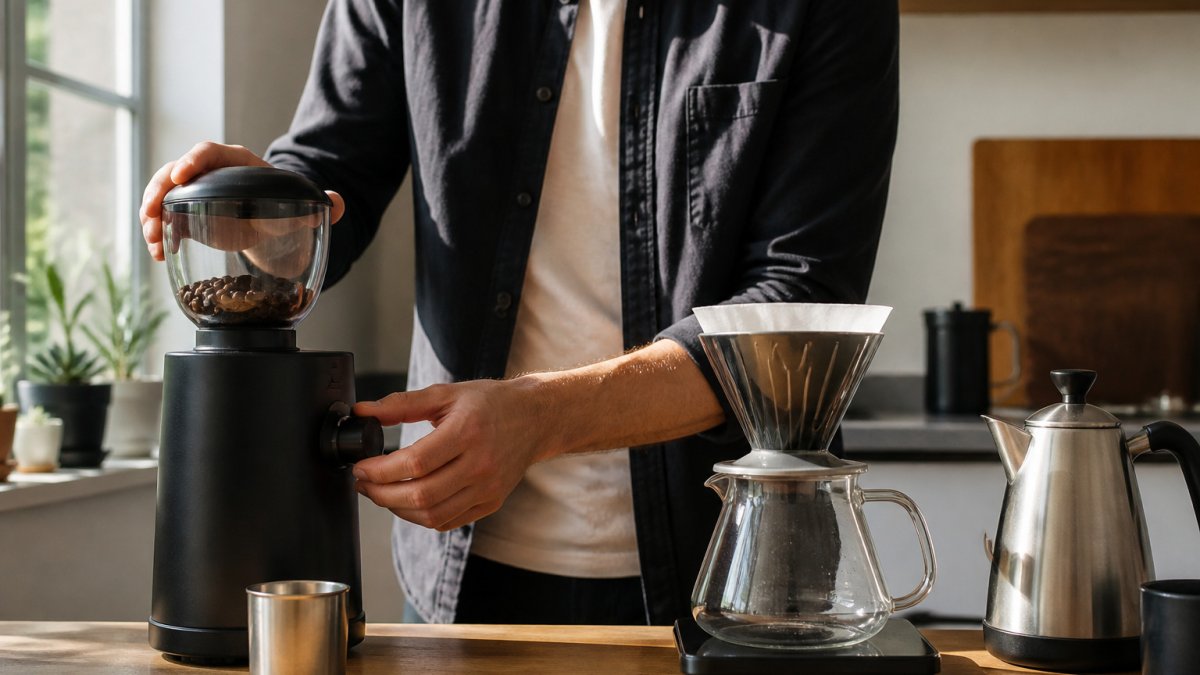
Most bitterness comes from brewing choices you can change in under a minute. Start here before you try any sweetener. The goal is to hit the sweet spot of extraction: enough contact between water and grounds to pull out sugars and aromatics, but not so much that you pull out the harsh, bitter compounds.
The Four Levers and What Each One Does
Every brewing variable pushes extraction in one direction. Change one at a time so you can taste what worked.
- Grind size: Finer grinds extract faster and can tip into bitterness; coarser grinds extract slower and can leave the cup sour. Move one notch at a time on your grinder.
- Coffee-to-water ratio: More coffee per unit of water makes a stronger, more concentrated cup; less coffee makes a thinner cup that can still taste bitter if extraction is off. A common starting range is 1:15 to 1:17 by weight (about 1 gram of coffee per 15-17 grams of water).
- Water temperature: Hotter water extracts faster. Most drip brewers and pour-over setups land between 195°F and 205°F. If your cup is harsh, try the lower end of that range; if it is sour, try the higher end.
- Brew time: Longer contact extracts more. Shorten the brew if the cup is bitter; lengthen it if the cup is sour or weak.
Starting Points by Brew Method
Use these as baselines, then adjust one variable at a time. Grind settings are described in relative terms because every grinder's numbers differ.
- Drip (automatic): Medium grind, 1:16 ratio, 195°F-205°F water. If the cup is bitter, go one step coarser before changing anything else. If it is weak, add 1-2 grams of coffee per cup rather than extending the brew.
- Pour-over: Medium-fine grind, 1:16 ratio, 200°F-205°F water, total brew time around 2:30-3:30 for a single cup. A bitter cup usually means the grind is too fine or the pour is too slow; a sour cup usually means the grind is too coarse or the water is too cool.
- French press: Coarse grind, 1:15 ratio, 195°F-205°F water, steep 4 minutes, then press slowly. Bitterness here often comes from over-steeping or from a grind that is too fine and slips through the mesh.
- Espresso: Fine grind, roughly 1:2 ratio (coffee to yield) in 25-30 seconds as a starting point. Bitter shots usually mean the grind is too fine or the dose is too high; sour shots usually mean the grind is too coarse or the dose is too low.
A Quick Diagnostic Loop
- Taste the cup and name the flaw: bitter, sour, or weak.
- Change one lever in the direction that addresses that flaw (coarser for bitter, finer for sour, more coffee for weak).
- Brew again and taste. If the flaw improved, keep the change; if it got worse, reverse it and try a different lever.
- Write down the setting that worked so you can repeat it.
Why This Matters Without Sugar
Sugar masks bitterness and sourness. When you remove it, extraction flaws become obvious. Dialing in grind, ratio, temperature, and time is the most reliable way to make coffee taste sweeter and more balanced without adding anything to the cup.
Choosing Beans That Taste Sweeter Naturally
Bean choice affects sweetness more than most people expect. Some coffees carry natural notes of chocolate, caramel, and fruit that read as sweet without any added sugar.
Look at the tasting notes on the bag, and use them as a guide to which beans taste sweetest to you.
Freshness matters too. Beans that have sat for weeks lose aromatics, and the cup tastes flatter.
Natural Sweeteners for Coffee and How to Use Them
If you still want a touch of sweetness, natural options can help. Start with a small amount and adjust. For a convenient, low-effort alternative to brewing from scratch, see our instant coffee option.
- Cinnamon: Adds a warm, sweet aroma. A pinch in the grounds or the cup goes a long way.
- Cardamom: Brings a floral, slightly citrus sweetness. Good with light and medium roasts.
- Ginger: Adds spice and a bit of heat that balances bitterness.
- Vanilla extract: A few drops can round out a sharp cup.
Mix spices with a little hot coffee first so they dissolve evenly. Then stir in the rest.
How to Flavor Coffee Without Syrup
Flavor without syrup is simpler than most people think. Flavored coffees can also deliver taste without the sugar load of a syrup.
Iron Spur Coffee offers Hazelnut and Mocha made with natural flavoring, which gives you a rich flavor straight from the bag.


Milk and creamers can also change how sweet coffee tastes. Whole milk adds body and a naturally sweet dairy note, which can make an unsweetened cup feel smoother.
Benefits of Black Coffee Without Sugar and a Step-by-Step Reduction Plan
Drinking coffee black lets you taste what the beans actually offer. The adjustment is real, but it takes a few weeks and works better with a plan than with willpower alone.
What Changes When You Cut Sugar
- You taste more of the coffee. Sugar covers up acidity, bitterness, and aroma. Removing it lets you evaluate the cup and fix brewing problems.
- You control the sweetness level. A naturally sweet bean or a pinch of cinnamon can carry the cup without the blood-sugar spike of added sugar.
- You build a repeatable routine. Once your palate adjusts, black coffee becomes the default rather than a sacrifice.
A Measurable Four-Week Plan
Use a kitchen scale or measuring spoon to track your usual amount of sugar, then reduce it on a schedule. The numbers below assume a starting point of 2 teaspoons (about 8 grams) of sugar per cup; adjust to your own baseline.
- Week 1, Measure and cut by half. Measure your normal sugar, then use half (about 1 teaspoon, or 4 grams). Keep everything else in the cup the same so you can isolate the change.
- Week 2, Swap half for a spice or extract. Use half the Week 1 amount (about 1/2 teaspoon, or 2 grams) plus a pinch of cinnamon or a drop of vanilla extract. The goal is to keep the cup familiar while reducing sugar.
- Week 3, Go black on your best cup. Pick the cup where your coffee tastes best (usually the first one after you dial in your brew) and drink it black. Keep a small amount of sweetener available for other cups if you need it.
- Week 4, Make black the default. Drink black coffee as your default and save sweetened cups for treats. By this point, most people find that a fully sweetened cup tastes too sweet.
Handling Cravings Without Reaching for Sugar
- Warm the cup. A slightly hotter cup can read as more aromatic and satisfying.
- Add body, not sugar. A splash of whole milk or unsweetened oat milk adds a naturally sweet dairy or grain note and makes the cup feel smoother.
- Use aroma. Smell the cup before you sip; aroma carries much of what we perceive as sweetness.
- Keep a backup. If a craving hits, brew a cup you know tastes good rather than adding sugar to a cup you don't like.
How Long Adjustment Takes
Many people find that sweetness becomes more noticeable over a few weeks of consistent reduction. If you slip, restart at the previous week's level rather than quitting the plan. The point is to change your baseline, not to be perfect every day.
Pick Your Next Bag and Taste the Difference
Better coffee starts with fresh, well-roasted beans. Iron Spur Coffee roasts in small batches and roasts to order. If you want a bean that tastes naturally sweet, start with one of the profiles above and work through the brewing steps in this guide.
Discover Iron Spur Coffee today and find the cup that works without the sugar.
Frequently Asked Questions
What are the benefits of drinking black coffee without sugar?
Black coffee without sugar adds no calories or added sugar to your day, which makes it easier to keep your intake of added sugar low. Many people find that without sugar they can taste the coffee's natural sweetness, cocoa, and fruit notes more clearly. Black coffee also suits a simple morning routine and travels well in a thermos for hikes or long workdays. If the taste is harsh at first, adjusting grind size and brew ratio usually makes it smoother within a week or two of trying.
How can I make coffee taste less bitter without sugar?
Start with grind size: a coarser grind reduces over-extraction, which is the main source of bitterness in most home brews. Next, check your coffee-to-water ratio, since a common starting point is about 1:16 by weight, and avoid brewing for too long. Use water that is hot but not boiling, and buy fresh beans roasted to a medium profile. Small changes made one at a time show you which adjustment is actually fixing the bitterness.
What are some natural sweeteners that can be used in coffee?
Common natural options include honey, maple syrup, and cinnamon, which adds a sense of sweetness without sugar. Monk fruit and stevia are plant-derived sweeteners with no calories, though some people notice an aftertaste. Erythritol is a sugar alcohol that is sometimes used in place of sugar. Try a small amount of any sweetener first, because a little goes a long way and too much can overpower the coffee's flavor.
How can I flavor my coffee without using syrup?
Ground spices such as cinnamon, cardamom, and a pinch of ginger add warmth and aroma to the grounds or the cup. A splash of milk or cream adds body and softens bitter notes. Naturally flavored coffees, such as the French Vanilla or Mocha from Iron Spur Coffee, are flavored with natural flavoring.
