

Best Coffee Beans for Long Hikes: A 2026 Guide
Table of Contents
- Best Coffee Beans for Long Hikes: Quick Comparison
- Instant Coffee: Maximum Convenience for the Trail
- Single-Serve Pour-Over: Fresh Extraction Without Grinders
- How to Make Coffee While Backpacking
- Lightweight Backpacking Coffee Gear
- Leave No Trace Coffee Disposal
- Caffeine Content and Hiking Endurance
- Cost Per Serving: Value on Multi-Day Treks
Last Updated: August 7, 2026
Best Coffee Beans for Long Hikes: Quick Comparison
When you're grinding out mile 15 of a multi-day trek, the difference between mediocre coffee and a genuinely energizing cup becomes impossible to ignore. The best coffee beans for long hikes aren't necessarily the same ones you'd brew at home. Weight matters. Brew time matters. How much fuel you burn heating water matters. This guide from Iron Spur Coffee breaks down the real-world considerations that separate trail-tested options from wishful thinking.
The challenge isn't finding coffee that tastes good, it's finding coffee that tastes good while keeping your pack light, your setup simple, and your caffeine delivery reliable when you're 20 miles from the nearest town.
| Coffee Type | Weight per Serving | Brew Time | Cleanup | Best For |
|---|---|---|---|---|
| Instant Coffee | 2-4g | 2 minutes | 30 seconds | Ultralight, speed-focused |
| Single-Serve Pour-Over | 10-15g | 3-4 minutes | 2 minutes | Fresh flavor, moderate weight |
| Whole Bean + Grinder | 15-20g | 8-10 minutes | 5 minutes | Flavor enthusiasts, car camping |
| Espresso Device | 8-12g | 2-3 minutes | 3 minutes | Espresso lovers, weight-conscious |
Instant Coffee: Maximum Convenience for the Trail
Instant coffee dominates backcountry use for one reason: it works. Boil water, stir in powder, drink within two minutes. No filters to pack out, no grounds to manage, no equipment beyond a mug. The real distinction isn't between instant and fresh, it's between instant options that taste genuinely good and those that taste like burnt cardboard dissolved in hot water. Specialty-grade instant coffees use freeze-dried extraction methods that preserve more of the original bean's complexity than commodity instant products.
Iron Spur Instant Coffee: Specialty-Grade Solubility
Iron Spur's instant offering delivers what most hikers actually need: rapid solubility, no bitterness, and the complex sweetness that comes from precision roasting. Their specialty-grade beans are sourced from high-elevation estate environments, then roasted to order using thermal mapping to eliminate burnt, acrid notes. A single serving weighs around 3 grams and dissolves completely in hot water with no residue.

At $22.99 for a 30-serving pouch, you're paying roughly $0.77 per serving. The roasting-to-order process ensures fresh product, not inventory that's been sitting in a warehouse losing flavor. Pre-portion individual 3-gram servings into small ziplock bags before your hike to cut pack weight and make morning brewing foolproof.
Alpine Start Original Blend: High-Altitude Arabica
Alpine Start positions itself explicitly for outdoor use. Made from 100% Colombian Arabica beans, each sachet delivers one 8-10 oz serving with 120 mg of caffeine. The flavor is clean and straightforward, exactly what you want at 6,000 feet elevation. The sachets dissolve in both hot and cold water, which opens options if you're running low on fuel.
At $9.99 for an 8-pack of sachets, you're paying roughly $1.25 per serving. Individual sachets weigh slightly more than bulk instant when you account for packaging, but for a three-day hike, the difference is negligible.
Mount Hagen Organic: Low Acidity and Freeze-Dried Freshness
Mount Hagen's 100% Arabica beans are freeze-dried to retain flavor and aroma, delivering noticeably smoother coffee than most instant options. Low acidity means your digestive system won't rebel on longer treks. At $17.07 for a 3.53 oz jar (approximately 50 cups), you're paying roughly $0.34 per serving.
Pre-portion into small ziplock bags before your hike to save weight and space. A single 3-day hike needs roughly 10-15 grams of instant coffee, depending on daily consumption.
Single-Serve Pour-Over: Fresh Extraction Without Grinders
Pour-over packets occupy the middle ground between instant convenience and whole-bean quality. You get fresher extraction than instant coffee without carrying a grinder, meaning better flavor for only slightly more weight and complexity. The trade-off is brew time, typically 3-4 minutes versus 2 minutes for instant, and you need to pack out the used filter and grounds.
Kuju Coffee: Compostable Packets and Minimal Cleanup
Kuju's single-serve pour-over packets are designed specifically for outdoor use. Each packet contains pre-portioned, medium-roasted coffee grounds with a built-in filter. You clip the packet to your mug, pour hot water, and wait 3-4 minutes. The entire packet composts.
At $14.95 for a 6-pack, you're paying roughly $2.50 per serving. The flavor gap justifies it for many hikers. The extraction process pulls more of the bean's complexity than freeze-drying can preserve. Weight per serving is roughly 12-15 grams including the packet, which is heavier than instant but lighter than carrying whole beans and a grinder.
How to Make Coffee While Backpacking
The method you choose depends on your priorities: speed, flavor, weight, or fuel efficiency.
Instant Coffee Method: Boiling Water and Steeping
Boil water in your camp pot or lightweight titanium kettle. Pour into a mug, add instant coffee powder, stir for 15-20 seconds, and drink. Total time: 2 minutes. Water temperature should be around 195-205°F (90-96°C), just off boiling. Steeping time matters less with instant than with other methods, twenty seconds of stirring is enough for complete dissolution.
Pour-Over Method: Fuel Efficiency and Brew Time
For single-serve pour-overs like Kuju packets, clip the packet to your mug rim and pour hot water slowly over the grounds. The water extracts flavor as it passes through, and gravity pulls the brewed coffee into your mug below. Total time: 3-4 minutes.
The key variable is water temperature and pour rate. Pour too fast and you under-extract (weak, sour coffee). Pour too slowly and you over-extract (bitter, harsh coffee). The sweet spot is a steady, moderate pour that takes 2-3 minutes total.
Brew time at altitude changes slightly. Water boils at lower temperatures as elevation increases; at 10,000 feet, water boils around 194°F instead of 212°F. Add 30-60 seconds to your expected brew time at high altitude.
Lightweight Backpacking Coffee Gear
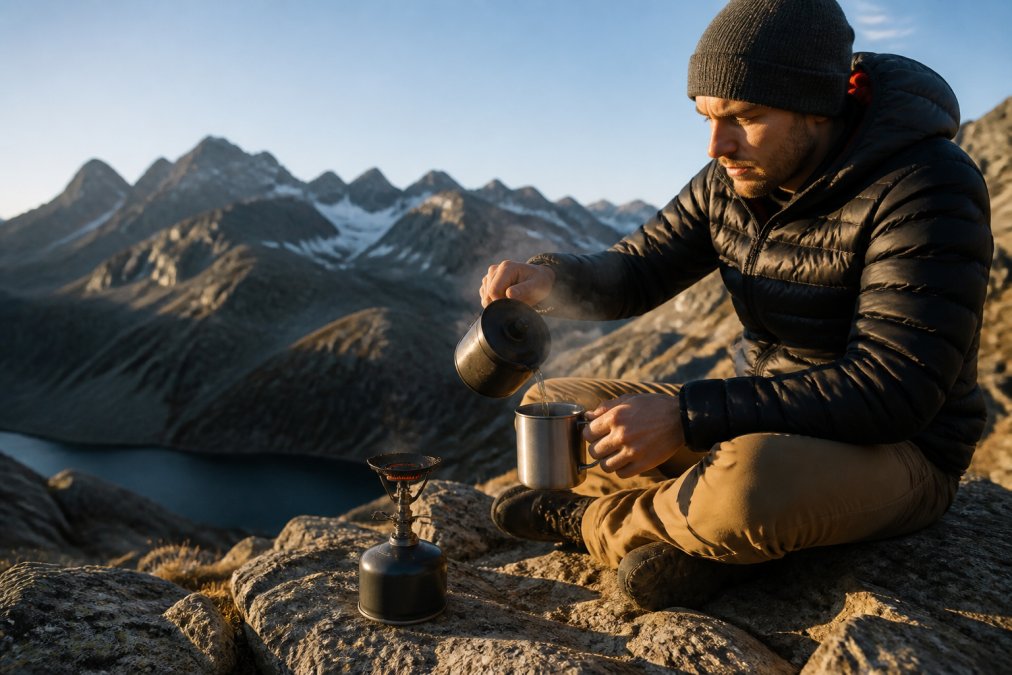
Equipment weight matters on long hikes. A full pour-over setup with grinder can add 8-12 ounces to your pack. Single-serve packets eliminate the grinder but add bulk. Instant coffee requires almost nothing: just a mug and hot water.
Ultralight Options: Under Half an Ounce
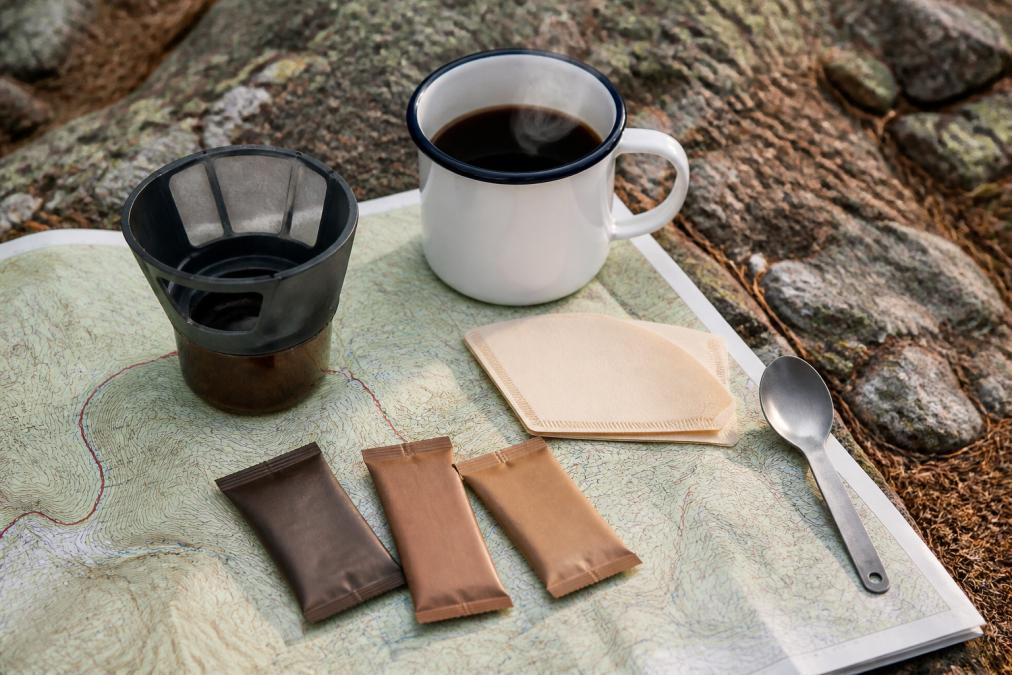
The GSI Outdoors Ultralight Java Drip weighs 9 grams (0.3 oz) and folds to the size of a credit card. You insert a #2 or #4 paper filter, add ground coffee (8-12 grams), and pour hot water. The entire device costs $9.95 and will last for years. The trade-off is obvious: you need to carry ground coffee separately and pack out used filters and grounds.
Discover Iron Spur Coffee Today →
Iron Spur's Enamel Mug ($25.00) weighs 5.6 oz and is durable enough to survive years of backcountry use.

Portable Brewing Devices: Weight-to-Quality Ratio
The Wacaco Minipresso GR2 ($49.90) is a hand-powered portable espresso maker that weighs 7 oz and produces genuine espresso shots. It requires pre-ground coffee (8-12 grams per shot) and hot water. Hand-pumping the device takes physical effort, roughly 40-60 firm pumps per shot. After a long day of hiking, that's tedious.
Weight-to-quality ratio favors instant coffee for most hikers. The Minipresso delivers better flavor than instant but adds 7 oz of equipment plus the weight of pre-ground coffee. For a three-day hike, you're carrying roughly 12-15 oz of total coffee-related equipment. Compare that to instant coffee (3-4 oz for the whole setup) and the weight penalty becomes obvious.
Leave No Trace Coffee Disposal
Backcountry ethics require proper waste management. Coffee grounds and filters decompose slowly in alpine environments where soil microbes work at reduced rates. Used grounds can also attract wildlife if left near camp.
Instant coffee produces no waste, you drink the entire serving, and there's nothing to dispose of beyond the empty packet, which you pack out. This is the cleanest option from a Leave No Trace perspective.
Pour-over packets and grounds require different handling. If you're using compostable packets like Kuju, bury the entire packet at least 200 feet from water sources and camp. Used paper filters and loose grounds should be packed out in a small ziplock bag, not buried or burned. A single coffee filter weighs almost nothing, so the pack-out burden is minimal.
Never pour used grounds directly into water sources or leave them scattered around camp.
Caffeine Content and Hiking Endurance
Most instant coffees contain 60-100 mg of caffeine per serving, depending on the brand and how much powder you use. A standard serving is roughly 2-3 grams of instant coffee. Single-serve pour-overs typically deliver 80-120 mg of caffeine per serving.
Iron Spur's Long Ride + blend is specifically formulated for higher caffeine delivery, blending house Arabica with Robusta beans. Robusta naturally contains roughly twice the caffeine of Arabica, so the blend delivers more energy per serving than single-origin Arabica options.

Caffeine absorption is faster on an empty stomach, which is why pre-hike coffee hits harder than coffee after breakfast. The effect peaks roughly 30-45 minutes after consumption. Tolerance builds quickly with regular consumption. If you rarely drink caffeine, a single serving at altitude can cause jitteriness or anxiety, especially when combined with physical exertion and thin air.
Cost Per Serving: Value on Multi-Day Treks
The price per serving varies significantly across options. Instant coffee from Iron Spur runs $0.77 per serving. Alpine Start sachets cost $1.25 per serving. Mount Hagen instant runs $0.34 per serving. Kuju pour-over packets cost $2.50 per serving.
For a three-day hike where you drink two cups per day (six total servings), Mount Hagen is the cheapest option at $2.04 total. Over a month-long thru-hike (60 servings), Mount Hagen remains cheap at $20.40 total, while Kuju becomes prohibitively expensive at $150.00 for the entire month.
The real value question isn't just price, it's price relative to the experience you want. For most hikers balancing taste, weight, and cost, Iron Spur's instant coffee hits the middle ground. The specialty-grade roasting eliminates burnt, acrid notes that plague cheaper options, so you're drinking genuinely good coffee, not just caffeine delivery.
The best coffee beans for long hikes aren't about finding the most expensive option or the one with the fanciest branding. They're about matching your brewing method to your priorities and then selecting a product that actually delivers on those criteria. For hikers who want specialty-grade flavor without the complexity of grinders and whole beans, Iron Spur Coffee's instant options provide a resilient foundation for your day. Their precision thermal mapping eliminates bitterness, and the roasting-to-order process ensures complex sweetness and deep flavor notes that transform your morning brew from functional fuel into something worth savoring. Discover Iron Spur Coffee Today
Frequently Asked Questions
What is the best coffee for backpacking?
The best coffee for backpacking depends on your priorities. Instant coffee offers maximum convenience and minimal weight, making it ideal for ultralight trips. Pour-over packets deliver fresh-brewed flavor without requiring a grinder. Whole bean coffee with a portable grinder suits connoisseurs willing to carry extra gear. Iron Spur Instant Coffee ($22.99) provides specialty-grade extraction in a lightweight format, while their Long Ride blend ($23.99) works well if you have a grinder and camp stove. Consider your hiking duration, available fuel, and flavor preferences when choosing.
Does caffeine help with hiking endurance?
Caffeine improves mental alertness and can reduce perceived exertion during extended hikes. A typical serving contains 95-200 mg of caffeine, depending on the brewing method and bean type. Robusta beans contain nearly twice the caffeine of Arabica, making blends like Iron Spur's Max Caf Blend ($23.99) effective for demanding multi-day treks. Caffeine also enhances fat oxidation, helping your body access energy reserves during long-distance hiking. Consume it 30-60 minutes before strenuous climbing for maximum benefit. However, dehydration can amplify caffeine's diuretic effects, so match coffee intake with adequate water consumption.
How do you dispose of coffee grounds on the trail according to Leave No Trace principles?
Leave No Trace guidelines require scattering used coffee grounds at least 200 feet from water sources and camp. Spread grounds thinly across a wide area to accelerate decomposition. Instant coffee produces minimal waste, making it the most Leave No Trace-friendly option. If using pour-over packets, pack out the filter completely. Never bury grounds; they decompose faster when exposed to soil microorganisms. For multi-day trips, carry a small waste bag to consolidate all coffee-related trash (filters, packaging) and pack it out. Freeze-dried instant coffee from sources like Mount Hagen leaves virtually no residue, reducing environmental impact on sensitive alpine ecosystems.
What is the lightest way to make coffee while backpacking?
Instant coffee is the lightest option, adding only ounces to your pack. The GSI Outdoors Ultralight Java Drip weighs 9 grams and costs $9.95, nesting compactly under a fuel cartridge. Simply add instant coffee to hot water in your mug, no equipment needed. If you prefer pour-over flavor, Kuju single-serve packets ($14.95 for six) require only a mug and hot water. Avoid carrying whole bean coffee or grinders on ultralight trips; the weight-to-serving ratio becomes impractical. Iron Spur Instant Coffee ($22.99) delivers specialty-grade flavor in a resealable pouch, eliminating the need for individual sachets and reducing packaging waste on the trail.
How do you pack coffee beans for a multi-day hike?
For whole beans, transfer them to a lightweight, airtight container or resealable pouch to preserve freshness and reduce packaging weight. Pre-grind your beans at home or use a compact hand grinder on-site; grinding adds 3-5 ounces but delivers superior flavor extraction compared to pre-ground coffee. Store the container in a cool part of your pack away from direct sunlight, which degrades the roast profile and aroma. For multi-day trips, instant coffee or single-serve pour-over packets eliminate grinding entirely. Iron Spur's instant options come in resealable pouches optimized for backpacking, and their Long Ride blend ($23.99) maintains complex sweetness and deep flavor notes when properly sealed. Calculate servings carefully, one ounce of ground coffee yields approximately 4-5 cups.
This article was written using GrandRanker